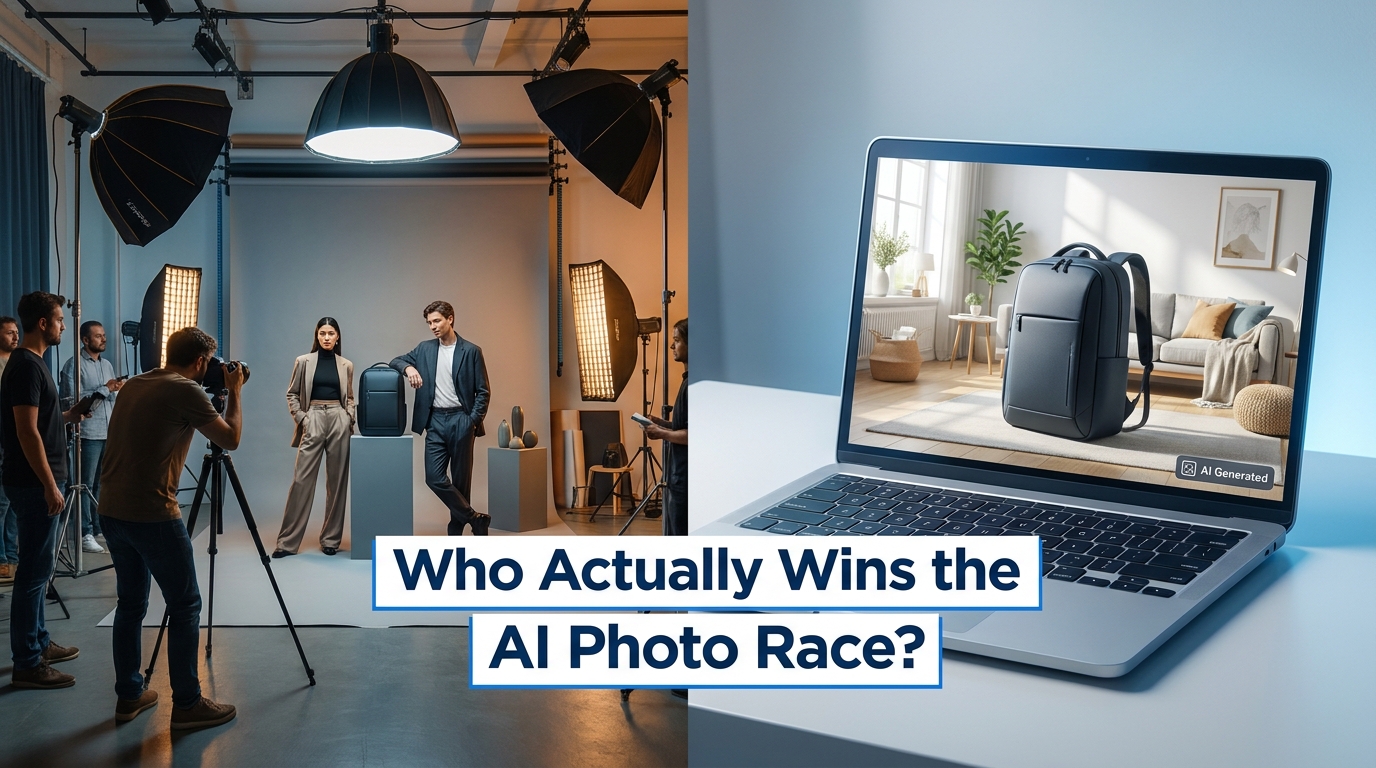
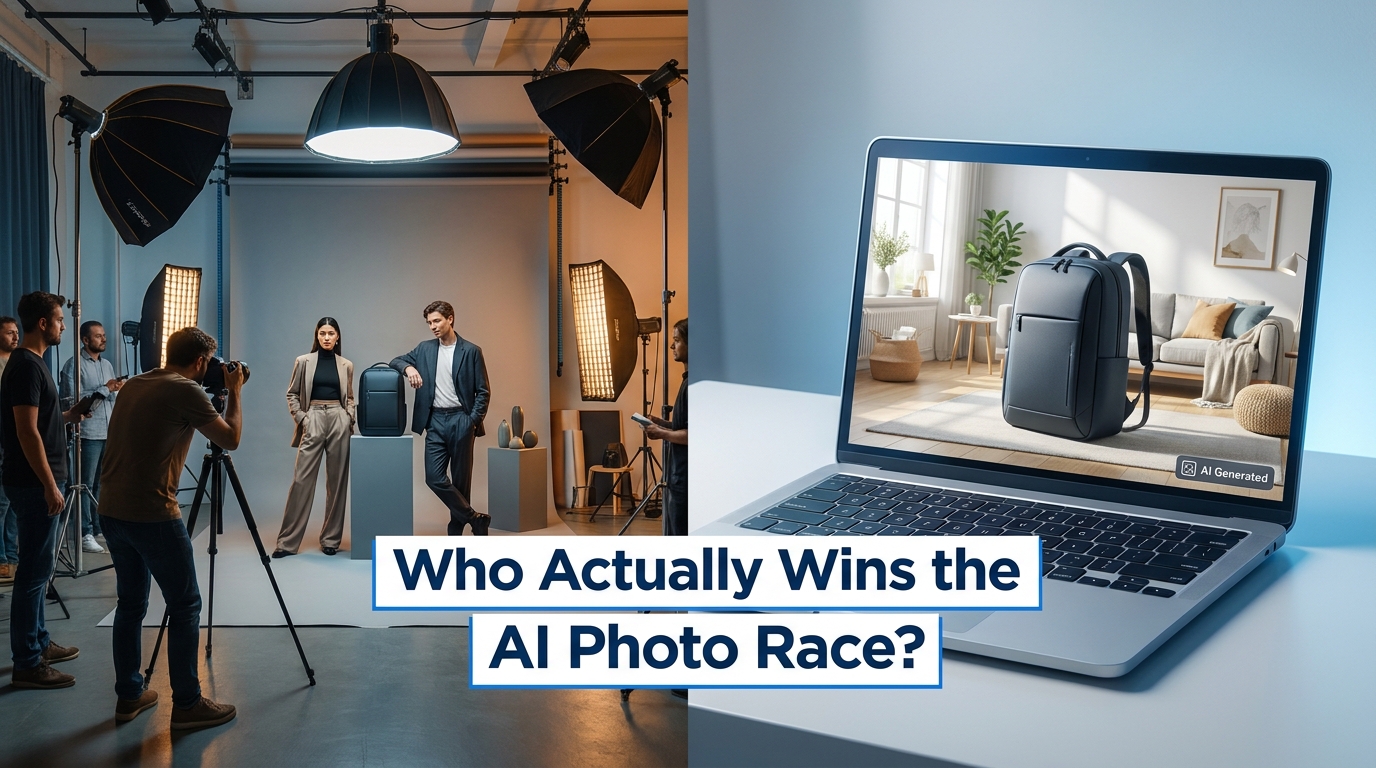
For years, the gap between a $100,000 annual ad budget and a $10,000 one on Amazon was nowhere more visible than in the photography. Big brands ran full studio shoots with professional lighting, hired models, and location-scouted lifestyle settings. Smaller sellers took product shots on a folding table in their spare bedroom. That asymmetry showed up directly in click-through rates, conversion rates, and ultimately in ranking.
Amazon’s 2026 policy adjustments around AI-generated imagery didn’t come with a dramatic announcement — no press release, no Seller Central banner reading “AI images now allowed.” The shift was more gradual: updated image guidelines, the expansion of AI tools inside the Amazon Ads console, the rollout of Titan Image Generator through Creative Studio, and a compliance framework that began to acknowledge AI-assisted production as a normal part of the creative workflow.
But “allowed” and “advantageous” are two very different things. And the question nobody is asking clearly enough is: which sellers actually benefit from this, and which ones are walking into a trap?
The answer depends heavily on your product category, your current image quality baseline, how you use AI (in ads versus listings), and whether your workflow can actually catch the failure modes that AI image generation introduces before they cost you suppression events or return rate spikes. This article breaks it down by category, by seller size, and by the specific use cases where AI lifestyle images help — versus where they quietly hurt.
What Amazon’s 2026 Policy Actually Changed — and What Didn’t
The clearest way to understand Amazon’s 2026 stance on AI-generated lifestyle images is to separate what was always the rule from what genuinely shifted.
The Rule That Hasn’t Changed: Hero Images Are Sacrosanct
The main image — slot one in your listing’s image gallery — remains subject to the strictest requirements Amazon enforces. It must show the actual physical product, photographed on a pure white background (RGB 255, 255, 255), with the product filling at least 85% of the frame. No lifestyle scenes, no props, no watermarks, no AI-generated backgrounds. This hasn’t changed in 2026, and there is no credible indication it’s about to.
What this means in practice: AI cannot replace your hero image. Any tool that claims to generate a policy-compliant main image from scratch — without a real product photograph as the base — is selling you a suppression risk. The hero shot still requires a real camera pointed at a real product.
What Has Genuinely Shifted
Secondary images — slots two through nine in your gallery — and all ad creative formats are where the policy movement is meaningful. Amazon’s updated compliance framework in 2026 takes the position that the tool used to create an image is less important than whether the image accurately represents the product. AI-assisted background replacement, lighting correction, scene composition, and lifestyle context generation are all considered acceptable for secondary images and ad creatives, provided the product itself is not misrepresented.
Specifically, AI edits that alter color, dimensions, included accessories, material texture, or functionality cross the line. A background swap that places your product in a living room scene is fine. A background swap that also quietly saturates your beige product into a more photogenic cream crosses into misrepresentation territory.
The New Disclosure Layer
Third-party compliance guides (and emerging Seller Central documentation) point to a 2026 framework requiring sellers to indicate when product content — including images — is substantially generated by AI rather than lightly edited. This is not a checkbox in the image uploader currently; it exists more as a policy position that could be enforced retroactively. The safest interpretation is that images where the product is real but the environment is AI-generated sit in a clearly permissible zone. Images where the product itself is AI-rendered without a real photograph underneath carry meaningful policy risk.
The Cost Math: What Photography Actually Used to Cost
Before evaluating whether AI lifestyle images are worth adopting, it helps to understand what the old model actually cost — and why those costs were so gatekeeping for smaller sellers.
The Traditional Studio Cost Stack
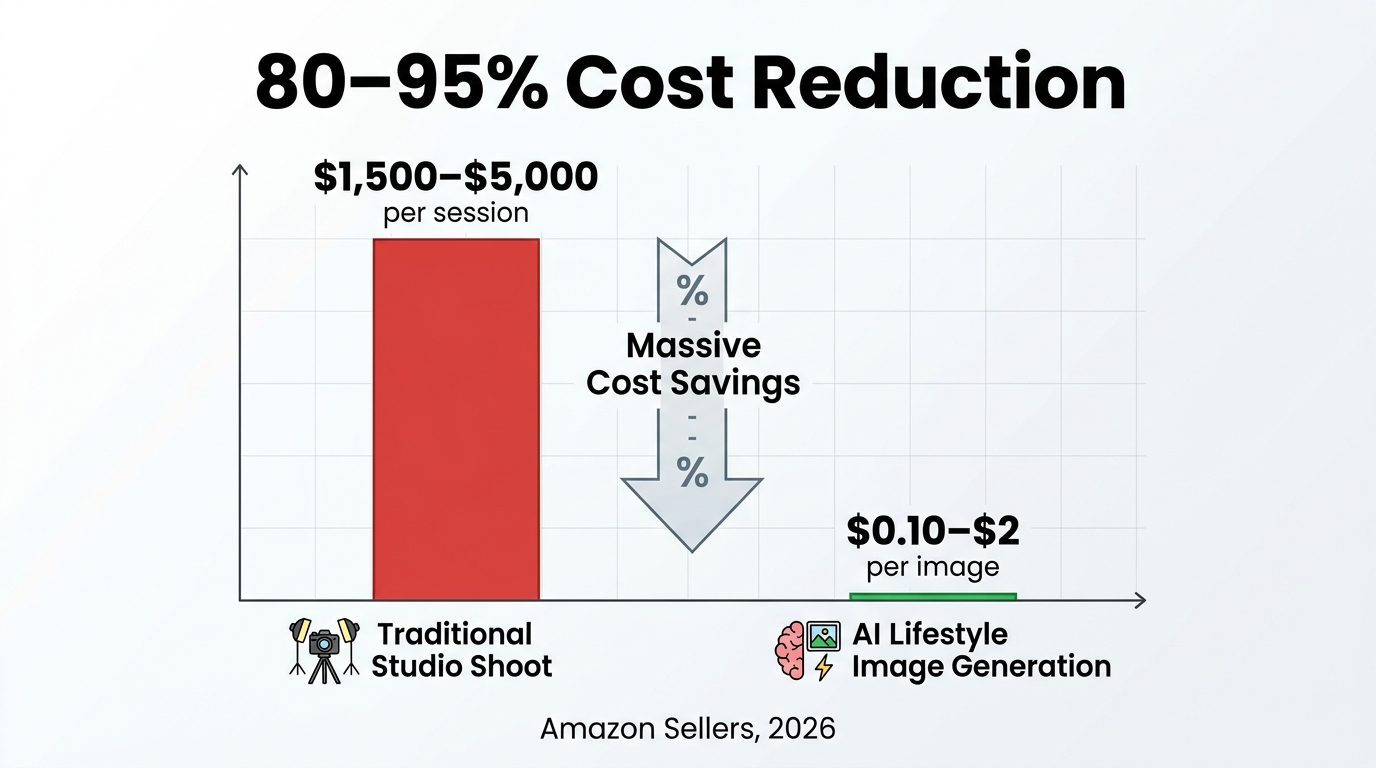
A standard professional product photography session in 2024–2025 ran between $1,500 and $5,000 per session for a competent freelance or mid-tier studio setup. That’s before factoring in model fees ($200–$800 per hour for experienced commercial talent), location rental for lifestyle settings ($500–$2,000 per day), post-production retouching ($50–$150 per final image), and the logistical overhead of sample shipping, scheduling, and art direction.
For a seller with a catalog of 50 SKUs and multiple variants each, a comprehensive lifestyle shoot could represent $15,000–$40,000 in production spend — a cost that large brands absorbed without flinching and small sellers couldn’t justify. The result was predictable: small sellers competed with functional pack shots while big brands dominated the visual shelf with aspirational imagery.
What AI Changes the Math To
AI product photography tools in 2026 — both Amazon’s native offerings and third-party platforms — bring that per-image cost down to approximately $0.10–$2.00 per generated image, depending on the tool and usage tier. Time compression is equally dramatic: what previously required a two-week production cycle (booking, shooting, retouching, delivery) now runs from product upload to final image in minutes to hours.
Multiple industry analyses put the aggregate cost reduction at 80–95% versus traditional studio shoots. Amazon’s own internal data shows that advertisers using AI-generated images in Creative Studio were able to advertise up to five times more products than they previously could — a direct consequence of removing the per-SKU production bottleneck.
The Important Caveat
Cost reduction is not value creation. A cheaper image that triggers returns, earns negative reviews about “product not as shown,” or gets suppressed for policy violations costs far more than a well-executed studio shot. The real question isn’t whether AI is cheaper — it clearly is. It’s whether the quality output is good enough for your product category, your customer expectations, and your compliance obligations. That answer varies significantly by what you’re selling.
Category Winners: Where AI Lifestyle Images Outperform
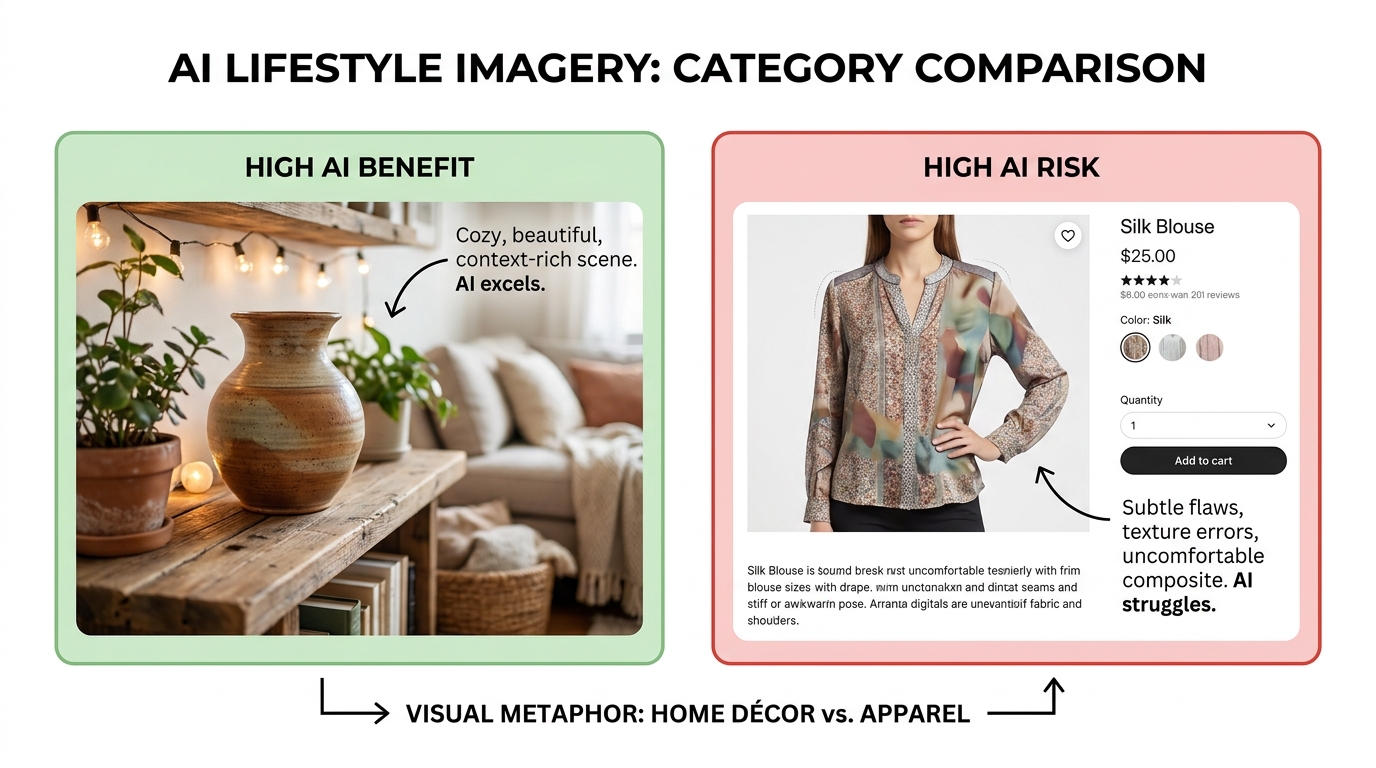
Not every product category responds equally to AI-generated lifestyle imagery. The categories that benefit most share a common set of characteristics: the purchase decision is context-driven, color and texture accuracy at fine detail levels matters less than placement and setting, and the emotional resonance of the image (does this fit my life?) matters more than technical precision.
Home Décor and Furniture
This is the strongest category fit for AI lifestyle photography, and the reasons are structural. Shoppers buying a throw pillow, a wall sconce, a coffee table, or an area rug are primarily asking: “Does this fit in a room like mine?” They want to see scale, setting, and style compatibility. AI excels at generating convincing room scenes — cozy living rooms, minimal Scandinavian kitchens, warm bedroom vignettes — and placing a real product photograph composited into that environment.
Because home décor products are often non-reflective solids (fabric, wood, ceramic, stone), the AI rendering of the product within the scene is generally accurate. Color consistency on solid-surface items holds reasonably well across AI tools. Industry reports place CTR lifts from lifestyle versus white-background-only images at 20–40% for this category, and that lift is achievable with AI-generated scenes at a fraction of traditional photography cost.
Kitchen and Dining
Kitchen gadgets, cookware, food storage, and dining accessories are strong performers with AI lifestyle imagery for similar reasons. Shoppers want to see the product in use — a cutting board on a well-lit counter, a spice rack mounted in an actual kitchen, a blender staged near fresh produce. The use-case clarity that lifestyle images provide in this category directly reduces the cognitive friction of the purchase decision.
Because kitchen items are typically matte-finish plastics, ceramics, or stainless steel, AI rendering of textures and surfaces performs adequately. The bigger challenge is scale accuracy — a blender that appears to be the size of a coffee mug in an AI-generated scene can erode trust quickly — but most modern tools handle scale reasonably well when provided with accurate product dimensions.
Pet Products
Pet beds, feeders, toys, and grooming tools benefit enormously from lifestyle context. Shoppers want to see an animal using the product — and while generating convincing animals in AI scenes is more technically demanding than generating a room, the category tolerance for minor realism imperfections is generally higher. A dog bed staged in a cozy corner of a living room, with an AI-generated pet composited naturally, resonates far more than the same product on a white background.
Sports, Fitness, and Outdoor Equipment
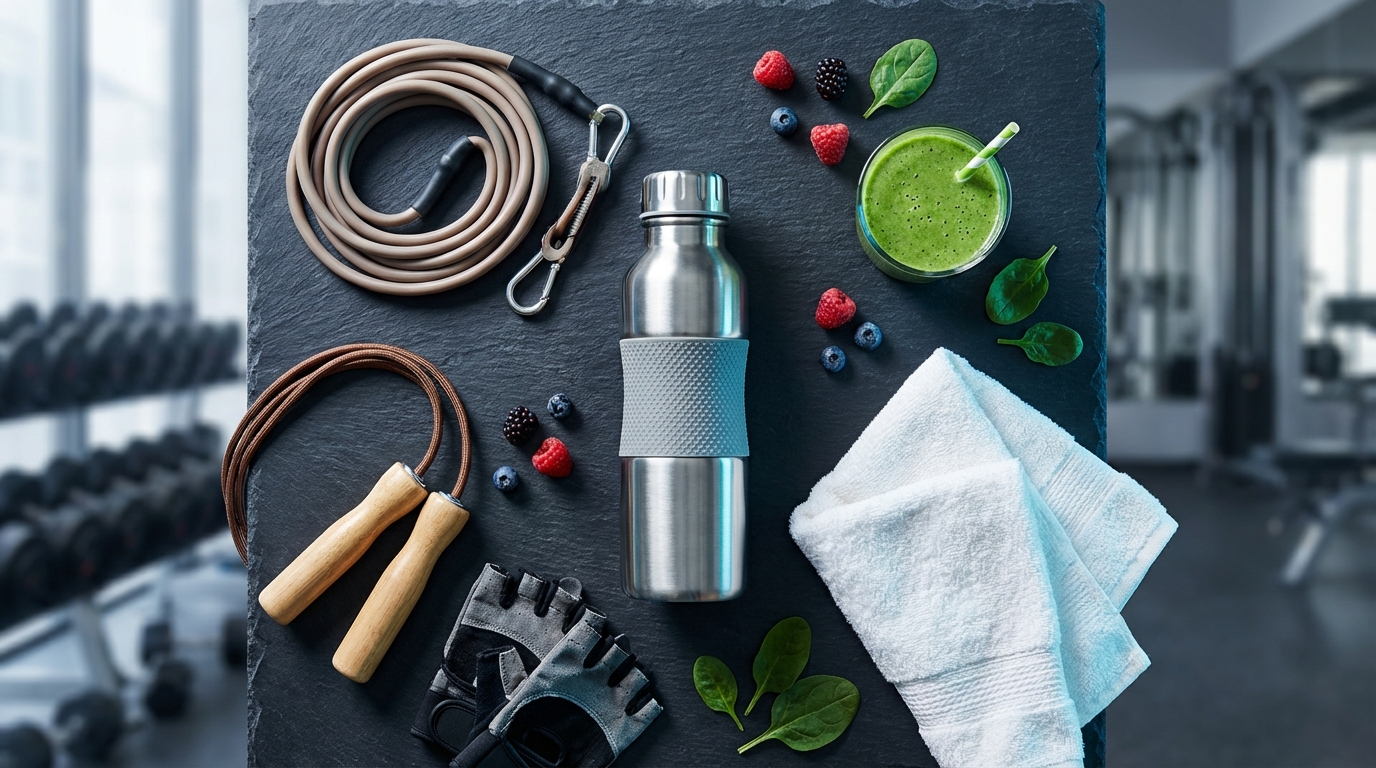
Yoga mats, gym equipment, camping gear, and fitness accessories benefit from aspirational scene-setting. A yoga mat on a white background tells you nothing about whether it feels like a real yoga mat. The same mat in a sunlit studio with a clean hardwood floor and soft morning light — even AI-generated — helps the shopper imagine use. Because these products tend to be simple geometrically (flat mats, round balls, angular equipment), AI compositing is generally accurate.
Category Risks: Where AI Lifestyle Images Underperform or Create Real Problems
The categories where AI lifestyle photography introduces meaningful risk share a different set of characteristics: the purchase decision is heavily dependent on fine material detail, exact color accuracy, complex surface rendering, or the realistic simulation of how the human body interacts with the product.
Apparel and Fashion: The Highest-Risk Category
Apparel is where AI lifestyle photography most frequently creates problems. The issues are multiple and compound each other. First, fabric texture rendering in AI systems is often inaccurate — what should read as a crisp cotton weave gets rendered as something ambiguous, what should look like matte denim gets a subtle sheen that changes the perception of the product entirely. Second, color fidelity on apparel is where AI fails most often: reds oversaturate, navies flatten into black, beige and cream read as gray in poorly calibrated outputs.
Third — and most problematically — AI-generated human models in apparel lifestyle scenes carry their own distortion risks. Hands are a known failure mode, proportions can shift subtly, and the physical interaction between clothing and a body (drape, weight, fit, movement) is extraordinarily difficult for AI to render authentically. Experienced apparel shoppers notice these artifacts quickly, and the cognitive dissonance they create can tank conversion rates rather than improve them.
The downstream consequence is returns. A buyer who purchases a “navy” jacket and receives a dark charcoal-black one — because the AI slightly darkened the product in the lifestyle scene — generates a return, a negative review, and a seller metric that Amazon’s algorithm reads as signals of listing quality problems.
Jewelry and Accessories
Jewelry presents a compounding set of AI rendering challenges. Reflective metal surfaces, gemstone translucency, fine engraving detail, and delicate chain rendering are all areas where current AI models produce outputs that range from plausible to obviously artificial. A diamond ring under studio lighting has a specific relationship between facets, light, and shadow that AI hasn’t yet reliably reproduced at the detail level jewelry shoppers expect. For fine jewelry in particular, AI lifestyle scenes are a fast path to negative reviews about misrepresented appearance.
Electronics and Tech Products
Electronics present a different kind of risk: text rendering. Screens, displays, buttons, ports, and printed labels are all areas where AI-generated product imagery introduces errors — logos rendered incorrectly, screen displays showing impossible UIs, port layouts that don’t match the actual device. For electronics, lifestyle context matters, but product accuracy matters more, and AI currently cannot guarantee accurate small-detail rendering. Electronics sellers should use AI for environmental scene building — a laptop on a desk in a home office — while ensuring the product itself is a real, retouched photograph composited into the scene.
Small Sellers vs. Big Brands: Is This Actually a Leveling Field?

The most frequently repeated claim about AI lifestyle images is that they level the playing field between small sellers and large brands. Like most simple narratives about complex systems, this is partially true and partially misleading.
Where the Field Genuinely Levels
The most concrete leveling effect is in advertising reach. Amazon’s own internal data shows that sellers using AI image generation in Creative Studio advertised up to five times more products than before. This is a real and meaningful change: previously, small sellers with 40-SKU catalogs couldn’t afford lifestyle creative for every product and therefore restricted their advertising to their top 10 performers. AI generation removes the per-SKU production cost barrier, which means more of the catalog becomes advertisable.
Similarly, A+ Content — which requires lifestyle imagery to be effective — was previously inaccessible at scale for small sellers. A small brand with 200 ASINs couldn’t fund A+ creative for all of them at $400–$800 per module in photography costs. AI brings that cost down to a level where even small sellers can maintain visual consistency across their full catalog.
Jungle Scout’s 2025 seller survey (cited in multiple 2026 industry analyses) found that approximately 41% of third-party Amazon sellers have already integrated AI image generation into their standard creative workflow. For small sellers (annual revenue under $500,000), the adoption rate was directionally similar — suggesting this isn’t only a large-brand capability.
Where the Playing Field Remains Tilted
The advantages large brands retain are not in production cost — they’re in quality control infrastructure, creative direction expertise, and testing capacity. A large brand using AI lifestyle images has a creative director who reviews outputs before publishing, a legal team checking compliance, and an analytics function running A/B tests to validate that AI images are actually improving ROAS before scaling.
A small seller using the same AI tool, with the same access, but without that surrounding infrastructure is more likely to publish images with subtle quality problems that they haven’t QA-checked, run into compliance issues they weren’t aware of, and measure success by “looks good to me” rather than by actual conversion lift data.
The leveling is real, but it’s conditional. Small sellers who develop systematic workflows around AI image generation — with quality checkpoints, compliance review steps, and performance tracking — can close a meaningful portion of the visual gap with large brands. Small sellers who use AI image generation as a quick shortcut often discover that cheap content that doesn’t perform is worse than no content at all.
Where AI Images Actually Fail: The Quality Problems Sellers Face
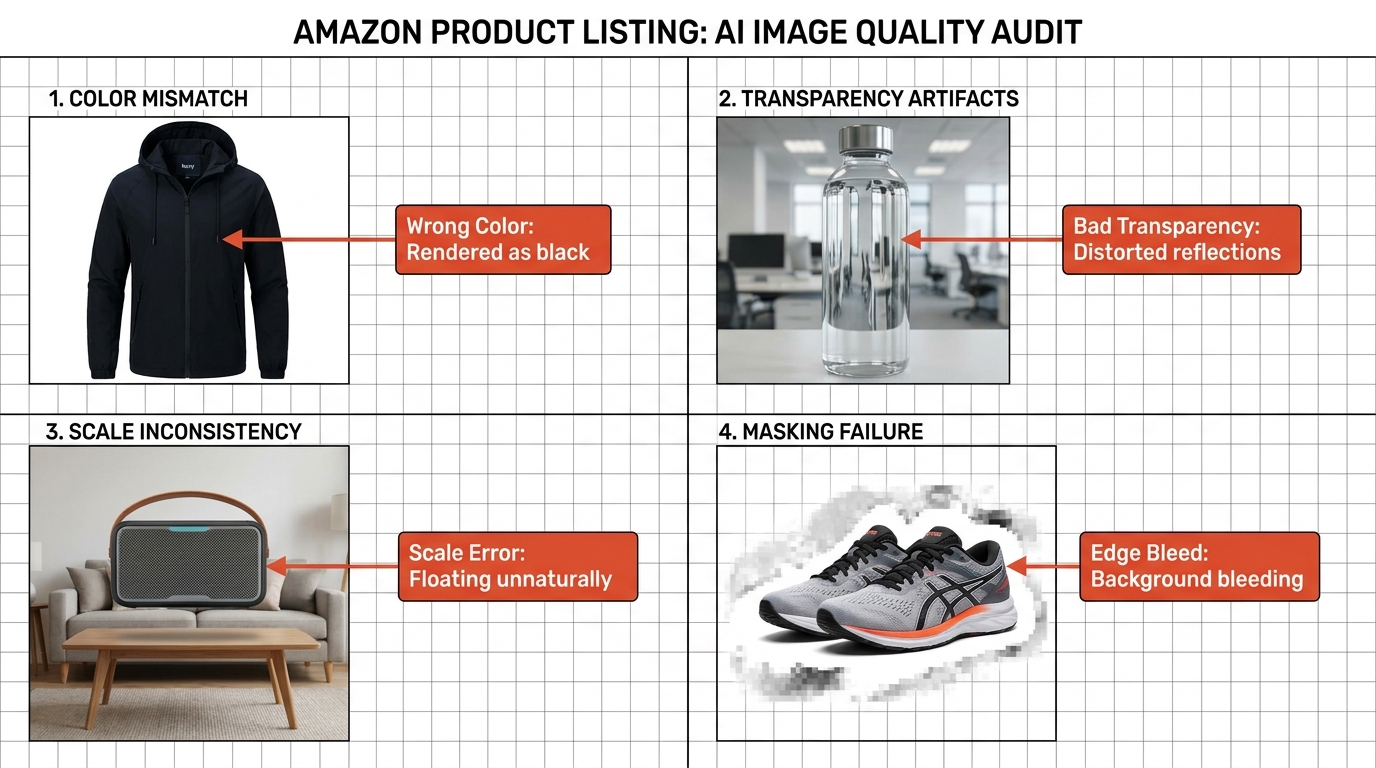
The failure modes of AI image generation for Amazon sellers fall into predictable categories. Understanding them is the prerequisite for building a workflow that catches them before they go live on your listing.
Color and Material Inaccuracy
This is the most common and most consequential failure mode. AI image generation models are not calibrated against your specific product’s colorimetry — they’re producing their best statistical guess at what the product looks like based on the input image and the scene context they’re generating. The result is consistent drift in certain color ranges.
Navy reliably skews darker. Warm whites and creams shift toward cool grays. Reds and oranges oversaturate. Matte black products often develop a slight sheen. For products where exact color is a purchase criterion — throw pillows, upholstered furniture, paint-complementary accessories, clothing — this drift directly causes returns and negative reviews. The fix is not just to review the AI output visually, but to compare it against a calibrated color reference of the physical product before publishing.
Transparency and Reflectivity
Glass, crystal, acrylic, and highly polished metal surfaces present rendering challenges that current AI models handle inconsistently. A glass candle holder that should show the ambient scene through its body often gets rendered with a flat opacity that makes it look plastic. A polished stainless surface that should show a soft environmental reflection instead gets rendered as flat gray. These artifacts are immediately visible to the trained eye and erode perceived product quality — which is the opposite of what lifestyle images are supposed to achieve.
Edge Bleeding and Compositing Artifacts
When AI tools composite a product image into a generated lifestyle scene, the boundary between the product and the generated environment is a frequent source of artifacts. Soft edges, fringe pixels, and background “bleeding” around the product create an obvious artificial appearance. More critically for Amazon: background color bleed on a hero-image edit can cause an image that appears white to have subtle gray tones at the pixel level, triggering automated suppression by Amazon’s image processing systems.
Scale Inconsistency
AI lifestyle scenes often get scale wrong in ways that are subtle but damaging. A small product staged to appear larger in context (inadvertent or not) creates purchase expectations the physical product can’t meet. A large product staged in a context that makes it appear smaller creates confusion about dimensions. Amazon’s primary image standards forbid props or design elements that create false impressions of product size — and an AI-generated lifestyle scene that accidentally creates that impression carries the same compliance risk as a manually designed image that does so intentionally.
Amazon’s Automated Detection Systems
Amazon’s image processing infrastructure runs automated checks on submitted images. These systems flag pure-white background violations on main images, detect watermarks, identify obvious compositing artifacts in certain contexts, and can suppress listings based on image quality signals. Sellers who assume that AI-generated images will sail through these checks without review are learning otherwise — Amazon’s detection capabilities are improving alongside AI generation capabilities, and the compliance gap between “looked good in Canva” and “passed Amazon’s automated review” is real.
AI Images in Ads vs. Listings: Two Very Different Use Cases
One of the most persistent misunderstandings about AI lifestyle images on Amazon is treating “listing images” and “ad creative images” as equivalent. They’re not — the policy environment is different, the performance mechanics are different, and the risk profile is different.
AI Images in Amazon Ads: The Strongest Legitimate Use Case
Amazon’s own performance data is most clearly validated in the ad context. Sponsored Brands campaigns using AI-generated lifestyle images delivered a 10.3% higher ROAS compared to campaigns without AI images, according to Amazon Ads’ internal beta testing data cited in multiple 2026 industry analyses. Mobile Sponsored Brands placements with contextual AI lifestyle images showed up to 40% higher click-through rates versus standard product images.
Why does the ad context work so well? Partly because the competitive baseline is low — a huge proportion of Amazon ads use plain white-background product images, which means any meaningful lifestyle scene creates instant visual differentiation in search results. Partly because ad performance is testable: you can run a plain image and a lifestyle image against each other with statistical validity in a matter of days and know which one wins before committing to catalog-wide changes.
Amazon’s Creative Studio makes this frictionless: select a product ASIN, click generate, and the system produces multiple lifestyle creative variants from the product detail page information. The output goes directly into the ad console without touching the listing images. This is the lowest-risk, most measurable way to deploy AI lifestyle images — and the data says it works.
AI Images in Listing Secondary Slots: Higher Stakes, More Complexity
Using AI-generated lifestyle images in the secondary image slots of your actual listing is a higher-stakes decision. These images influence organic conversion rate — which affects your A9/A10 ranking directly. A well-executed AI lifestyle image in a secondary slot can lift CVR by 20–40% for appropriate categories (per EvolveAMZ’s 2026 analysis). A poorly executed one — wrong colors, obvious compositing artifacts, scale problems — can depress CVR and generate negative reviews that persist long after you’ve replaced the image.
The key operational discipline is to treat listing AI image deployment the way you’d treat any listing change: as a measured test, not a bulk rollout. Test on a subset of ASINs, monitor conversion rate and return rate over a defined window, and validate that the change is performing in the right direction before applying it across the catalog.
A+ Content: The Underrated Sweet Spot
A+ Content modules are arguably the best use case for AI lifestyle imagery in listing content. A+ sits below the fold, carries brand storytelling weight rather than primary purchase decision weight, and has traditionally been under-resourced by small sellers because of photography costs. AI-generated lifestyle imagery for A+ Content — brand story panels, use-case scenario images, feature callout backgrounds — is low compliance risk, high visual impact, and delivers brand-building value at a scale previously inaccessible to most sellers.
Analyses of premium A+ Content implementation in 2026 suggest conversion lifts of 8–12% for listings that upgrade from no A+ to well-designed AI-assisted A+ versus traditional A+ at no measurable quality difference when the product category is appropriate.
The Disclosure Question: What It Means for Your Operation
The 2026 compliance framework’s emerging AI disclosure requirement is the piece of the policy shift that sellers are paying the least attention to — and that carries the most long-term risk to ignore.
What “Substantially Generated by AI” Likely Means
The operative phrase in Amazon’s evolving disclosure framework is “substantially generated by AI.” Industry compliance guides interpret this as covering images where the environment, scene, or context is AI-generated — even if the product itself is a real photograph composited into that scene. This would cover the majority of “background replacement + lifestyle scene generation” workflows.
What it likely doesn’t cover: minor AI-assisted retouching, color correction, background cleanup, or upscaling of real photographs. These are more accurately described as AI-assisted editing of authentic images rather than AI-generated content. The practical boundary is whether a human photographer originally captured the scene context, or whether the scene was algorithmically generated.
The Current Enforcement Gap
As of mid-2026, enforcement of AI disclosure requirements is not systematic or consistent. Sellers cannot currently check a box labeled “AI-generated lifestyle scene” when uploading images in Seller Central — the infrastructure for formalized disclosure doesn’t yet exist in the interface. The risk sellers face is not current enforcement but retroactive enforcement: if Amazon moves to systematic disclosure requirements and audits existing inventory, listings that used AI-generated scenes without disclosure could face suppression or other penalties.
The pragmatic response is to document your AI image generation workflow internally — which images were AI-generated, which tools were used, when they were published — so that if Amazon asks, you have a clear record and can respond promptly. This is basic compliance hygiene that costs nothing but time and protects against an enforcement scenario that is probable within the next 12–18 months.
Trust and Consumer Perception
Beyond formal compliance, there’s a softer risk that disclosure requirements are designed to address: consumer trust. Buyers who discover that a product looked different in “lifestyle” context than in person don’t typically think “that was AI-generated imagery.” They think “this seller misled me.” The review that results doesn’t distinguish between AI and human deception — it just reads “not as pictured” and damages your listing’s conversion rate for months.
The practical implication is that the tolerance for AI lifestyle image inaccuracy is set not by Amazon’s policy team but by your return rate, your negative review velocity, and your conversion rate. Those metrics don’t care whether the image was algorithmically generated or studio-shot — they only measure whether the image set accurate expectations that the physical product met.
Building a Hybrid Workflow That Actually Works
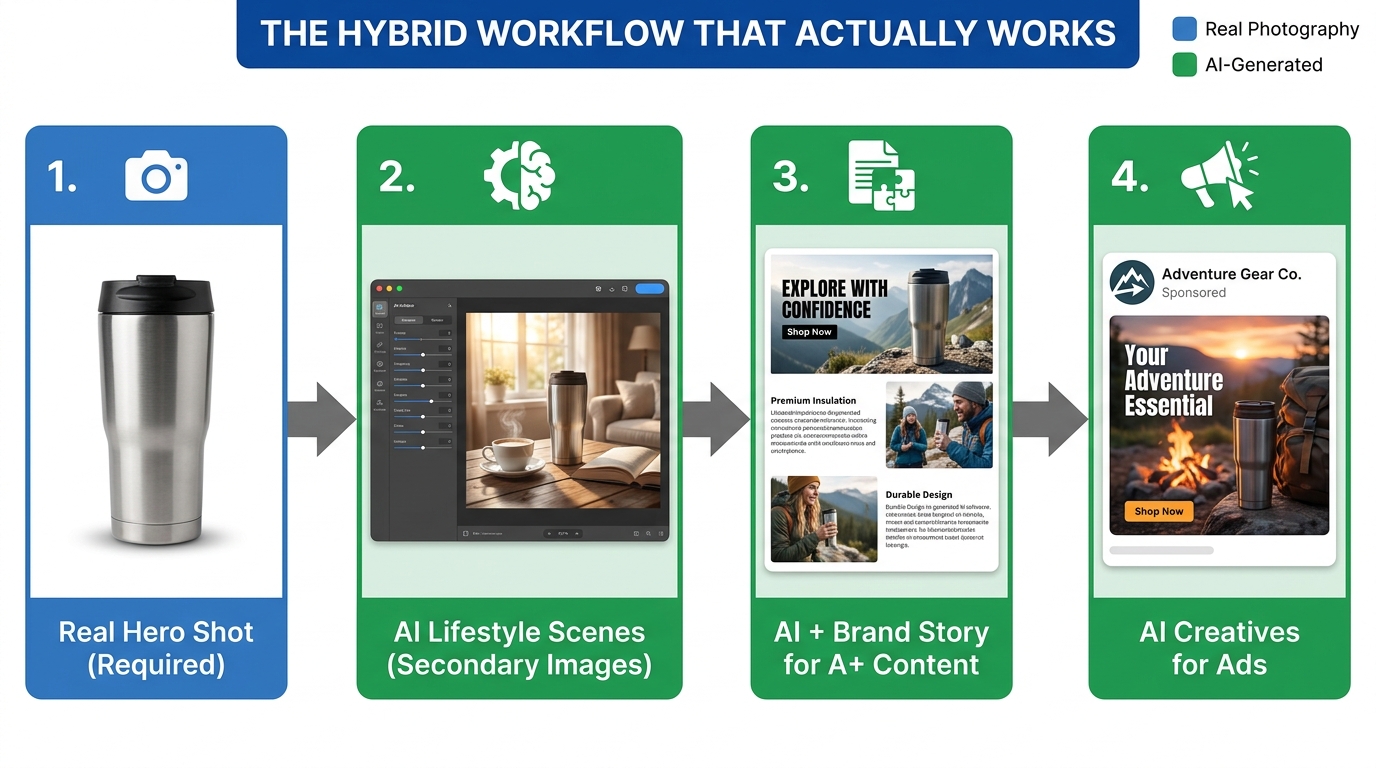
The sellers who are extracting genuine value from AI lifestyle photography in 2026 are not using it as an either/or replacement for traditional photography. They’re building structured hybrid workflows that assign each image type to the production method it’s best suited for.
Step 1: Protect the Hero Shot
Your main image is non-negotiable. Invest in a proper hero photograph: real product, white background, correct lighting, accurate color calibration. This image is your compliance anchor, your listing’s first impression, and the foundation that the rest of your image strategy builds on. If you’re on a tight budget, a well-lit white-background photo produced with a quality smartphone and basic photo editing is sufficient for compliance — it doesn’t need to be expensive, but it does need to be real.
Step 2: Use AI for Secondary Lifestyle Scenes — With QA Gates
Secondary images (slots 2–8) are where AI lifestyle generation delivers real value for appropriate categories. The workflow that works: upload a clean, color-accurate product photograph, generate multiple scene variants across different lifestyle contexts, conduct a structured quality review (color accuracy against reference, scale plausibility, edge quality, material accuracy), select the two or three strongest outputs, and publish as secondary images.
The QA gate is not optional. Sellers who skip structured quality review and publish raw AI outputs are the ones generating returns and suppression events. Build a simple checklist — color match, scale plausibility, edge quality, material render quality — and run every AI output through it before it touches a live listing.
Step 3: Scale A+ Content With AI Confidently
For A+ Content, AI-generated imagery is the most justified use case with the lowest risk profile. Brand story panels, feature illustration backgrounds, lifestyle module imagery — these are areas where AI output quality is more than sufficient, compliance risk is lower, and the production economics are most favorable. Use A+ Content deployment as your AI scaling engine: it’s where you can move fast, produce at volume, and see real results without the return-rate risk that comes from secondary listing image misrepresentation.
Step 4: Test AI Lifestyle Creatives in Ads First
Before committing AI lifestyle imagery to listing secondary slots, validate performance in Sponsored Brands campaigns first. Create a parallel creative set: your existing images versus AI-generated lifestyle alternatives. Run them against each other with equal budget allocation for two to three weeks. If the AI creative produces measurably higher CTR and ROAS, that’s your validation signal that the imagery is resonating — and it’s now a lower-risk candidate for secondary listing slots on the same products.
This test-first approach also builds internal data that helps you make category-by-category decisions rather than applying a blanket AI adoption policy across a diverse catalog where different product types will respond very differently.
Tool Selection Considerations
Amazon’s native Creative Studio is the default starting point for most sellers — it’s free, integrated into the ad console, and calibrated to Amazon’s own image standards. Its outputs are optimized for Sponsored Brands and Display formats specifically. For listing secondary images and A+ Content, third-party tools (including Pixelcut, Autophoto.ai, and similar platforms) often provide more fine-grained control over scene generation, but require more explicit compliance verification before use on live listings.
The practical guidance: use Amazon’s native tools for ad creative, where their integrated workflow eliminates friction. Use third-party tools for listing content, where you need more control over output quality and scene parameters — and apply your QA checklist rigorously before publishing.
The Competitive Reality: Who’s Getting Left Behind
The arrival of AI lifestyle photography as a mainstream production method on Amazon creates a new form of competitive risk that is different from the old version. Previously, the seller who couldn’t afford professional lifestyle photography was visually disadvantaged against the brand that could. The solution was clear: find budget, hire photographers, close the visual gap.
The 2026 version of this competitive dynamic is more nuanced. The sellers who get left behind aren’t necessarily those who lack resources — they’re those who misapply AI image generation in ways that create compliance, quality, or trust problems, or who simply fail to adopt it at all while competitors are using it to expand their advertising reach by a factor of five.
The Inaction Risk
Sellers who are waiting for AI lifestyle image tools to be “more proven” before adopting them are already two to three years behind where the tooling actually is. Amazon’s own data from Sponsored Brands campaigns is real and validated: lifestyle images improve CTR and ROAS measurably. The cost economics are not speculative — 80–95% cost reduction versus studio photography is documented across multiple independent analyses. Waiting for more certainty in this area is a decision to concede visual ground to competitors who are moving now.
The Overcorrection Risk
The opposite error — wholesale replacement of professional photography with AI generation across an entire catalog, including hero images and high-risk categories like apparel — introduces compliance, quality, and trust risks that can manifest as suppression events, return rate spikes, and negative review accumulation. The sellers who are winning with AI lifestyle photography are moving selectively: right categories, right image slots, right quality controls, right measurement framework.
Neither extreme is correct. The seller who does nothing is leaving real performance gains on the table. The seller who does everything without discipline is manufacturing a different set of problems. The competitive advantage belongs to the seller who understands the specific mechanics well enough to deploy selectively.
What This Means for Product Photographers
It would be incomplete to discuss the impact of AI lifestyle photography on Amazon without acknowledging its implications for the professional photographers whose business model was built around serving Amazon sellers.
The demand for hero image photography — real product, white background, color-accurate — is not going away. Amazon’s policy guarantees the hero shot remains a real-photography requirement, which means every serious Amazon seller still needs a skilled photographer for their primary images. The category of photographers most at risk is not the product photographer per se, but specifically the lifestyle and contextual photographer whose work was deployed in secondary images and ad creative.
What the market for professional photography on Amazon is shifting toward is differentiation: the quality ceiling for lifestyle photography that AI cannot reach. Complex multi-product scenes with interactive elements, authentic human lifestyle moments that require real talent and real models, brand story photography that carries narrative depth and emotional authenticity — these are areas where professional photographers retain a clear advantage that AI tools cannot approximate.
The volume play — generating 50 background-replacement lifestyle images for a commodity catalog — is increasingly where AI wins. The differentiation play — creating iconic, brand-defining imagery for a premium product launch — is still firmly in human territory. Photographers who understand where that line sits and position their services above it are navigating this transition more successfully than those still competing on production speed and cost in categories AI has already commoditized.
Conclusion: Selective Adoption Beats Wholesale Replacement
Amazon’s 2026 policy shift on AI-generated lifestyle photography didn’t rewrite the rules of visual commerce on the platform — it clarified them in ways that favor sellers who understand the nuances. The core principle is unchanged: images must accurately represent the product. The mechanism for producing those images has expanded dramatically.
The sellers who win in this environment share a common characteristic: they’re making decisions about AI lifestyle photography based on their specific product category, their specific image slots, and their specific customer’s tolerance for approximation versus exactness. They’re not applying a blanket “use AI everywhere” or “avoid AI entirely” policy. They’re using AI in advertising creative — where the data supporting it is clear and the risk is low. They’re using AI in secondary slots for appropriate categories — home goods, kitchen, pet, fitness — with structured quality controls. They’re deploying AI in A+ Content across their catalog because the risk-reward ratio is unambiguous. And they’re maintaining real photography for hero images because that’s what Amazon’s policy requires and what trust demands.
Actionable Takeaways
- Audit your catalog by category first. Before generating a single AI lifestyle image, map your ASINs to their risk profile. High-confidence AI categories (home décor, kitchen, pet, fitness) versus high-risk categories (apparel, jewelry, electronics with complex surfaces). Apply AI selectively.
- Start in ads, not listings. Use Amazon Creative Studio to test AI lifestyle creatives in Sponsored Brands campaigns before touching listing secondary images. Let ROAS and CTR data tell you whether the imagery is resonating before committing it to the listing.
- Build a QA checklist for AI outputs. Color match, scale accuracy, edge quality, material render accuracy, and compliance check against Amazon’s secondary image rules. Every AI output should pass this checklist before publishing.
- Document your AI generation workflow. Record which images were AI-generated, which tools were used, and when they were published. This is compliance insurance against enforcement scenarios that are plausible within the next 12–18 months.
- Use A+ Content as your AI scaling engine. It’s the highest-value, lowest-risk deployment for AI lifestyle imagery. If you’re behind on A+ Content coverage, AI-generated scenes are the most efficient way to close that gap across your catalog.
- Protect your hero shot. Never compromise on main image quality and compliance. A suppressed listing from a non-compliant hero image costs far more than any savings from skipping professional photography on that slot.
AI lifestyle photography isn’t a shortcut — it’s a production capability that requires as much strategic thought as any other major change to your listing optimization process. The sellers who approach it that way are building a durable competitive advantage. Those who treat it as a cost-cutting shortcut are finding out why the shortcut doesn’t always lead where they expected.