Tag: ChatGPT Work

  • ChatGPT Work and Claude Managed Agents: How Two Competing Visions of the AI Coworker Are Playing Out in Production

    ChatGPT Work and Claude Managed Agents: How Two Competing Visions of the AI Coworker Are Playing Out in Production

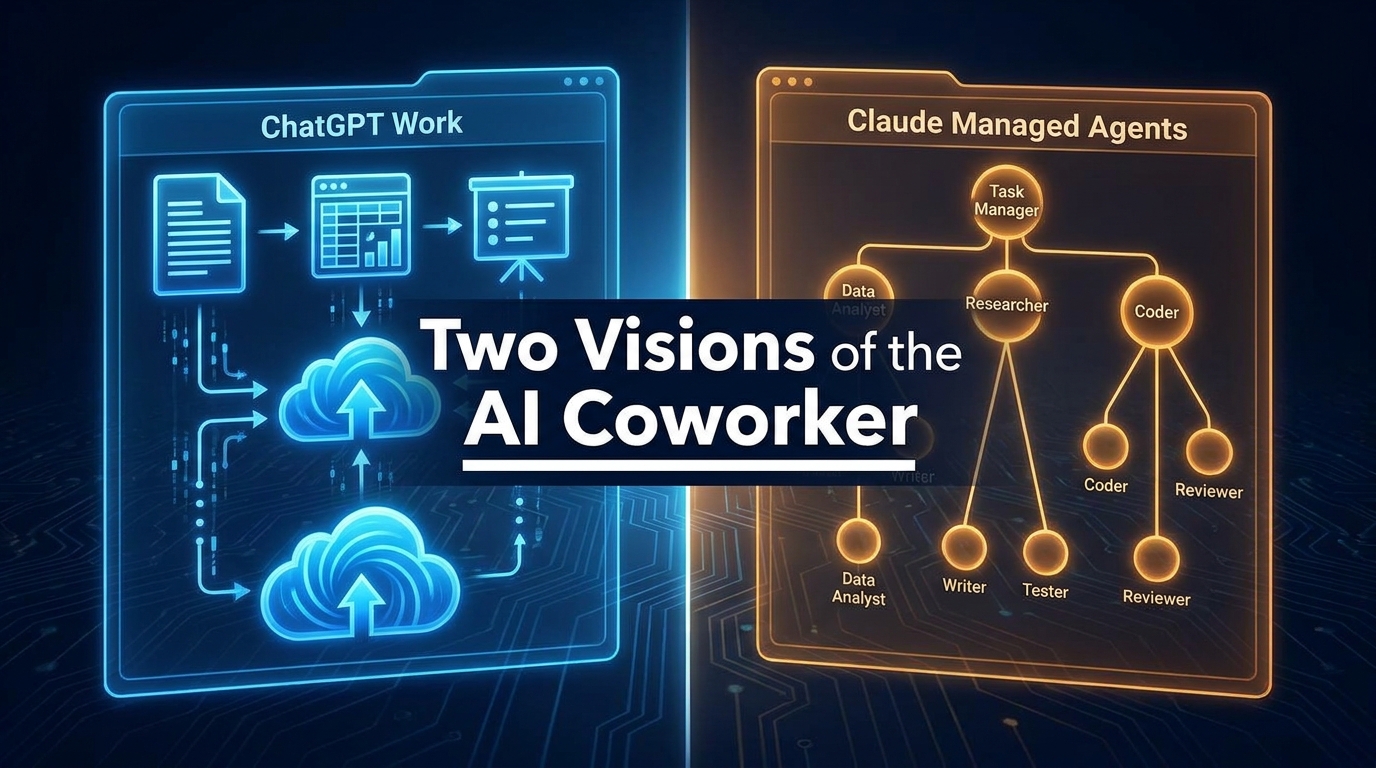
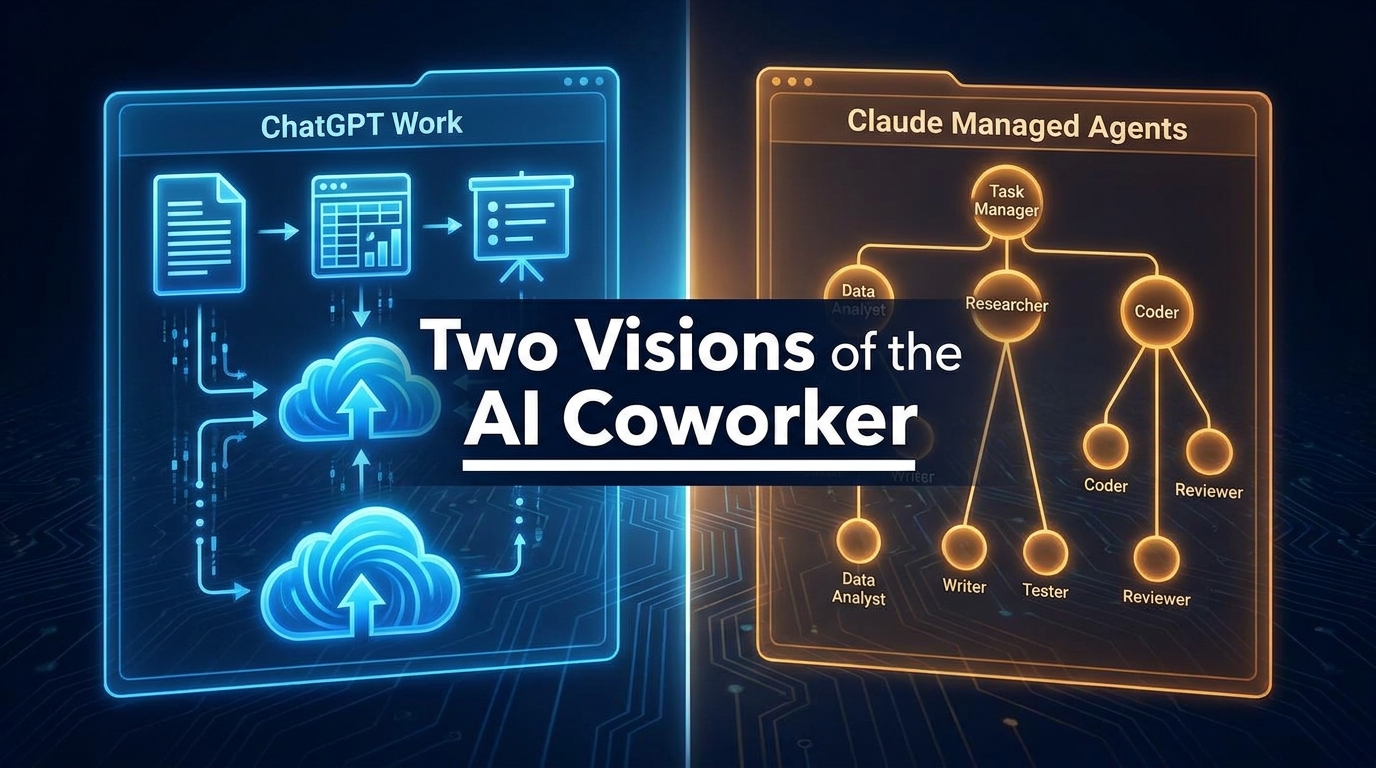
    ChatGPT Work vs Claude Managed Agents: two competing visions of the AI coworker in 2026

    When OpenAI launched ChatGPT Work on July 9, 2026, it crystallised a question that enterprise teams had been quietly wrestling with for months: what does it actually mean for an AI to do your work, rather than just assist with it?

    The distinction sounds semantic. It isn’t. “Assistance” means a human-in-the-loop at every decision. “Work” means the agent takes a goal, figures out the steps, gathers the data from across your connected apps, and hands you a finished output — a report, a spreadsheet, a slide deck, a web app. The human re-enters at the end to review, not at every juncture to steer.

    That shift from assistant to executor is what both OpenAI and Anthropic have been racing toward in 2026. And while their public messaging occasionally sounds interchangeable — “autonomous agents,” “orchestrated workflows,” “AI coworkers” — the two platforms are making fundamentally different architectural bets. ChatGPT Work is a cloud-native, cross-SaaS output machine. Claude Managed Agents are evolving into a hosted control plane for memory, evaluation, and multi-agent delegation.

    Neither is universally better. But they are genuinely different, and choosing between them (or combining them) without understanding those differences is how organisations end up with expensive pilots that don’t survive contact with real workflows.

    This article unpacks both platforms in detail — what they are, how they’re built, where the production evidence is strongest, and what your team needs to get right before trusting either with consequential work.

    What ChatGPT Work Actually Is (And What It Isn’t)

    ChatGPT Work is not a new model. It is a new mode — a third interface surface inside ChatGPT alongside Chat and Codex, powered by GPT-5.6 and designed specifically for outcome-driven execution rather than turn-by-turn conversation.

    The operative word in OpenAI’s positioning is “finished.” You give Work a goal — “prepare a competitive analysis of our three main rivals using our internal sales data, our CRM, and recent news sources” — and it comes back with a finished artifact: a formatted document, a populated spreadsheet, a set of slides, or a small web application. It is not asking you which rival to start with. It is not checking in after every paragraph. It is doing the work.

    How the App Connection Layer Works

    The engine behind this is ChatGPT’s connector ecosystem, which by mid-2026 had extended to Microsoft 365, Google Workspace (Drive, Docs, Sheets, Gmail, Calendar), Slack, Notion, GitHub, and a growing set of third-party integrations. Work pulls from these sources, synthesises across them, and writes back to them as appropriate.

    That cross-app reach is what separates Work from a simple document generator. A typical multi-step task might involve pulling a brief from Notion, finding relevant past research in Google Drive, cross-referencing recent email threads in Gmail, running analysis code via Codex, and assembling the output into a Google Doc — all without a human directing each handoff.

    Workspace Agents: The Team-Level Layer

    Alongside Work, OpenAI simultaneously moved Workspace Agents to general availability in Business, Enterprise, and Edu plans. Workspace Agents are reusable, shareable agents that an admin configures once and teams can invoke repeatedly. Where Work is user-level and ad hoc, Workspace Agents are org-level and repeatable.

    Think of the difference this way: a user spinning up Work to draft a one-off competitive brief is using Work. A sales team that has a standing “weekly account intelligence” agent that runs every Monday morning, pulls from the CRM and LinkedIn, and drops a formatted summary into Slack — that is a Workspace Agent.

    The two tiers are complementary, and most enterprise deployments will end up using both: Work for complex, varied, individual tasks, and Workspace Agents for high-frequency, standardised workflow automation.

    What It Isn’t

    ChatGPT Work is not a persistent-memory system in the Anthropic sense (more on that shortly). It does not have a native mechanism for an agent to review its own past sessions and get smarter over time. It does not natively support hierarchical multi-agent delegation — a coordinator agent spinning up specialist subagents for different parts of a complex task. And it is not currently the strongest tool for heavily regulated, compliance-sensitive environments where auditability of each reasoning step matters as much as the quality of the output.
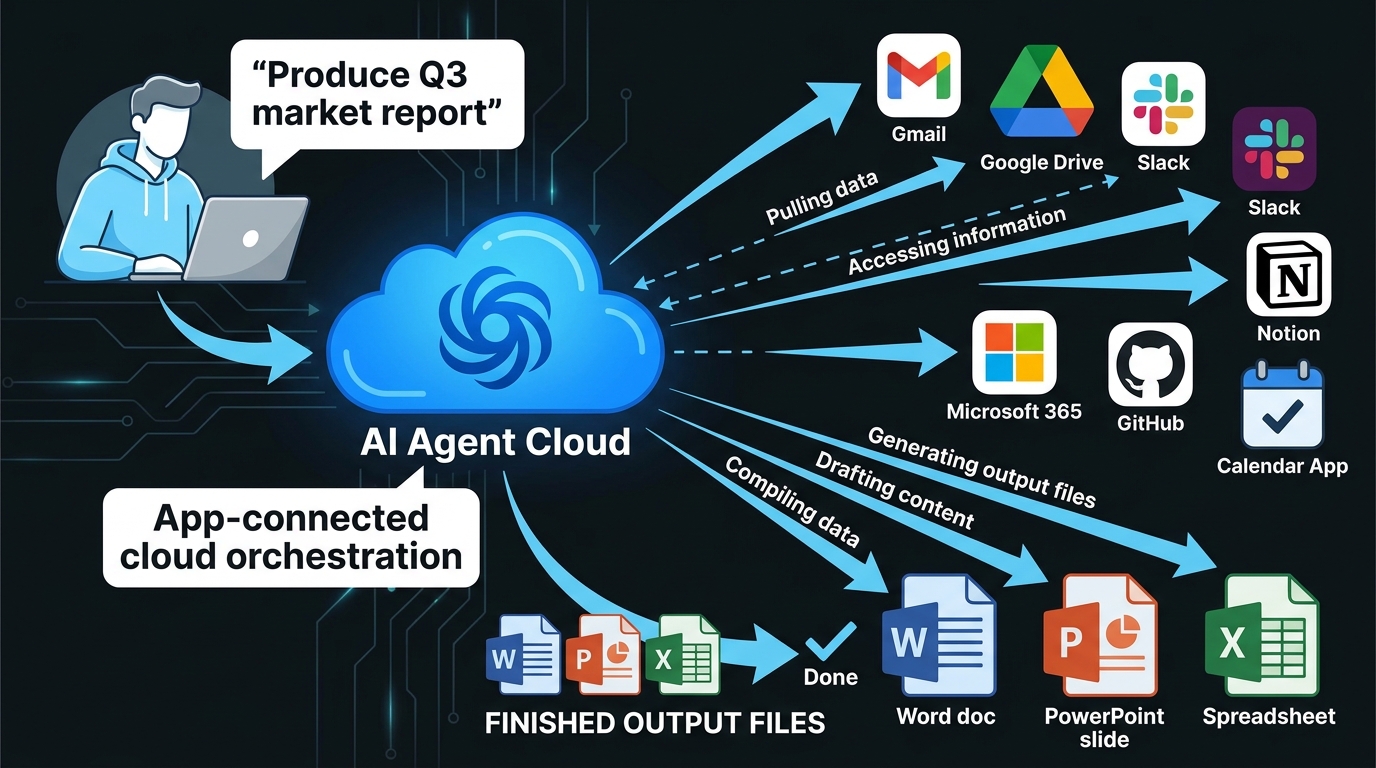
    ChatGPT Work architecture: cloud-native app-connected orchestration across SaaS tools

    Claude Managed Agents: A Different Architectural Bet

    Anthropic’s approach to managed agents reflects a different theory of what makes AI work at enterprise scale. Where OpenAI is betting on breadth of integration and output quality, Anthropic is betting on what you might call agent continuity — the idea that the most valuable thing a managed agent can develop is memory, evaluation capability, and the ability to improve through repetition.

    Claude Managed Agents as they stand in mid-2026 are a bundle of four distinct capabilities: a hosted execution runtime, persistent cross-session memory, an outcomes-based evaluation layer, and multi-agent orchestration with subagent delegation. Each of these deserves unpacking separately because they solve different problems.

    The Hosted Runtime

    The foundation is a managed execution environment that handles the infrastructure complexity of running long-lived agents — state persistence, retry logic, timeout handling, tool-call tracking — so development teams do not have to build that themselves. This is what “managed” actually means in the product name. You are not deploying an agent on your own servers; you are running it on Anthropic’s control plane, with the platform handling durability and observability.

    For enterprise teams that previously had to stitch together LangChain, a custom memory store, a monitoring layer, and their own orchestration logic, this is a significant consolidation. The separate vendors that used to sell those infrastructure layers individually are now competing against a bundled platform — a dynamic that is reshaping the agent infrastructure market in real time.

    Persistent Memory: What Changed in April 2026

    On April 23, 2026, Anthropic moved persistent memory for Managed Agents into public beta. The feature does something that sounds simple but has substantial operational implications: it gives agents a cross-session state layer, meaning an agent can store structured memories from one session and access them in the next.

    In practice, this means an agent working on a long-running project — say, a multi-week legal document review or a rolling software build — does not start from scratch each session. It carries forward what it learned about the codebase, the client’s preferences, the recurring error types, the output standards that passed review. The agent gets demonstrably better at the specific job it is doing, without requiring a human to re-brief it every time.

    The production results attached to this feature are striking. Rakuten’s deployment of Claude Managed Agents reported 97% fewer first-pass critical errors compared to baseline — a number that becomes plausible once you understand that persistent memory eliminates entire categories of repeated mistakes. Wisedocs, which uses Claude agents for medical document processing, reported a 30% increase in errors caught and a 50% reduction in audit time.

    Dreaming, Outcomes, and the Self-Improving Agent

    The most conceptually ambitious feature in Claude’s managed agent stack is what Anthropic calls Dreaming — and it deserves more attention than the AI press has given it.

    What Dreaming Actually Does

    Dreaming is a scheduled, asynchronous background process that runs between agent sessions. After a session concludes, Dreaming reviews the session logs and the existing memory store, extracts recurring patterns (common error types, successful reasoning paths, preferred output formats), and rewrites memory to reflect those learnings before the next session begins.

    The metaphor to the human experience of sleep-consolidating memories is intentional and reasonably apt. The agent is not learning during the task. It is processing what happened after the task, in a dedicated consolidation cycle, and arriving at the next session with a refined understanding of how to do the work better.

    At launch, Dreaming is in research preview, meaning it is available to a subset of developers and enterprise accounts experimenting with it under Anthropic supervision. But early production data is hard to ignore: Harvey, the legal-AI platform that uses Claude Managed Agents for complex document workflows, reported a roughly 6× lift in agent task completion rates after enabling Dreaming. That is not a marginal improvement. It is the difference between a system that finishes complex multi-step tasks reliably and one that stalls out.

    Outcomes: Measuring Whether Agents Are Actually Working

    Alongside persistent memory, Anthropic introduced an Outcomes evaluation layer — a rubric-driven scoring system that lets teams define what “good” looks like for a given agent workflow and then measure whether the agent is consistently hitting that bar.

    This addresses one of the most persistent problems in enterprise AI deployment: the gap between “it seems to be working in testing” and “we can prove it is working in production against measurable criteria.” Outcomes allows teams to specify success criteria in natural language (or structured rubrics), run the agent against those criteria at scale, and surface systematic failure patterns.

    The business value is not just quality assurance — it is the ability to have a defensible answer when a compliance team, a board, or a regulator asks how you know the agent is doing what you say it is doing. That kind of measurability is increasingly non-negotiable in regulated industries.
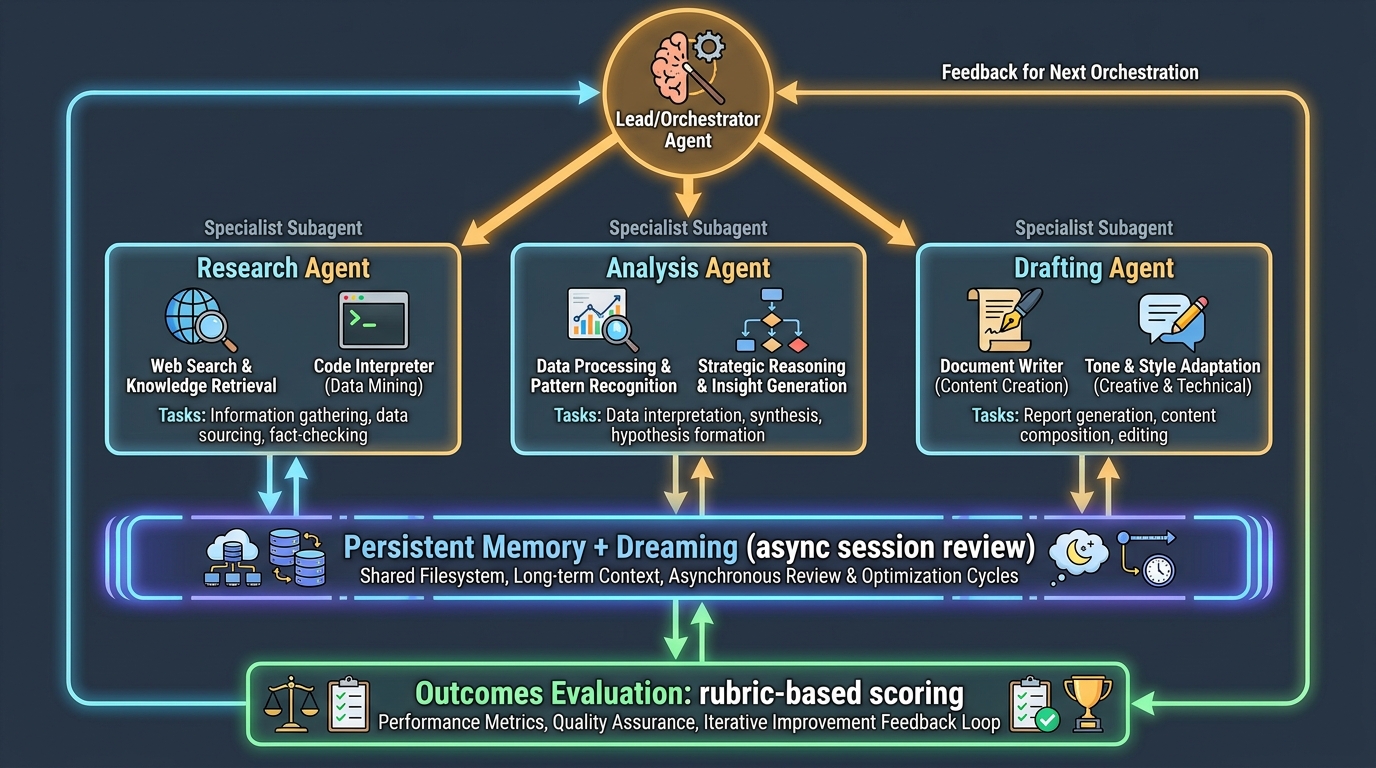
    Claude Managed Agents multi-agent orchestration: lead agent coordinating specialist subagents with persistent memory and Dreaming

    Multi-Agent Orchestration: How Lead Agents and Subagents Actually Work

    The most architecturally significant development in Claude’s platform in 2026 is multi-agent orchestration, which moved to public beta at Anthropic’s Code with Claude developer event in May 2026. This is not a chatbot feature or a UX improvement — it is a fundamental change to how Claude-based systems decompose and execute complex work.

    The Lead Agent / Subagent Pattern

    In Claude’s multi-agent architecture, a lead (or orchestrator) agent receives a high-level task and decomposes it into subtasks, each of which is delegated to a specialist subagent. Each subagent has its own model configuration, its own system prompt, its own tool access, and its own context window. The lead agent coordinates their work, aggregates their outputs, and assembles the final result.

    The practical implication is that complex tasks can now be parallelised in ways that a single-context agent cannot manage. Consider a workflow like “conduct a comprehensive due diligence report on a target company before an acquisition.” A single agent would work through this sequentially, hit context limits, and potentially lose coherence across a long chain of reasoning. A multi-agent system running parallel subagents — one on financial history, one on legal exposure, one on market position, one on regulatory compliance — can work breadth-first and then integrate findings, completing the same work faster and more completely.

    Shared Filesystem and Coordination

    The subagents in Claude’s orchestration system operate on a shared filesystem, which is the coordination mechanism that allows them to hand off information without routing everything through the lead agent’s context window. One subagent’s research output becomes another subagent’s input, without the lead agent needing to hold all of it in memory simultaneously.

    This design choice reflects an architectural philosophy: Claude’s multi-agent system is built around breadth-first decomposition, with a shared state layer for inter-agent communication. It is a different approach to multi-agent coordination than systems that route all communication through a central context or message bus, and it has real implications for the kinds of tasks it handles well — particularly tasks where the scope is wide and the subtasks are relatively independent.

    Fountain: A Real-World Multi-Agent Case Study

    Anthropic’s 2026 Agentic Coding Trends Report highlighted Fountain, a frontline workforce management platform, as a flagship example of multi-agent orchestration in production. Fountain’s system uses a hierarchical agent architecture to handle complex hiring workflow automation — ingesting applicant data, running screening evaluations against configurable criteria, routing decisions to appropriate reviewers, and generating structured candidate summaries for hiring managers.

    The key insight from Fountain’s deployment is not just that agents automated tasks, but that the multi-agent structure allowed them to handle scale and variance simultaneously. A single monolithic agent would struggle with the volume and diversity of inputs. The orchestrated system, with specialist subagents for different workflow stages, handled both without the quality degradation that single-context systems typically show under load.

    Governance, Admin Controls, and the Approval Gate Problem

    Any serious discussion of managed agents in enterprise contexts has to grapple with governance — not as a compliance checkbox, but as a genuine operational challenge. When an AI agent can take actions across your connected systems (sending emails, creating calendar entries, writing to databases, submitting code), the question of what it is allowed to do without human review becomes existential for risk teams.

    ChatGPT’s Governance Model

    OpenAI has built a suite of admin controls into ChatGPT Enterprise and Business that operate at the organisation level. Admins can configure which apps a Workspace Agent can access, what data it can read versus write, which users can create or invoke agents, and what actions require explicit approval before execution.

    The emerging best practice in ChatGPT Work deployments is to treat each agent as a distinct non-human identity — not as an extension of the user who created it. This distinction matters for access control (agents get scoped permissions, not inherited user permissions), for audit trails (each agent action is logged under its own identity, not attributed to the user), and for compliance (you can demonstrate what the agent did and why, independently of any human actor).

    The approval gate mechanism allows admins to designate high-risk action categories that require explicit human sign-off before execution. Sending a mass email to customers, submitting a PR to a production codebase, or modifying a pricing record in the CRM — these can be configured to pause and present for human review rather than executing autonomously. The agent’s chain of reasoning and proposed action is surfaced to the reviewer, who can approve, modify, or reject before anything happens.

    Claude’s Governance Architecture

    Claude Managed Agents take a somewhat different approach to governance, shaped in part by Anthropic’s Constitutional AI research lineage. The platform has built-in policy enforcement at the agent level — you configure what a given agent is allowed to do at the system-prompt level, and those constraints are evaluated against Anthropic’s own safety policies before execution.

    The Outcomes evaluation layer doubles as a governance tool: teams can define rubrics that explicitly test for policy compliance, harmful outputs, or inappropriate actions, and surface violations systematically. This is particularly relevant for regulated industries where the compliance team needs ongoing evidence that the agent is behaving within defined boundaries — not just an assurance from the AI team that it was set up correctly.

    Claude Opus 4.8, the model underpinning the most capable Claude agents as of mid-2026, achieved 88.8% task completion and only 2.5% unintended harmful actions on Anthropic’s WorkBench benchmark in June 2026. Those numbers represent meaningful progress on the safety-capability frontier, though “2.5% unintended harmful actions at scale” still requires serious governance infrastructure to be acceptable in high-stakes environments.
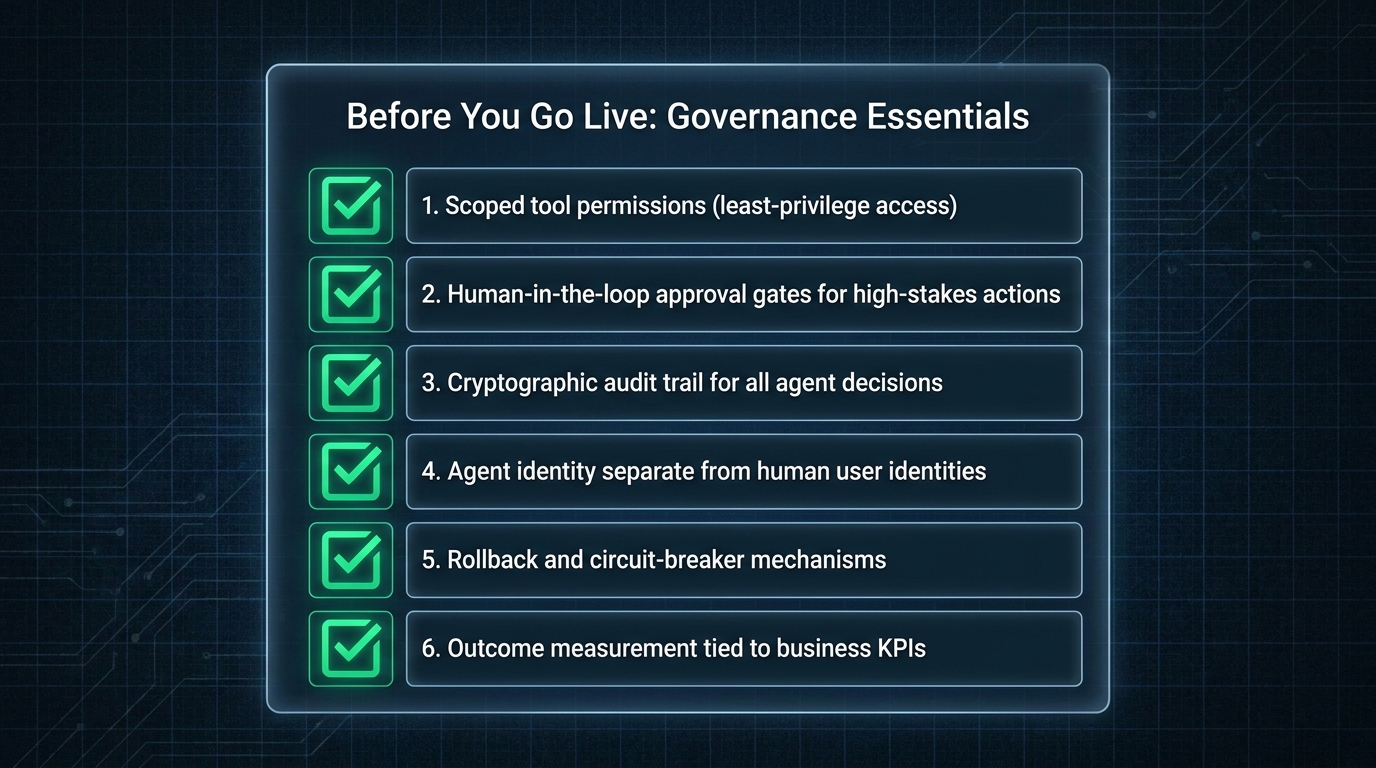
    Enterprise governance checklist for AI managed agents: six essentials before going live

    The Pricing Reality Check: Credits, Seats, and What You’ll Actually Pay

    One of the more significant mid-2026 developments in this space is the shift from flat per-seat pricing toward credit-based, token-metered pricing for agent workloads — a change with real implications for how enterprises budget AI at scale.

    ChatGPT Work’s Credit Model

    Workspace Agents moved to credit-based pricing on May 6, 2026. The architecture is a hybrid: organisations continue to pay per-seat subscriptions for ChatGPT Business or Enterprise (broadly in the $25–$75 per user per month range), but agent-executed workloads draw down from a shared credit pool, with additional credits purchasable as usage scales.

    Codex, which powers Work’s code generation and code-execution capabilities, is now available as a pay-as-you-go seat with no fixed monthly fee — you pay purely on token consumption. This makes it economically viable to add Codex access for a handful of power users or specific automations without buying full Enterprise seats for every developer.

    OpenAI has also made significant cuts to API/credit costs, with GPT-5.6 Luna and Terra pricing reduced by up to 80% from initial rates. The effective result is that the cost per “unit of AI work” has dropped substantially since early 2026, which is materially improving the ROI calculus for enterprise deployments moving from pilots to at-scale production.

    Claude’s Pricing Architecture

    Claude Managed Agents pricing is more closely tied to API token consumption, with managed infrastructure costs layered on top. The persistent memory and Dreaming features carry their own cost structures, as they require storage and compute for the background consolidation processes.

    The practical consideration for teams evaluating cost is not the headline per-token rate but the total cost of ownership versus building equivalent infrastructure independently. Before Managed Agents, a team that wanted persistent memory, evaluation, and orchestration for Claude-based workflows had to build and maintain those systems themselves — or buy them from separate vendors. The bundled platform changes that build-vs-buy equation significantly.

    The ROI Signal From Early Adopters

    Early enterprise adopters of both platforms are reporting productivity gains in the 10–20% range for broad workforce deployment, with significantly higher numbers in specific high-frequency workflow automations. The RingCentral case — where ChatGPT Work’s automation of a monthly launch-check workflow allowed one person to effectively support approximately 50 product managers — represents the high end of what targeted automation can achieve when the workflow is well-defined and the agent is deeply connected to relevant data sources.

    The pattern that emerges from the production data is consistent: the ROI is highest where the workflow is repetitive, the inputs are structured, and the agent has access to all the context it needs. The ROI is lowest where the workflow is genuinely novel each time, the inputs are ambiguous, or the agent has to work around data it cannot access.

    Production Case Studies: What the Evidence Actually Shows

    Rather than relying on vendor claims, it is worth examining the documented production results from actual deployments of both platforms — along with what those results reveal about the conditions under which each platform performs best.
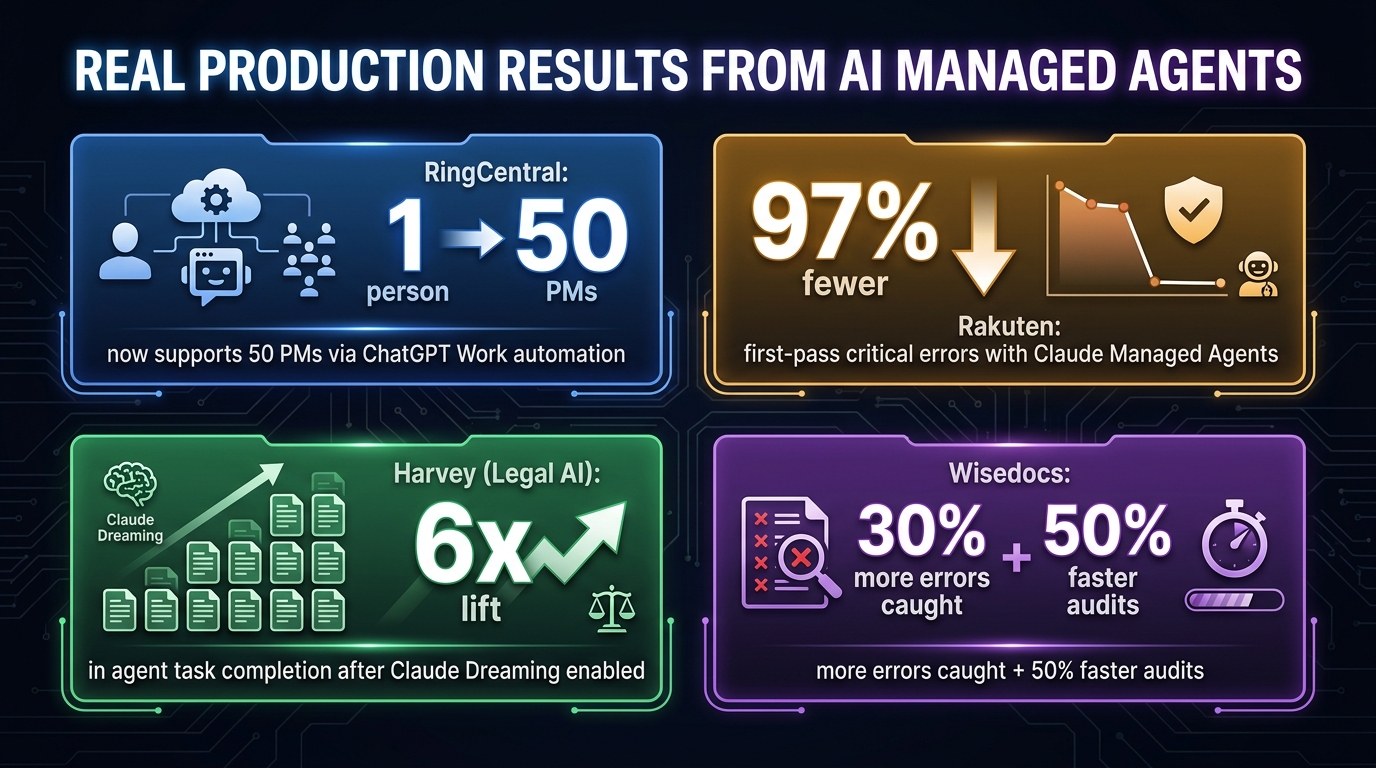
    Production results from AI managed agents: RingCentral, Rakuten, Harvey, and Wisedocs results in 2026

    RingCentral: Scaling Across Product Teams With ChatGPT Work

    RingCentral’s R&D Efficiency team deployed ChatGPT Work to automate a monthly launch readiness workflow that previously required significant manual effort across multiple product and go-to-market teams. The agent was configured to pull launch criteria from Notion, cross-reference product status in the team’s project management system, surface blockers from Slack threads, and assemble a formatted readiness report.

    The headline result — one person supporting approximately 50 product managers through automated workflow — is a function of Work’s ability to operate across connected apps at scale, without requiring the human coordinator to touch each instance. The human’s role shifted from assembling information to reviewing the assembled output and making judgment calls on the blockers the agent surfaced.

    The lesson from RingCentral is that ChatGPT Work’s value compounds when the workflow involves aggregating information from multiple heterogeneous sources into a structured output. That is precisely the task profile where the cloud-native app connector architecture pays off.

    Rakuten: Error Reduction With Claude Managed Agents

    Rakuten’s Claude Managed Agents deployment was structured around code review and quality assurance workflows. Using persistent memory and the Outcomes evaluation layer, the agent retained context about Rakuten’s codebase standards, common error patterns in their environment, and the specific rubrics their engineering team used for code review.

    The result: 97% fewer first-pass critical errors compared to pre-agent baseline, alongside a 27% reduction in cost and 34% reduction in latency. These numbers become interpretable when you understand the mechanism — the agent was not getting smarter in an abstract sense; it was retaining specific institutional knowledge (this codebase, these standards, these common failure modes) that a stateless agent would have to re-derive from scratch in every session.

    The lesson from Rakuten is that Claude’s persistent memory architecture delivers its biggest gains in workflows where institutional context accumulates over time. Code review is an ideal fit: the standards are relatively stable, the error patterns are recurring, and the value of “remembering what we learned last time” is concrete and measurable.

    Harvey: Legal AI With Dreaming Enabled

    Harvey, which uses Claude Managed Agents for complex legal drafting and document review workflows, is the most dramatic case study for the Dreaming feature specifically. Harvey’s agents work on long-horizon legal tasks — multi-document analysis, drafting complex agreements, reviewing regulatory submissions — where task completion rate (finishing the task without stalling or degrading) is the primary quality signal.

    After enabling Dreaming, Harvey reported a roughly 6× increase in agent task completion rates. The mechanism is straightforward in retrospect: legal workflows have many recurring patterns (contract clauses, citation formats, regulatory requirements specific to a jurisdiction), and an agent that has reviewed its past sessions and consolidated those patterns arrives at each new task with a significantly richer foundation for handling its specific challenges.

    Wisedocs: Medical Document Processing

    Wisedocs processes medical documentation at scale — a domain where both accuracy and auditability are non-negotiable. Their Claude Managed Agents deployment combined persistent memory with the Outcomes evaluation layer, with rubrics calibrated to medical documentation standards and compliance requirements.

    Results: 30% more errors caught (the agent learned from accumulated examples of what “correct” looks like in their specific document types) and 50% faster audits (because the Outcomes layer provides structured, queryable evidence of the agent’s decisions, rather than requiring auditors to review raw outputs). The auditability improvement is particularly notable — it speaks directly to the compliance value of the Outcomes architecture, not just the quality value.

    Where Each Platform Clearly Wins — And Where It Struggles

    Based on the architecture, the pricing model, and the production evidence, some clear patterns emerge about where each platform outperforms the other. Understanding these is essential for teams making build decisions in mid-to-late 2026.
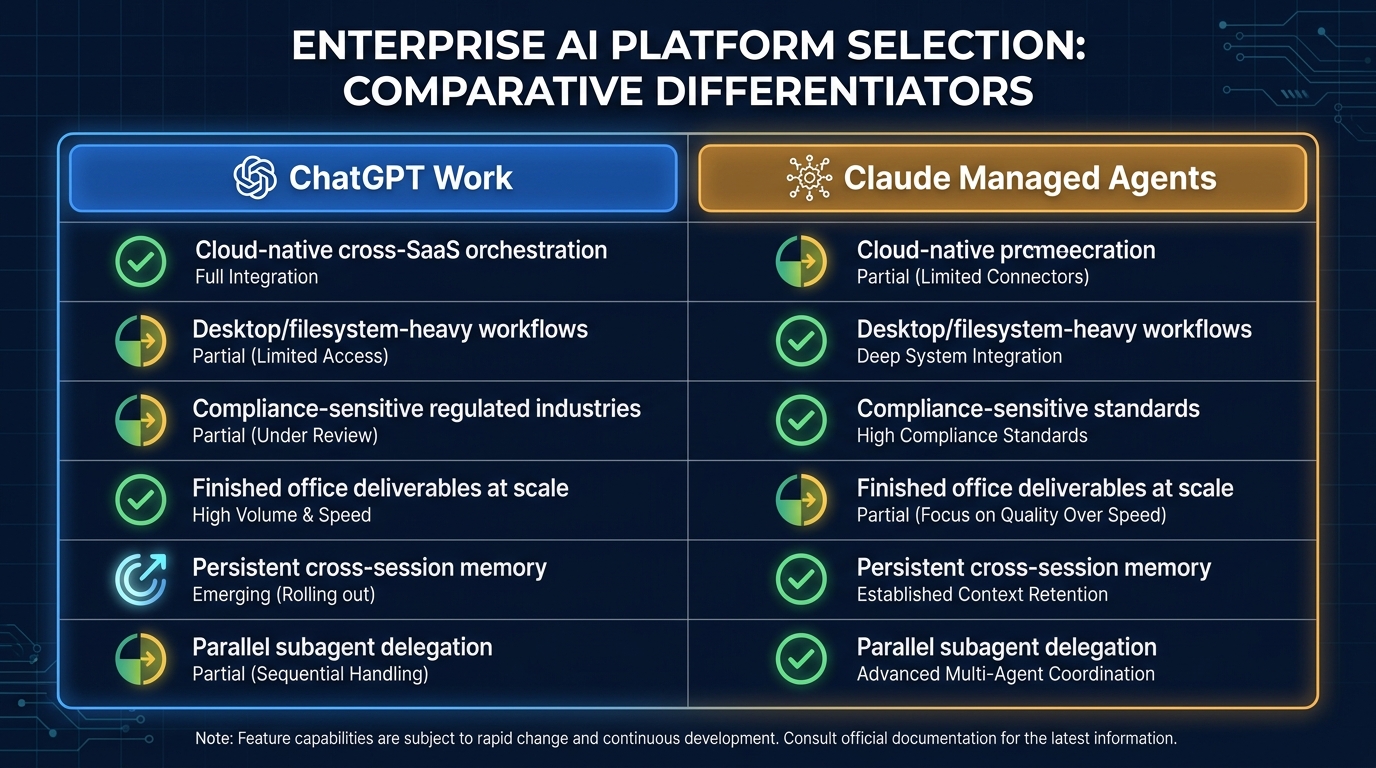
    ChatGPT Work vs Claude Managed Agents: enterprise capability comparison by use case

    ChatGPT Work: Where It Wins

    Cloud-native, cross-SaaS output workflows. If the task requires pulling from multiple cloud apps and producing a finished office deliverable — document, presentation, spreadsheet, web app — ChatGPT Work’s connector architecture is the strongest option available in 2026. No other platform matches its breadth of native integrations with the leading SaaS productivity tools.

    Teams already embedded in the Microsoft 365 or Google Workspace ecosystems. Work’s connectors are deep and bidirectional, meaning it does not just read from these systems — it can write back to them, update records, create documents in the right folders, and trigger downstream workflows. The friction of working within an existing SaaS stack is minimal.

    Broad, varied task portfolios. For teams where no two tasks look the same — marketing teams that move between competitive analysis, campaign briefs, and audience research — Work’s ad hoc, outcome-driven model fits better than a memory-augmented specialist agent.

    ChatGPT Work: Where It Struggles

    Highly regulated industries with strict auditability requirements. Work’s outputs are excellent; Work’s reasoning trails are less granular than Claude’s Outcomes evaluation layer. If a compliance team needs to audit why the agent made a specific decision, not just what it produced, the current ChatGPT Work architecture is less equipped to answer that question.

    Long-running, repetitive workflows where institutional learning matters. Without native persistent memory in the Claude sense, Work treats each task as largely independent. For workflows where the agent should get measurably better over time at the specific job, that is a meaningful limitation.

    Claude Managed Agents: Where It Wins

    Repetitive, domain-specific workflows where memory compounds. Code review, legal document processing, medical records management, financial analysis — anywhere the agent is doing essentially the same type of work repeatedly, with institutional knowledge that accumulates — Claude’s persistent memory architecture delivers outsized gains.

    Regulated industries where auditability is a first-order requirement. The Outcomes evaluation layer, combined with the structured logs from Managed Agents, provides the kind of documented evidence trail that compliance teams in healthcare, financial services, and legal services need.

    Complex tasks that benefit from parallel breadth-first decomposition. The multi-agent orchestration architecture, with specialist subagents operating on a shared filesystem, outperforms single-context approaches for tasks that are wide in scope and have relatively independent subtask dimensions.

    Claude Managed Agents: Where It Struggles

    Cross-SaaS connector breadth. Claude’s integration ecosystem is narrower than ChatGPT Work’s, particularly for cloud-native productivity app workflows. Teams that need deep, bidirectional integration with the full Google or Microsoft stack will find Work better positioned today.

    Ad hoc, general-purpose task variety. Claude Managed Agents shine on specific, repeatable workflows. For the unpredictable breadth of requests that a general knowledge-worker brings to an AI tool, the overhead of Managed Agent configuration adds friction that Work’s more free-form approach avoids.

    What Operators Need to Actually Get Right Before Going Live

    Both platforms have moved past the “is this real?” stage of enterprise adoption. The question in mid-2026 is not whether managed agents can do consequential work — the production evidence confirms they can. The question is what the organisational and technical prerequisites are for that work to be trustworthy and sustainable.

    Define the Agent’s Identity Before You Define Its Tasks

    The most consistent recommendation from enterprise teams that have deployed either platform successfully is to treat each agent as a distinct non-human identity, not as an extension of a user or a power tool. This matters for several reasons.

    First, it determines access control. Agents should have scoped, least-privilege permissions — access to exactly the data and tools they need for their specific function, and nothing more. Inheriting broad user permissions from the account that created the agent is a governance anti-pattern that most teams discover the hard way.

    Second, it determines accountability. When an agent takes an action — sends an email, modifies a record, submits code — that action needs to be attributable to the agent identity, not to a human user. This is what makes audit trails defensible: you can reconstruct exactly what the agent did and when, separate from any human actor’s activity log.

    Build Approval Gates Around Action Risk, Not Action Frequency

    A common mistake in early agent deployments is configuring approval gates around action frequency — requiring human review of every nth action, or limiting agents to a fixed number of actions per session. This creates approval fatigue without actually catching the high-risk actions that matter.

    The more effective pattern is to classify actions by risk level and require approval for the high-risk category regardless of frequency. Sending a read receipt is low risk. Sending a mass external communication is high risk. Modifying a read-only record in a compliance system is high risk. Approving a customer refund above a threshold is high risk. Build your approval gates around the risk taxonomy, not the volume.

    Instrument for Failure Modes, Not Just Successes

    The standard approach to evaluating AI outputs — reviewing what the agent produced and deciding whether it is good — does not scale to production agent deployments. You cannot manually review every output when the agent is running thousands of tasks per week.

    What scales is instrumenting for specific, known failure modes. Define the ways the agent could fail that would matter most — producing outputs with factual errors in a regulated context, taking actions outside its scoped permissions, stalling on a task that should complete — and build automated checks for those failure modes. The Claude Outcomes layer is specifically designed to support this; ChatGPT Work’s admin analytics provide aggregate visibility that can support similar monitoring with appropriate instrumentation.

    Run a Shadow Period Before Autonomous Execution

    Before giving any managed agent autonomous execution rights, run it in “shadow mode” — configured to produce its planned actions for human review, without actually executing them. This gives you a production-quality view of what the agent would do in real conditions, without any of the real consequences.

    Most teams that skip this step report a predictable experience: the agent performs well on the tasks they tested, and then encounters an edge case they did not anticipate, and does something plausible but wrong. Shadow periods expose the edge cases before they have consequences.

    Tie Evaluation Criteria to Business Outcomes, Not AI Quality Signals

    The most common evaluation mistake is optimising for AI quality metrics — BLEU scores, human preference ratings, benchmark performance — rather than business outcomes. A document that scores highly on a generic quality rubric may still be wrong in the specific context of your business, your compliance requirements, or your customer relationship.

    Define success criteria in terms of the business outcome you are trying to achieve, then work backwards to what the agent output needs to look like to achieve it. Rakuten’s rubrics were calibrated to their specific codebase standards. Wisedocs’s rubrics were calibrated to their specific documentation compliance requirements. That specificity is what made the metrics meaningful.

    The Bigger Picture: Two Bets That Are Both Paying Off

    It would be convenient — and wrong — to declare a winner between ChatGPT Work and Claude Managed Agents at this stage of development. Both are producing measurable value in production. Both are moving fast. And both have genuine architectural strengths that the other does not yet match.

    What the 2026 production evidence actually shows is that the “AI coworker” concept has bifurcated into two meaningfully different product philosophies. OpenAI is building toward a universal output machine — an agent that can do finished work across any connected system, for anyone, on any task. Anthropic is building toward a persistent, learning agent runtime — a platform where agents develop institutional knowledge, get evaluated against measurable criteria, and improve through experience.

    These are not competing visions in the sense that one will make the other irrelevant. They are complementary in the sense that different workflows call for different architectures. The organisations that will get the most out of managed agents in 2026 and beyond are the ones that understand this distinction clearly enough to match platform to task rather than defaulting to whichever vendor they already have a relationship with.

    The shift from “AI that assists with work” to “AI that does work” is already underway. The production numbers make that clear. What remains genuinely hard — and what will separate the organisations that get lasting value from those that get impressive demos — is the governance infrastructure, the evaluation discipline, and the operational maturity to run AI agents at scale without letting the autonomy outrun the oversight.

    That gap is where most of the real work still needs to happen. And it is, notably, a human problem rather than a technology problem.

    Takeaways for Teams Making Decisions Now

    If your team is actively evaluating ChatGPT Work or Claude Managed Agents for production deployment, the following points represent the most actionable synthesis of the 2026 evidence:

    • Choose ChatGPT Work if your priority is breadth of SaaS integration, finished office-document outputs, or a low-friction tool for teams with highly varied, ad hoc task profiles.
    • Choose Claude Managed Agents if your priority is domain-specific, repetitive workflows where memory compounds value, regulated environments where Outcomes-based auditability is required, or complex tasks that benefit from parallel multi-agent decomposition.
    • Consider using both — the platforms are not mutually exclusive, and a growing number of enterprise teams are running Work for broad knowledge-worker productivity while running Claude Managed Agents for specific high-stakes automated workflows.
    • Do not skip shadow mode. Run every agent in a non-executing review period before granting autonomous action rights. The edge cases you discover will justify the time investment.
    • Instrument for failure modes. Define the specific ways your agent could fail in ways that matter, and build automated detection for those scenarios — don’t rely on sampling outputs manually at production scale.
    • Treat credit costs as a variable, not a fixed line item. Both platforms’ token-based pricing means agent costs scale directly with usage. Model your credit consumption against your expected workflow volume before committing to at-scale deployment.
    • The governance infrastructure is not optional. Scoped permissions, agent identity management, approval gates for high-risk actions, and queryable audit trails are prerequisites for production deployment in any environment where consequential actions are involved — not features to add later.

    The managed agent era is not coming. It arrived. The organisations figuring out how to govern these systems well, not just how to deploy them, are the ones that will be ahead of this curve twelve months from now.
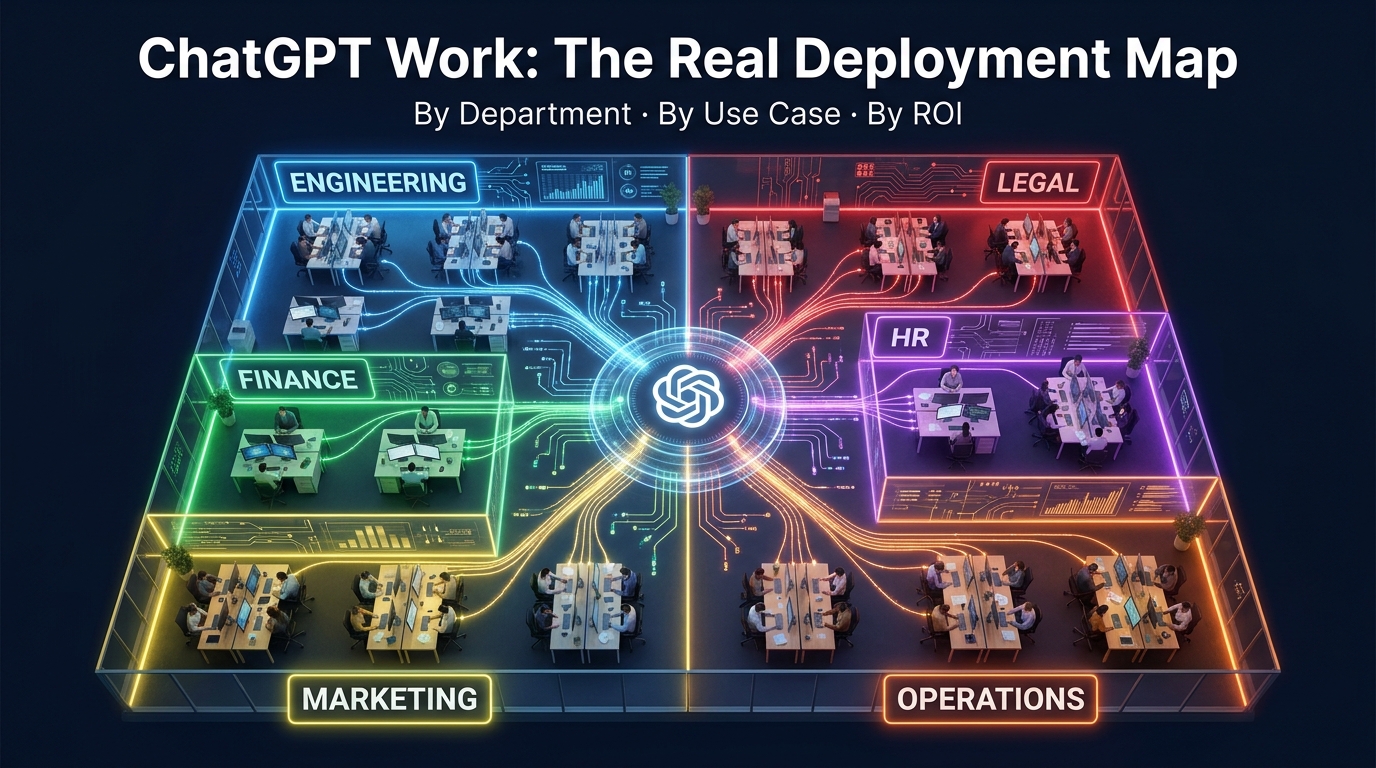
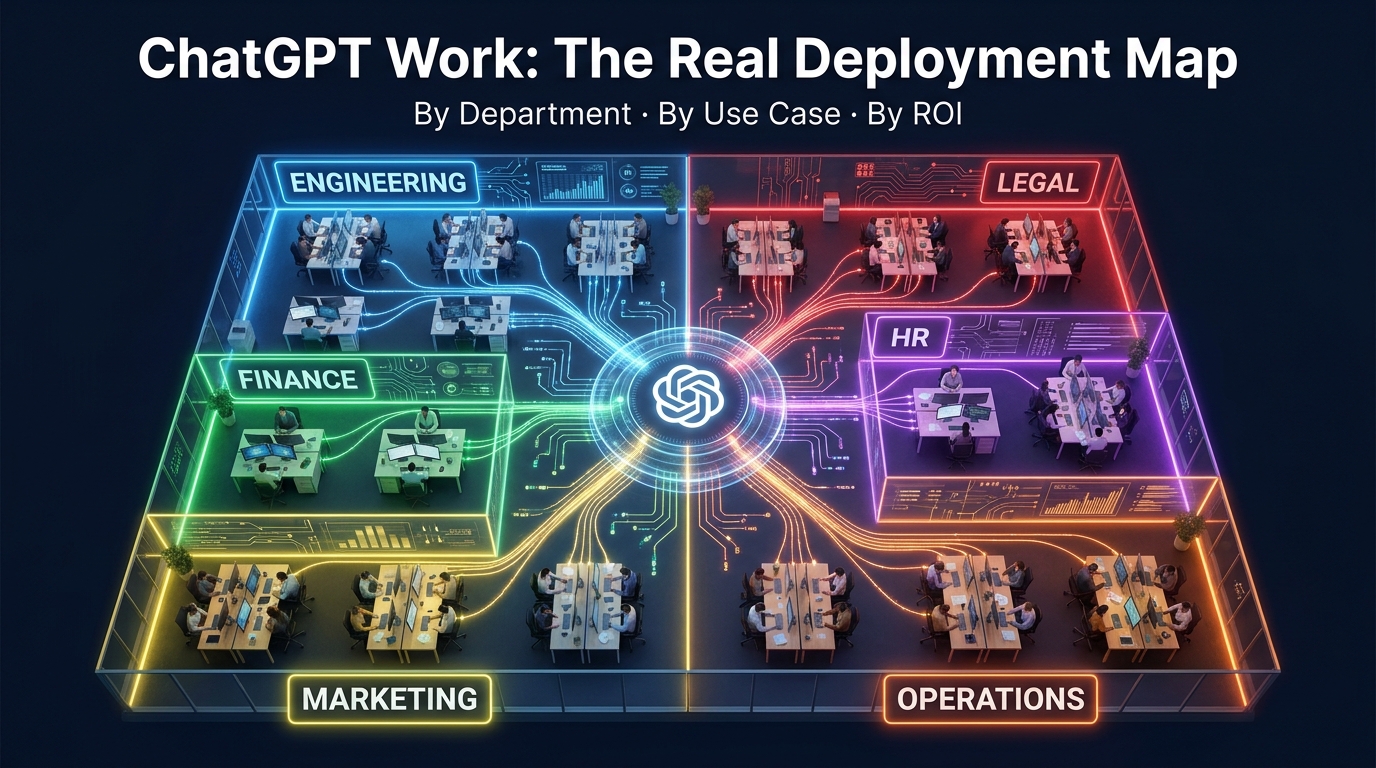
  • The Department-by-Department ChatGPT Work Deployment Map: What’s Actually Happening on the Ground in 2026

    The Department-by-Department ChatGPT Work Deployment Map: What’s Actually Happening on the Ground in 2026

    ChatGPT Work deployment map across departments: Engineering, Finance, Marketing, Legal, HR, Operations

    Ask any executive in mid-2026 whether their company is “using AI,” and you’ll almost certainly get a yes. Ask them which teams are getting results, which are spinning their wheels, and what separates the two — and the answers get a lot murkier.

    This is the real challenge with ChatGPT in the workplace right now. The technology is broadly available. The motivation to deploy it is strong. But the outcomes are wildly uneven — and the gap has almost nothing to do with the model itself.

    What separates companies hitting 200–350% first-year ROI from those sitting on a pile of unused Enterprise licenses comes down to a set of deployment decisions that are almost never discussed in the product launch announcements: which department goes first, what specific workflows get targeted, how prompts are governed, and how human review is built into the process before a single output leaves the building.

    This article is not about whether ChatGPT is worth deploying. That debate is over. It’s about how the organizations that are actually succeeding are doing it — department by department, workflow by workflow, decision by decision. We’ll map what’s working in engineering, finance, marketing, legal, HR, and operations, look at the governance architecture that makes or breaks deployments at scale, and give you a practical prompt-library framework you can build from this week.

    If you’ve already deployed ChatGPT and wonder why adoption is flatlining, or if you’re planning a rollout and want to skip the expensive mistakes, this is the map you need.

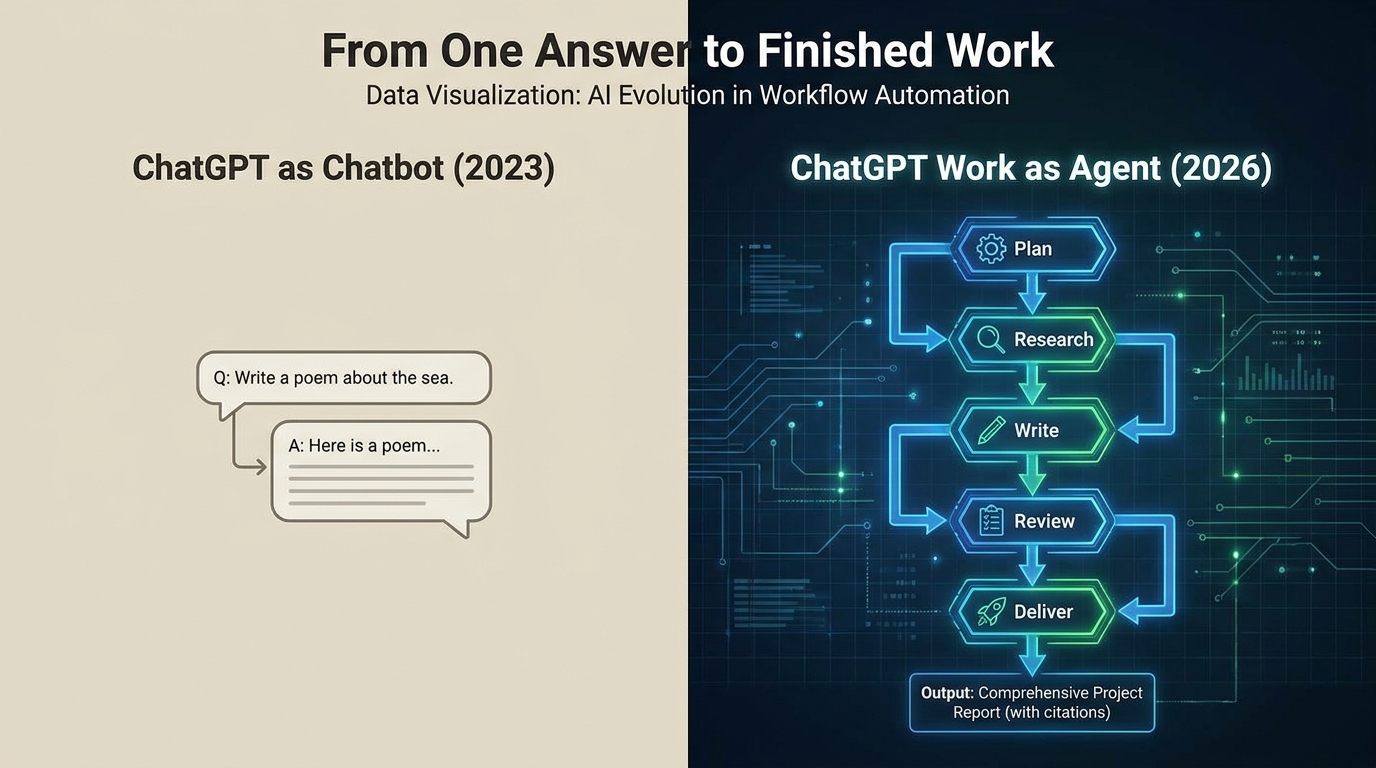
    From Chatbot to Autonomous Agent: What ChatGPT Work Actually Is in 2026

    Split-screen comparison: ChatGPT as a single-turn chatbot in 2023 vs. ChatGPT Work as a multi-step autonomous agent in 2026

    The term “ChatGPT” still conjures images of a text box where you type a question and get an answer. That model of the tool is now several generations out of date, and organizations that are still treating it that way are leaving the majority of its value on the table.

    ChatGPT Work — OpenAI’s enterprise-oriented agentic feature set — can accept a high-level business goal, plan the steps required to achieve it, execute those steps across connected apps and files, and deliver a finished work artifact. Not a draft. Not raw output. A finished deliverable: a spreadsheet, a slide deck, a forecasting model, a PR-ready code change, an updated campaign readout.

    What “Agentic” Means in Practice

    When practitioners use the word “agentic” to describe ChatGPT Work, they mean something specific. The system doesn’t just respond to a prompt — it reasons about a goal, assembles a plan, uses tools (web search, code execution, file access, connected SaaS integrations), executes steps in sequence, checks its own output, and iterates until the task is complete. This can run for minutes or, in complex cases, hours, with minimal human intervention during execution.

    The practical implication is significant. In a traditional deployment, a knowledge worker might use ChatGPT as a drafting assistant — paste in content, get improved content back, copy it somewhere else. That’s a productivity enhancer. ChatGPT Work operating agentically is closer to a digital coworker: it connects to your project management system, pulls the relevant data, synthesizes it with context from recent messages, builds the status deck, and flags the blockers. The worker reviews and approves the output rather than building it from scratch.

    The Three Modes of Current Deployment

    Across organizations deploying ChatGPT in 2026, three distinct modes have emerged based on how deeply agentic the use case is:

    • Assisted mode: ChatGPT helps a human produce better output — editing, summarizing, drafting, translating. The human drives every step. This is the most common mode and the easiest to deploy safely.
    • Directed mode: ChatGPT executes defined multi-step tasks under human supervision — it runs a research workflow, generates a report structure, populates a template from connected data. The human reviews before anything goes external.
    • Autonomous mode: ChatGPT Work runs background tasks, scheduled workflows, or cross-system processes with limited human input during execution. This is where the highest productivity gains live — and where governance becomes non-negotiable.

    Most organizations are currently operating in a mix of assisted and directed modes, with selective autonomous deployments for well-defined, lower-risk workflows. The shape of that mix by department tells you a lot about where the real ROI is being captured.

    The Four Deployment Tiers: Choosing the Right Seat Structure Before You Start

    One of the most consequential decisions organizations make before deploying ChatGPT at work is also one of the least discussed: which plan tier to use, and how to structure seats across teams. Getting this wrong creates both security exposure and budget waste.

    ChatGPT Team (2–149 users)

    Designed for small to mid-size departments or early-stage pilots. ChatGPT Team provides shared workspaces, basic admin controls, and strong default data privacy (conversations are not used to train OpenAI’s models). It’s the right tier for a department of 20–30 people testing a focused workflow before broader rollout.

    The limitation is scale and governance depth. Team doesn’t include SSO/SCIM provisioning, audit logs, or the kind of centralized analytics you need to manage adoption across dozens of departments. Organizations that try to scale Team-tier deployments to 500+ users typically hit friction fast.

    ChatGPT Enterprise

    Enterprise is purpose-built for company-wide deployments in regulated or security-conscious environments. It adds SSO/SCIM integration, audit logs, data residency controls, compliance API visibility for conversations and agent activity, and advanced workspace analytics. It also includes full access to ChatGPT Work’s agentic capabilities and Codex for engineering teams.

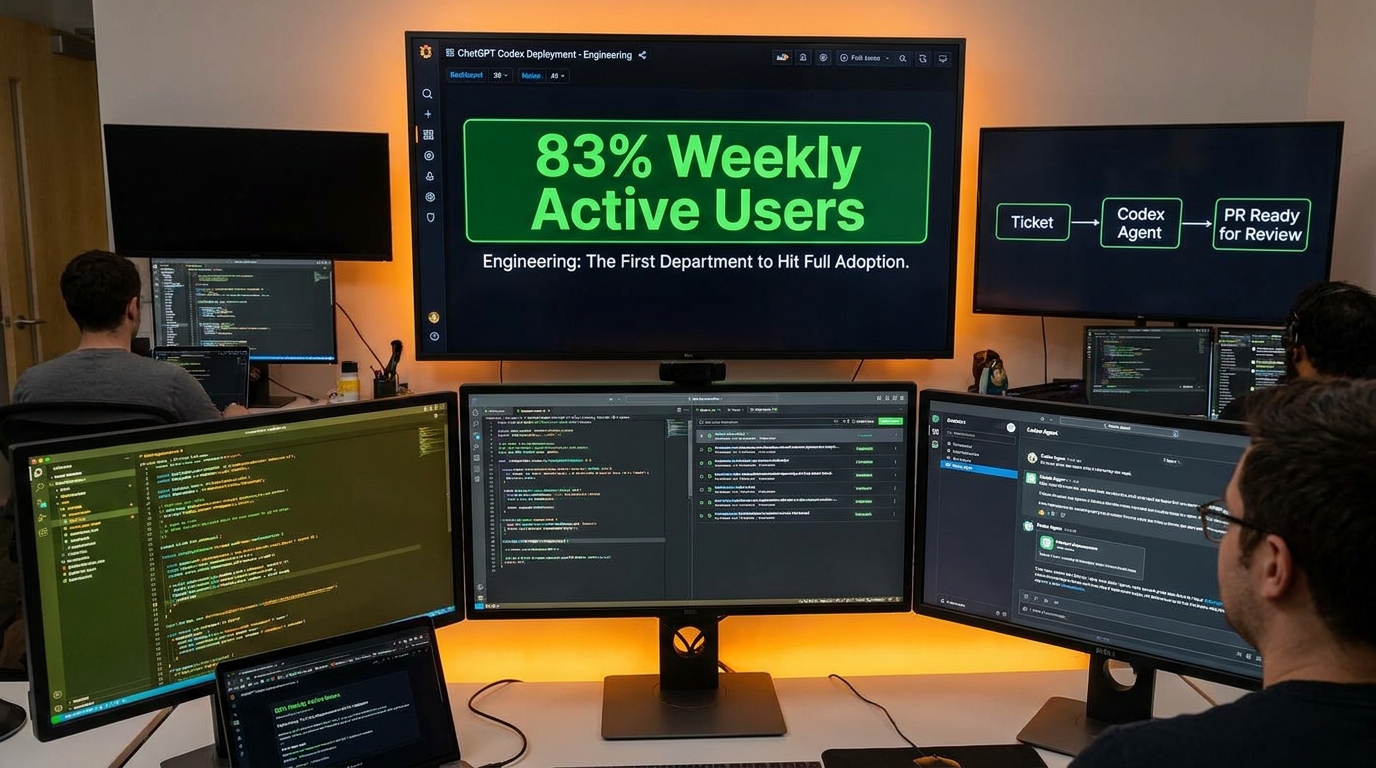
    OpenAI’s own case studies show that companies who move to Enterprise typically see significantly higher adoption rates. In one reported deployment, 83% weekly active users and 98% employee preference over competing tools were measured — metrics that reflect both product quality and the organizational momentum that comes from a properly governed rollout.

    The Pilot-to-Enterprise Bridge

    The most common and costly deployment mistake organizations make is running a Team-tier pilot for three months, seeing positive results, and then trying to scale company-wide without upgrading their governance architecture. The pilot worked because it was small, well-managed, and involved early adopters. The company-wide rollout fails because governance, training, and integration weren’t designed to scale with it.

    The better path: use Team-tier for genuine experimentation with 20–50 users, document what works, build the governance framework, and move to Enterprise for the production rollout. Don’t try to scale the pilot — industrialize the lessons from it.

    Engineering and Dev Teams: The Fastest Adopters — and the Most Instructive Case

    Engineering team ChatGPT Codex deployment showing ticket-to-PR workflow with 83% weekly active user stat

    Engineering teams are, consistently, the fastest adopters of ChatGPT at work — and not just because developers are more comfortable with AI tools. The deeper reason is structural: software development already has the workflow discipline, review processes, and measurement infrastructure that successful AI deployment requires. Engineers don’t ship code without review. They have version control. They have test suites. These habits translate directly into responsible AI use.

    The Codex Workflow: Ticket to PR Without Manual Coordination

    The flagship engineering use case for ChatGPT Enterprise in 2026 is Codex-powered PR generation. The workflow runs like this: a developer receives a ticket, opens it in a Codex-connected environment, and instructs the agent to understand the task, inspect the relevant codebase, propose a solution, implement the change, run the test suite, validate the experience, and prepare the PR for team review — all in a single flow.

    This isn’t theoretical. Organizations running this workflow are reporting measurable reductions in cycle time from ticket to review-ready PR. The human work shifts from writing code from scratch to reviewing, approving, and refining AI-generated work — a change that experienced developers often describe as qualitatively different rather than just faster.

    What the 60–80% Adoption Figure Actually Means

    Current estimates put ChatGPT adoption in engineering and IT departments at 60–80%+ across organizations that have deployed Enterprise. That number is significantly higher than marketing (40–60%) or HR (15–30%), and it reflects a few things beyond developer enthusiasm:

    • Clear output verifiability: Code either compiles and passes tests or it doesn’t. Engineers can assess AI output quality rapidly and with confidence, which reduces anxiety about using the tool.
    • Existing workflow integration: GitHub, Jira, and linear development workflows already have integration points. Slotting Codex into a PR review process requires less organizational change management than, say, introducing AI to a legal review process.
    • Culture of experimentation: Engineering culture typically treats new tools as hypotheses to test rather than threats to resist. This lowers the adoption friction that kills rollouts in more risk-averse departments.

    The Engineering Playbook: What Successful Teams Do

    The teams getting the most out of ChatGPT in engineering are following a consistent pattern. They start with code documentation and explanation tasks — low-risk use cases where AI output quality is easy to verify. They build confidence, refine their prompting practices, and then move to more complex tasks like test generation, code review assistance, and eventually full Codex-driven PR workflows.

    They also treat AI-generated code the same way they’d treat code from a junior developer: it gets reviewed, it goes through the test suite, and nothing ships without human signoff. That discipline — not the tool itself — is what separates teams that succeed from those that introduce bugs at scale.

    Finance Teams: The Workflow That Pays Back Fastest

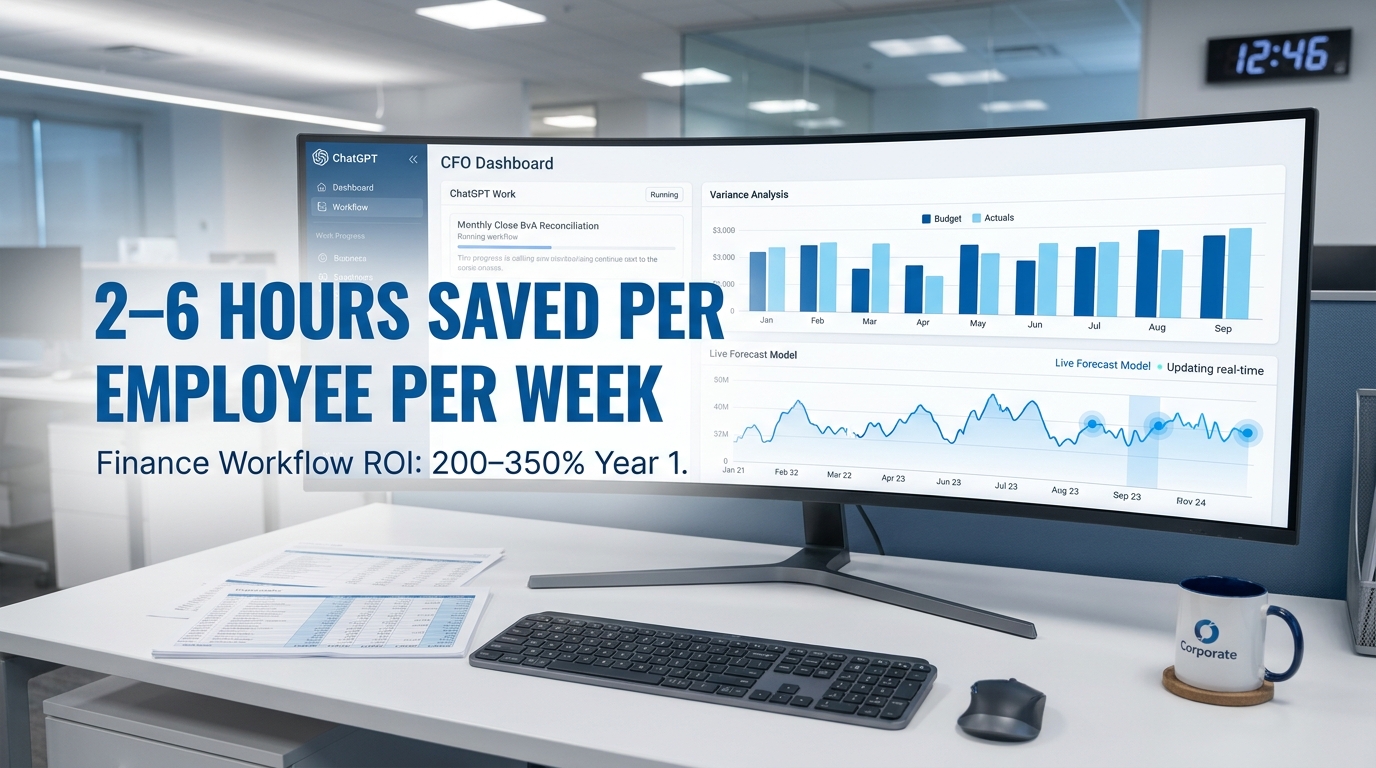
    Finance team ChatGPT Work dashboard showing monthly close BvA reconciliation workflow with ROI statistics

    Finance is not the department most people imagine when they think about ChatGPT deployment. But in terms of raw time-savings, measurable ROI, and payback speed, it is consistently one of the top performers — because finance work is exactly the kind of high-volume, structured, data-intensive workflow that ChatGPT Work handles well.

    The Monthly Close Problem

    Every finance team that runs a monthly close knows the pain: stitching together data from multiple systems, reconciling variances, building BvA (budget vs. actual) comparisons, adjusting forecasts, and preparing leadership presentations — all under time pressure, all with a high tolerance for error.

    ChatGPT Work’s finance workflow addresses this directly. As described in OpenAI’s own Enterprise documentation, a fully connected deployment can reconcile variances across systems, assess the quality of results against targets, model risk-weighted scenarios, build a live dashboard, and refresh the forecast model — in a fraction of the time a manual process requires.

    This is the archetype of a workflow where ChatGPT delivers not just convenience but structural time savings that compound month over month. Finance teams running this workflow are reporting reductions in monthly close cycle time, with some organizations cutting the process by 30–40% in the first quarter of deployment.

    Ad Hoc Analysis vs. Guided Decision Support

    The second major finance use case — and one that’s significantly underdeployed — is moving from reactive ad hoc analysis to proactive decision support. In a traditional setup, a finance analyst spends much of their time answering the same five questions from business partners: what was revenue last month, what’s driving the variance, how are we tracking against plan? These are valuable questions, but the analysis to answer them is repetitive and time-consuming.

    ChatGPT Work connected to a data warehouse and CRM can run a standing analysis on these questions before they’re asked, combining financial results with business context, identifying anomalies, and building an interactive report that explains changes and recommends where to focus. The analyst’s time shifts from data assembly to interpretation and strategic guidance — a meaningfully different job.

    The Finance Guardrails Non-Negotiable

    Finance deployments require the strictest data governance of any department. Financial data connected to a ChatGPT workspace must be governed through role-based access controls — not every team member should be able to query every dataset. Audit trails for AI-generated analyses need to exist for regulatory compliance. And outputs used in external communications or regulatory filings must go through human review and sign-off before use.

    Organizations that have had the most success in finance treat the AI as a skilled analyst who still requires a senior reviewer’s sign-off before anything leaves the department. That mental model gets the governance right without stifling the productivity gains.

    Marketing and Content: Where Volume Wins — and Where It Backfires

    Marketing team ChatGPT Work campaign workflow showing brief to leadership readout flow with adoption statistics and quality control warning

    Marketing is where ChatGPT deployment is simultaneously most enthusiastic and most prone to failure. Adoption rates in marketing and content departments run 40–60% across organizations with Enterprise access — high relative to HR and finance, but below engineering. The gap reflects a fundamental tension: marketing needs AI to produce more volume, but volume without quality control is a liability, not an asset.

    The High-ROI Marketing Use Cases

    The marketing workflows where ChatGPT consistently delivers strong returns are those that involve structured transformation of existing content or data — not open-ended creation from scratch.

    • Campaign reporting: Turning raw performance data into structured leadership readouts with clear narrative and recommendations. ChatGPT Work can ingest campaign metrics, compare against benchmarks, identify what’s working and what isn’t, and build a presentation-ready analysis. This used to take a skilled analyst four to six hours. It now takes under an hour with human review.
    • Brief-to-draft: Converting a structured creative brief into a first-draft long-form asset — blog post, white paper, case study. The AI does the scaffolding and research assembly; the human refines the voice, adds proprietary insight, and ensures factual accuracy.
    • Multi-channel adaptation: Taking a single piece of approved content and adapting it to five different formats and platforms. This is pure volume work that AI handles efficiently and correctly when the source content is solid.
    • Competitive research summaries: Using ChatGPT’s research mode to monitor competitor messaging, product updates, and market positioning — and synthesizing it into a weekly briefing that marketers actually read.

    Where Volume Without Governance Breaks Down

    The marketing failures in 2026 deployments follow a consistent pattern. A team gets access to ChatGPT Enterprise, starts using it for all content production, ships AI-generated copy without systematic review, and eventually publishes something factually incorrect, tonally off-brand, or legally problematic. The damage isn’t always dramatic — sometimes it’s subtle brand drift, sometimes it’s a compliance issue, sometimes it’s simply content that doesn’t sound like the company.

    The root cause is almost always the same: the team deployed the tool before establishing the review process. They were focused on output volume rather than output quality standards. The lesson isn’t that AI shouldn’t produce marketing content — it’s that every AI-produced piece needs a review step that is explicitly designed for AI-generated material, not repurposed from the editorial review process for human-written content. AI makes different kinds of errors than humans, and the review process needs to check for them specifically.

    Building the Marketing Prompt Library That Holds Up

    The marketing teams with sustained high performance from ChatGPT have one thing in common: a maintained prompt library that is treated as a living document, not a one-time setup. This library contains tested prompts for each major content type, with version history so that when a prompt is refined, the old version doesn’t disappear. It includes brand voice guidelines embedded directly in the system prompts for each Custom GPT. And it has explicit instructions about what the AI should not do — facts to avoid asserting without verification, claims that require legal review, brand positioning statements that require sign-off before publication.

    This kind of prompt library takes two to three weeks to build properly. Organizations that build it before full deployment see dramatically better sustained performance than those who deploy first and iterate under fire.

    Legal, Compliance, and HR: The Governance-First Departments

    Legal, compliance, and HR teams share a characteristic that shapes their ChatGPT deployment: every output carries real-world consequences for real people. A contract clause that’s wrong exposes the company to liability. A benefits policy FAQ that’s misleading creates legal obligations. A job description that uses the wrong language creates discrimination exposure. These stakes mean that governance isn’t a nice-to-have for these departments — it’s the precondition for any deployment at all.

    Legal: Where ChatGPT Earns Its Keep in Document-Heavy Work

    Contract review, NDA drafting, policy summarization, and regulatory research are the legal workflows that ChatGPT handles best. These are tasks where the AI’s ability to process large volumes of text rapidly, identify relevant clauses, flag potential issues, and generate structured summaries provides genuine time savings for legal teams that are perpetually under-resourced relative to their workload.

    The key governance principle for legal is clear and consistent: ChatGPT output is a first draft or a research assist, never a final work product. Every AI-generated contract clause, policy summary, or regulatory analysis must be reviewed and signed off by a qualified legal professional before it is used. This isn’t just a governance policy — it needs to be a technical constraint built into the deployment, making it impossible for AI-generated legal content to leave the system without a documented human review step.

    Organizations that have implemented this properly report that their legal teams are handling significantly higher document volumes without proportional headcount increases. The AI handles the first pass; the lawyer handles judgment, strategy, and client relationships.

    HR: The Use Cases That Scale and the Ones That Create Risk

    HR adoption of ChatGPT runs at the lower end of the department spectrum — typically 15–30% in most organizations — and for understandable reasons. HR work involves sensitive personal data, employment law compliance, and decisions that directly affect people’s livelihoods. But there is a set of HR use cases where ChatGPT delivers clear value with manageable risk.

    Job description drafting is the canonical example. ChatGPT can take a role brief and a set of requirements and generate a structured, inclusive-language job description quickly. HR reviews for compliance and brand voice, then posts. The AI saves the initial drafting time; the human ensures legal and organizational alignment.

    Onboarding material creation, policy FAQ generation, and benefits communication drafting follow the same model — AI handles the templated, document-heavy work, human experts review for accuracy and compliance before distribution.

    Where HR must be careful: using AI in any part of the actual hiring decision process. Resume screening, candidate assessment, or interview evaluation that involves AI without rigorous bias auditing and legal review creates significant legal exposure. The current guidance from employment law specialists is consistent: AI can assist HR with documentation and communication workflows, but should not be in the decisional loop for employment outcomes without explicit, audited safeguards.

    Compliance: AI as a Research and Monitoring Layer

    Compliance teams are finding ChatGPT most useful as a regulatory research and change-monitoring layer. Keeping up with regulatory changes across jurisdictions is a volume problem — there is simply more regulatory output than small compliance teams can read, synthesize, and act on. ChatGPT’s research mode can monitor regulatory feeds, summarize relevant changes, flag potential impacts on specific policies or processes, and generate preliminary impact assessments for human review.

    This is the kind of consistent background work that AI handles well and that frees compliance professionals for the higher-stakes judgment work that actually requires their expertise.

    Operations: The Unsung ROI Engine of ChatGPT Deployment

    Operations is consistently underrepresented in discussions of ChatGPT deployment, which is strange given that operations teams tend to have the highest density of the workflows where AI delivers the clearest ROI: structured, high-volume, data-intensive processes that need consistent execution across distributed teams.

    The Weekly Review Problem — and How ChatGPT Solves It

    Ask any operations leader what they spend most of their meeting preparation time on, and “chasing updates to rebuild the status deck” is a near-universal answer. Before a weekly review, someone needs to pull data from the project management system, the initiative tracker, the planning documents, and recent team messages. They need to reconcile them, identify what’s on track and what’s at risk, and build a deck that makes sense of it all.

    This is precisely the task that ChatGPT Work’s agentic capabilities are designed for. Connected to the relevant systems, it can pull current data, identify risks and blockers, synthesize recent signals, and prepare the review deck — with each owner and their current status already mapped. The operations manager walks into the meeting having reviewed the output rather than having spent hours preparing it.

    Early adopters of this workflow are reporting that operations team members are reclaiming three to five hours per week that were previously consumed by status reporting and deck preparation. That time is being redirected to actual problem-solving — the work that operations leaders are most qualified to do.

    Cross-System Data Synthesis: Where Ops Gets Asymmetric Value

    Operations teams typically work across more systems than any other department — project management tools, ERP systems, logistics platforms, customer success dashboards, HR systems, finance data. The data they need to do their job is fragmented across these systems, and assembling a coherent operational picture manually takes significant time.

    ChatGPT Work connected to these systems can synthesize cross-system data on demand, building operational dashboards that would otherwise require a data analyst and a day of work. This capability is available today for organizations with Enterprise accounts and the right integrations, and it’s delivering outsized ROI for operations teams willing to invest in the integration layer.

    The Governance Architecture That Separates Successes from Failures

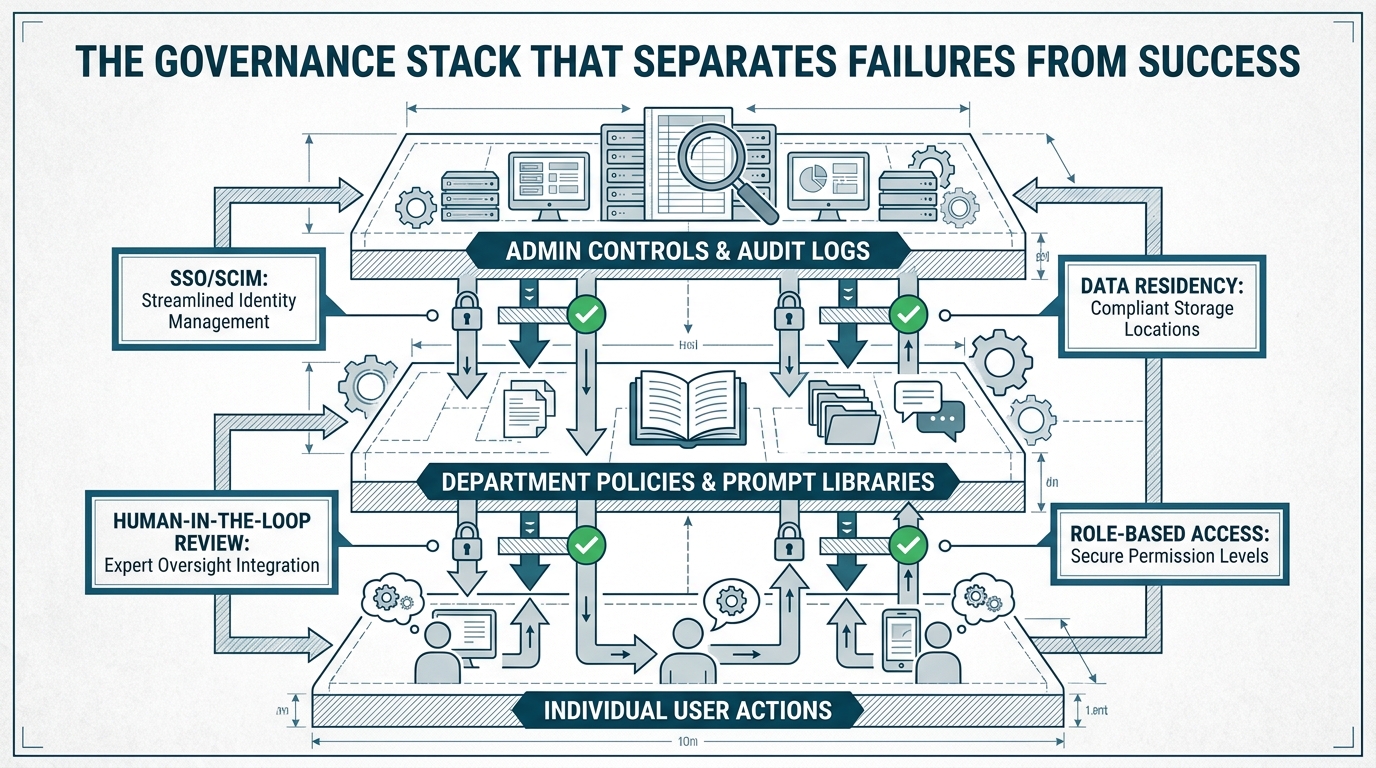
    Enterprise AI governance architecture diagram showing layered admin controls, department policies, and human-in-the-loop review gates

    Every organization that has successfully scaled ChatGPT across departments has one thing in common: they built the governance layer before they needed it, not after something went wrong. Governance is not a compliance checkbox — it’s the technical and organizational infrastructure that allows the tool to be used broadly and confidently rather than cautiously and narrowly.

    The Three-Layer Governance Model

    The governance architecture that works in practice has three layers, each serving a distinct function:

    Layer 1: Admin Controls and Audit Infrastructure. At the enterprise level, IT and security teams control who has access to ChatGPT, which tools and integrations each workspace can use, and what data the system can see. Audit logs capture all agent activity, conversation data, and file access. Compliance API visibility ensures that every action taken by ChatGPT Work on behalf of a user is traceable. This layer is non-negotiable for any organization operating in a regulated industry or managing sensitive customer data.

    Layer 2: Department Policies and Prompt Libraries. Each department operates under its own set of approved use cases, standardized prompts, data access rules, and output review requirements. These are documented, versioned, and maintained by a departmental AI lead or governance owner. The marketing department’s policy is different from the legal department’s — and both are different from the engineering team’s. Trying to govern all departments with a single blanket policy consistently fails because the risk profiles and workflow patterns are too different.

    Layer 3: Individual User Training and Practice Standards. Individual users need to understand not just how to use ChatGPT, but how to use it responsibly in the context of their specific role. This means role-based training (not generic AI literacy training) that covers the approved use cases for their department, the prompt templates they should use, and the review process they need to follow before using AI output externally.

    The Failure Modes That Governance Prevents

    The deployment failures that made the most news in 2025–26 were almost all governance failures rather than technology failures. The pattern is consistent: a team deploys ChatGPT without clear use-case boundaries, an employee uses it for a task it wasn’t designed or approved for, the output goes external without review, and the consequences range from embarrassing to legally problematic.

    Model behavior changes compound this risk. When OpenAI updates its models — and updates happen regularly — prompts that worked reliably on one model version may behave differently on the next. Organizations without version-controlled prompt libraries and systematic output monitoring won’t notice this drift until something goes wrong. Organizations with proper governance will catch it in the review layer before it causes damage.

    Building the AI Working Group: Who Needs to Be in the Room

    Successful governance programs consistently start with a cross-functional AI working group that meets before deployment begins and maintains oversight throughout the rollout. The minimum viable working group includes:

    • IT/Security: For technical controls, data governance, and integration architecture.
    • Legal/Compliance: For acceptable use policies, data privacy compliance, and liability review.
    • HR: For acceptable use communications, training program design, and employment policy alignment.
    • Finance: For cost controls, seat allocation strategy, and ROI measurement.
    • Business unit leads: For use-case prioritization, workflow design, and department-level adoption.

    This group doesn’t need to meet weekly forever. But it needs to exist before rollout, actively during the first 90 days, and on a quarterly basis thereafter to review usage patterns, address emerging issues, and manage model update cycles.

    Building Your Department Prompt Library: The Practical Framework

    A prompt library is not a collection of clever prompts — it’s a governed, versioned system of templates that standardizes how your organization interacts with ChatGPT for specific, defined tasks. Building it correctly is one of the highest-leverage investments you can make in your deployment.

    The Anatomy of a Deployment-Grade Prompt

    A prompt that’s ready for organizational deployment has several components that a casual prompt doesn’t:

    • System context: A clear statement of the AI’s role in this task, the output format it should produce, and the audience it’s writing for. This is usually embedded in the Custom GPT’s system prompt rather than the user prompt.
    • Constraint instructions: Explicit statements of what the AI should NOT do — claims it shouldn’t assert, content it shouldn’t produce without human verification, formatting it should avoid.
    • Output scaffolding: For structured tasks (reports, analyses, communications), a template that the AI populates. This dramatically improves output consistency and review efficiency.
    • Review checklist reference: A pointer to the review process the output should go through before use. This makes the review step a part of the prompt workflow, not an afterthought.

    How to Build the Library Without Spending Six Months on It

    The mistake organizations make is trying to build a comprehensive prompt library from scratch before they’ve actually deployed the tool. They end up with a library built on theoretical use cases that doesn’t reflect how the tool is actually being used.

    The better approach is a two-week sprint after a limited pilot:

    1. Week 1: Run a limited pilot with 20–30 users in one department. Have each user document every prompt they use that produces a useful output. Collect these prompts centrally at the end of the week.
    2. Week 2: A small team reviews collected prompts, identifies the highest-value use cases, refines the top 10–15 prompts using the anatomy framework above, and creates the initial library. Governance owners review and approve.
    3. Ongoing: The library is a living document. A designated maintainer reviews usage analytics monthly, identifies prompts that need refinement (especially after model updates), and adds new approved prompts as use cases expand.

    This approach produces a library that reflects real workflows rather than theoretical ones, takes weeks rather than months, and starts generating value immediately.

    The Custom GPT Layer

    For Enterprise deployments, prompt libraries should be implemented not just as document repositories but as Custom GPTs — configured AI assistants that have the governance constraints built into their system prompts. This means that when a marketing team member opens the “Campaign Report Builder” Custom GPT, they’re automatically working with the approved system context, constraints, and output format — without needing to remember or correctly apply a complex prompt each time.

    This approach dramatically reduces user error, improves output consistency, and makes governance auditable. Every output from the “Legal NDA Reviewer” Custom GPT is traceable to that specific configuration, and changes to the configuration require an approval process.

    Measuring Real ROI: The Metrics That Actually Matter

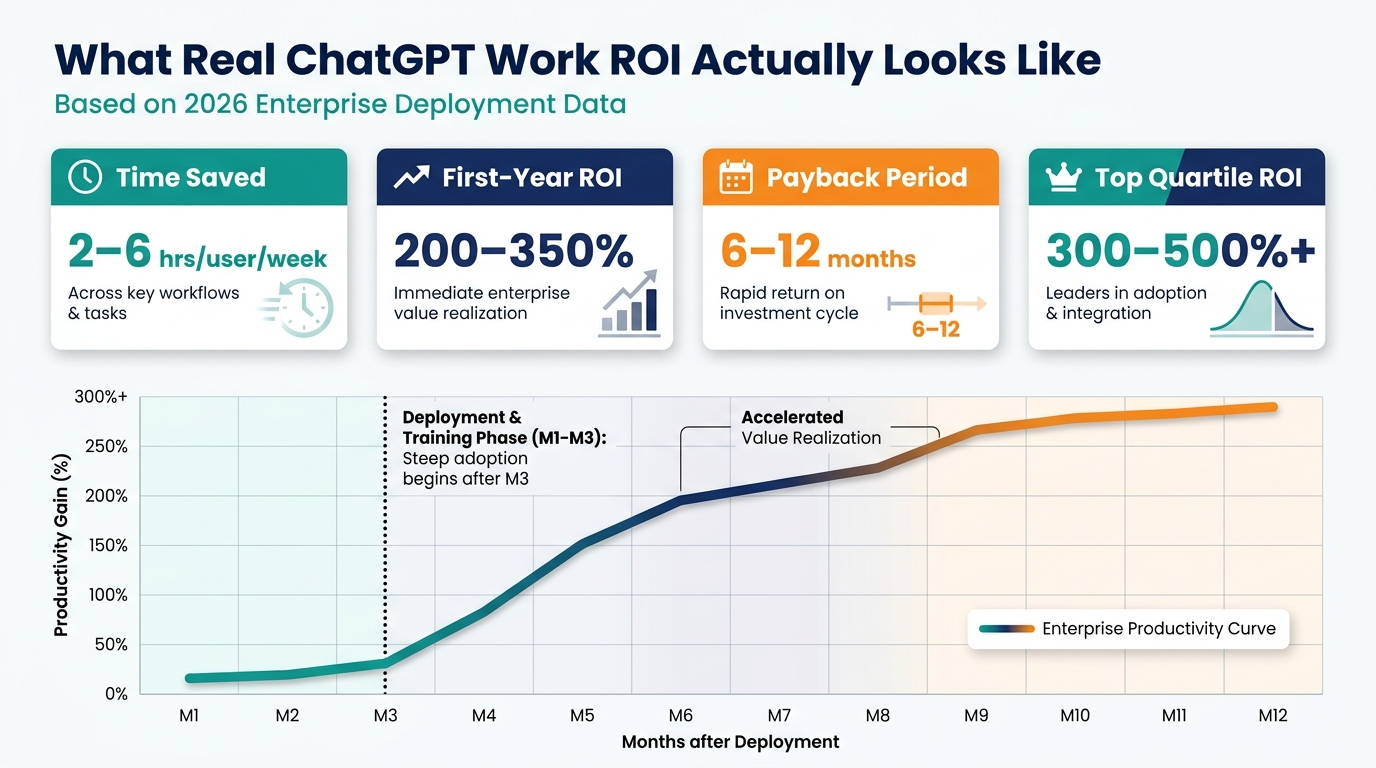
    ChatGPT Work ROI measurement dashboard showing 2–6 hours saved per week, 200–350% first-year ROI, 6–12 month payback, and 300–500%+ top-quartile ROI

    The organizations measuring ChatGPT ROI correctly aren’t looking at message volume, query counts, or user satisfaction surveys. They’re measuring business outcomes — and the numbers from properly governed deployments in 2026 are consistent and credible enough to act on.

    The Core Productivity Numbers

    Across enterprise deployments with strong governance and workflow focus, the consistent reported productivity gain is 2–6 hours saved per knowledge worker per week. That range reflects the difference between assistive use cases (lower end) and fully integrated agentic workflows (higher end). For a team of 50 knowledge workers, even the low end of this range represents 100+ hours per week of recovered capacity — the equivalent of two to three additional full-time employees.

    First-year ROI for well-implemented deployments runs in the 200–350% range, with a payback period of 6–12 months. Top-quartile programs with deep workflow integration and strong adoption are reporting 300–500%+ ROI within the first year. These numbers are consistent across multiple independent enterprise deployments and reflect time savings, quality improvements, and reduced need for certain categories of external vendor work.

    The Metrics Worth Tracking vs. the Ones That Distract

    The metrics that predict successful long-term deployment are behavioral, not volume-based:

    • Weekly active users as a percentage of licensed seats: Below 50% after 60 days of deployment signals an adoption problem. Above 70% suggests the tool is genuinely embedded in workflow. (The OpenAI-reported figure of 83% weekly active users in high-success deployments is a benchmark worth aspiring to.)
    • Workflow completion rate: For agentic use cases, the percentage of initiated workflows that produce a usable output without requiring a restart. Low completion rates indicate prompt quality, integration, or model performance issues.
    • Review escalation rate: The percentage of AI outputs that require significant human revision before use. High escalation rates indicate that prompts, system context, or use-case selection need adjustment — not that the tool doesn’t work.
    • Time-on-task before/after: For defined, measurable workflows (monthly close, contract review, report generation), direct measurement of time taken before and after AI deployment. This is the most defensible ROI metric for internal business cases.

    The 30/60/90 Day Measurement Cadence

    The teams that sustain ROI over time are measuring at three defined checkpoints:

    30 days: Adoption rate, early productivity signals, top user pain points. The goal is to identify and fix friction before it calcifies into habit. If adoption is below 40% at 30 days, there is a training or workflow-fit problem that needs immediate attention.

    60 days: Workflow completion rates, review escalation patterns, and the first pass at time-on-task comparison. This is when you identify which use cases are working well (expand them), which are underperforming (diagnose and adjust), and which prompt library gaps need to be filled.

    90 days: Full ROI calculation, user satisfaction, and recommendation for scale or scope adjustment. The 90-day review should produce a documented business case for the next phase of deployment — whether that means expanding to new departments, moving to Enterprise tier, or building additional Custom GPTs for the use cases that have proven out.

    Why Most Deployments Stall at 30%: The Organizational Dynamics Nobody Talks About

    The technical deployment of ChatGPT is rarely what causes rollouts to underperform. The technology works. The organizational dynamics around it frequently don’t — and they follow patterns that are predictable enough to plan for.

    The Early Adopter Cliff

    Most ChatGPT deployments show a characteristic adoption curve: rapid uptake by the 15–20% of employees who are naturally enthusiastic about new technology, followed by a plateau as the tool fails to penetrate the majority who are waiting to see whether it’s genuinely useful in their specific job. This plateau — often around 30–35% adoption — is the most common failure mode in enterprise AI rollouts.

    Breaking through it requires a different approach than the one that drove early adoption. Early adopters self-served. The majority needs demonstration, not documentation — they need to see a colleague in their specific role doing a specific task faster and better with ChatGPT before they’ll commit to changing their workflow. Peer demonstrations and internal case studies from within the organization are far more effective at this stage than vendor-produced materials or executive mandates.

    The Manager Multiplier Effect

    One of the strongest predictors of departmental ChatGPT adoption is whether the department’s manager uses it visibly and talks about it openly. Teams with actively AI-using managers hit adoption rates 2–3x higher than comparable teams with AI-skeptical or passive managers. This isn’t about mandating use — it’s about the signal that a manager sends by demonstrating the tool in team settings, referencing AI-assisted work in meetings, and creating space for experimentation without fear of judgment.

    Organizations that identify this dynamic early and specifically train managers to be visible AI adopters consistently see stronger rollout performance than those that focus all their enablement energy on individual contributors.

    The “Productivity Theatre” Trap

    A specific failure mode that has become more visible in 2026: teams that adopt ChatGPT enthusiastically but use it in ways that look productive without creating real business value — generating more reports that nobody reads, producing longer documents that contain less useful information, or automating the production of deliverables that shouldn’t exist in the first place.

    This is the “productivity theatre” trap, and it’s surprisingly common. The fix is simple but requires discipline: before deploying AI to a workflow, ask whether the workflow itself is creating genuine value. If the answer is uncertain, the right intervention is workflow redesign, not AI automation of an existing but questionable process.

    The 90-Day Deployment Checklist: From Decision to Measurable ROI

    Everything above distills into a practical sequence of decisions and actions. Here is the checklist that the best-performing ChatGPT work deployments have in common — not as an abstract framework, but as a concrete sequence you can act on.

    Weeks 1–2: Foundation

    • Form the AI working group (IT, Legal, HR, Finance, business leads).
    • Define the specific use case for the pilot — one workflow, one department, 20–50 users.
    • Select and configure the deployment tier (Team for pilots under 50 users, Enterprise for broader rollout).
    • Draft the acceptable use policy for the pilot department.
    • Identify the department AI lead who will own the prompt library and training.

    Weeks 3–6: Pilot and Learn

    • Deploy to pilot users with role-specific training focused on the target workflow.
    • Establish the baseline time-on-task metric for the targeted workflow.
    • Collect prompts and use patterns from pilot users daily.
    • Run a weekly 30-minute retrospective to surface friction and early wins.
    • Document the review process that AI output must go through before external use.

    Weeks 7–8: Governance and Library

    • Build the initial prompt library from pilot learnings (target: 10–15 well-governed prompts).
    • Create the department Custom GPT with governance constraints built into system prompts.
    • Define the 30/60/90 day metrics and assign measurement ownership.
    • Run the first adoption audit and address any users who have not engaged with the tool.

    Weeks 9–12: Scale and Measure

    • Expand to additional use cases within the pilot department.
    • Conduct peer demonstration sessions to drive adoption past the early-adopter plateau.
    • Train department managers to be visible AI users.
    • Conduct the 90-day ROI review and build the business case for the next phase.
    • Present findings to the AI working group and define the next department for rollout.

    This sequence is not theoretical — it’s a distillation of what the organizations reporting 200–350% first-year ROI actually did in their first 90 days. It is notably un-glamorous. There is no “big launch moment,” no all-hands announcement with slick videos, no promise of immediate transformation. There is instead careful problem selection, disciplined governance, persistent measurement, and the organizational patience to build something that actually works before declaring victory.

    What 2026 Has Made Clear: The Deployment Decisions That Define the Outcome

    Eighteen months into widespread ChatGPT Work deployment, the organizational evidence is clear enough to draw some firm conclusions — not about the technology, but about the decisions that determine whether it delivers on its potential.

    The organizations seeing real, sustained returns share a profile: they started narrow and specific rather than broad and aspirational. They built governance before they needed it. They invested in department-level prompt libraries rather than hoping individuals would figure out effective prompting on their own. They measured outcomes rather than activity. And they treated the organizational change management as the hard part — not the technology setup.

    The organizations that are disappointed — sitting on expensive Enterprise licenses with low adoption and unclear ROI — made the opposite choices. They launched broadly without sufficient preparation. They invested in access without investing in enablement. They measured the wrong things and missed the signals that something was going wrong until it was expensive to fix.

    ChatGPT Work is, in 2026, genuinely capable of changing how knowledge work gets done. The engineering team that moves from ticket to PR-ready code without manual coordination is working differently, not just faster. The finance team running a live, always-current operating model is doing a different job than the one that spent three days assembling a monthly close. The operations leader walking into a review with a current, AI-synthesized risk register is having a different conversation than the one who spent hours rebuilding the deck from scratch.

    That kind of change is available. Whether your organization captures it comes down to the deployment decisions you make in the next 90 days — and whether you’re willing to do the unglamorous work of building governance, measuring outcomes, and earning adoption one department at a time.

    Key takeaway: The difference between ChatGPT deployments that deliver 300%+ ROI and those that stall is not the technology. It’s the specificity of the use cases targeted, the quality of the governance architecture, the investment in department-level prompt libraries, and the organizational patience to measure real outcomes rather than activity metrics. Start with one workflow. Govern it properly. Measure the results. Then scale.