Tag: Customer Support

  • What Actually Breaks When You Scale a Voice Agent Past the Pilot Stage

    What Actually Breaks When You Scale a Voice Agent Past the Pilot Stage

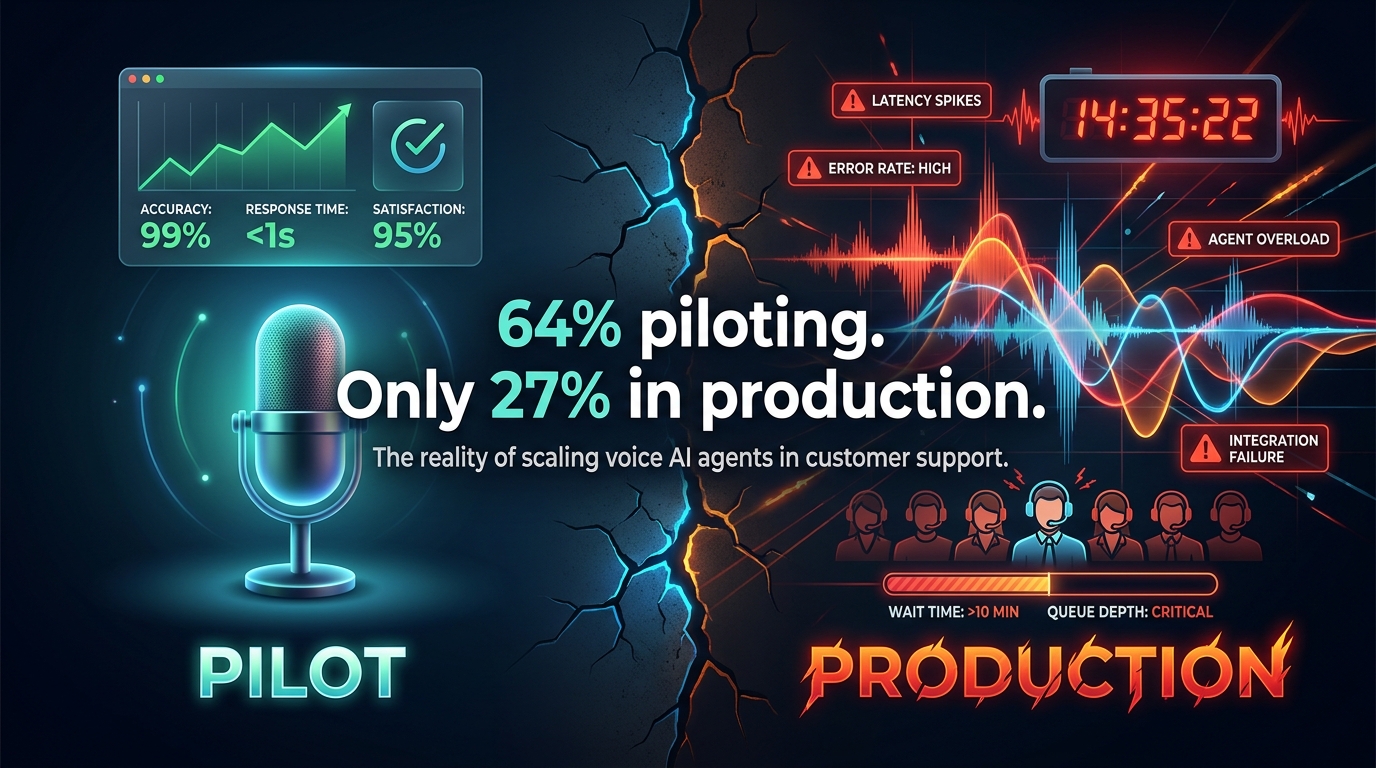
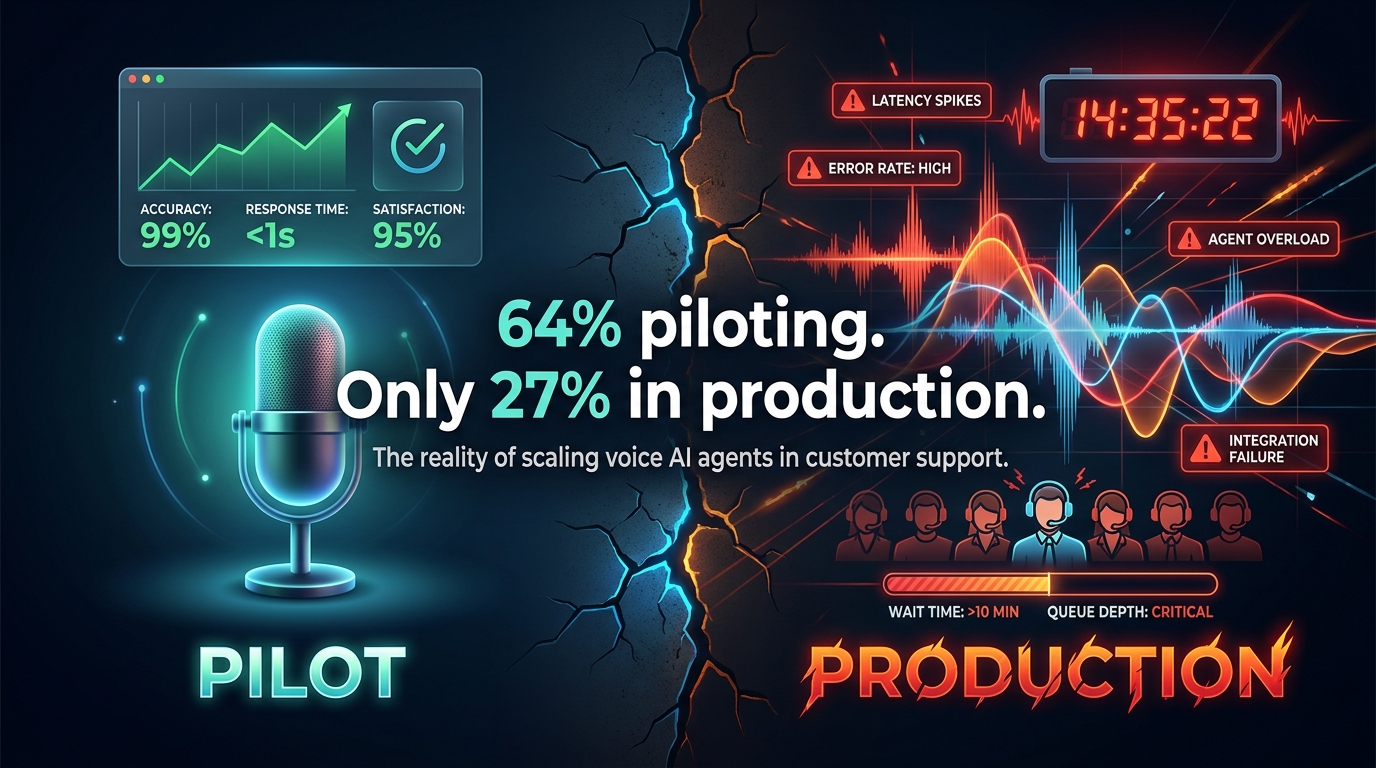
    Voice AI agent pilot vs production gap — 64% piloting, only 27% in full production

    There is a number that should make every CX leader pause before celebrating a successful voice agent pilot: 64% of enterprise customer experience teams ran an agentic AI or voice agent pilot in 2026. Only 27% have at least one channel in full production.

    That gap is not a technology gap. The tools work. The vendors have improved dramatically. Latency has come down, LLM accuracy has gone up, and the economics of per-interaction cost are genuinely compelling. The gap is an execution gap — a systematic series of things that break or get underestimated the moment you move from a controlled demo environment into the messy, high-variance reality of a live production call queue.

    About 18% of programs that started pilots in 2025 are still stuck there after twelve months. They are not failing; they are not succeeding. They are in a holding pattern, perpetually finding new reasons the timing is not right for a broader rollout.

    This article is for the teams that do not want to end up there. It examines what actually breaks at scale — the architectural assumptions, the measurement frameworks, the workforce dynamics, and the compliance realities that pilots conveniently sidestep — and what the teams that do reach full production do differently.

    This is not a technology overview. It is a post-pilot survival guide.

    The Pilot Illusion: Why Demo Numbers Don’t Survive First Contact with Real Calls

    Pilot conditions are, by design, favorable. Teams typically select a narrow call type with high-volume, low-variance intent — something like “check my balance” or “what is the status of my order.” They curate the test dataset, brief the evaluators, and measure against metrics that the system has essentially been tuned to pass.

    None of those conditions survive real production deployment.

    The variance problem

    Real callers do not read the system prompt. They call with compound problems, mid-sentence topic switches, strong accents, background noise, and emotional states the system was never trained to handle. Where a pilot might process 500 carefully selected interactions, a production system handles thousands per day, and the long tail of unusual cases is far longer than any pilot team anticipated.

    In production, LLM hallucination rates can increase three to five times compared with controlled demos as call content deviates from the training distribution. That is not a model problem — it is a scope problem. Pilots succeed precisely because they exclude the variance that production cannot.

    The latency gap

    Humans tolerate conversational silence differently on the phone than in any other medium. Research consistently shows that users find delays above approximately 1,000 milliseconds noticeably robotic and uncomfortable. Delays above 1.5 seconds begin to feel like the system has crashed.

    In a pilot, the team might accept 1.2 seconds of mouth-to-ear latency because it “mostly works.” In production at scale, with concurrent sessions competing for GPU resources, network variability, and edge cases that require longer LLM reasoning chains, that 1.2-second average can degrade to 2.0 seconds under peak load. The customer experience deteriorates precisely when call volume is highest — the worst possible time.

    The integration gap

    Pilots often connect to a staging version of the CRM, a sandbox API, and a simplified knowledge base. Production connects to the real systems, which have undocumented edge cases, rate limits, authentication timeouts, and data quality issues that nobody documented because human agents worked around them intuitively.

    When the voice agent hits a CRM record with unexpected null fields, it either fails silently, invents data, or crashes the interaction. Human agents know to ask a clarifying question and keep moving. The system does not — unless someone built that recovery logic, which pilot teams rarely have time to do.

    What this means for your team

    A successful pilot is a necessary condition for production deployment, but it is not a sufficient one. Before declaring a pilot a success, the team should deliberately stress-test against production-variance conditions: unscripted callers, real system integrations, peak concurrent load, and the specific failure modes the agent will encounter at 2 AM on a Sunday when nobody is watching. If it cannot handle those conditions in staging, it is not ready for the rollout conversation.

    The Architecture That Has to Work at Scale
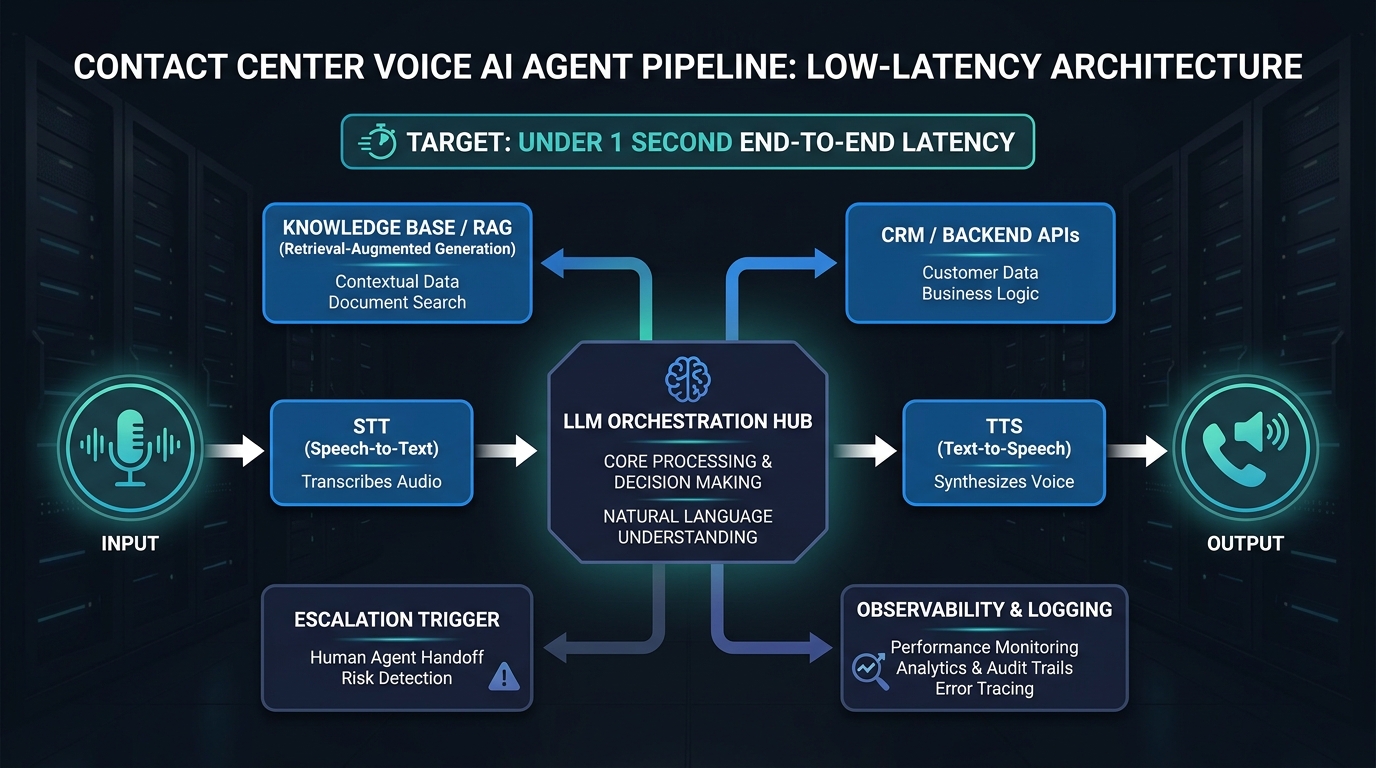
    Voice AI agent production pipeline: STT to LLM orchestration to TTS with CRM and escalation integrations

    Production voice agents in 2026 converge on a specific architectural pattern. Understanding it is important because the failure modes are not random — they are predictable, and they cluster around specific points in the pipeline.

    The cascaded STT → LLM → TTS pipeline

    The dominant architecture flows like this: a Speech-to-Text (STT) engine converts the caller’s audio to text in real time, often using streaming transcription to reduce perceived latency. That transcription passes to a large language model, which reasons about the intent, queries relevant tools or knowledge stores, and generates a response. A Text-to-Speech (TTS) engine converts that response back to audio and plays it to the caller.

    Each stage introduces latency, and those latencies are multiplicative. An STT engine adding 150ms, an LLM taking 400ms to generate a response, and a TTS engine taking 200ms means roughly 750ms before audio starts playing — and that does not account for network transit, authentication calls to the CRM, or RAG retrieval from a knowledge base. Production systems targeting sub-one-second end-to-end latency have to be engineered deliberately at every stage.

    The orchestration layer — the real production system

    The part that is consistently underinvested in pilots is the orchestration layer. This is not glue code. It is the component responsible for: managing conversation state across turns, handling barge-in (when the caller talks over the agent), deciding when to call backend tools versus when to respond from context, triggering escalation logic, managing retry and recovery when an API call times out, and writing structured logs that feed the observability stack.

    In production, the orchestration layer processes thousands of concurrent, stateful conversations simultaneously. It needs to handle failure gracefully — if the CRM API returns a 503, the agent should acknowledge the issue, offer alternatives, or escalate. It should not confuse the caller or pretend the problem does not exist.

    Teams that treat orchestration as an afterthought discover it in the worst way: an agent that silently drops state between turns, gives contradictory answers within a single call, or fails to escalate when it clearly should.

    Emerging speech-to-speech architectures

    A newer pattern gaining traction in 2026 is the speech-to-speech (S2S) multimodal model, which collapses the cascaded pipeline into a single end-to-end model that processes audio input and produces audio output without a separate STT or TTS stage. The primary benefit is latency reduction — eliminating transcription and synthesis steps can bring mouth-to-ear latency below 500ms. The drawback is maturity: S2S models are harder to audit, harder to integrate with structured backend tools, and have fewer production references than cascaded architectures.

    For most enterprise deployments in 2026, the cascaded streaming pipeline with a well-engineered orchestration layer remains the safer production choice. S2S architectures are worth piloting in narrow scenarios, particularly where latency is the primary constraint, but treating them as a production default is premature for most organizations.

    Observability is not optional

    Production voice agents need trace-level logging of every turn: what the caller said (as transcribed), what the model received, what tools were called and what they returned, what the model generated, and what the TTS spoke. Without this, diagnosing failures is guesswork, and improving containment rates is essentially impossible.

    Leading teams in 2026 treat observability as a first-class architectural requirement rather than a post-launch add-on. They instrument latency at each pipeline stage, track per-intent error rates, and run automated quality sampling on a random percentage of calls daily.

    Scoping Your First Production Use Case: The Narrow-Before-Wide Rule

    The single most consistent factor separating teams that reach production from teams stuck in pilot purgatory is use case discipline. Teams that try to automate everything at once automate nothing at scale. Teams that pick one narrow, high-volume, well-bounded call type and build it to production quality first create the organizational confidence and technical foundation to expand.

    What “narrow” actually means

    A production-ready use case has several properties. First, the intent distribution is predictable: if you pull 1,000 calls of this type, the vast majority follow a recognizable pattern and the variance is manageable. Second, the backend integrations are finite and documented: the agent needs to call two or three APIs, not fifteen. Third, the failure mode is recoverable: if the agent fails, the escalation path to a human agent is smooth and the customer experience is not damaged. Fourth, the volume justifies the investment: automating a call type that accounts for 200 calls a month does not move any meaningful metric.

    Classic first use cases that meet these criteria include: order status and shipping inquiries, account balance and transaction history, appointment scheduling and cancellation, password reset and basic account authentication, and FAQ deflection for common policy questions.

    The temptation to over-scope

    CX leaders face constant pressure to demonstrate transformational impact quickly. This pressure often drives over-scoping — trying to automate complex, multi-intent call types that require judgment, empathy, or access to a dozen backend systems. These use cases have real ROI potential, but they require a production foundation that does not exist yet.

    A banking organization that tries to deploy a voice agent capable of handling loan applications, dispute resolution, and product advisory conversations simultaneously is designing for failure. The same organization that starts with balance inquiries and account verification — achieving 70%+ containment on those narrow intents — builds the observability infrastructure, the integration patterns, the escalation protocols, and the team confidence to tackle complex use cases in phase two.

    Mapping intents before you build

    Before finalizing use case selection, the best teams do a structured intent audit: pulling three to six months of call recordings, transcribing them, and clustering by intent. This reveals which call types are genuinely high-volume and low-variance versus which ones look simple from the outside but are actually filled with exceptions. It also provides the training and evaluation data the model needs — not synthetic examples, but real caller language with all its messiness.

    Teams that skip the intent audit and build from assumed call types consistently discover, post-launch, that the distribution does not match their assumptions. The agent is tuned for calls that rarely happen and struggles with calls that are extremely common.

    The Escalation Handoff: Designing the Moment That Defines Trust

    Voice AI agent warm handoff to human agent with structured context brief — not a blind transfer

    If there is one design decision that defines whether customers trust a voice agent program, it is the escalation handoff. Get it right and customers feel the system is working as intended. Get it wrong and customers feel trapped, deceived, or disrespected — and they call back angry, sometimes multiple times.

    The multi-signal escalation trigger

    Escalation should never be driven by a single confidence threshold. Production-grade systems in 2026 use composite trigger logic that weighs multiple signals simultaneously: the model’s internal confidence score, detected customer sentiment (frustration signals in tone or word choice), conversation loop detection (the customer has stated the same need more than twice without resolution), explicit human agent requests, and policy-based rules (certain transaction types or compliance-sensitive topics should always involve a human).

    Composite triggers reduce both under-escalation (the agent confidently handles something it should not) and over-escalation (the agent transfers too easily, undermining the value of the system). The thresholds for each signal should be defined before deployment as explicit policy, not tuned reactively after complaints.

    Context transfer, not transcript dumping

    The single most common failure in production escalation is what happens after the transfer decision. Teams often configure the system to send the human agent a raw transcript of the conversation — which is typically 500-1,500 words of dialogue that the agent has no time to read while the caller is on hold waiting.

    Leading teams instead generate a structured context brief at the point of escalation: a 4-6 line summary that tells the human agent the customer’s name, their authenticated account status, the intent they called about, the steps the voice agent already took, the specific failure point, and the recommended next action. A human agent can absorb this in 8-10 seconds while the customer is in the transfer queue, meaning the conversation resumes intelligently rather than forcing the customer to repeat everything from the beginning.

    Forcing customers to repeat themselves after an AI transfer is one of the top-cited frustration points in post-deployment CSAT surveys. It signals that the AI portion of the interaction produced zero value. The structured brief eliminates this entirely.

    Warm transfer versus cold drop

    A warm transfer connects the caller to a human agent and provides a brief verbal summary before completing the handoff — something like “I’m connecting you with a specialist now. I’ve let them know you’ve been waiting and what you need.” A cold drop simply routes the call and leaves the human agent to figure it out from the incoming call.

    Warm transfers require slightly more engineering — the system needs to handle the three-party moment between the voice agent, the caller, and the incoming human agent — but the CSAT impact is substantial. Production teams that measure post-escalation CSAT consistently find warm transfers outperform cold drops by 15-25 points.

    Durable state for human-in-the-loop workflows

    An underappreciated design requirement for complex call types is durable conversation state — the ability for a human agent to review what the AI did, make a decision, and then hand back to the AI for completion. This is particularly valuable in regulated industries where certain steps require human authorization but others can be automated.

    Without durable state, every human intervention effectively terminates the automated portion of the workflow. With it, the human acts as a checkpoint rather than a replacement, dramatically improving the economics of complex, partially-automated interactions.

    Governance, Compliance, and the Regulatory Layer That Pilots Skip

    Compliance is where many enterprise pilots stall when they try to scale. The pilot ran on a test dataset that excluded sensitive interactions. Production cannot. Voice agents in 2026 operate under a thickening web of regulatory obligations that were either absent or unenforced when most pilot architectures were designed.

    PCI DSS 4.0.1 and voice payments

    PCI DSS 4.0.1 — which reached full mandatory compliance in 2026 — explicitly addresses AI systems that handle payment card data in contact center environments. Voice agents that capture card numbers, expiry dates, or CVVs are now required to implement scope-reduction controls, maintain audit trails of AI-mediated transactions, and ensure the LLM and TTS systems do not retain sensitive data between interactions.

    Many pilot architectures log full conversation transcripts for quality review without redacting payment data. This is a compliance violation at production scale. Teams need to implement real-time redaction pipelines that scrub card data from transcripts before storage, and they need to audit every component in the voice pipeline to confirm it does not cache sensitive audio or text.

    HIPAA and healthcare voice agents

    Healthcare organizations deploying voice agents in patient-facing support roles face HIPAA obligations that extend to every component in the AI pipeline — including the LLM provider, the STT engine, the TTS provider, and the observability platform. Each of these vendors typically needs a Business Associate Agreement (BAA). The LLM provider’s standard enterprise agreement may not include BAA terms, which means the legal team needs to negotiate customized contracts before the voice agent can handle any interaction involving protected health information.

    This is not a theoretical risk. HIPAA enforcement against AI-mediated healthcare interactions has intensified since late 2025, with investigators specifically examining whether organizations applied the same rigor to AI systems that they would apply to human agents.

    EU AI Act Article 50 and disclosure requirements

    For organizations serving EU customers, the EU AI Act’s Article 50 transparency obligations — now enforceable — require that customers interacting with an AI system be clearly informed that they are speaking with an AI, not a human. This means voice agents cannot use names, voices, or conversational patterns designed to create the impression of human interaction without disclosure.

    The practical implication is that the introductory script — “Hi, this is Aria, our virtual assistant” — is not optional branding copy. It is a compliance requirement. And it needs to be reinforced at the point of escalation, when customers are sometimes uncertain whether they have been transferred to a human. Failing to disclose this explicitly is an enforceable violation.

    TCPA and outbound voice AI

    Organizations using voice agents for outbound calls — proactive notifications, collections, appointment reminders — face Telephone Consumer Protection Act obligations that have become significantly more stringent. Updated consent requirements now require explicit, documented, revocable consent for AI-initiated outbound voice calls, and consent obtained for one purpose (marketing, for example) does not transfer to another (collections).

    Compliance teams need to audit every outbound use case before production deployment, verify the consent basis for every contact list, and implement real-time opt-out handling so the voice agent immediately stops calling a customer who requests it — including recognizing verbal opt-out requests in natural language.

    The Metrics That Actually Matter — Beyond Containment Rate
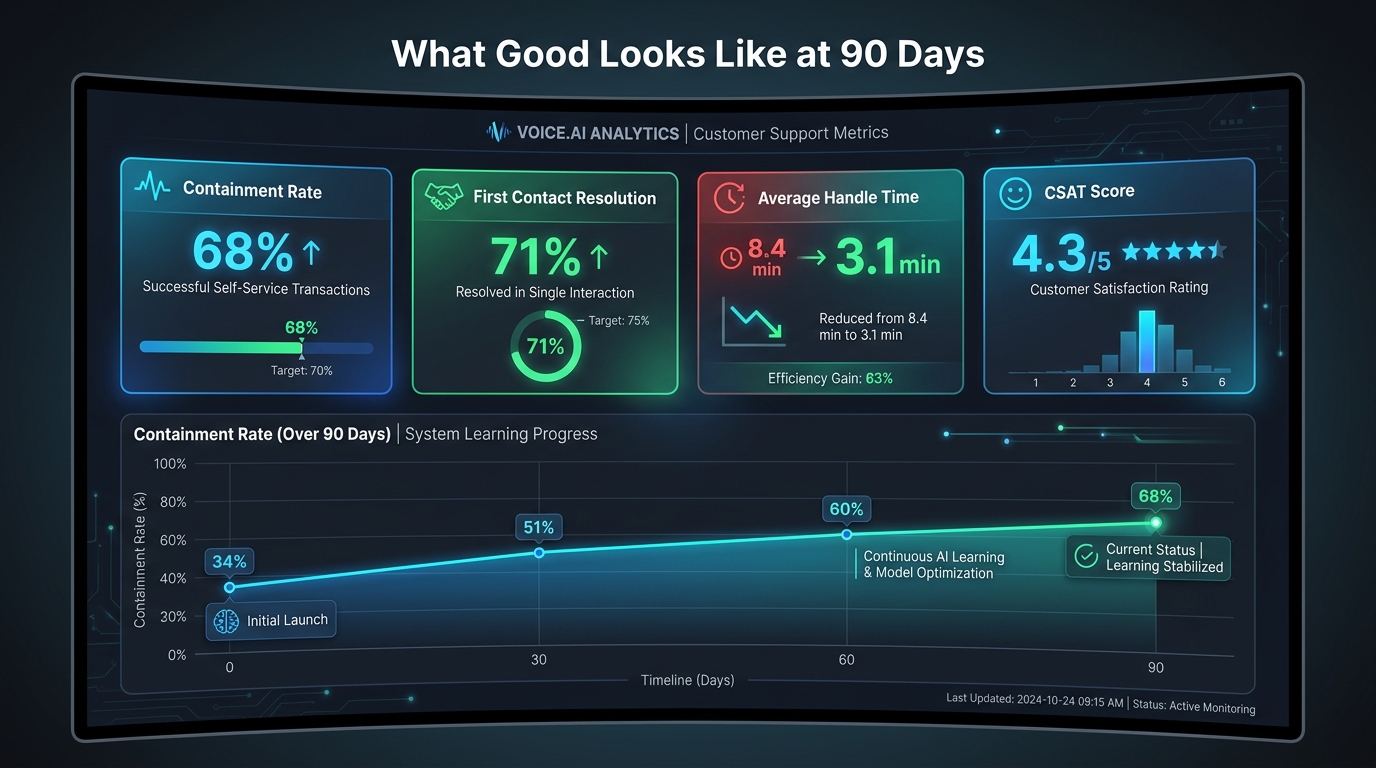
    Voice AI support metrics dashboard showing containment rate 68%, FCR 71%, AHT reduction, and CSAT 4.3 after 90 days

    Containment rate — the percentage of calls the voice agent handles end-to-end without escalation — has been the headline metric for voice AI deployments since the technology emerged. It is also one of the most misleading metrics in production if it is the only metric being tracked.

    Why containment rate lies to you

    A containment rate measures calls completed without human escalation. It does not measure whether those calls were actually resolved. A caller who asks about a billing dispute, receives an unhelpful response, and hangs up in frustration counts as a “contained” interaction by most definitions. That caller will call back — often immediately, now irate — and the repeat contact represents a cost that the containment metric invisibilized.

    The shift in leading contact centers in 2026 is from containment rate to true resolution rate — a metric that measures whether the customer’s issue was actually solved, typically validated by checking whether the same customer with the same intent contacts support again within a defined window (usually 24-72 hours). A voice agent that truly resolves an issue at 65% containment is dramatically more valuable than one that “contains” at 80% but resolves at 40%.

    The metric stack for mature deployments

    Teams operating in full production track a five-metric stack that gives a complete picture of voice agent performance:

    • True resolution rate (TRR): The percentage of handled interactions where the issue was resolved without repeat contact. This is the primary performance metric.
    • Post-escalation resolution time: How long it takes human agents to resolve calls that were escalated from the voice agent. A rising post-escalation time indicates the agent is handling the wrong calls — passing the most complex cases through — or that context transfer is failing.
    • CSAT delta by channel: Customer satisfaction scores for AI-handled versus human-handled calls on the same intent type. This should narrow as the agent matures, but a persistent gap signals a quality ceiling.
    • Escalation trigger precision: What percentage of escalations were genuinely necessary versus cases where the agent escalated unnecessarily. High unnecessary escalation rates indicate over-cautious thresholds; low unnecessary escalation rates with high post-escalation CSAT scores indicate the trigger logic is well-calibrated.
    • Cost per resolved contact: The total operational cost (infrastructure, staffing, oversight, vendor fees) divided by the number of contacts where the issue was fully resolved. This grounds the business case in outcomes, not activity.

    The 90-day learning curve

    Production voice agents rarely hit their operational targets in the first few weeks. Mature deployments in 2026 typically show a pattern of containment starting in the 30-40% range at launch and climbing to 55-70% over a 60-90 day ramp period, as the team tunes intent recognition, expands the knowledge base, fixes integration edge cases, and refines escalation thresholds based on real call data.

    Teams that measure success at day 14 and conclude the program is underperforming are measuring at the wrong point on the curve. The appropriate target-setting conversation should be about 90-day benchmarks, not launch-week performance.

    The Workforce Conversation Nobody Wants to Have
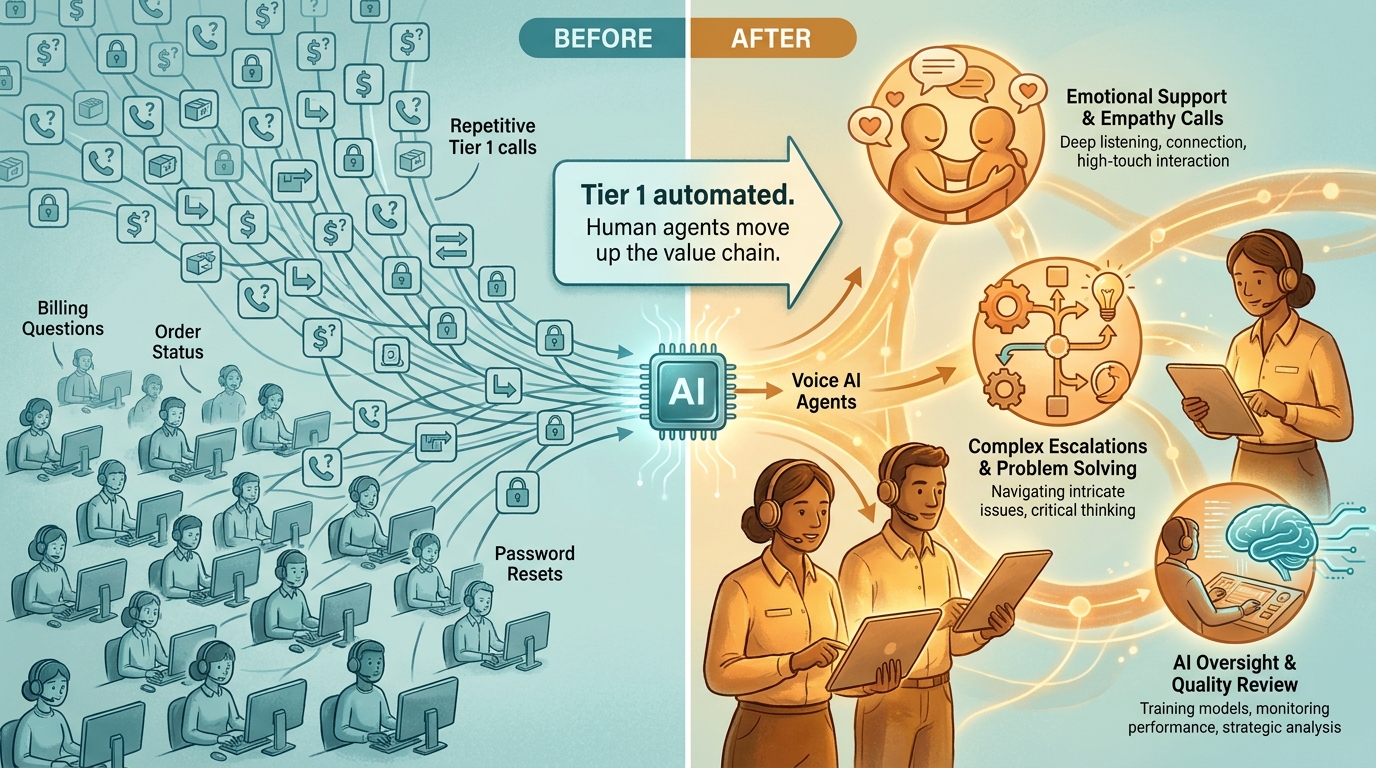
    Contact center workforce transformation — agents moving from repetitive Tier 1 calls to complex escalations and AI oversight roles

    There is no version of a successful full-production voice agent rollout that does not affect the workforce. Approximately 2 million call center jobs were eliminated globally between mid-2024 and mid-2026 as voice AI deployed at scale. That is not a statistic to be celebrated or minimized — it is a fact that every CX leader planning a rollout needs to address explicitly with their teams.

    What agents are actually afraid of

    Frontline customer support agents in 2026 report that their primary concern is not immediate job loss — it is work intensification. As voice agents handle routine Tier 1 interactions, the calls that reach human agents are, by definition, the harder ones: frustrated customers, complex multi-issue interactions, emotionally charged escalations, and edge cases the AI cannot resolve. Agents report that their jobs are becoming more cognitively demanding and emotionally taxing without a corresponding change in compensation, title, or support infrastructure.

    This is the dynamic that, left unaddressed, drives the highest-quality agents to leave. And losing experienced agents who know how to handle complex calls is exactly the wrong outcome when the voice agent is supposed to be freeing humans for higher-value work.

    The role redesign problem

    Many organizations announce a voice agent rollout with messaging that emphasizes “augmentation” and “freeing agents for meaningful work,” without actually redesigning the work. The agent queue changes in volume and composition, but the job descriptions, performance metrics, compensation structures, and support resources stay the same.

    Effective rollouts treat workforce redesign as a parallel workstream, not a follow-on task. This means: redefining performance metrics to reflect the harder nature of the remaining call mix, creating explicit AI oversight and quality review roles that skilled agents can grow into, providing training on handling emotionally escalated calls (which will make up a larger share of the queue), and establishing clear communication about headcount changes — whether through attrition management, redeployment, or reduction in force.

    The change management minimum viable commitment

    The minimum change management commitment for a full production rollout includes: a pre-launch briefing with frontline agents that is honest about what the system does and how it affects their role; a feedback channel where agents can report voice agent failures or inappropriate escalations; regular sessions where agent insights about common failure patterns inform model improvement; and a visible internal sponsor — ideally a CX executive — who communicates regularly about the program’s direction.

    Teams that skip this and simply launch tend to encounter passive resistance — agents who recommend that callers “ask to speak to a real person” or who flag every AI interaction as a complaint regardless of outcome. This is not malicious; it is what happens when the people closest to the customer feel excluded from a process that fundamentally changes their work.

    Where Voice Agents Are Delivering Real Numbers: Sector Evidence
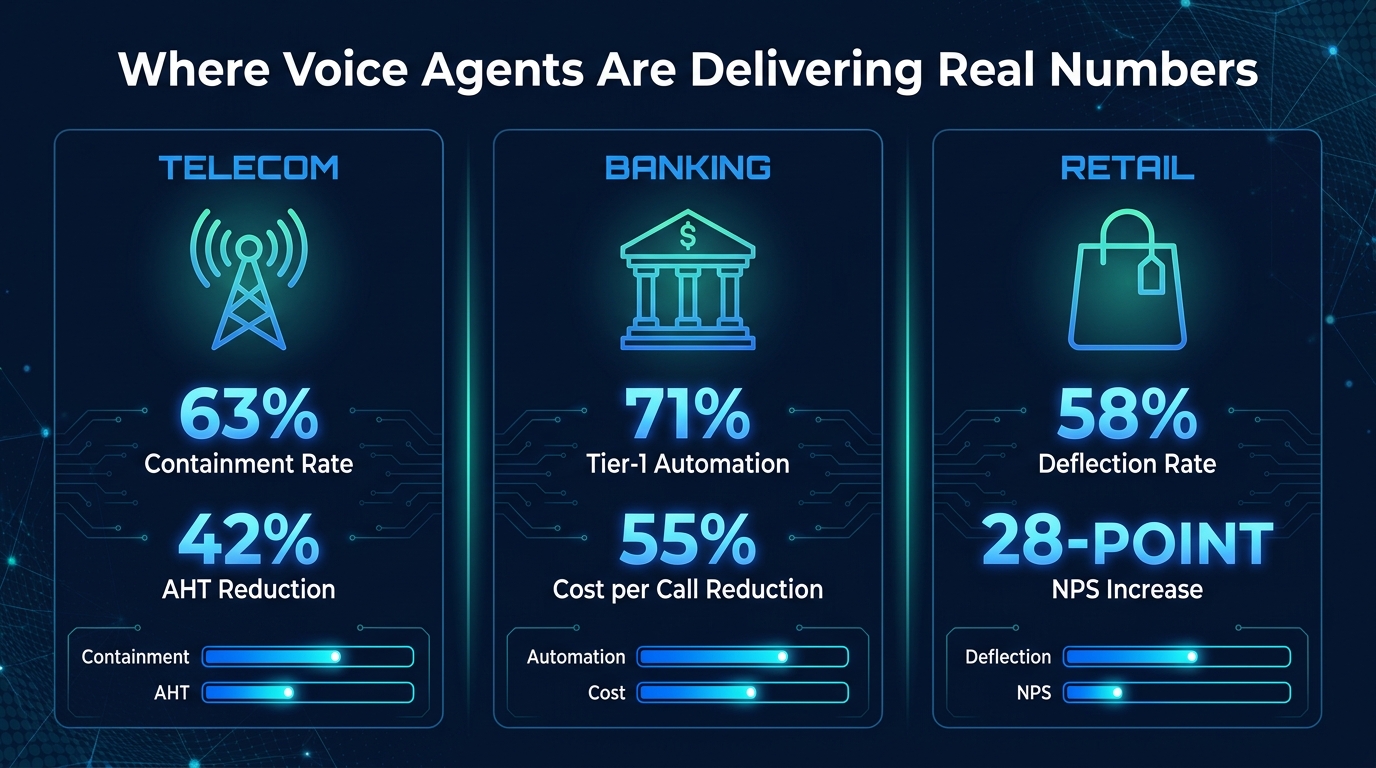
    Voice AI agent results by sector — Telecom 63% containment, Banking 71% Tier-1 automation, Retail 58% deflection

    The gap between pilot enthusiasm and production reality does not mean voice agents are not working. In specific sectors, with specific use cases, they are delivering substantial, measurable results. The pattern is consistent: results are best where call volume is high, intent distribution is predictable, and backend integrations are manageable.

    Telecom: High volume, high ROI

    Telecommunications is the sector with the most mature voice agent deployments in 2026. Tier-1 telcos typically handle hundreds of thousands of inbound calls per day, with a significant portion concentrated in a handful of common intents: billing inquiries, data usage checks, outage status, SIM card issues, and plan changes.

    Production deployments in this sector report containment rates of 55-70% for these defined use cases, with average handle time reductions of 35-50% on the calls that do reach human agents (because the AI has already authenticated the customer and captured the intent). Cost per resolved contact has dropped by 40-60% in mature telco deployments. Vodafone’s published results with its generative AI speech agent for first-level customer service illustrate the pattern: SIM activation and billing query automation at scale, with the human agent queue refocused on complex and commercial calls.

    Banking: Trust-intensive, but the numbers work

    Banking presents higher compliance complexity than telecom — authentication requirements are stricter, error costs are higher, and customer trust in AI handling financial matters starts from a lower baseline. But mature banking deployments are achieving 65-75% Tier-1 automation rates for self-service account management use cases, with 50-60% cost reductions per interaction.

    The key differentiator in successful banking deployments is authentication architecture. Voice agents that use voice biometrics combined with knowledge-based authentication (rather than relying solely on knowledge-based verification, which is increasingly vulnerable to social engineering) achieve higher containment rates because they resolve authentication faster, and customers feel the security is appropriate for the channel.

    Outbound use cases in banking — proactive balance alerts, payment due reminders, and collections follow-ups — are also generating measurable results, with collection rates on AI-handled outbound campaigns running 15-25% higher than equivalent email campaigns, primarily because the voice medium achieves higher engagement rates.

    Retail: Seasonal scaling and multilingual support

    Retail’s primary voice AI value proposition is different from telco and banking: it is less about permanent cost reduction and more about elastic capacity. Retail call volume spikes dramatically during peak periods — Black Friday, holiday shipping windows, major sale events — and the traditional approach of hiring seasonal agents creates quality and training challenges.

    Voice agents scale to handle those peaks without hiring, without training lag, and without the quality variance that comes with seasonal agents who have been onboarded in two days. Retailers with production voice agent deployments report 55-65% deflection rates for order status, returns initiation, and store information queries during peak periods, with CSAT scores that hold within 10 points of the off-peak baseline — a meaningful improvement over seasonal agent quality metrics.

    Multilingual support is a secondary but significant advantage in retail. A voice agent can be deployed in 15 languages simultaneously at no marginal cost per language, while adding a human agent for each language requires separate hiring markets and training infrastructure. For retailers with geographically diverse customer bases, this capability alone can justify the deployment investment.

    The 90-Day Rollout Cadence That Actually Works

    Across the deployments that have successfully moved from pilot to full production, a repeatable 90-day cadence emerges. It is not universal — sector, team size, and technical complexity create variations — but the broad structure holds.

    Days 1-30: Production foundation, not feature expansion

    The first month of production is not the time to add use cases. It is the time to confirm that the initial use case is functioning reliably under real load, that the observability stack is capturing everything needed for diagnosis, and that the escalation pathway is smooth. Teams should be reviewing a random sample of calls daily — not just metrics, but actual transcripts and audio — to identify failure patterns that aggregate metrics obscure.

    Key targets for day 30: containment rate of at least 35% on the target use case (the system is handling something meaningful), escalation CSAT above 3.8 on a 5-point scale (the handoff experience is not damaging customer relationships), and zero compliance findings from legal and compliance review of the call logs.

    Days 31-60: Systematic improvement, intent expansion

    With the foundation confirmed, days 31-60 focus on improving performance on the existing use case while beginning the readiness assessment for the next. The improvement work is data-driven: categorizing containment failures by root cause (transcription error, intent misclassification, missing knowledge, integration failure, or appropriate escalation), then prioritizing fixes by frequency and impact.

    The intent expansion readiness assessment follows the same criteria as the original use case selection: intent distribution analysis, backend integration inventory, failure mode mapping, and compliance review. The goal is to have the next use case ready to launch in month three, not to start the architecture work in month three.

    Days 61-90: Scale and second use case launch

    By day 60, a well-executed deployment should show containment rates in the 55-68% range on the initial use case and be ready to launch the second. Days 61-90 run both use cases simultaneously, with careful monitoring to ensure that adding volume and complexity to the system does not degrade performance on the established use case.

    The 90-day mark is also the appropriate point for the first formal business case review: comparing actual cost per resolved contact, agent time savings, and customer satisfaction metrics against the pre-launch projections. This review serves two purposes: it validates (or challenges) the ongoing investment, and it builds the organizational evidence base for the next phase of expansion.

    What Full Production Actually Looks Like — and How You Know You’re There

    There is no universally agreed definition of “full production” for a voice agent program. But the characteristics of teams that consider themselves there — as opposed to teams still in an extended pilot — are fairly consistent.

    Volume thresholds

    A program is in full production when the voice agent is handling a material percentage of the total call volume for its defined use cases — not a gated subset, not a test cohort, but the default path for those calls. This typically means 20-40% of total inbound call volume for the combined set of automated intents, with the expectation that this will grow as more use cases are added.

    Programs where the voice agent is still handling less than 10% of relevant call volume, or where human agents retain a parallel path for the same call types, are not in full production. They are in supervised expansion — which is a legitimate stage, but it is not the same thing.

    Operational independence

    A production program runs without requiring dedicated attention from the AI/ML team for routine operations. The contact center operations team can adjust thresholds, update knowledge base content, configure new routing rules, and review performance dashboards without developer involvement. The development team handles structural changes and new use case launches, but the day-to-day operation is genuinely owned by operations.

    This is frequently the last milestone reached. Teams that built voice agents on architectures that require engineering intervention for every content update or threshold adjustment are operationally dependent on the technical team indefinitely. Full production requires sufficient no-code or low-code configurability that operational staff can manage the system they are accountable for.

    Continuous improvement infrastructure

    A production program has a functioning feedback loop: call samples are reviewed regularly, failure categories are tracked and prioritized, model updates are deployed on a cadenced schedule (not reactively), and performance metrics are reviewed in monthly operational reviews that include both technical and business stakeholders.

    The distinction between a mature production program and a deployed-but-stagnant one is this continuous improvement infrastructure. Without it, a system that achieves 60% containment at launch will still be at 60% eighteen months later, and the business case for expansion deteriorates.

    Escalation as a designed system, not an exception path

    Finally, a production program treats escalation not as a failure mode but as a designed workflow. The system knows which calls to escalate, when to escalate them, how to transfer context, and how to route to the right human agent tier. Post-escalation performance is measured and reviewed. The human agent queue is staffed appropriately for the escalation volume. And escalation rate itself is used as a leading indicator — a rising escalation rate signals something has changed in the call mix or the system’s performance, and that signal triggers investigation before it becomes a customer satisfaction problem.

    Conclusion: The Gap Is Executable

    The 37-point gap between the 64% of enterprises piloting voice agents and the 27% that have reached production is not a reflection of the technology’s limits. It is a reflection of execution complexity that pilots are specifically designed to avoid confronting.

    The teams that close that gap share a specific set of behaviors: they scope narrowly and build to quality before expanding, they invest in orchestration and observability as first-class concerns rather than afterthoughts, they design escalation as a user experience rather than a technical fallback, they address compliance proactively rather than reactively, and they treat the workforce impact as a change management challenge that requires as much attention as the technical architecture.

    The median time from pilot to production is four to five months. That is not a long time. But it requires that the months be spent on the right problems — the variance handling, the integration depth, the escalation design, the governance framework, and the operational tooling that pilot conditions happily obscure.

    Voice agents are not difficult to demo. They are difficult to run well at scale in a production support environment where the calls are harder, the callers are real, and the consequences of failure — a frustrated customer, a compliance finding, a lost agent — are concrete.

    The teams in the 27% know this. They built for those conditions from the start. That is what separates a production rollout from a pilot that never ends.

    Key Takeaways

    • Stress-test for real conditions before launch: Unscripted callers, real integrations, peak load, and edge cases. Pilot conditions are favorable by design.
    • Treat orchestration as the production system: State management, retry logic, observability, and escalation triggers belong in the architecture from day one.
    • Start with one narrow, high-volume, well-bounded use case. Over-scoping is the most common path to pilot stagnation.
    • Design escalation as a UX, not a fallback: Multi-signal triggers, structured context briefs, and warm transfers are non-negotiable in production.
    • Audit compliance before launch, not after: PCI DSS 4.0.1, HIPAA, EU AI Act Article 50, and TCPA requirements apply to production systems — and enforcement has intensified.
    • Measure resolution, not containment: A call the AI “contained” but did not resolve is a repeat contact waiting to happen.
    • The workforce conversation is not optional: Agents whose work changes without explanation or redesign become the program’s loudest critics.
    • 90 days is the right measurement window: Systems that look underwhelming at day 14 often hit targets by day 60-90 as tuning and data accumulate.
  • Speed Isn’t the Point: What AI First Response in Customer Support Actually Gets Wrong (and Right)

    Speed Isn’t the Point: What AI First Response in Customer Support Actually Gets Wrong (and Right)

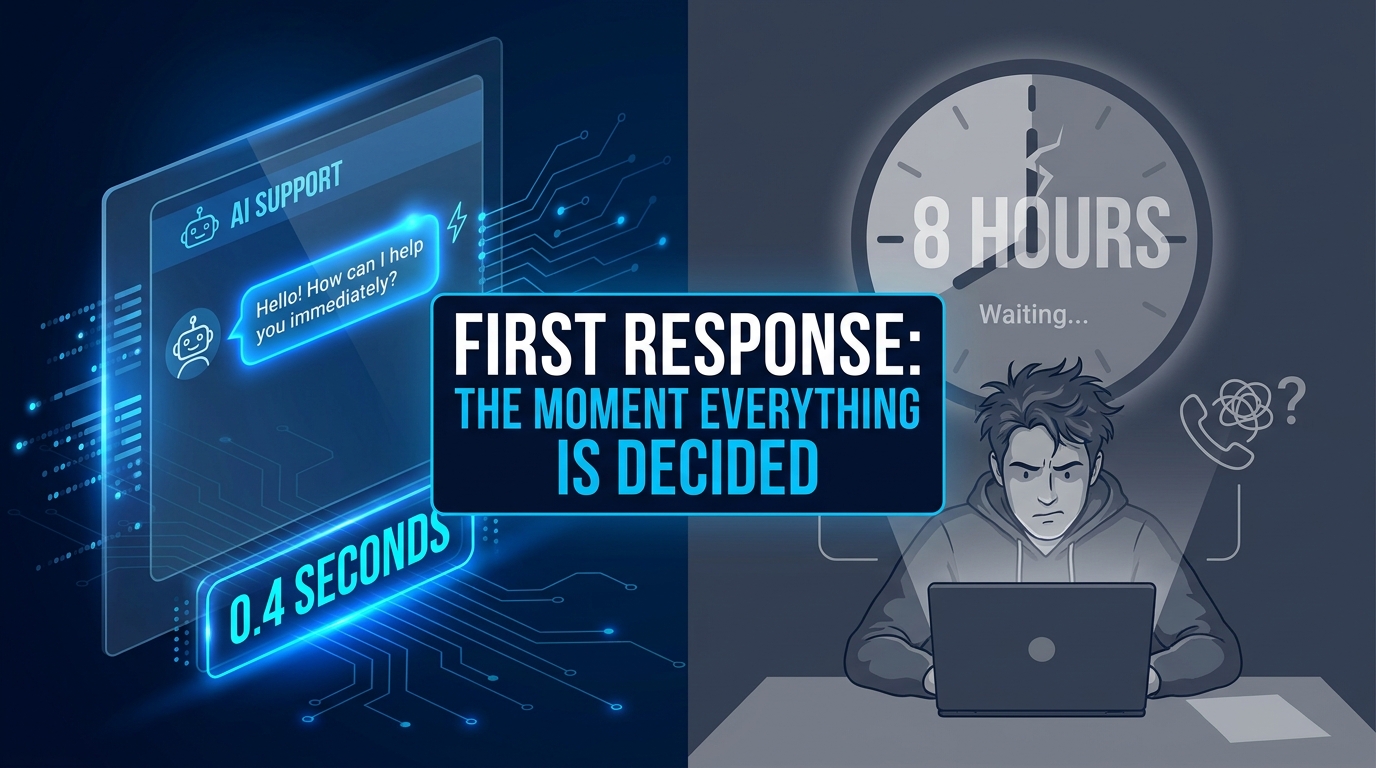
    There is a specific moment in every customer support interaction that decides everything that follows. It’s not the resolution. It’s not the CSAT survey at the end. It’s the first response — the moment a customer reaches out and something responds back.

    For most of the last decade, that moment was defined by waiting. Six hours for an email reply. Nine minutes in a live chat queue. Two minutes on hold listening to hold music while someone pulled up your account. That waiting period wasn’t just inconvenient — it was the first signal a company sent about how much it valued your time.

    AI has obliterated that wait. In 2026, AI-powered first responses arrive in under four seconds on chat, instantly on voice, and within minutes on email — compared to industry averages that used to stretch across hours. Freshworks benchmark data shows AI-equipped teams reducing first response time from over six hours to under four minutes. Klarna cut resolution time from eleven minutes to two. Lovepop reportedly went from seven hours to eighteen seconds.

    The numbers are real. But here’s the problem: the conversation about AI first response has become almost entirely about speed, and that framing is causing companies to make decisions they’ll spend the next two years unwinding. Speed is the easy part. What happens in those first four seconds — the quality, the accuracy, the tone, the routing logic — is where AI deployments actually succeed or fail.

    This article is not a celebration of how fast AI responds. It’s an examination of what AI first response actually is, what it gets right, what it gets catastrophically wrong, and what the data says about building systems that don’t just respond fast but respond well.

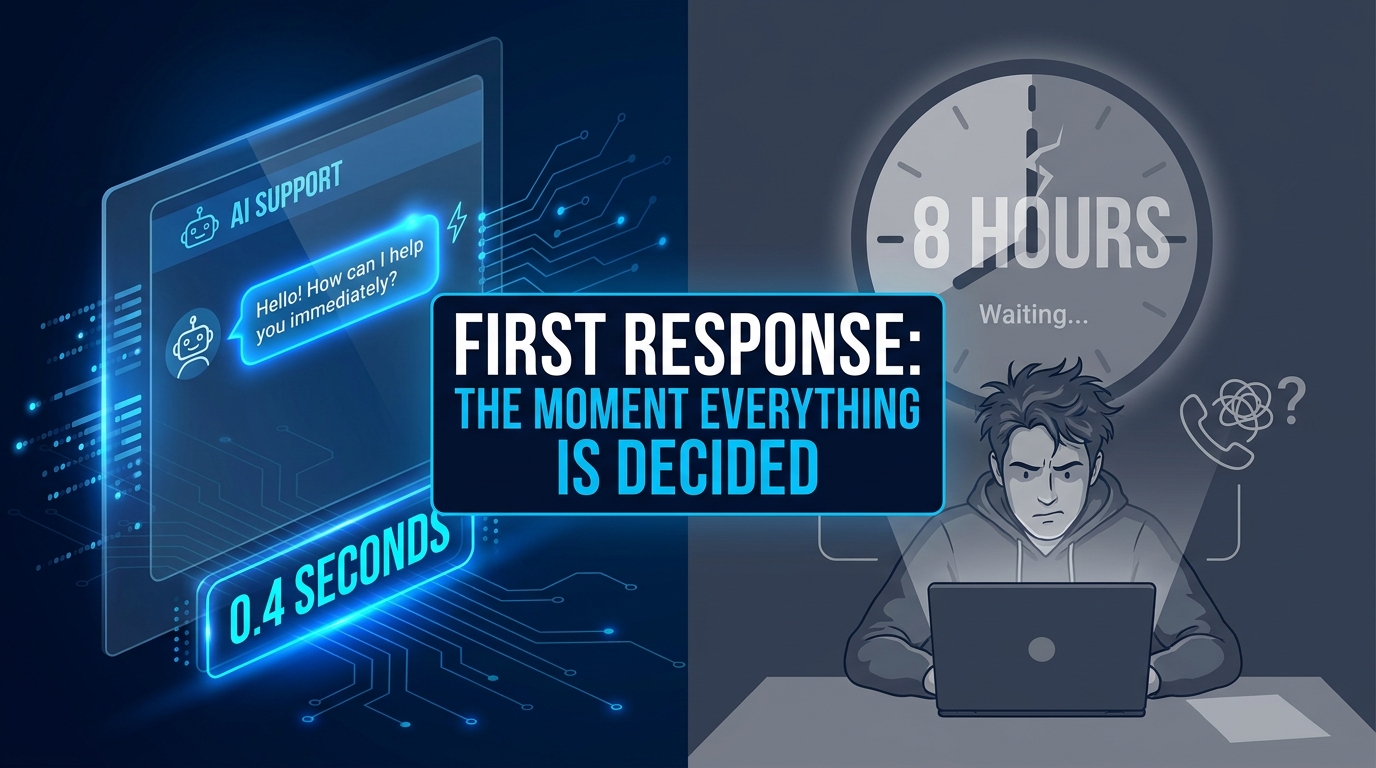
    AI first response in customer support — split screen showing instant AI response versus long human wait time

    What “First Response” Actually Means in the AI Era

    Before analyzing what works and what doesn’t, it’s worth being precise about terminology — because “first response” is used loosely in ways that obscure what’s actually happening inside a support interaction.

    First Response Time (FRT) vs. First Contact Resolution (FCR)

    First Response Time (FRT) measures how long it takes for a customer to receive any reply after submitting a request. In the AI context, this is typically measured in seconds. A chat session that receives an automated acknowledgment within four seconds has an excellent FRT regardless of whether that response actually helps the customer.

    First Contact Resolution (FCR) is the metric that actually matters. It measures whether the customer’s issue was fully resolved in that first interaction — without requiring a follow-up ticket, a callback, or escalation to a human agent. The industry average for human-staffed contact centers is around 70%, according to SQM Group research. World-class FCR — above 80% — is achieved by fewer than 5% of contact centers.

    The reason this distinction matters: many AI deployments report impressive FRT numbers while quietly delivering poor FCR. A customer receives a response in four seconds that says “Thanks for reaching out, I’m looking into this” — but the underlying issue still takes three more exchanges and a human agent to resolve. The FRT looks great. The customer experience does not.

    The Triage Response: A Third Category

    There’s a third type of first response that often gets overlooked: the triage response. This is an AI-generated first reply whose primary job isn’t resolution — it’s classification. The AI acknowledges the customer, identifies the category and urgency of the issue, and either routes it appropriately or provides enough information to begin resolution while a human prepares to take over.

    Done well, a triage response functions as a bridge. Done poorly, it’s just an automated holding pattern that customers can see through immediately. The difference lies in whether the triage response is genuinely useful or merely performative — and that depends entirely on what happens in the systems behind it.

    Channel Context Matters More Than Most Benchmarks Acknowledge

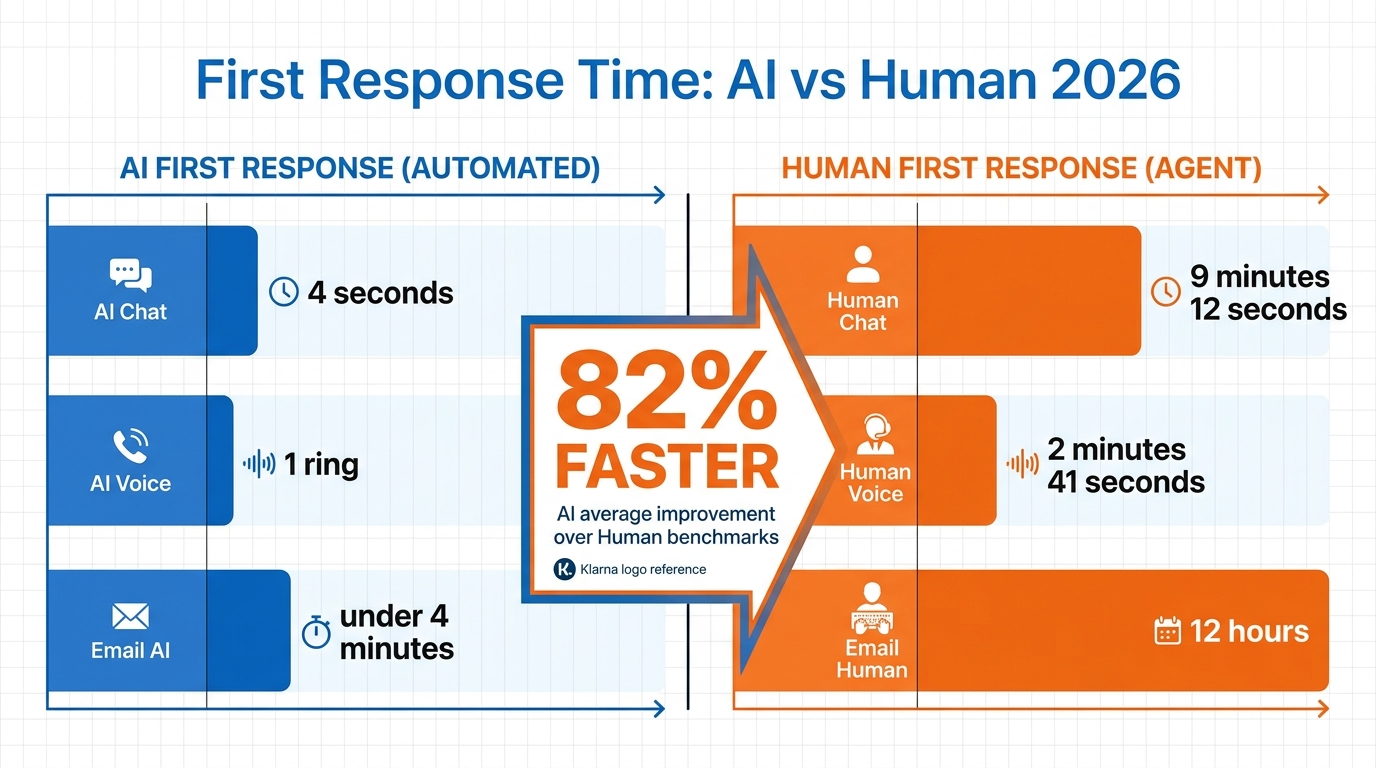
    FRT benchmarks also vary dramatically by channel, and treating them as comparable is a mistake. For live chat, a strong AI FRT is under 40 seconds — with the best AI systems consistently hitting under five seconds. For email, under four hours is considered strong performance, while the industry average sits around twelve hours. For social media, under sixty minutes is the target. Voice AI is in a different category altogether, where response means picking up within one ring.

    When a vendor quotes “74% reduction in first response time,” it matters enormously whether that reduction was on chat, email, or phone — and whether it was measured against FRT alone or against the full resolution timeline. Both numbers can be true while telling completely different stories about actual customer experience.

    The Real Benchmarks: What AI First Response Looks Like in Practice

    AI vs human first response time benchmarks 2026 — bar chart comparison showing 4 seconds vs 9 minutes for chat

    Setting aside vendor marketing, the data picture that emerges from 2026 deployments is both more impressive and more nuanced than most summaries suggest.

    The Speed Numbers Are Legitimate

    AI chat first response averages four seconds, according to Digital Applied’s 2026 benchmarking data. Human live chat averages nine minutes and twelve seconds. That’s a gap of roughly 137x in raw speed. For voice, AI responds within one ring while human agents average two minutes and forty-one seconds to answer. These aren’t hypothetical projections — they’re measured averages across real deployments.

    The Klarna case is the most widely cited because the numbers are independently verifiable. After deploying an OpenAI-powered assistant, Klarna handled 2.3 million customer conversations in the first month — equivalent to the workload of approximately 700 full-time agents. Average resolution time fell from eleven minutes to two minutes, an 82% improvement. Repeat inquiries dropped 25%. And crucially, their CSAT score remained comparable to human-only benchmarks.

    H&M’s generative AI chatbot reduced response times by 70% compared to human agents. Freshworks data from their CX Benchmark report shows AI dropping first response from over six hours to under four minutes, and resolution time from 32 hours to 32 minutes — an 87% cut on resolution. For small businesses specifically, AI delivered a 41.56% improvement in FRT and a 36.39% gain in resolution time.

    Resolution Rates Tell a More Complex Story

    While FRT numbers are consistently strong, resolution rates show much more variance — and this is where the honest conversation about AI first response needs to happen.

    The industry average for AI resolution sits at 65-70% for standard deployments. That number improves over time: most platforms report 40-60% in the first few months, climbing to 60%+ after six to twelve months of learning. Best-in-class deployments using source-grounded Retrieval Augmented Generation (RAG) approaches reach 85-90% resolution rates — Intercom’s Fin platform reports an average of 67% across its 7,000+ customers, with top performers hitting 80-84% and exceptional deployments reaching 93%.

    Salesforce Agentforce reported an 84% autonomous resolution rate across 380,000+ conversations, with only a 2% escalation rate. These numbers represent what’s achievable with mature, well-configured systems. They are not the starting point for a new deployment.

    What the Top 10% Actually Does Differently

    Freshworks benchmark data makes an important observation: top AI-equipped support teams hit ten-second average responses compared to six minutes for non-AI teams. But the gap between average AI deployments and top-quartile AI deployments is nearly as large as the gap between AI and non-AI teams. The technology is table stakes. What separates performance levels is the configuration, the knowledge base quality, and the routing logic behind the first response — not the AI model itself.

    Why Speed Alone Is a Trap (The CSAT Nuance Nobody Explains)

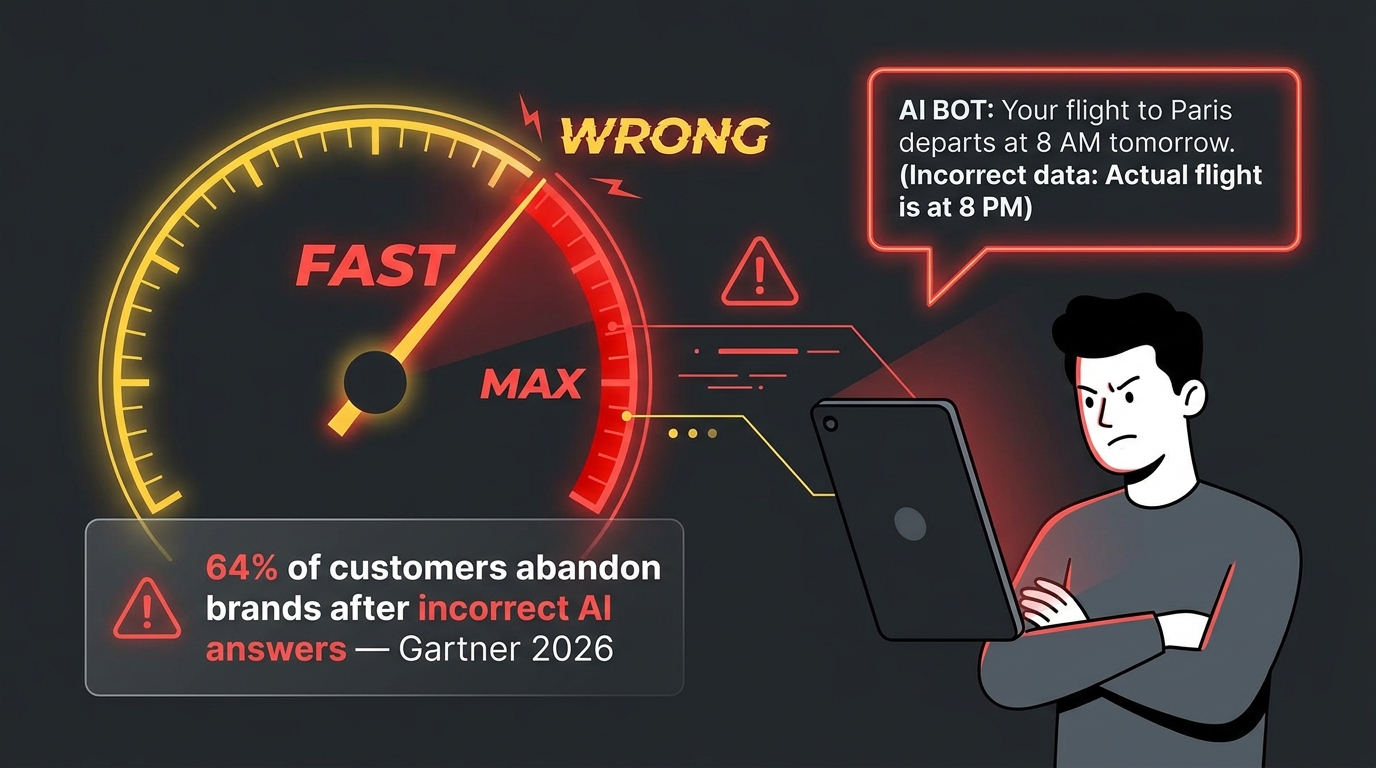
    Speed vs quality trap in AI customer support — speedometer showing fast but wrong responses

    The dominant narrative around AI customer support treats speed as the primary value driver. Faster responses equal happier customers equal better business outcomes. This logic has a kernel of truth and a large blind spot.

    Speed Is Table Stakes, Not a Differentiator

    Early 2026 research is surfacing a pattern that most vendors are slow to publicize: customers now expect fast AI responses as a baseline. The presence of a fast first response no longer creates satisfaction — its absence creates dissatisfaction. That’s a meaningful shift from even two years ago when sub-minute AI response times were still genuinely impressive to customers.

    When speed becomes an expectation rather than a differentiator, it stops driving CSAT scores. What drives CSAT in 2026 is whether the fast response was also correct. Gartner data is unambiguous on this point: 64% of customers abandon brands after receiving incorrect AI answers. The speed that impressed them means nothing once they receive information that’s wrong.

    The CSAT Holding Pattern

    Multiple studies show that AI deployments hold CSAT scores relatively stable — they don’t dramatically improve them, but they also don’t sink them in well-implemented cases. Klarna’s comparable CSAT numbers are cited as a success, and they are. But “comparable to humans” is a floor, not a ceiling. The ceiling is what happens when AI first response combines speed with genuine accuracy and appropriate tone — and that combination is what organizations building serious support infrastructure are working toward.

    The data from OnClarity shows AI live chat achieving 87% CSAT versus 61% for email — but that gap exists across channels regardless of AI involvement. It reflects channel preferences, not AI quality. Freshworks reports AI-first teams improving CSAT from 89% to 99% in some cases, but those results require months of tuning and knowledge base optimization. They don’t arrive with deployment.

    The Quality Threshold: Where AI First Response Breaks Down

    There is a resolution rate threshold below which AI first response actively damages customer relationships rather than supporting them. Most practitioners put that threshold at around 75% — meaning if fewer than three in four customer inquiries are being genuinely resolved on first contact, the system is creating more repeat contacts, more escalations, and more frustration than it’s preventing.

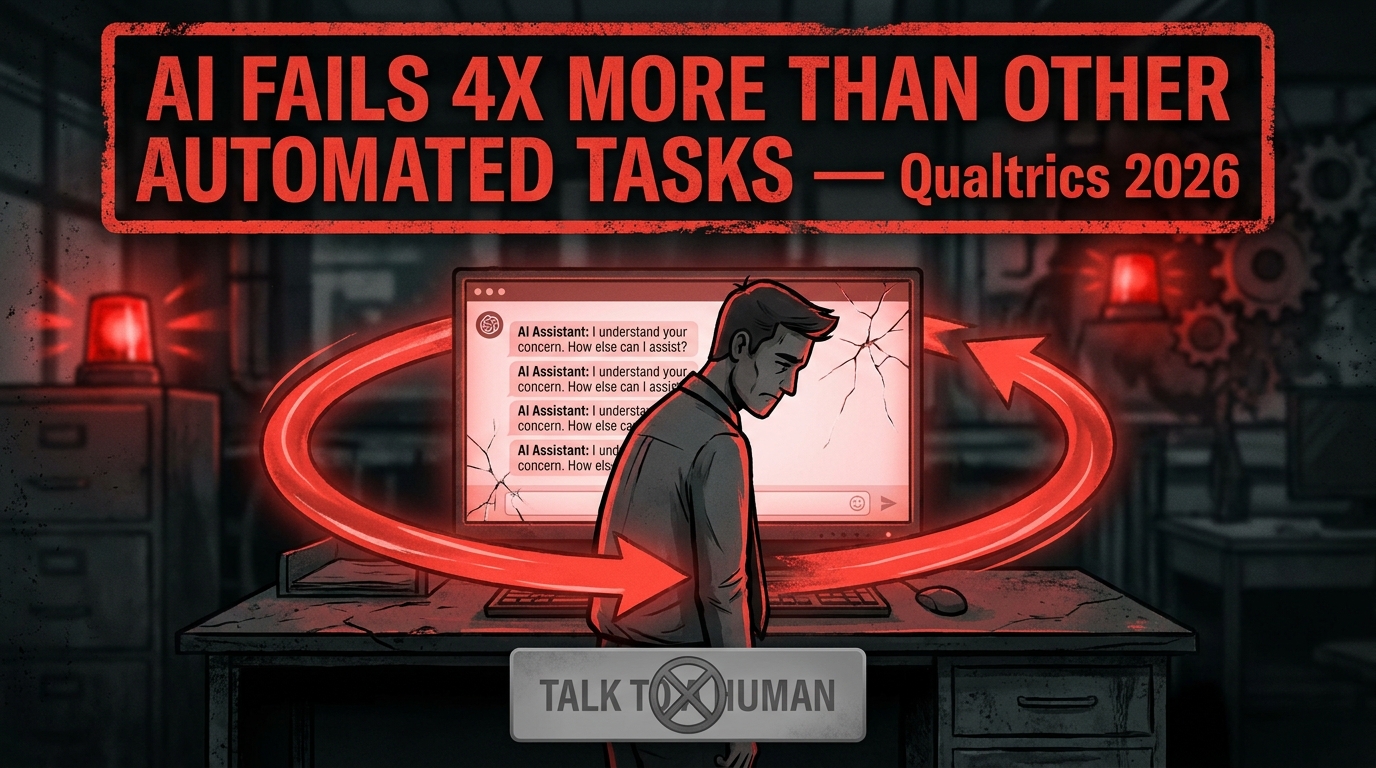
    Qualtrics’ 2026 consumer research — surveying 20,000 people across 14 countries — found that AI-powered support fails at four times the rate of other automated business tasks. Ninety percent of respondents reported reduced brand loyalty when AI support failed without a clear human escalation path. Fifty-three percent expressed concerns about data misuse in AI interactions, up eight percentage points year over year.

    These are not fringe concerns. They are mainstream customer attitudes, and they exist inside the same market where 51% of customers say they prefer chatbots for their speed. Both things are simultaneously true: customers want speed AND accuracy. The moment speed comes at the cost of accuracy, the preference for AI inverts quickly.

    The Anatomy of an Effective AI First Response

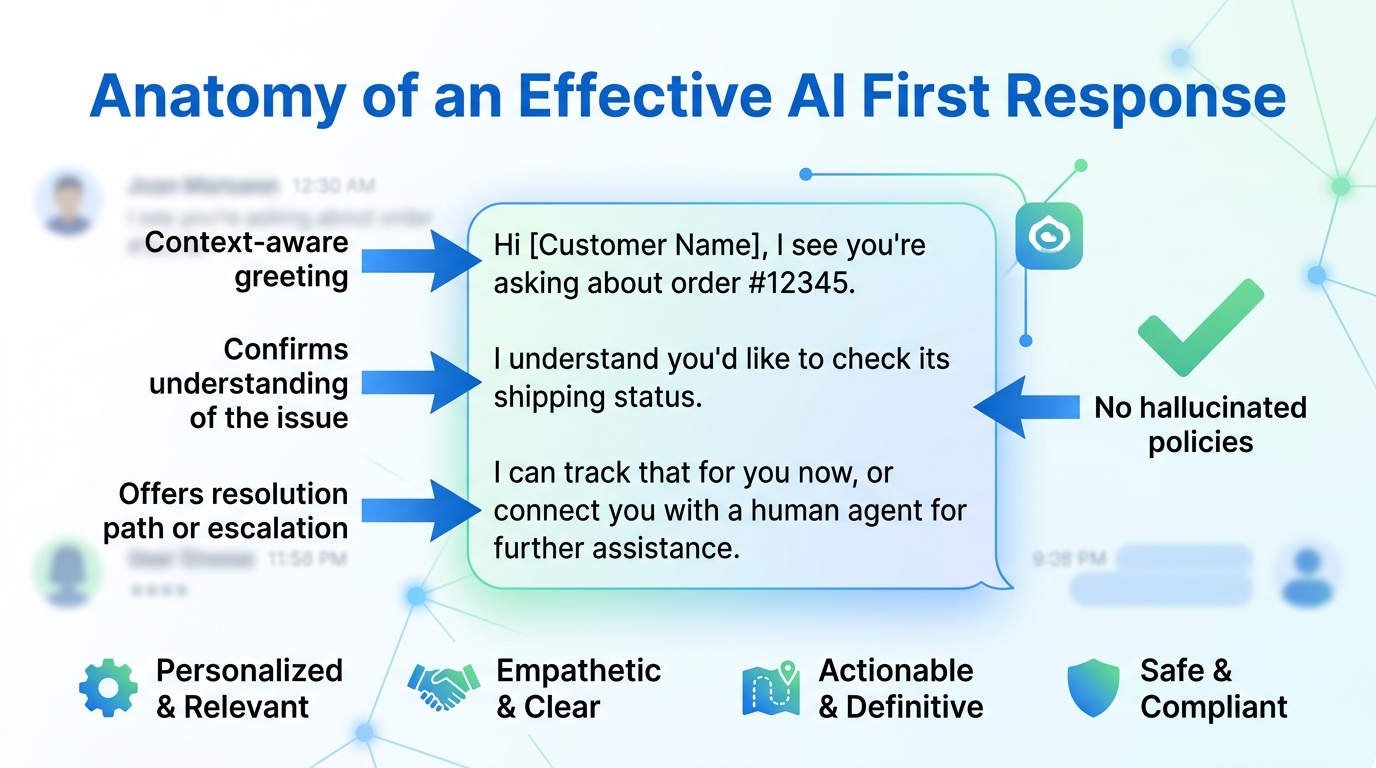
    Anatomy of an effective AI first response — labeled diagram of a good AI customer service reply

    If speed is not sufficient, what actually constitutes a good AI first response? The answer has a structure that most vendor documentation glosses over and most deployment guides don’t address directly.

    Confirmation of Understanding Before Action

    The single most common failure mode in AI first responses isn’t a wrong answer — it’s a response to the wrong question. AI systems that jump directly to resolution without confirming what the customer is actually asking create a specific kind of frustration that’s worse than a slow response. The customer feels unheard, and then has to spend the next exchange clarifying what they meant before any progress happens.

    Effective AI first responses — especially for complex or multi-part queries — include a brief confirmation step. Not a rote “I understand your concern” placeholder, but a paraphrase of the issue that demonstrates the AI has correctly parsed the intent. This single element has an outsized impact on the quality of what follows, because an incorrect interpretation caught early saves an entire downstream interaction.

    Context-Aware Personalization

    AI systems with CRM integration can do something in their first response that human agents often can’t in the first minute of an interaction: they can reference the customer’s account history, recent orders, subscription status, or open tickets before saying anything substantive. This changes the character of the first response completely.

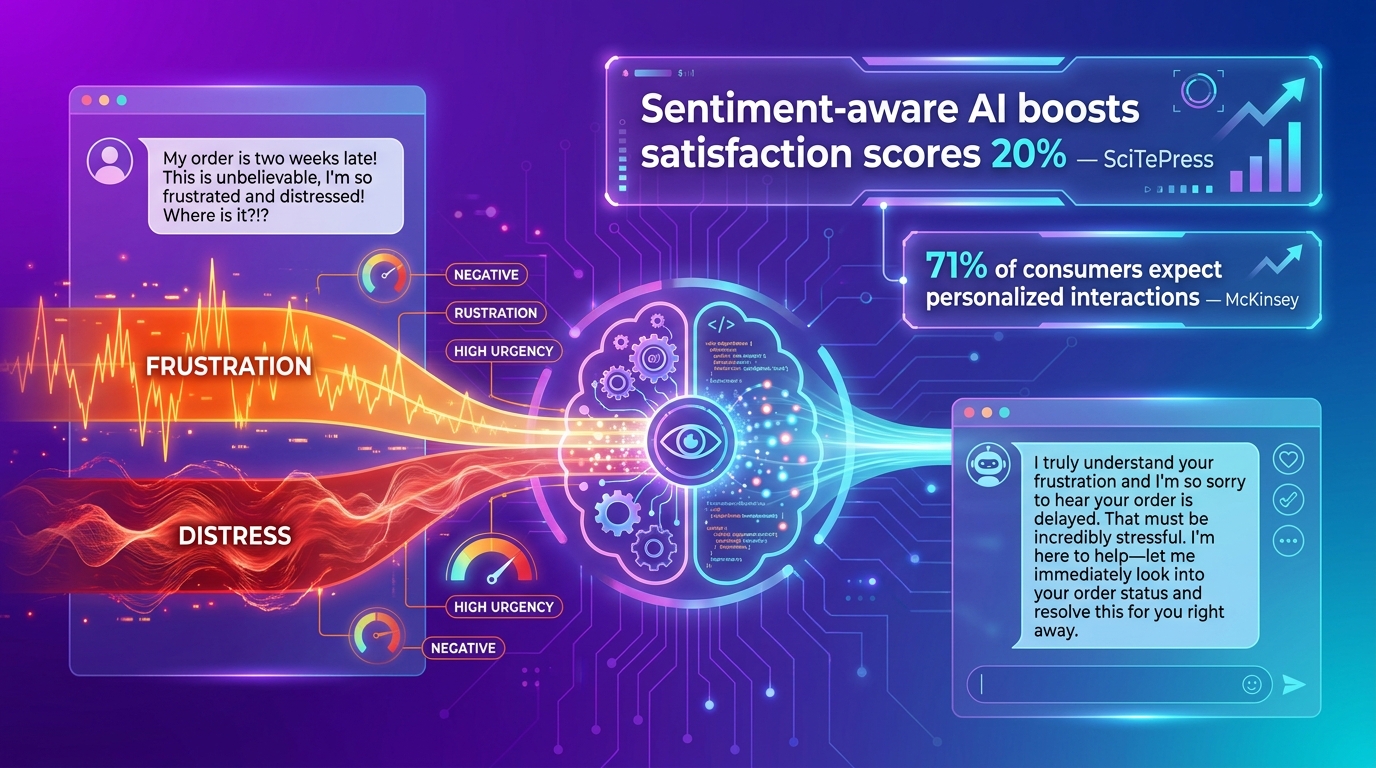
    A first response that opens with “I can see your order #4892 shipped yesterday — is this what your message is about?” signals something fundamentally different than “Thanks for contacting support! How can I help?” The former demonstrates the system knows who you are and why you’re probably reaching out. The latter could have come from anyone. McKinsey research shows 71% of consumers expect personalized interactions — and the first response is the most powerful moment to deliver that signal.

    Verified, Grounded Information Only

    This is non-negotiable. AI first responses must be generated from verified, current information — not from what the model “knows” in a general sense. The difference between source-grounded AI responses (drawn exclusively from approved documentation) and ungrounded responses is the difference between systems that hallucinate at rates of less than 1% and those that hallucinate at rates up to 30%, according to Vectara research.

    Source-grounded RAG approaches — where every response is tied to specific, retrievable documents from the company’s own knowledge base — are what separates deployments with 85-90% resolution rates from those stuck at 55-65%. It’s also what separates deployments that occasionally invent policies (with serious legal consequences) from those that consistently stay within sanctioned information.

    A Clear Path Forward

    Every AI first response should end with an unambiguous next step. Either the issue is resolved and that’s stated clearly, or the customer knows exactly what happens next: whether that’s a follow-up step they can take, information that’s been escalated, or a transition to a human agent with context already prepared. Leaving a customer uncertain about the status of their issue after reading an AI response is a design failure — and it’s one of the most common ones.

    When AI First Response Goes Wrong: The Cases Worth Studying

    AI customer support failure — customer trapped in escalation loop with inaccessible human support button

    The failure cases in AI customer support don’t receive enough serious examination. They tend to circulate as cautionary anecdotes and then disappear, rather than being studied as the instructive data points they are.

    Air Canada: When the AI Invents Policy

    The Air Canada chatbot case is probably the most consequential AI support failure to date. A customer asked the chatbot about bereavement fare refunds for travel that had already occurred. The bot provided specific, detailed information about a refund policy that did not exist — it was entirely fabricated by the AI. When the customer acted on this information and Air Canada refused to honor it, the dispute went to a small claims tribunal.

    The tribunal ruled Air Canada liable for the chatbot’s negligent misrepresentation. The airline argued the chatbot was a “separate legal entity” — an argument the tribunal dismissed entirely. The outcome: airlines, banks, insurance companies, and any organization operating in regulated spaces are now legally responsible for what their AI support systems tell customers.

    The technical failure here was ungrounded AI generation. The operational failure was the absence of a validation layer between AI response and customer delivery. The legal consequence was entirely predictable once those two failures combined.

    Cursor: The Hallucinated Restriction

    In 2025, Cursor’s AI support bot “Sam” told users that the platform had a new restriction limiting multi-device logins — a policy that didn’t exist. Users who encountered this response began cancelling subscriptions based on misinformation they had received from official support. The company’s cofounder addressed the incident directly on Reddit, acknowledging the hallucination.

    The pattern here is identical to Air Canada: an AI response generated outside the bounds of verified information caused customers to make decisions based on false premises. The platform recovered, but the incident illustrates that hallucination risk isn’t confined to large enterprises — it affects any product-led company using AI support without proper knowledge governance.

    DPD: The Viral Failure

    DPD’s chatbot, widely shared on social media, was prompted into producing responses that were demonstrably inappropriate and wildly off-brand. Beyond the immediate embarrassment, the incident revealed something important: AI support systems without robust content guardrails are not just a customer experience risk — they are a brand risk that can go viral in hours.

    The Structural Lessons

    Across these failure cases, the structural cause is consistent. AI systems deployed with insufficient guardrails, ungrounded knowledge generation, or inadequate validation layers don’t fail slowly — they fail dramatically, publicly, and in ways that damage customer trust for months afterward. The 4x failure rate of AI customer support compared to other automated tasks (Qualtrics 2026) is not random noise. It’s a predictable consequence of deploying speed-first systems without the quality infrastructure to back them up.

    The Triage Layer Nobody Talks About

    Behind every effective AI first response is a layer of logic that most public-facing discussions of AI support don’t address: the triage and routing system that determines what kind of first response a given ticket should receive.

    Manual Routing Is Failing at Scale

    Enterprise support teams using manual routing and prioritization systems experience a misrouting rate of approximately 35%, according to 2026 industry data. That means more than one in three tickets is sent to the wrong queue, the wrong agent tier, or prioritized incorrectly — creating SLA breaches, wasted agent time, and frustrated customers who have to be transferred. AI triage achieves 89% average categorization accuracy at speeds under thirty seconds per ticket.

    Beyond Keywords: Intent and Entity Mapping

    The most sophisticated AI triage systems in 2026 have moved beyond keyword-based classification into what DevRev calls “intent and entity mapping.” Rather than categorizing a ticket as “billing issue” because the word “invoice” appears, these systems map the ticket against a knowledge graph that understands context — the customer’s tier, their product version, known active bugs, renewal proximity, and sentiment signals from the message itself.

    This produces triage categorization that looks qualitatively different from keyword routing. A ticket that reads “the export isn’t working again” gets mapped not just to “export bug” but to “known v3.2 export bug with fix scheduled Thursday, customer is enterprise tier with renewal in 60 days.” The AI first response can then be calibrated accordingly — and so can the human agent if escalation follows.

    Business-Impact Scoring in Routing

    One of the most consequential advances in enterprise AI support triage is the shift from urgency-based prioritization to business-impact scoring. Traditional triage systems ask: how urgent does the customer say this is? Business-impact triage asks: what is the actual business impact if this issue isn’t resolved quickly?

    That means scoring tickets against annual recurring revenue, churn risk, renewal date, product usage patterns, and historical escalation behavior — and routing based on that composite score rather than the category the customer selected from a dropdown. High-revenue accounts with expiring contracts and declining usage patterns get a different first response than identical-sounding tickets from low-risk accounts. This is not discriminatory prioritization — it’s operationally rational resource allocation.

    Real-Time Sentiment as a Routing Signal

    Kustomer and similar CRM-integrated platforms use real-time sentiment analysis not just to adapt the tone of AI responses, but as a routing signal. A customer whose message language indicates high distress — regardless of the category of their issue — can be automatically escalated past standard AI handling to a senior agent queue, with an emotional context summary generated for the agent before they pick up the conversation.

    The combination of sentiment-aware routing and context handoff is one of the most concrete advances in support quality that AI has enabled. It doesn’t happen without deliberate architecture decisions — but when it’s built properly, it consistently separates high-performing support organizations from average ones.

    The Real Cost Picture: What AI First Response Actually Costs

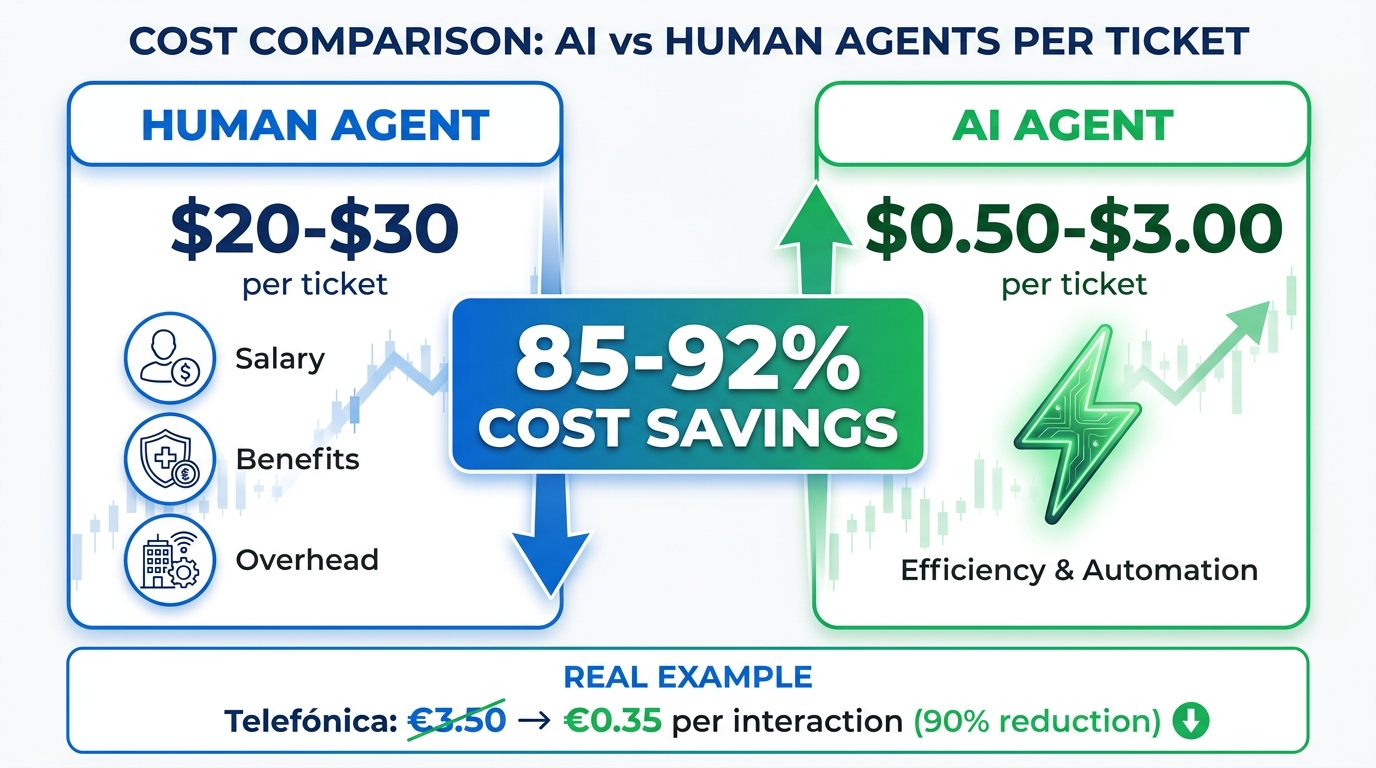
    Cost comparison infographic — AI agent $0.50-$3.00 per ticket vs human agent $20-$30 per ticket, 85-92% savings

    The cost narrative around AI customer support is real, but it’s often presented in ways that obscure the actual economics of deployment versus savings.

    The Per-Ticket Math

    Human agent costs vary considerably by geography and role level. A fully loaded U.S.-based support agent — including salary, benefits, training, tools, and overhead — costs between $20 and $30 per ticket handled. Offshore agents in comparable roles run $8 to $15 per ticket. Gartner’s commonly cited benchmark for agent-assisted interactions is $13.50.

    AI per-ticket costs sit between $0.50 and $3.00 for most platforms, with blended averages around $1.84 for self-service interactions (Gartner) and specific vendor pricing ranging from Intercom Fin at $0.99 per resolution to Zendesk AI at $1.50-2.00 per conversation. The per-unit savings are real and substantial: 85-92% cost reduction per interaction at scale.

    Real-world examples make the scale of this clear. Telefónica reduced their per-interaction cost from €3.50 to €0.35 — a 90% reduction. HelloFresh reportedly moved from $12 million annually in support costs to $1.8 million. A mid-market SaaS company handling 8,000 tickets per month, with 40% eligible for AI deflection, can save roughly $25,000 per month through automated handling of that tier-1 volume.

    The Hidden Costs That Offset Savings

    What these numbers typically exclude: implementation costs, knowledge base build-out, ongoing maintenance, quality monitoring overhead, and the cost of failure incidents when AI goes wrong. A well-implemented AI support deployment requires significant upfront investment in knowledge architecture — auditing existing documentation, reformatting it for RAG retrieval, establishing governance processes for keeping it current, and building validation workflows that catch errors before they reach customers.

    The ROI timeline matters too. Most platforms report breakeven happening at 1,000+ tickets per month with 40-50% tier-1 volume — which means companies under that threshold may not see meaningful financial returns in the first year. McKinsey estimates that deflection rates of 40-50% trigger ROI within six months for mid-market deployments, while more complex enterprise implementations may take twelve to eighteen months to see net savings above implementation costs.

    The Repeat Contact Cost Nobody Accounts For

    Gartner research puts the cost of each repeat contact — when a customer has to reach out again because their issue wasn’t resolved the first time — at $13.50 per instance in agent-assisted environments. When AI first response fails to resolve an issue and triggers a repeat contact, it doesn’t eliminate that $13.50 cost — it defers it and often increases it because the second contact now requires context reconstruction and possibly agent time.

    This is why FCR, not FRT, is the metric that actually drives AI support economics. A system that responds in four seconds and resolves 90% of issues is dramatically more valuable — financially and operationally — than a system that responds in four seconds and resolves 55% of issues, even if both report excellent first response times.

    The Hybrid Handoff Problem

    If there is a single area where AI customer support most consistently fails customers, it is the handoff from AI to human — and it is the area that receives the least design attention in most deployment projects.

    Why Escalation Design Is the Real Failure Point

    Qualtrics 2026 data is striking on this point: 90% of customers report reduced loyalty when they cannot access human support during an AI interaction. Support abandonment spikes sharply after five failed exchanges with an AI system. And the primary driver of AI support failure — ahead of incorrect answers, slow response times, or poor personalization — is the inability to clearly and easily reach a human when the AI can’t resolve the issue.

    This isn’t an AI capability problem. It’s an intentional design problem. Many organizations deploy AI support with escalation paths deliberately obscured — because escalation to a human agent costs money, and the AI is supposed to contain that cost. The short-term cost containment logic is understandable. The long-term brand damage from customers who feel trapped is not worth it.

    The Context Transfer Failure

    Even when escalation paths exist, the quality of handoff from AI to human agent varies enormously — and poor handoffs compound the customer’s frustration significantly. When a customer spends three exchanges explaining their issue to an AI, successfully escalates to a human, and then has to explain the entire issue again from scratch, the experience is measurably worse than if they had reached a human from the start.

    Effective AI escalation design includes automatic context transfer — a structured summary of what the customer said, what the AI understood, what solutions were attempted, and what remains unresolved — presented to the human agent before they begin the conversation. This single element transforms the quality of hybrid interactions from frustrating to genuinely seamless. Without it, escalation becomes punishment rather than resolution.

    Designing Escalation as a Feature, Not a Failure State

    The best-performing support organizations in 2026 treat human escalation not as a sign that AI failed, but as a deliberate part of their service architecture. For certain issue types — billing disputes involving large amounts, security-related concerns, emotionally charged situations, or anything involving regulatory compliance — the correct first response may be an AI triage that immediately routes to a human rather than attempting autonomous resolution.

    Gartner data shows that 95% of enterprise leaders retain human agents alongside AI systems. The ones doing this well have defined clear, documented criteria for which issue types always go to humans, which always get autonomous AI handling, and which follow hybrid protocols. That taxonomy doesn’t exist by default — it requires deliberate architecture decisions that most deployment projects rush past.

    Building AI First Response That Doesn’t Break: The Implementation Reality

    The gap between AI customer support deployments that perform well and those that create ongoing problems is almost entirely explained by implementation decisions, not technology selection. The platforms are similar enough that the differentiating factor is almost always the quality of the setup.

    The Six Implementation Mistakes That Predict Failure

    Based on 2026 post-deployment analysis from practitioners across the industry, six specific implementation patterns reliably predict problems:

    1. Skipping validation layers. Sending AI responses directly to customers without any quality check — even an automated one — is the most common path to the kinds of failures described above. Every production AI support system should have a layer between generation and delivery that checks responses for on-topic accuracy, brand voice consistency, and policy compliance.
    2. Deploying AI on unorganized operations. AI scales what’s already there. If your knowledge base is inconsistent, your SOPs are undocumented, and your support processes rely on tribal knowledge, an AI system will faithfully replicate all of that inconsistency at ten times the volume. Before deploying AI first response, the knowledge architecture must be clean, current, and structured.
    3. Single-model overloading. Feeding an entire knowledge base into one AI model produces the kind of context overload that degrades accuracy sharply. Best practices in 2026 involve deploying multiple specialized agents — one for billing, one for technical troubleshooting, one for account management — each with tightly scoped, optimized knowledge rather than one model attempting to handle everything.
    4. Full-volume deployment without staged rollout. Deploying AI first response to 100% of ticket volume on day one means that any systemic errors in your configuration reach every customer simultaneously. A staged rollout — starting with a single high-volume, low-risk queue, measuring performance for 30 days, and expanding incrementally — catches configuration errors before they become incidents.
    5. Neglecting post-sale vendor support. AI support platforms are not set-and-forget deployments. They require ongoing configuration, knowledge updates, and troubleshooting. Organizations that evaluate vendors primarily on features and price without rigorously vetting post-implementation support find themselves without help during exactly the moments when things break — high-volume periods like product launches or holiday seasons.
    6. Ignoring data freshness governance. AI systems trained on or retrieving from stale documentation generate confidently stated wrong answers. Knowledge base governance — including freshness metadata, update protocols, and version tracking — is not an optional operational detail. Vectara research shows hallucination rates range from 1% (with strong freshness controls) to 30% (without them).

    The 30-Day Pilot Framework

    The most reliable deployment methodology in current practice involves a structured 30-day pilot on a single, representative queue before any broader rollout. The metrics tracked during this pilot: FRT, misrouting rate (target below 5%), first contact resolution rate, escalation rate, and CSAT on AI-handled tickets versus human-handled tickets from the same queue.

    If FCR on AI-handled tickets comes in below 65% during the pilot, the correct response is to improve the knowledge base before expanding — not to push forward on schedule. The cost of fixing a poorly configured AI system across full production volume is substantially higher than taking an extra four weeks to get the pilot right.

    The Emotional Intelligence Gap

    AI emotional intelligence in customer support — sentiment analysis detecting frustration and adapting response tone

    One of the most significant developments in AI customer support in 2026 is the emergence of what practitioners are calling emotion-aware first response — AI systems that detect the emotional state of a customer’s message and adapt their response accordingly, in real time.

    What Sentiment-Aware AI Actually Does

    The technical architecture behind emotion-aware support AI involves multiple concurrent analysis streams: natural language processing to identify semantic content, sentiment classification to detect emotional valence (positive, neutral, negative, distressed), tone analysis to distinguish frustration from anger from sadness, and in voice applications, acoustic analysis of speech patterns.

    These signals feed into response generation in ways that change the character of the first response. A neutral inquiry about order status gets an efficient, informational response. A message from a customer who uses language indicating frustration — repeated phrases, capitalization, descriptions of how much time they’ve spent on the issue — triggers a response that leads with acknowledgment before moving to resolution. SciTePress research measuring satisfaction scores shows sentiment-aware AI producing scores of 9.13 out of 10 compared to 8.41 for systems without sentiment adaptation — a meaningful difference in perceived quality.

    The Personalization Layer

    Hyper-personalization — using a customer’s purchase history, account age, previous support interactions, and behavioral patterns to tailor the tone and content of first responses — is one of the highest-ROI investments an AI support team can make. Nextiva data shows 47% of companies linking personalization capabilities directly to revenue outcomes. McKinsey’s research indicates 5-15% revenue increase attributable to personalized customer interactions at scale.

    In practice, this means AI systems that distinguish between a customer who has been with a company for five years and one who signed up last week — and calibrate their first response language, offer parameters, and escalation thresholds accordingly. The five-year customer who contacts support for the first time gets acknowledged as a longtime customer. The new customer gets onboarding-oriented framing if their issue suggests a product familiarity problem. These are not dramatic differences — but in aggregate they shift how customers perceive the support interaction.

    Where Emotional Intelligence Still Has Limits

    Despite genuine advances, it’s worth being direct about where AI emotional intelligence remains limited. Approximately 50% of customers view AI as genuinely empathetic (Zendesk data), which means the other half do not — and when customers are dealing with genuinely distressing situations (bereavement, financial hardship, health issues), even well-executed AI empathy often feels insufficient. Only 27% of Gen Z consumers, the demographic most comfortable with AI across the board, are comfortable relying on AI for emotional support in a support context.

    The correct operational response to this is not to push AI emotional intelligence further into sensitive domains — it’s to use emotional signals as escalation triggers. When sentiment analysis detects a genuine distress signal that exceeds a threshold, the appropriate AI response is to acknowledge and immediately route to a human agent, with context prepared. That’s not a failure of AI — it’s an appropriate use of it as part of a larger system.

    What Comes Next: The Direction AI First Response Is Moving

    Looking beyond current deployments, the trajectory of AI first response in customer support points in several specific directions that organizations planning multi-year support infrastructure should be accounting for now.

    Proactive First Response

    The concept of the first response is already beginning to shift from reactive to proactive. AI systems integrated with product telemetry, order management systems, and usage data can identify customers who are likely to contact support — before they do — and send a first response proactively. A delivery that’s delayed gets a message before the customer notices and reaches out. A user whose behavior patterns suggest they’re stuck on a feature gets a helpful resource before they open a frustration-driven ticket. This inverts the support model fundamentally, and the early data on proactive AI support suggests significant CSAT improvements and measurable ticket volume reduction.

    Agentic Resolution: Beyond Triage

    First-response AI that can only talk is giving way to agentic AI that can act. The 2026 generation of AI support systems doesn’t just respond to a refund request — it checks the order status, validates the refund eligibility criteria, processes the refund, and sends the confirmation, all within the first interaction. ServiceNow reports that autonomous AI agents handle 80% of inquiries end-to-end, cutting complex case resolution by 52%. This shift from conversational to agentic AI changes the economics of support dramatically — because the cost isn’t just first response time anymore, it’s full resolution time on a per-case basis.

    The Accountability Architecture

    The Air Canada tribunal ruling has accelerated something that was already developing: formal accountability frameworks for AI-generated customer communications. Organizations are building audit trails that log every AI response, the knowledge sources it drew from, the confidence score associated with the generation, and the customer’s subsequent behavior. This creates a feedback loop that makes quality governance possible — and in regulated industries, may soon be required rather than optional.

    Conclusion: The Shift from Fast to Right

    The question that mattered most in AI customer support two years ago was: “How do we get response times down?” That question has been largely answered. The technology is there. The speed is achievable. The benchmarks are well-established.

    The question that matters in 2026 — and will matter more as AI support becomes universal — is different: “How do we make sure that fast response is also the right response?”

    That’s a harder question, and it doesn’t have a platform-level answer. It requires decisions about knowledge governance, validation architecture, escalation design, emotional intelligence calibration, and quality monitoring that have to be made by the organizations building these systems. The technology enables the speed. The quality is a choice.

    Companies that treat AI first response as a cost-reduction lever will continue to generate impressive FRT numbers and frustrating customer experiences. Companies that treat it as a quality-at-scale problem — using AI to deliver the kind of fast, accurate, personalized, emotionally aware first response that a great human agent would give — are the ones building support infrastructure that actually earns customer trust.

    The standard for AI first response in 2026 isn’t four seconds. It’s four seconds and correct.

    Actionable Takeaways

    • Measure FCR alongside FRT. If your AI reporting only shows first response time, you’re measuring the least important half of the equation. Build FCR tracking from day one.
    • Implement source-grounded RAG before deploying at scale. Ungrounded AI generation is the proximate cause of most high-profile AI support failures. Knowledge governance isn’t optional — it’s the foundation everything else sits on.
    • Audit your escalation paths as a separate project. Have someone unfamiliar with your system try to reach a human agent when the AI fails to resolve their issue. If they can’t do it in three steps or less, your escalation design needs work.
    • Pilot on one queue before expanding. A 30-day pilot on a high-volume, representative queue gives you the FCR and misrouting data you need to decide whether to expand or iterate.
    • Use sentiment signals for routing, not just tone adjustment. Real-time sentiment detection is most valuable as a routing trigger — getting distressed customers to human agents faster — not just as a way to make AI responses sound warmer.
    • Build context transfer into every escalation. The moment a customer transitions from AI to human agent, the agent should already have a structured summary of the conversation, the issue, the attempted resolutions, and the customer’s emotional state. This is a design decision, not a default behavior.
    • Track repeat contact rate as a lagging indicator. A rising repeat contact rate is the clearest signal that AI first response quality has degraded — and it often surfaces before CSAT scores move, giving you an early warning window to fix issues before they become patterns.