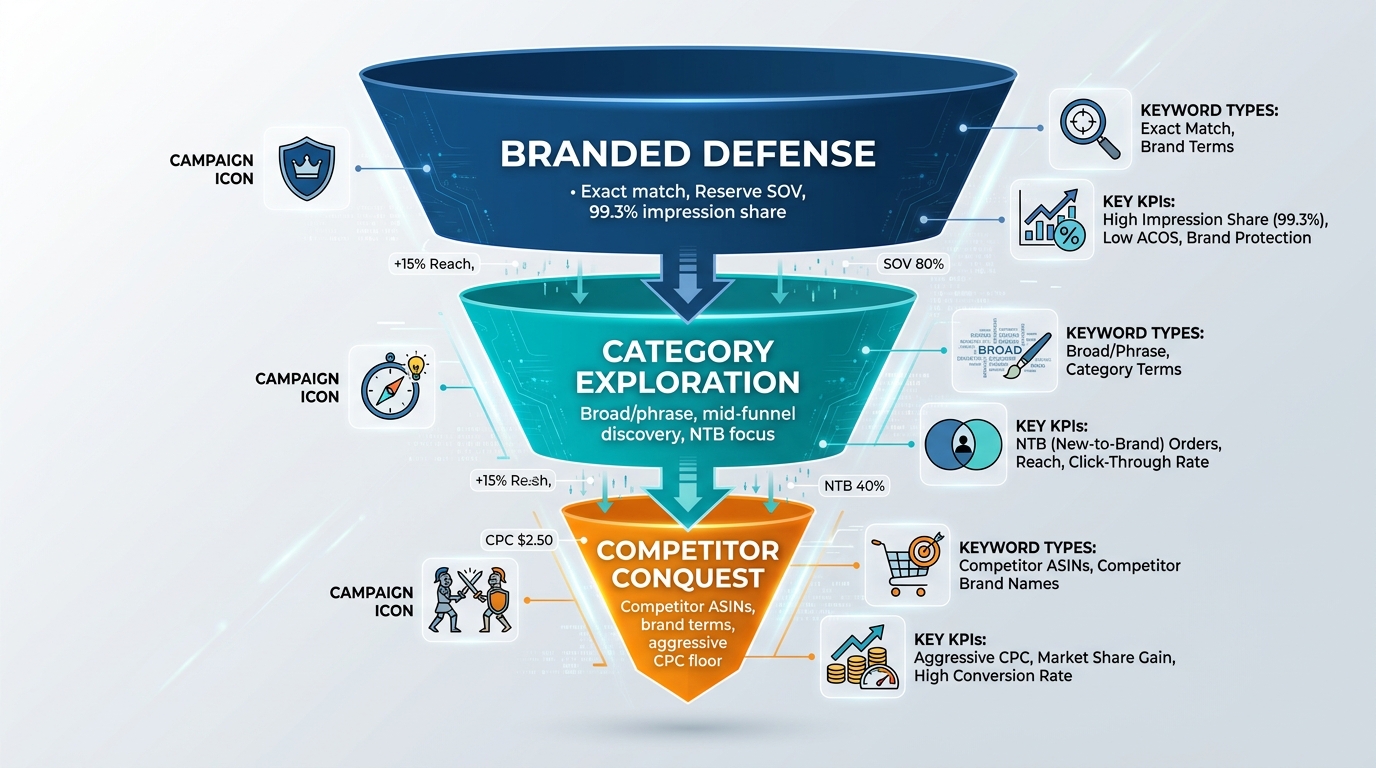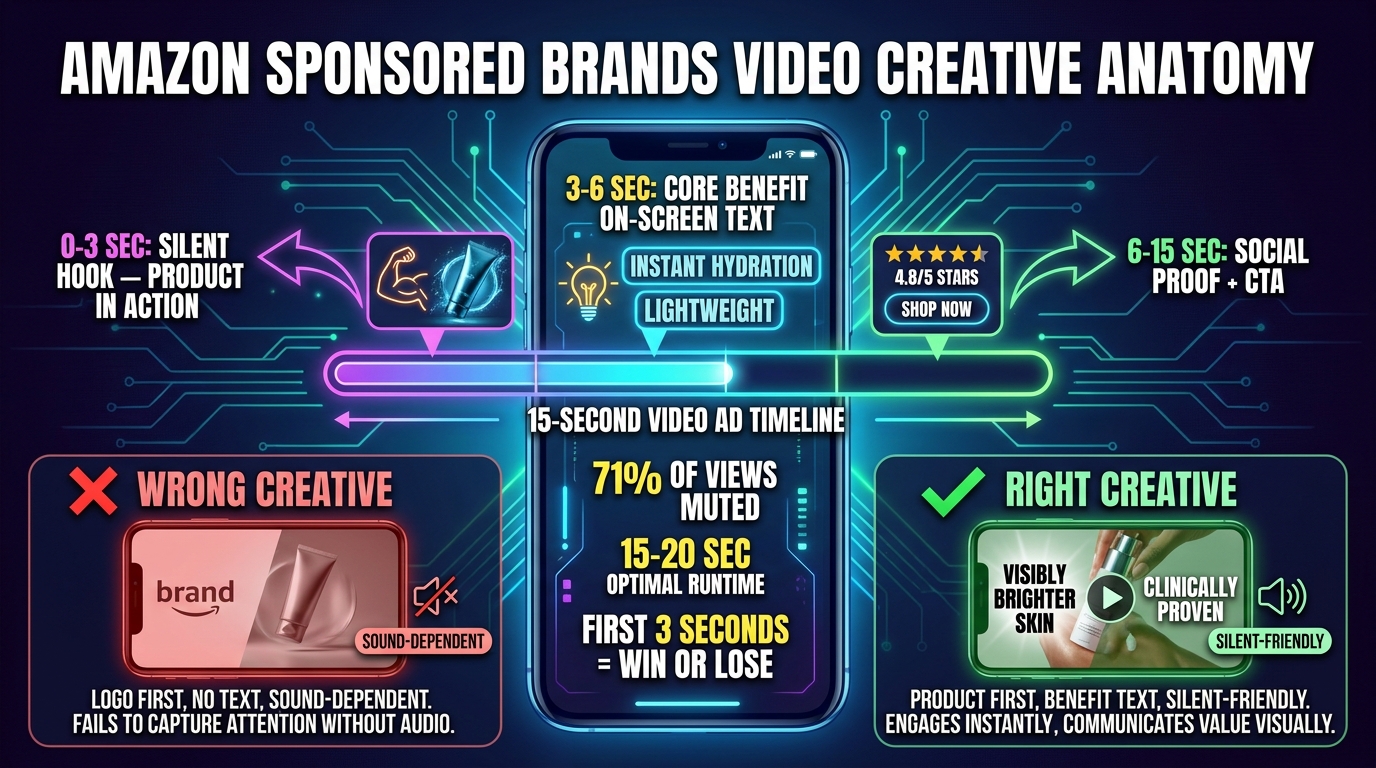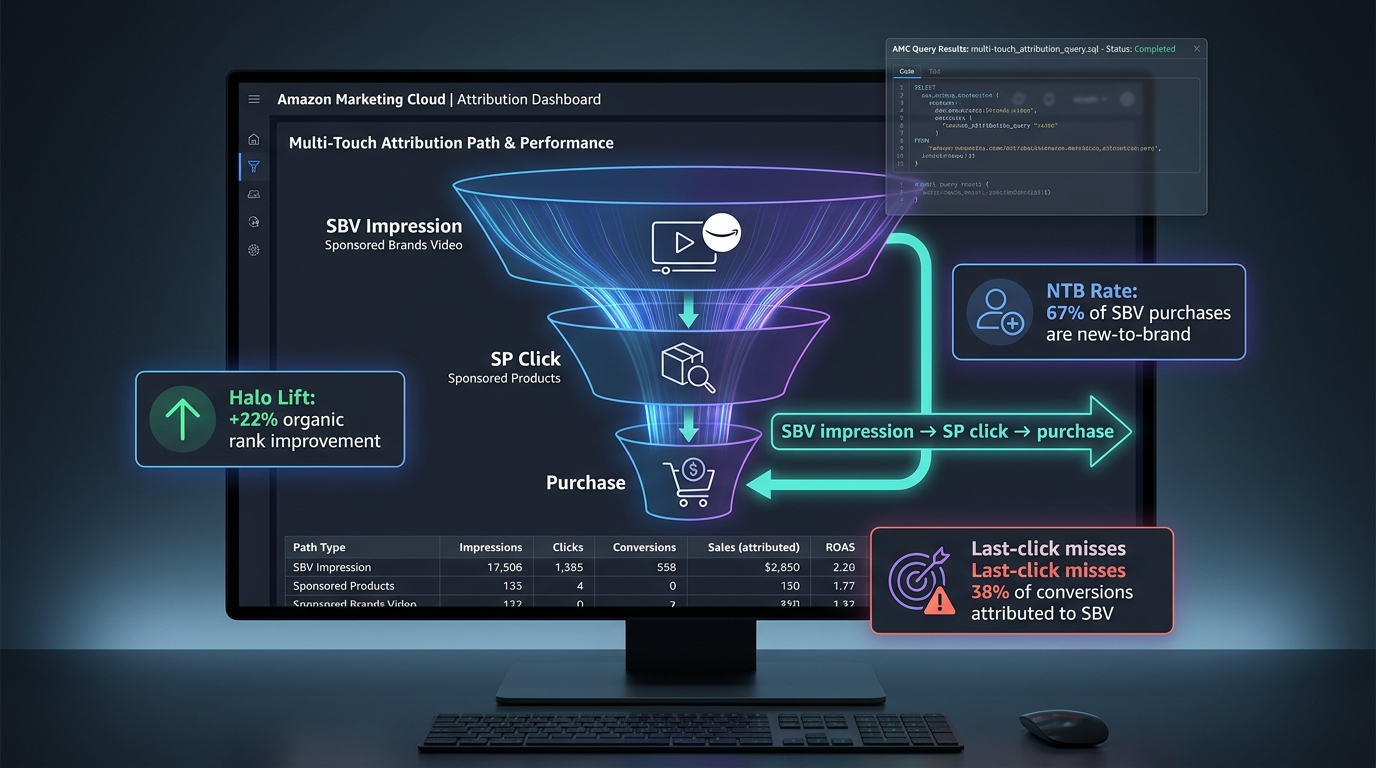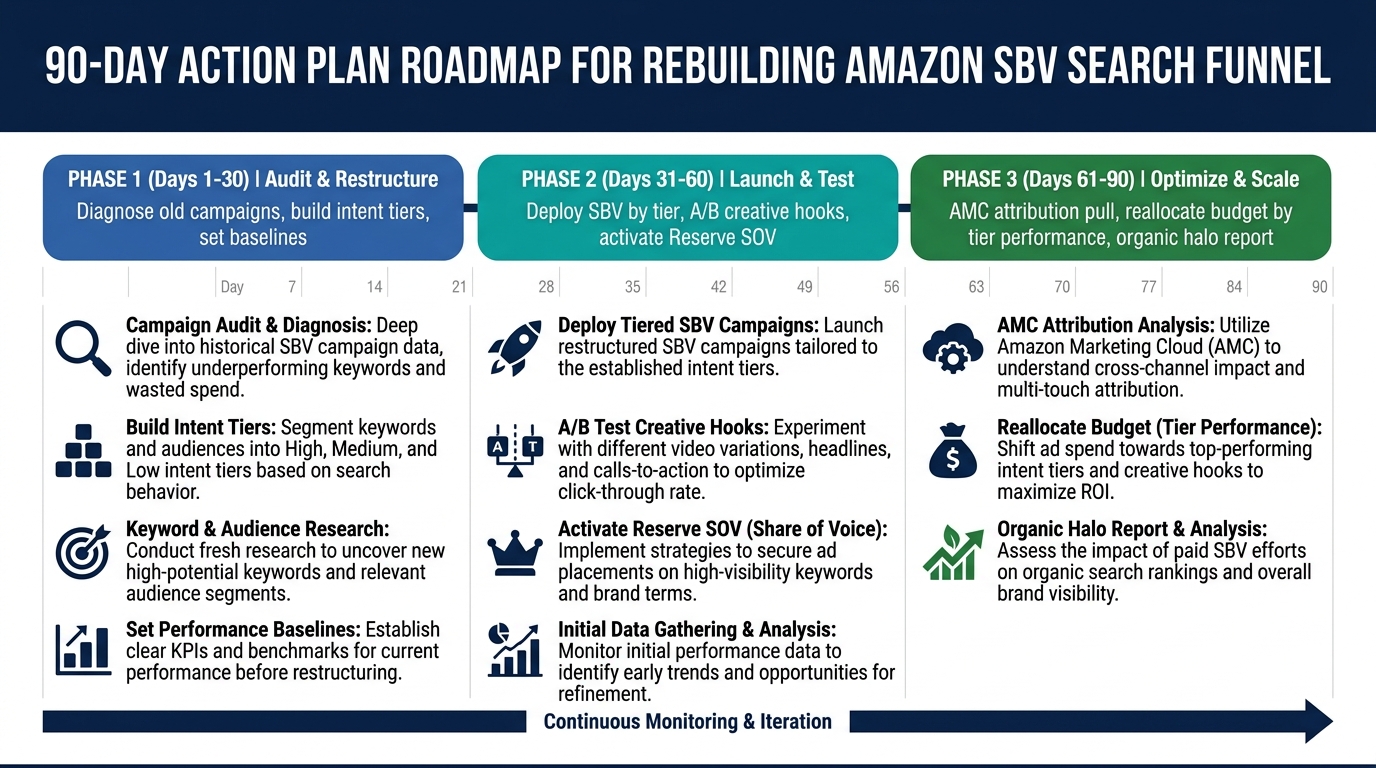
Tag: Amazon Marketing Cloud

  • Sponsored Brand Video Beyond Amazon: What Off-Platform Placements Actually Deliver (And What They Don’t)

    Sponsored Brand Video Beyond Amazon: What Off-Platform Placements Actually Deliver (And What They Don’t)

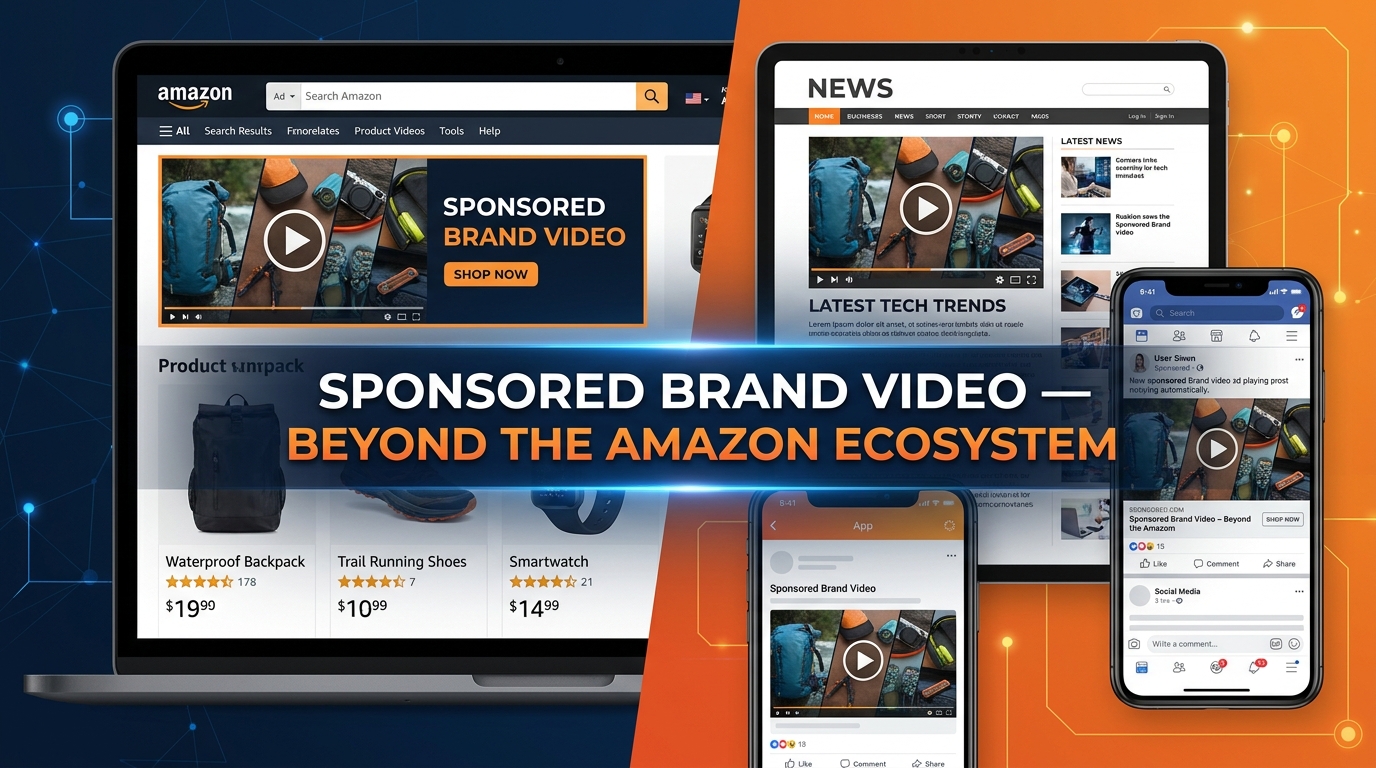
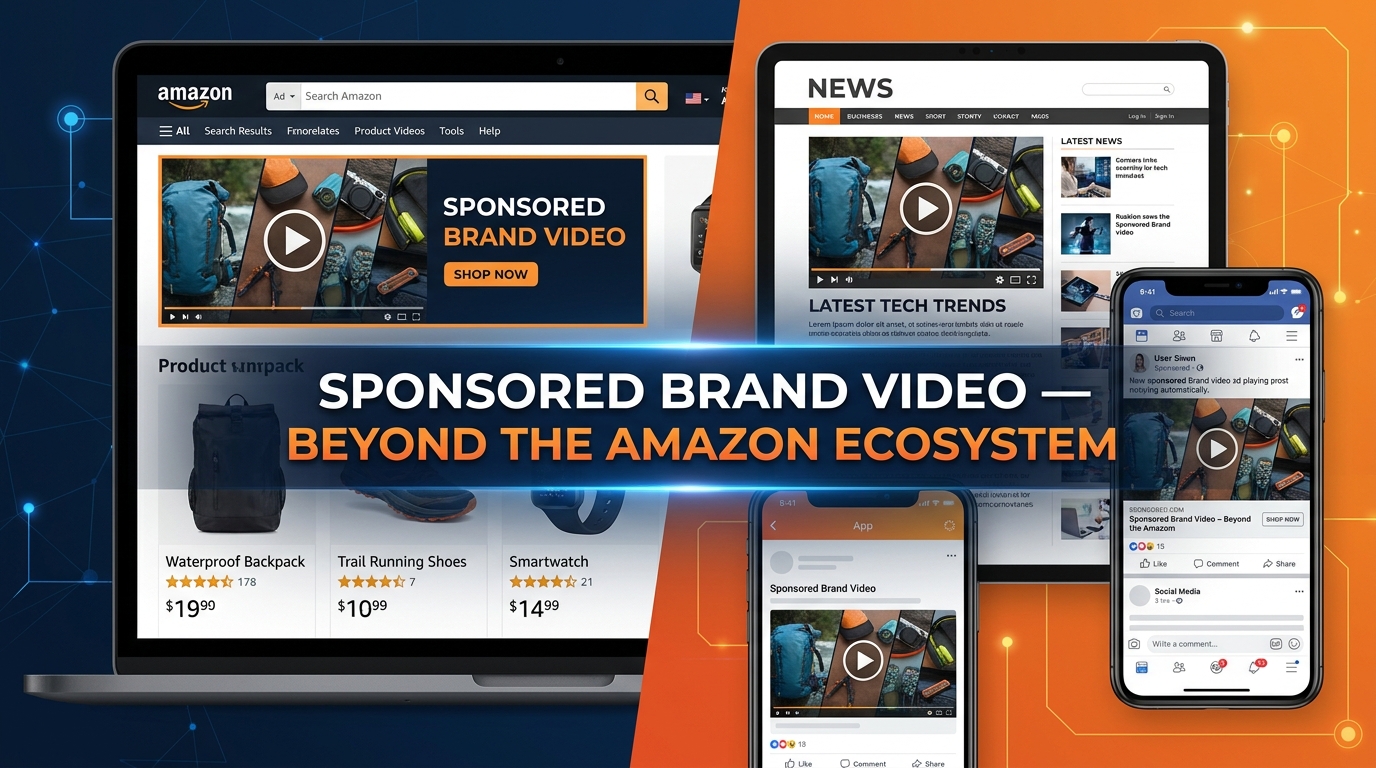
    Sponsored Brand Video ads running on Amazon search results and external websites side by side

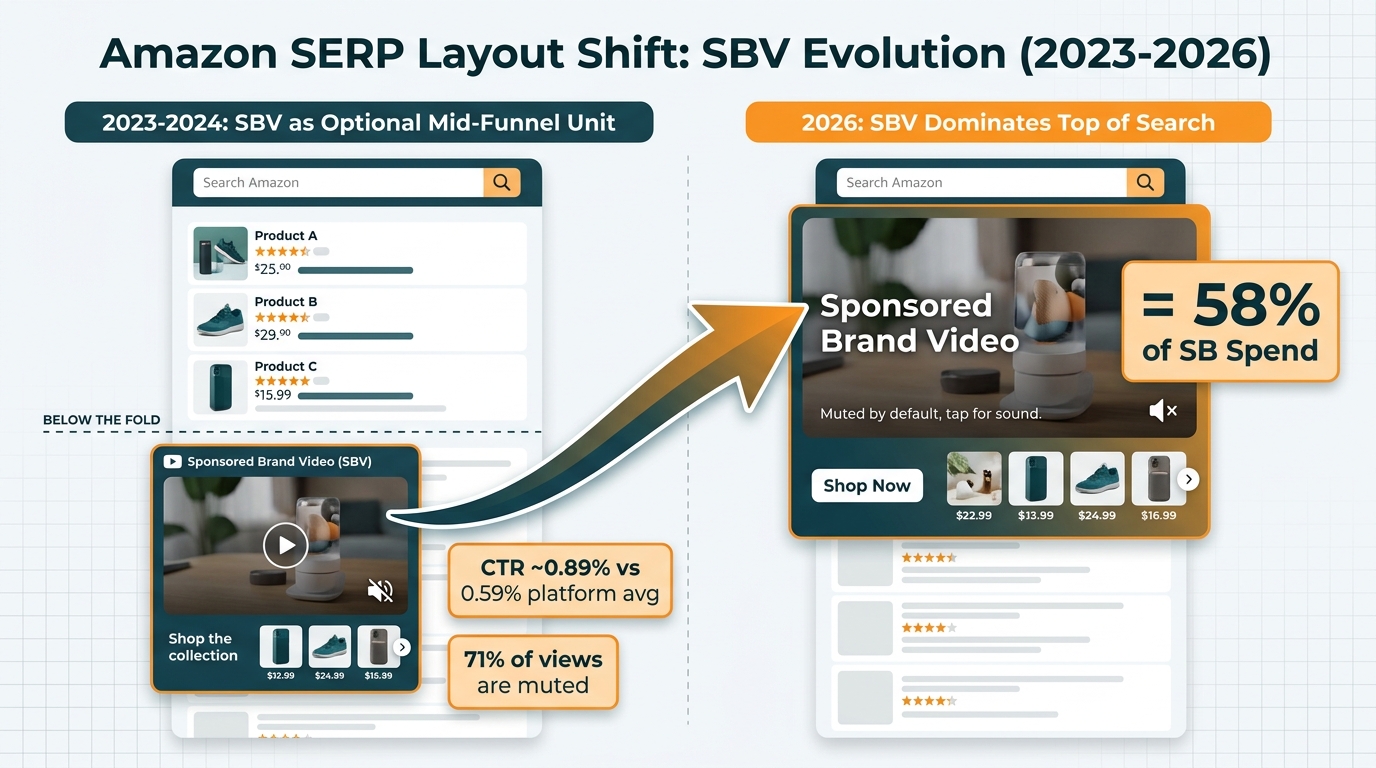
    There is a version of Sponsored Brand Video that most advertisers know well: the autoplay unit that fires at the top of Amazon search results, product in frame within the first two seconds, sound off, text overlay telling the viewer exactly what they’re buying before they’ve even decided they want it. It converts. It scales. It is one of the most defensible CPCs in self-serve advertising.

    Then there’s the other version — the one that Amazon quietly serves beyond its own domain, into third-party apps, publisher sites, and off-platform inventory — and the story there is considerably more complicated.

    The promise is straightforward: extend your brand’s video reach beyond Amazon’s walls, capture shoppers earlier in their journey, and drive them back to your listings with higher purchase intent than a cold paid-social impression ever could. The reality, as practitioners are discovering through placement reports and AMC queries, is messier. Off-Amazon SBV placements can carry higher ACoS, lower conversion rates, and significantly murkier attribution than the search-result placements that made the format famous.

    That doesn’t mean you should ignore them. It means you need to understand exactly what you’re buying, how to measure it honestly, and when — for your specific catalog, category, and funnel — off-platform video makes financial sense. This article covers all of it, without the hype.

    What “Off-Amazon Placements” Actually Means for Sponsored Brand Video
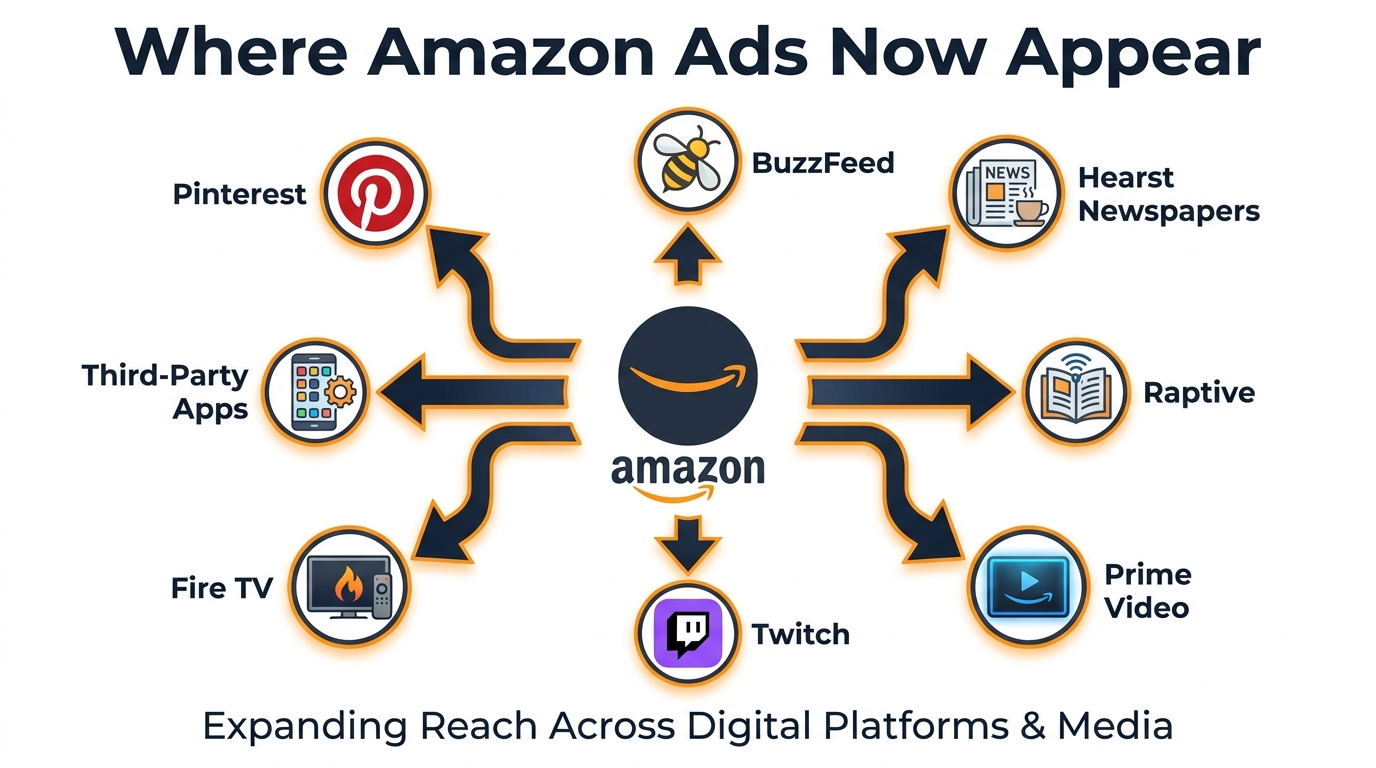
    Diagram of Amazon's expanding advertising network showing connections to Pinterest, BuzzFeed, Hearst, Raptive, Prime Video, Twitch, and Fire TV

    Before discussing performance, you need a clear map of what “off-Amazon” actually encompasses in 2026. The term covers substantially different inventory types, with different audiences, different intent signals, and different attribution mechanics. Treating them as a single category is where most advertisers make their first analytical mistake.

    The Three Distinct Off-Amazon Contexts

    Amazon-owned off-Amazon properties. This is the largest and most measurable segment. It includes Fire TV, Fire Tablet, IMDb, Twitch, and Alexa-adjacent surfaces. These are technically “off Amazon.com” but still within Amazon’s walled garden, meaning first-party audience data remains intact and attribution is relatively clean. Sponsored Brands Video does not natively run here — that’s primarily Amazon DSP and Streaming TV territory — but understanding this segment matters because it represents the gold standard of off-Amazon intent quality that purely external placements can’t replicate.

    Amazon’s third-party publisher network. This is where Sponsored Products off-Amazon placements live, and where the most practitioner confusion originates. Amazon serves ads on premium publishers including Pinterest, BuzzFeed, Hearst Newspapers, Raptive, Lifehacker, Mashable, and a growing list of Ziff Davis properties. The rollout began in 2023 for Sponsored Products. By 2026, this network has expanded considerably, though the extent to which Sponsored Brands Video — as opposed to Sponsored Products — flows through this publisher network is a question Amazon has not fully answered in public documentation.

    Browser and app-level remnant inventory. Through programmatic delivery and the broader reach of Amazon DSP, video can reach users on thousands of apps and websites outside Amazon’s premium network. This is distinct from SBV proper but forms part of the “off-Amazon video” conversation for advertisers thinking about cross-channel strategy.

    What SBV’s Official Spec Sheet Actually Says

    Amazon’s official Sponsored Brands Video documentation describes the format primarily as a search-results ad. The standard placement is top-of-search on Amazon, where intent is highest and the format genuinely earns its cost-per-click premium. However, placement reports available in the Amazon Ads console do surface an “Off Amazon” line item for some campaigns, indicating that budget is occasionally being allocated to placements beyond Amazon.com — even when advertisers haven’t explicitly chosen to go there.

    This is the central tension for most advertisers: off-Amazon placements for SBV are not always a deliberate strategic choice. Sometimes they’re a default, and the budget allocation to them can quietly erode campaign efficiency if placement reports aren’t reviewed regularly. The first practical step for any SBV advertiser is simply knowing whether their campaigns are serving off-Amazon at all — and at what share of spend.

    The Architecture of Amazon’s Expanding Ad Network

    To understand why off-Amazon placements exist and why Amazon is aggressively expanding them, you need to understand Amazon’s competitive position in digital advertising circa 2026. Amazon is now the third-largest digital advertising platform globally, trailing only Google and Meta. Its core advantage has always been purchase-intent data — no other platform can tie an ad impression directly to a product purchase with first-party data at scale. But there’s a ceiling on how much ad inventory Amazon.com itself can generate. The search results page has finite real estate. The product detail page has competing formats fighting for attention.

    Why Amazon Needs Off-Platform Reach

    Off-Amazon inventory solves a structural problem: Amazon has more advertising demand than its own platform can absorb at the CPCs and CPMs advertisers are willing to pay at the margin. Expanding to external publishers creates new inventory, new reach, and a rationale for advertisers to consolidate more of their media budget within Amazon’s ecosystem rather than splitting it between Amazon, Google Shopping, and paid social.

    The pitch to advertisers is compelling in theory: Amazon’s shopper purchase-intent data, applied to audiences on third-party sites, should produce better targeting than a generic programmatic buy. When a user who searched for “insulated water bottle” on Amazon in the last 30 days sees your SBV unit on a Hearst lifestyle article, they are, in theory, a higher-value prospect than someone reached via a lookalike audience on a demand-side platform with no purchase-signal backbone.

    The Publisher Network’s Current Reality

    In practice, the rollout of Amazon’s off-Amazon ad network through third-party publishers has been uneven. The early evidence from Sponsored Products off-Amazon placements — which expanded before SBV — showed that conversion rates drop sharply when shoppers are reached outside the purchase-intent context of Amazon search. A user browsing a BuzzFeed article about summer recipes and encountering a product ad is in a fundamentally different mental state than the same user typing a specific query into Amazon’s search bar. The purchase signal that makes Amazon inventory so valuable comes precisely from active shopping behavior. Off-platform, that signal dilutes significantly.

    Some practitioners running Sponsored Products campaigns have reported off-Amazon ACoS running at two to four times their on-Amazon benchmarks, with conversion rates that are a fraction of search-result placements. Sponsored Brand Video, with its heavier creative requirements and slightly longer engagement window, may perform better than static product ads in off-Amazon contexts — but the fundamental intent-gap problem doesn’t disappear because the ad has motion.

    Why SBV Was Built for On-Amazon — And What That Means Off-Platform

    Side-by-side performance comparison of Sponsored Brand Video on-Amazon vs off-Amazon showing CTR, CVR, ACoS, and intent levels

    Sponsored Brand Video was designed around a very specific user behavior: a shopper who has typed a keyword into Amazon’s search bar, scrolled past the top organic result, and encountered an autoplay video that — if the creative is done right — answers the implicit question behind their search query before they’ve had to read a single word of product copy.

    That interaction model is extraordinarily efficient. The shopper has already self-selected into purchase consideration. The video doesn’t need to create desire from scratch; it just needs to confirm relevance and differentiate the product. This is why SBV’s on-Amazon performance metrics — typically CTR in the 0.8–1.2% range, conversion rates of 8–12% for well-structured campaigns, and ACoS targets achievable in the 20–35% range for most categories — are so strong relative to other video formats.

    The Intent Architecture That Makes On-Amazon SBV Work

    Consider what the on-Amazon SBV placement actually captures. The shopper has expressed category intent through their search query. They’re actively evaluating options. The product display around the video ad reinforces the shopping context. The click goes directly to a product detail page or Brand Store, where purchase infrastructure — Prime shipping badging, reviews, A+ content, Buy Box — all works to complete the conversion. Every element of that chain is optimized for the transaction. Remove the shopper from Amazon’s context and that entire infrastructure disappears.

    Off-platform, even with Amazon’s audience targeting applied, the journey looks different. The shopper may have expressed purchase intent earlier — perhaps they did search on Amazon weeks ago, and Amazon’s retargeting machinery has identified them as an in-market audience. But “in-market” is not the same as “in-session.” A shopper reading the news has a much higher re-engagement cost than one already in the shopping funnel. The video has to do more work, and clicking an ad means leaving the current browsing context, navigating to Amazon, and reorienting to a purchase decision — a significant drop in probability at each step.

    Creative Requirements Change Off-Platform

    Amazon’s official best practices for SBV creative — product visible within the first two seconds, function demonstrated within five seconds, sound-off optimized, strong text overlay, 15–30 seconds total with 20 seconds or less strongly recommended — are calibrated for an audience in active purchase mode. Off-platform audiences need a different creative approach: more storytelling context, a clearer reason to click away from their current content, and a value proposition strong enough to interrupt browsing behavior rather than complement it.

    This is a genuine creative divergence. The best-performing on-Amazon SBV often features tight product shots, feature-forward editing, and a direct CTA to “Shop Now.” That creative, served to someone halfway through a recipe article on a lifestyle site, may not generate the response rate the placement report suggests it should. If you’re going to run video off-Amazon deliberately, you need to think about whether your current creative assets are built for that audience context — or whether you’re running on-Amazon creative in a context it wasn’t designed for.

    The Off-Amazon Placement Data Problem: What You Can and Can’t Measure

    One of the most significant barriers to making rational decisions about off-Amazon SBV placements is the data gap. Amazon’s placement reports do surface off-Amazon spend data, and the Amazon Ads console has improved its reporting significantly in 2025–2026. But the granularity that would allow advertisers to make truly informed allocation decisions — which specific publishers are receiving budget, what the completion rate of video is on those placements, what the post-click behavior looks like by external domain — remains largely unavailable in self-serve reporting.

    What Your Placement Report Actually Shows You

    In the Amazon Ads console, the placement report for Sponsored Brands campaigns breaks performance into broad buckets: top of search, other on-Amazon placements, and off-Amazon. The off-Amazon bucket aggregates all external placement performance into a single row. You can see spend, clicks, orders, CPC, and ACoS for that aggregate off-Amazon pool — but you cannot see which individual publishers drove which clicks, which placements had the highest view-through rates, or how the traffic from off-Amazon placements differed in downstream behavior from on-Amazon clickers.

    This aggregation makes optimization difficult. You know the total off-Amazon ACoS — if it’s 80% while your on-Amazon ACoS is 25%, you know something is wrong. But you don’t have the data to surgically fix it at the placement level the way you might exclude poorly performing keywords from a search campaign.

    The Placement Modifier Limitation

    Amazon does allow bid modifiers for different placement types, including the ability to set specific bid adjustments for top-of-search versus other placements. However, the control options for specifically reducing or eliminating off-Amazon delivery have historically been blunt. Advertisers who want to effectively exclude off-Amazon placements often need to use workarounds, including setting very low or zero bid modifiers for non-search placements, and monitoring placement reports weekly to detect any drift in off-Amazon spend share. This is not the kind of surgical placement control that, say, Meta’s Advantage+ or Google’s Performance Max campaign types now offer with their exclusion tools.

    Amazon Marketing Cloud Fills Some Gaps

    For advertisers with access to Amazon Marketing Cloud (AMC) — which requires either a managed service relationship or a direct AMC setup — the picture improves considerably. AMC allows you to run custom SQL queries across your full Amazon advertising dataset, including path-to-purchase analysis that can distinguish the contribution of off-Amazon placements versus on-Amazon touch points in multi-touch conversion journeys. You can run incrementality analyses to assess whether off-Amazon SBV impressions are generating sales lift above what would have occurred organically. AMC won’t tell you which publisher showed your ad, but it will tell you whether the population of users exposed to off-Amazon placements converted at rates meaningfully different from unexposed users — which is the question that actually matters for budget allocation.

    DSP Video vs. Sponsored Brand Video Off-Amazon: Picking the Right Tool

    Comparison diagram showing Sponsored Brand Video vs Amazon DSP Video formats, pricing models, and placement types across the advertising funnel

    If you want Amazon’s audience data applied to video inventory beyond Amazon.com, you have two fundamentally different tools available. Understanding why they’re different — and which one is actually appropriate for your objective — is critical before spending a dollar on off-Amazon video.

    Sponsored Brand Video: The Self-Serve CPC Format

    SBV operates on a cost-per-click model, is available to any seller or vendor enrolled in Brand Registry, requires no minimum spend, and is managed entirely within the Amazon Ads console. Its native habitat is Amazon search results. When SBV budget spills into off-Amazon placements, it is typically via Amazon’s automated delivery — the algorithm deciding that external inventory represents an opportunity to spend your budget at a favorable CPC before returning to on-Amazon inventory. You’re still paying cost-per-click, but the conversion rate on that click is likely materially lower than on-Amazon, which is why ACoS tends to run higher in the off-Amazon placement bucket.

    For advertisers primarily focused on efficient, last-click conversion, SBV’s off-Amazon delivery is more likely a problem to manage than an opportunity to pursue. The format wasn’t designed for off-site prospecting, and its CPC pricing model doesn’t account for the lower purchase probability of external traffic.

    Amazon DSP Video: The Purpose-Built Off-Amazon Format

    Amazon DSP video — including Online Video (OLV) on third-party sites and Streaming TV on Prime Video, Twitch, IMDb, and Fire TV — was specifically designed for off-Amazon delivery. It operates on a CPM basis, is priced and optimized for reach and awareness objectives, and gives advertisers far more placement control than self-serve SBV. Minimum spend thresholds apply (typically $10,000 or more for self-service DSP, higher for managed), making it inaccessible to smaller advertisers but meaningful for mid-to-large brands.

    DSP video with Amazon audience segments — in-market shoppers, lifestyle segments, competitive ASIN retargeting — is the correct vehicle for off-Amazon video reach when reach is actually the objective. Typical ROAS benchmarks for DSP video prospecting run in the 2–3x range; retargeting campaigns that hit audiences who have already visited product pages or add-to-cart audiences can deliver 4–8x ROAS. These numbers don’t match on-Amazon SBV’s lower-funnel efficiency, but they’re measuring a different objective: incremental reach to audiences who may not yet be in-market, rather than harvesting intent from shoppers already in the purchase funnel.

    The Practical Decision Framework

    The cleanest way to think about the choice: if your objective is conversion, maximize on-Amazon SBV and minimize or eliminate off-Amazon SBV delivery. If your objective is awareness and upper-funnel reach, use Amazon DSP video with the inventory targeting and audience segments it was built for. The mistake is using SBV as an off-Amazon awareness play because it’s cheaper to set up — it’s measuring success with ACoS when the actual goal is reach and brand recall, and it’s running bottom-funnel creative in a top-funnel context. That mismatch produces disappointing results and misleading data.

    Creative Strategy for Video That Works Across Contexts

    Whether you’re managing SBV placement spill or deliberately building off-Amazon video strategy via DSP, the creative decisions you make will have a larger impact on off-platform performance than any bid adjustment or targeting parameter. On-Amazon, a mediocre video with strong keyword targeting will still convert reasonably well because the intent context carries it. Off-Amazon, where the surrounding environment is providing no purchase signal reinforcement, the creative has to carry the full load.

    The On-Amazon Creative Checklist (Baseline)

    For SBV running in its primary habitat — top of Amazon search results — the evidence-backed creative approach is well-established. Show the product within the first two seconds; demonstrate its key function within five seconds; assume no audio (studies consistently show the majority of users browsing Amazon are in sound-off environments or using the app in public); include text overlays for every key message; end with a clear call to action. At 15–30 seconds total length, with Amazon’s own recommendation capping at 20 seconds for highest performance, this is a tight format that rewards ruthless clarity over creative ambition.

    Brands that have documented strong SBV performance — including HP’s 224% year-over-year impression growth in SBV placements and Loftie achieving 5.66 ROAS on SBV campaigns — consistently cite product-first creative execution as the common thread. These are not brand films. They are demonstration videos with a buy button attached.

    Adapting Creative for Off-Amazon Contexts

    Off-Amazon audiences need more. They haven’t signaled purchase intent, so your video needs to create it. That means a slightly longer tolerated introduction — you may need two to three seconds of context before the product reveal, because the viewer doesn’t know they’re looking at a shopping ad. Emotional or aspirational hooks work better in external browsing environments than pure feature lists; you’re interrupting content consumption, not complementing search behavior.

    Consider a two-creative approach if you’re running any significant budget off-Amazon: a tight, conversion-focused version for on-Amazon placements (15–20 seconds, product-first, feature overlay) and a slightly richer awareness version for off-Amazon (25–35 seconds, problem-solution narrative, softer CTA). Amazon’s creative serving doesn’t natively separate these by placement type in SBV campaigns, which is another argument for separating off-Amazon spend into DSP campaigns where you have full creative control by placement.

    Technical Specs That Matter

    For SBV, Amazon’s current technical requirements call for a 16:9 or 1:1 aspect ratio, minimum resolution of 1280×720 pixels, MP4 or MOV file format, maximum file size of 500MB, and audio mix optimized for both playback and mute scenarios. Closed captions are now effectively mandatory for any ad serving on mobile environments; the completion rate improvement from properly captioned video relative to uncaptioned is significant across all Amazon video formats. For DSP video, specs vary by placement type, with Streaming TV requiring a 16:9 aspect ratio and professional broadcast-quality audio since it’s playing on connected TVs where users are more likely to have sound enabled.

    Amazon Marketing Cloud: The Missing Link in Cross-Channel Attribution

    Amazon Marketing Cloud as a data hub connecting Sponsored Brand Video, DSP video, external traffic, and conversion data into unified attribution reports

    The single biggest shift in how sophisticated Amazon advertisers think about off-Amazon video in 2026 is the maturation of Amazon Marketing Cloud as a measurement infrastructure. For years, the attribution challenge with off-Amazon video was fundamental: you could see the impressions on one side and the Amazon sales on the other, but connecting them required either trusting Amazon’s own last-click attribution model (which undersells upper-funnel touchpoints) or running external incrementality studies that were expensive and slow.

    AMC changes that equation materially — for advertisers with the technical capability to use it.

    What AMC Actually Enables

    Amazon Marketing Cloud is a privacy-safe clean room environment that holds event-level Amazon Ads data. Advertisers can submit SQL queries against this dataset to surface insights not available in the standard reporting console. For off-Amazon video measurement, the key use cases are:

    • Path-to-purchase analysis: Understanding how many converting customers were exposed to off-Amazon video touch points before their on-Amazon purchase, and how that exposure affected time-to-conversion and average order value.
    • Reach and frequency reporting: Measuring the incremental audience reach delivered by off-Amazon video versus on-Amazon formats, identifying how much of the off-Amazon delivery was reaching net-new audiences versus retargeting shoppers already in the funnel.
    • Incrementality measurement: Comparing conversion rates between exposed and unexposed audience cohorts to isolate the actual sales lift attributable to off-Amazon placements, separate from organic purchase behavior.
    • Cross-channel overlap analysis: Identifying what percentage of SBV-exposed audiences were also reached by DSP video, Streaming TV, or external traffic sources, enabling frequency cap management across channels.

    The AMC Access Problem

    The limitation with AMC is access. Setting up an AMC instance requires either working through Amazon’s managed service team or an Amazon Ads-verified partner, and extracting meaningful insights requires SQL fluency or a tool built on top of the AMC API. For the majority of Amazon sellers — particularly those in the sub-$1M annual ad spend tier — this capability is either unavailable or economically impractical without agency support. The practical implication is that smaller advertisers making off-Amazon placement decisions are flying largely on aggregate placement report data, while larger competitors are making those same decisions with multi-touch attribution data three levels deeper. That’s a meaningful information asymmetry.

    Workarounds for Advertisers Without AMC

    For brands that can’t yet leverage AMC, Amazon Attribution tags offer a partial solution. Attribution tags let you track external traffic sources — including any media you’re buying outside Amazon — and measure the downstream Amazon conversion events (detail page views, add-to-carts, purchases) driven by that external source. This doesn’t give you the path-to-purchase granularity of AMC, but it does allow you to quantify the conversion value of off-Amazon media buys in a way that goes beyond impression counting. Combined with careful monitoring of Brand Store analytics — which show referral traffic sources and their conversion behavior — Amazon Attribution can provide a directional picture of off-Amazon video ROI even without full AMC access.

    Campaign Structure for Off-Amazon Video Reach

    If you’ve decided that off-Amazon video delivery is a deliberate part of your strategy rather than a byproduct of your SBV budget, the way you structure campaigns significantly affects both performance and your ability to measure it accurately. Running off-Amazon video objectives through the same campaigns as your on-Amazon SBV conflates metrics in ways that make optimization difficult and give false readings on both sets of placements.

    Separating Campaigns by Objective and Placement

    The most defensible structure is to run dedicated campaigns for distinct placement objectives:

    • Campaign 1: SBV Top-of-Search (Conversion Focus). Keyword-targeted, bid aggressively on top-of-search placement, monitor ACoS weekly. Placement modifier for “other placements” set to reduce or eliminate budget flowing to non-search positions. This campaign’s success metric is ACoS and ROAS.
    • Campaign 2: SBV Detail Page (Retargeting / Defense). Product-targeted or category-targeted, running on detail pages of your own ASINs and potentially competitor pages. ACoS target slightly higher than top-of-search given lower conversion rates, but still primarily a conversion-focused placement.
    • Campaign 3: DSP Online Video (Prospecting). For deliberate off-Amazon reach, run this as a separate DSP line item with audience segments (in-market, lifestyle) and CPM bidding. Success metrics are reach, frequency, video completion rate, and view-through conversion rate — not last-click ACoS.
    • Campaign 4: DSP Streaming TV (Brand Awareness). Prime Video, Twitch, IMDb, Fire TV placements. Evaluated on reach, frequency, brand search lift, and AMC-based halo analysis.

    This structure keeps metrics meaningful. When SBV and off-Amazon DSP are lumped together, a spike in DSP prospecting impressions can make the blended ROAS look weaker than it is — causing premature cuts to a strategy that may actually be driving incremental revenue when measured with appropriate attribution windows.

    Budget Allocation Guidance

    There’s no universal rule for how much budget belongs in off-Amazon video versus on-Amazon SBV, but the general principle is that off-Amazon should be additive — funded from incremental budget, not redirected from on-Amazon spend that’s already performing well. A common approach among experienced Amazon advertisers is to allocate 70–80% of video budget to on-Amazon SBV (where intent is highest and measurement is cleanest), 10–15% to DSP online video for prospecting and retargeting, and 5–10% to Streaming TV for upper-funnel brand work. These ratios shift based on category competitiveness, brand awareness stage, and whether the business is in growth mode versus efficiency mode.

    When Off-Amazon SBV Placements Are Worth It (And When They Aren’t)

    Decision flowchart for whether to opt out of off-Amazon Sponsored Brand Video placements based on ACoS thresholds and placement report data

    Rather than a blanket recommendation to embrace or avoid off-Amazon SBV delivery, the more useful framework is a conditional one: certain business conditions make off-Amazon placements a reasonable experiment, while others make them a straightforward drain on an otherwise efficient campaign.

    Scenarios Where Off-Amazon Delivery May Add Value

    High-consideration purchases with long research cycles. If your product category involves significant pre-purchase research — home appliances, premium fitness equipment, supplements with specific health claims — shoppers often leave Amazon during their research phase, consult review sites, watch YouTube comparisons, and read editorial content. Being visible during that research journey, even at lower conversion rates than on-Amazon, can influence the final purchase decision. Off-Amazon reach in these categories has a legitimate role in the purchase journey.

    New product launches before organic ranking is established. A product with no ranking history, few reviews, and low organic visibility struggles to compete for top-of-search SBV impressions on competitive keywords at an efficient ACoS. Off-Amazon awareness building — driving early traffic and brand searches that can feed back into Amazon’s relevance signals — can support a launch strategy, provided you’re measuring success by downstream signals (brand search volume, detail page view rate, conversion rate from traffic) rather than immediate last-click ROAS.

    Competitive displacement in saturated categories. If a competitor dominates top-of-search in your category with aggressive SBV spend, their bid may make efficient on-Amazon impressions expensive. Reaching potential customers earlier in their journey, before they’ve anchored on a competitor, can shift category consideration. This is harder to prove with standard reporting but measurable via AMC brand consideration studies.

    Scenarios Where Off-Amazon SBV Is Simply Leaking Budget

    Tight ACoS targets in competitive categories. If your campaign operates with an ACoS target below 30% and you’re in a category with aggressive on-Amazon competition, off-Amazon placement spill is typically adding spend at ACoS levels that would get any keyword paused in a properly managed search campaign. The appropriate action is placement report monitoring and bid adjustments that limit off-Amazon budget allocation.

    Commoditized or impulse-purchase products. Products bought on impulse — inexpensive consumables, accessories, trending items — don’t benefit from pre-funnel off-Amazon exposure the way high-consideration purchases do. The shopper who needs another set of USB cables isn’t spending time on a Hearst lifestyle site researching their options. Off-Amazon reach for these products is unlikely to change purchase behavior; it’s just impressions on audiences who would either find your product through search anyway or wouldn’t buy it regardless.

    Limited creative assets. Running SBV off-Amazon with on-Amazon creative assets — tight, feature-focused, no emotional hook — in external browsing contexts is likely to generate low engagement rates that may eventually impact how Amazon’s algorithm values your creative quality. If you don’t have the budget or capability to develop context-appropriate creative for off-Amazon audiences, that’s a signal to concentrate on on-Amazon placements where your existing assets are optimized.

    Measuring What Actually Matters: A Metrics Framework

    The mistake most advertisers make when evaluating off-Amazon video placements is applying on-Amazon success metrics to a fundamentally different audience context. ACoS — advertising cost of sale — is the right primary metric for on-Amazon SBV because you’re directly harvesting purchase intent. Off-Amazon, where the objective is reach and upper-funnel influence, ACoS as a primary metric will always look terrible, because you’re measuring a bottom-funnel metric against a top-funnel activity.

    The Metrics Hierarchy for Off-Amazon Video

    Primary metrics (did the ad reach the right audience?):

    • Unique reach and frequency — how many net-new users did your video reach, and how often?
    • Video completion rate (VCR) — what percentage of viewers watched to or near the end? For a 15–30 second video, rates above 60% indicate the creative is holding attention in the external context.
    • Viewability — was the video actually in-view when it played, or was it below the fold and auto-playing unseen?

    Secondary metrics (did reach generate meaningful engagement?):

    • Branded search lift — after running off-Amazon video, did branded search volume on Amazon increase for your brand name or product category terms? This is measurable through Brand Analytics and AMC.
    • Detail page view rate — are users who were exposed to off-Amazon video visiting your product pages at a higher rate than unexposed audiences? AMC path-to-purchase queries can answer this.
    • New-to-brand (NTB) customer rate — what percentage of conversions attributed to off-Amazon-exposed audiences are first-time buyers? NTB rate is available in Sponsored Brands reporting and helps distinguish whether off-Amazon placements are actually expanding your customer base or just retargeting existing buyers.

    Efficiency metrics (are you spending sustainably?):

    • Total advertising cost of sale (TACoS) — blended across all ad spend against total revenue, including organic. Off-Amazon activity that drives organic search rank improvement or brand awareness will show up in improved TACoS even if SBV placement-level ACoS looks weak.
    • Customer acquisition cost (CAC) — for NTB customers specifically, what are you paying to acquire them through off-Amazon video versus your best on-Amazon new-customer channel? If off-Amazon is bringing in NTB customers at a comparable or better CAC, it’s justifiable even with weak ACoS.

    Setting Realistic Time Horizons

    Off-Amazon video influence on Amazon purchase behavior doesn’t happen instantly or show up in weekly ACoS reports. A reasonable measurement window for evaluating upper-funnel video impact is 30–90 days, with AMC analyses comparing conversion behavior before and after a sustained off-Amazon video push. Evaluating a two-week off-Amazon campaign by its in-period ACoS and shutting it down is like judging a billboard campaign by the next day’s web traffic. The effects accumulate over time and across touchpoints — which is both the strength of the approach and the challenge of proving its value to stakeholders who think in weekly ROAS reports.

    The Road Ahead: Where Amazon’s Off-Platform Video Is Heading

    Timeline roadmap showing evolution of Amazon off-platform video advertising from 2023 through 2027 and beyond

    Amazon’s advertising strategy makes its direction clear enough to plan around, even where specific product announcements haven’t materialized. The trend lines running through 2023 to 2026 — Sponsored Products off-Amazon expansion, Prime Video ad-supported tier, DSP premium publisher network growth, AMC measurement infrastructure maturation — all point in the same direction: Amazon wants to be a full-funnel advertising platform that reaches shoppers across the entire digital ecosystem, not just on its own properties.

    Prime Video as the Premium Off-Amazon Canvas

    The most significant development in Amazon’s off-Amazon video story isn’t what’s happening with SBV — it’s what’s happening with Prime Video. The introduction of an ad-supported tier on Prime Video in 2024, which by 2026 has significantly grown its advertising inventory, gives Amazon a premium CTV environment with first-party audience data that neither Google nor Meta can match in the shopping-intent domain. This is where Amazon’s off-Amazon video ambitions are most fully realized: a large screen, captive attention, household-level audience data, and a direct path from ad exposure to Amazon purchase attribution.

    For advertisers who want off-Amazon video reach with Amazon’s data advantage, Prime Video advertising via DSP is now the highest-quality expression of that strategy. It has the attention quality of traditional TV (completion rates on CTV average well above 90%), the purchase-attribution capability of digital, and the audience precision of Amazon’s shopper data stack. Brands that have historically allocated TV budgets to reach and awareness objectives are finding that Prime Video as a DSP buy now offers a more measurable, commerce-attributable alternative.

    Retail Media Network Interoperability

    Longer term, the conversation around off-Amazon video advertising connects to a broader trend in retail media network interoperability. Multiple retail media standards bodies and industry initiatives are working toward cross-network audience matching that would allow, for example, a CPG brand to reach Amazon-identified in-market audiences through Walmart’s media network inventory, or vice versa. Amazon’s participation in these discussions — and the extent to which it opens its first-party audience data to external activation — will significantly shape what “off-Amazon video” means in 2027 and beyond.

    For now, Amazon keeps its most valuable audience signals within its own ecosystem. Off-Amazon reach through Amazon-sourced audience segments is available only through Amazon DSP — not through independent programmatic pipes or third-party demand-side platforms. That walled-garden approach limits adoption among advertisers who prefer open-web programmatic buying, but it protects the data advantage that makes Amazon’s off-Amazon targeting proposition meaningful in the first place.

    AI-Driven Placement Optimization

    Amazon’s advertising AI is increasingly taking an active role in where budget flows across placement types. The Performance+ and related automated campaign types Amazon has been building into its console are designed to find the most efficient placement mix across on- and off-Amazon inventory automatically, without advertisers specifying placement strategies in advance. For efficiency-focused campaigns, this automation can be beneficial — the machine will find high-converting off-Amazon placements and avoid poor-performing ones faster than manual placement report analysis allows.

    The tension is that automation optimizes for the objective you specify (typically ROAS or ACoS), which can be short-sighted for full-funnel strategy. If the algorithm sees off-Amazon placements converting at lower efficiency and pulls budget back to on-Amazon, it may be making the right last-click decision while leaving incremental reach and brand-building value on the table. Understanding what the automation is doing — and when to override it with manual placement controls — will be an increasingly important skill for Amazon advertising practitioners as these automated systems become more prevalent.

    Key Takeaways for Advertisers in 2026

    The honest summary on Sponsored Brand Video in off-Amazon placements is that the format’s core performance advantage — the ability to intercept high-intent shoppers at the moment of active search — is intrinsically tied to being on Amazon. Off-Amazon, that advantage diminishes because the intent context that makes top-of-search SBV so efficient disappears. But that doesn’t make off-Amazon video worthless. It makes it a different tool for a different objective — one that requires a different creative approach, a different metrics framework, and a different seat in the budget allocation conversation.

    Here’s what the evidence actually supports:

    • Audit your placement reports now. If you’re running SBV campaigns without checking the “Off Amazon” placement row, you may be allocating budget to external placements at ACoS levels that would justify pausing any keyword in your search campaigns. This is the most immediate action item and costs nothing but time.
    • Don’t use SBV as your off-Amazon awareness vehicle. If off-Amazon reach is genuinely a strategic objective, Amazon DSP video is the purpose-built format — it has the placement controls, the CPM pricing model, and the inventory quality that SBV campaigns don’t deliver in off-site contexts.
    • Match creative to context. On-Amazon SBV creative — product-first, sound-off, 15–20 seconds — is optimized for intent harvesting. Off-Amazon audiences browsing editorial content need a different hook, a different pacing, and a different CTA that acknowledges they’re not currently in a shopping mindset.
    • Invest in AMC if your spend justifies it. The brands winning at off-Amazon video measurement in 2026 are the ones using AMC to run path-to-purchase analysis, incrementality studies, and branded search lift measurement. Without that infrastructure, you’re making off-Amazon budget decisions with dangerously incomplete information.
    • Use the right success metrics by placement type. ACoS is the right metric for on-Amazon SBV. New-to-brand rate, branded search lift, detail page view rate, and video completion rate are the right metrics for off-Amazon video. Applying ACoS to an awareness placement is like measuring a billboard by its click-through rate — technically possible, practically meaningless.
    • Watch Prime Video ad inventory closely. For brands with budgets that can access DSP, Prime Video is currently the highest-quality off-Amazon video environment in Amazon’s ecosystem — premium attention, first-party audience data, and measurable commerce attribution. It’s where Amazon’s off-platform video ambitions are most fully delivered today.

    Off-Amazon placements for Sponsored Brand Video are neither the growth lever some vendors will tell you they are, nor the budget black hole that a single bad placement report might suggest. They’re a contextual tool — valuable in the right conditions, for the right objectives, with the right creative and measurement infrastructure in place. Getting that context right is what separates advertisers who build durable Amazon advertising programs from those who chase placements and question why the numbers never add up.
  • Why SBV Campaigns Built Around Personas Outperform Keyword-First Structures

    Why SBV Campaigns Built Around Personas Outperform Keyword-First Structures

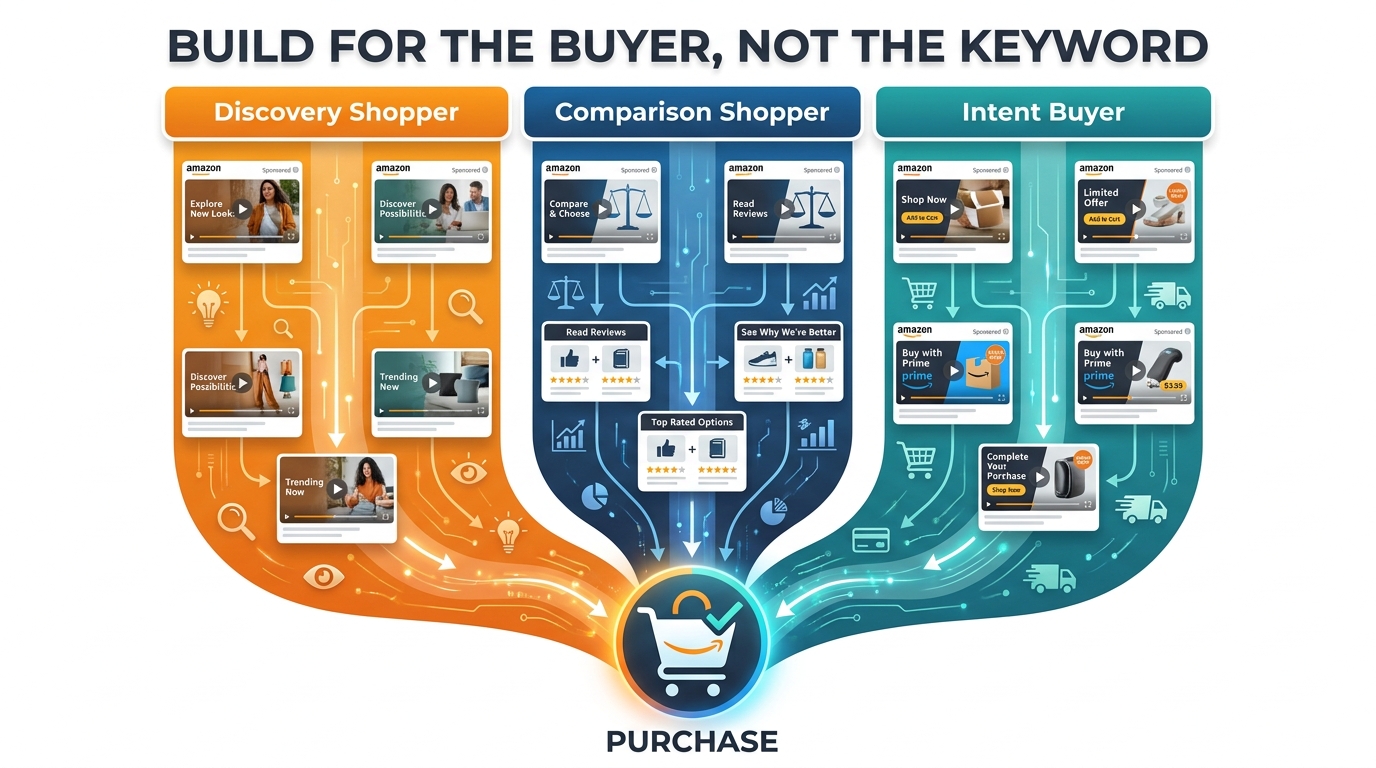
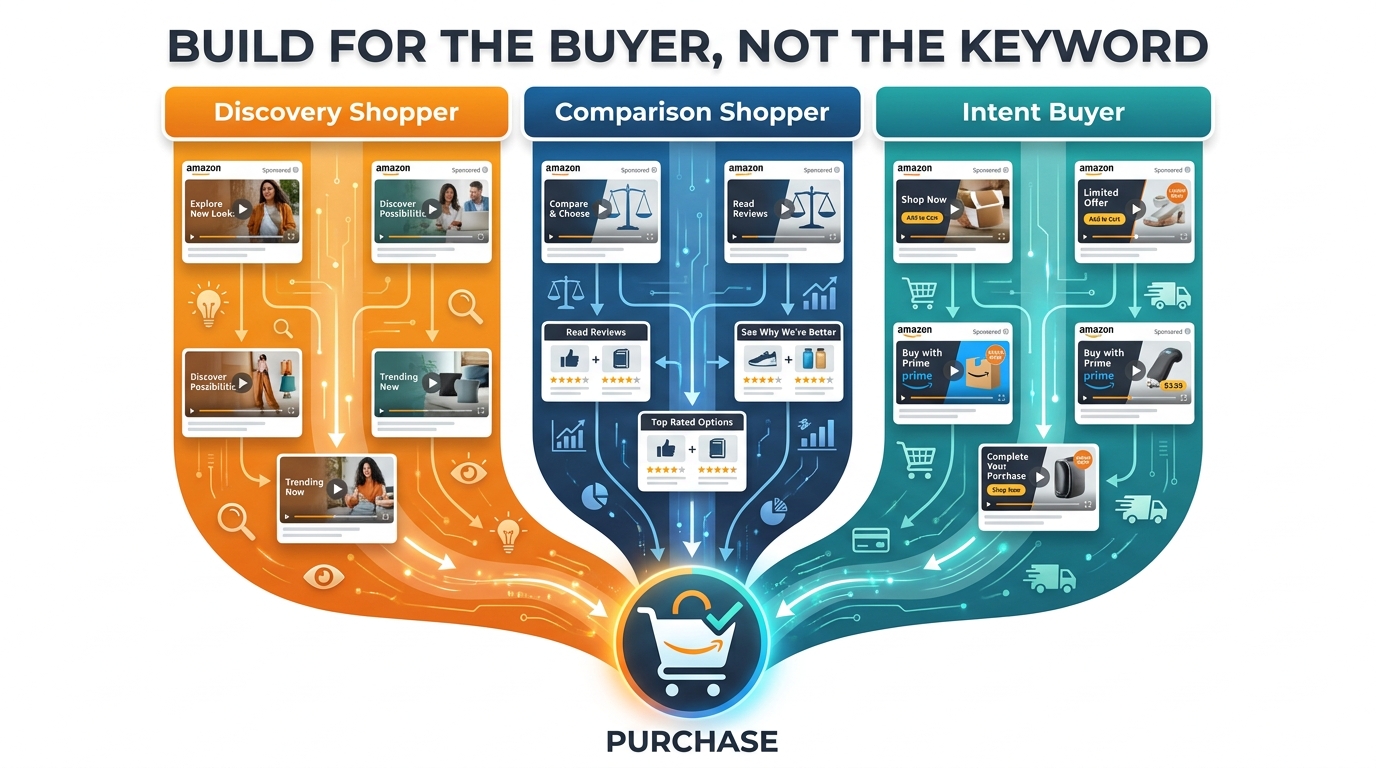
    Amazon Sponsored Brands Video persona-first campaign funnel divided into three buyer lanes: Discovery Shopper, Comparison Shopper, and Intent Buyer

    There is a version of Sponsored Brands Video that most Amazon advertisers are still running. It goes like this: pick your best-performing keywords from Sponsored Products, duplicate them into an SBV campaign, set a bid, point it at the product detail page, and hope the video does something useful. Measure it on ACoS. Shrug when the ACoS looks high. Pause. Repeat.

    That approach was never particularly strategic. In 2026, it is actively limiting. The reason isn’t that SBV has gotten more competitive — though it has. It’s that the underlying targeting infrastructure has changed in ways that reward a fundamentally different way of thinking about campaigns.

    Amazon has quietly expanded what SBV can do: product detail page targeting is now a primary placement type, not an afterthought. Theme-based AI matching has reduced reliance on exhaustive keyword lists. Amazon Marketing Cloud has moved from a reporting novelty to a genuine audience-activation layer. And audience bid modifiers — including a +900% ceiling for specific shopper segments — have made campaign segmentation far more consequential than it used to be.

    Put those pieces together and what you get is a system that is explicitly designed to reward advertisers who think about who they are reaching before they think about what keywords they are bidding on. That’s what persona-first SBV means in practice. This article breaks down what changed, why the keyword-first default no longer works, and how to rebuild your SBV campaigns around buyer types rather than match types.

    The Problem With Running SBV Like a Keyword Campaign

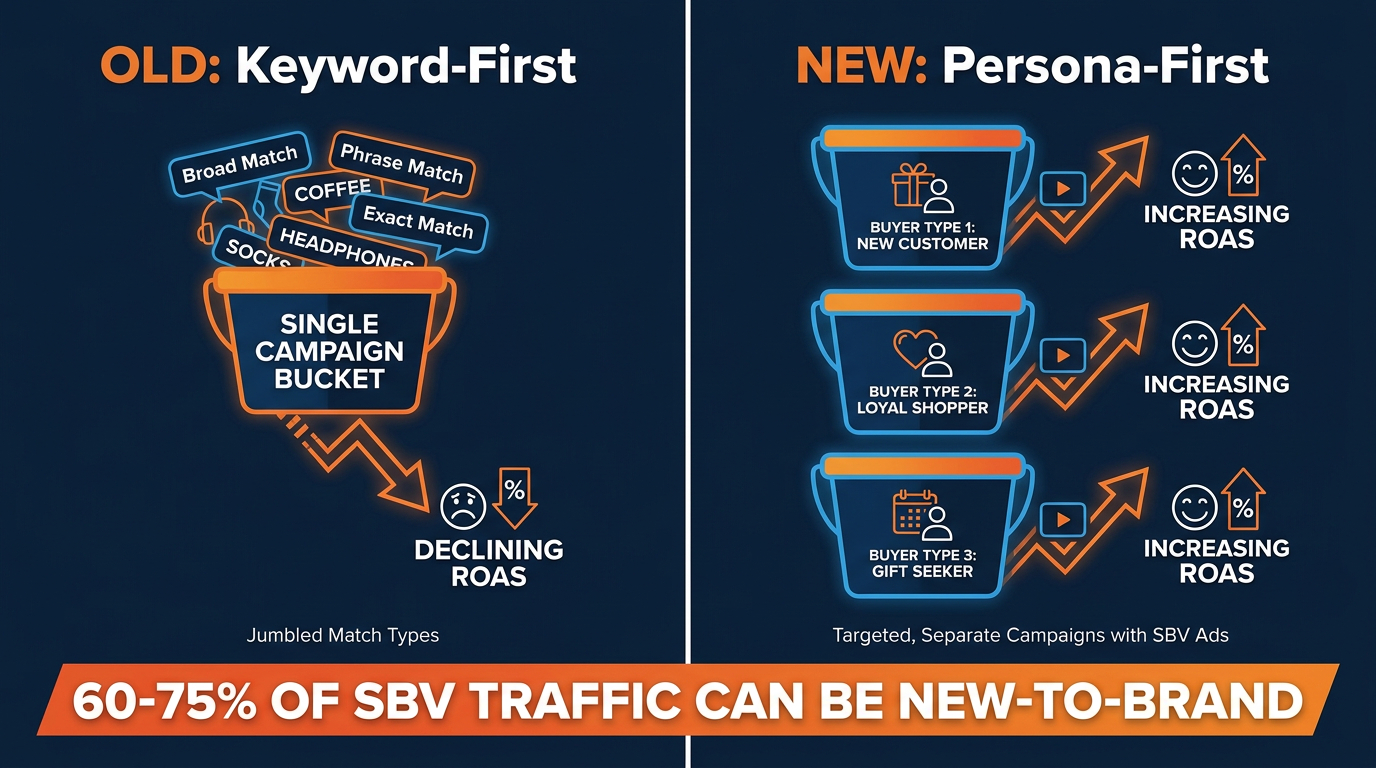
    Side-by-side comparison showing keyword-first SBV campaign structure with declining ROAS versus persona-first structure with three buyer-type campaign buckets and improving performance

    The original logic of running SBV from a keyword list made sense when SBV was simply a richer version of a static Sponsored Brands banner. You had the same targeting levers, the same match types, the same search-result placement logic. The video was the creative upgrade; the keyword strategy stayed the same.

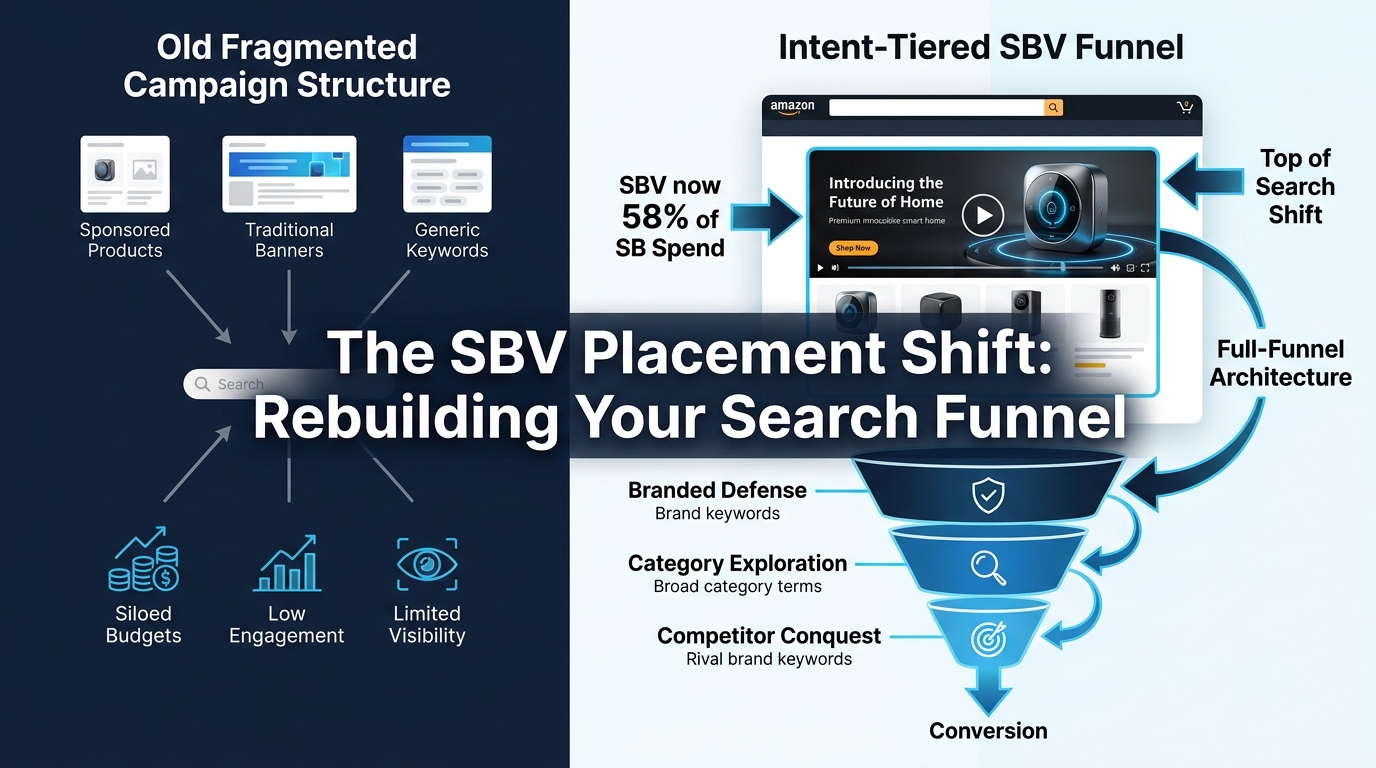
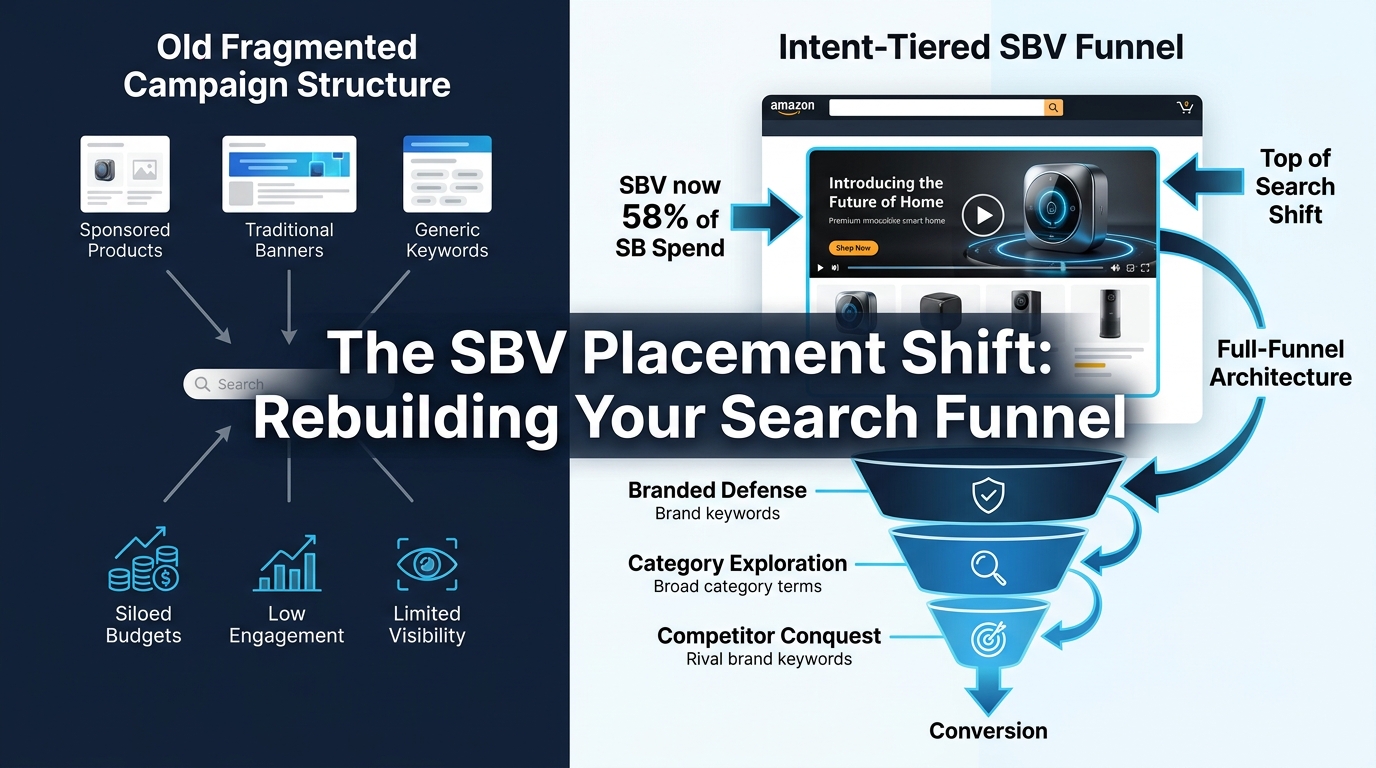
    The problem is that this created a structural mismatch between the ad format and the strategy behind it. Video is a mid-funnel, awareness-building format. Keywords — especially the high-intent, close-in keywords that perform best in Sponsored Products — are a bottom-of-funnel tool. When you run a discovery-oriented format against a conversion-oriented keyword set, you either pay too much to reach buyers who were going to find you anyway, or you reach genuinely new audiences without any mechanism to handle them differently.

    The ACoS Trap

    Measuring SBV on ACoS compounds this problem. ACoS is a direct-response metric. It divides ad spend by attributed revenue and produces a number that tells you nothing about what SBV actually does well — which is introducing your brand to shoppers who have never bought from you, influencing consideration during a multi-session research process, and building the kind of brand recall that eventually shows up as organic search volume for your brand name.

    Brands that measure SBV on ACoS will almost always find it underperforms relative to Sponsored Products. That comparison is essentially meaningless. It’s like measuring a trade show booth by how many sales happened at the booth itself, rather than how many leads walked out the door and converted over the following weeks.

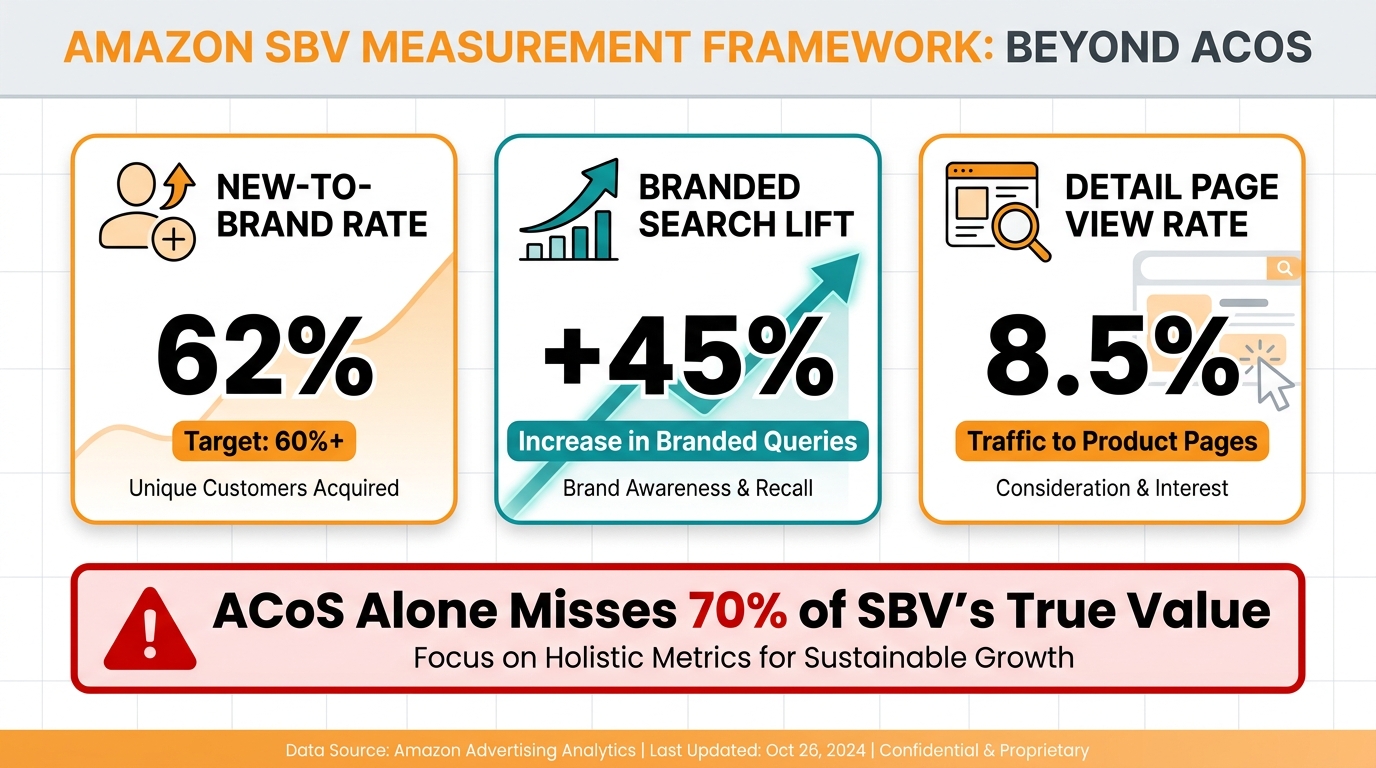
    This is why new-to-brand rate has become the leading KPI for sophisticated SBV advertisers. Industry data puts SBV NTB rates between 60% and 75% for many categories — meaning the majority of SBV-attributed orders are coming from shoppers who had never purchased from that brand on Amazon before. That’s the metric that tells you whether SBV is doing its actual job.

    Why Keyword Lists Can’t Capture Buying Stages

    A keyword like “wireless earbuds” tells you a shopper searched for a category. It tells you almost nothing about where they are in the purchase journey. Are they browsing options for the first time? Comparing three shortlisted products? Ready to buy but checking price? All three shoppers might type the same query, but they need very different messages, and they represent very different economic value to your campaign.

    A keyword-first campaign treats all three the same. A persona-first campaign structures around the reality that these are three distinct audiences who should be reached with different creative angles, different bidding logic, and different downstream measurement.

    This is the foundational shift. Keywords become inputs to persona buckets — not the organizing principle of the campaign itself.

    What the New SBV Targeting Landscape Actually Looks Like

    Before getting into strategy, it’s worth mapping the actual targeting options available in SBV as of 2026 — because the menu has expanded considerably from the basic keyword/category/product triad that most advertisers started with.

    Keyword Targeting: Still the Foundation, Now a Signal Source

    Keywords remain available across broad, phrase, and exact match types in SBV. The change isn’t that keywords have been removed — it’s that advanced advertisers now treat them less as campaign organizers and more as intent signals that feed into larger audience logic. Your high-converting broad-match keywords are still valuable, but their primary function is now surfacing search term data that helps you understand what kind of shopper is reaching you, not defining which campaign bucket a particular piece of spend lives in.

    The practical implication: keyword lists in SBV should be curated specifically for the persona they’re meant to attract. A campaign targeting first-time category explorers should use different keyword sets than a campaign targeting shoppers who’ve demonstrated product-specific intent. Same keywords, different campaigns, different bids, different creative.

    Product and Category Targeting: Now a Primary Placement Driver

    Product detail page (PDP) targeting — placing your SBV ad on a competitor’s or complementary product’s detail page — has become a significantly more important placement type in 2026. Amazon has expanded PDP placements for Sponsored Brands and video, and performance data from practitioners consistently shows strong conversion rates from this placement, particularly when the targeting is precise.

    The logic here is straightforward: a shopper on a competitor’s detail page has already demonstrated category intent and is actively evaluating options. Your SBV unit appearing at that moment, with creative that speaks directly to a comparison-stage buyer, is one of the highest-leverage places you can spend SBV budget.

    Category targeting works similarly but casts a wider net — useful for awareness campaigns where the goal is broad-category discovery rather than direct comparison.

    Theme Targeting and AI-Assisted Matching

    Amazon’s theme-based targeting — sometimes called AI-assisted or automated relevance matching — represents the newest layer of the SBV targeting stack. Rather than requiring advertisers to manually build exhaustive keyword lists, theme targeting lets Amazon’s algorithm find relevant placements based on the semantic theme of the campaign, the product being advertised, and real-time shopper intent signals.

    This is not a “set and forget” mechanism — it still requires close monitoring of where impressions are going and what the resulting traffic quality looks like. But for advertisers who have historically missed discovery opportunities because their keyword lists were too narrow, theme targeting opens reach in a controlled way. The practical approach most agencies recommend is to run theme targeting in a separate campaign with its own budget, review the placement report weekly, and use negative targeting to suppress irrelevant placements while feeding good ones back into manual campaigns.

    Audience Bid Adjustments: The Multiplier Layer

    Amazon now supports three built-in audience segments for Sponsored Brands bid adjustments: new-to-brand shoppers, shoppers who clicked or added the brand’s product to cart, and shoppers who previously purchased the brand’s product. Bid boosts can be applied up to +900% above the base bid for these audiences.

    This is where campaign segmentation becomes financially consequential. A +900% bid modifier on a returning purchaser in a replenishment category means you are willing to bid nearly ten times more to reach someone you already know is a high-probability buyer. Applied thoughtfully, these modifiers let you essentially run auction strategies that are invisible in the headline campaign structure but doing significant work under the hood.

    How Amazon Marketing Cloud Changes the Persona Game

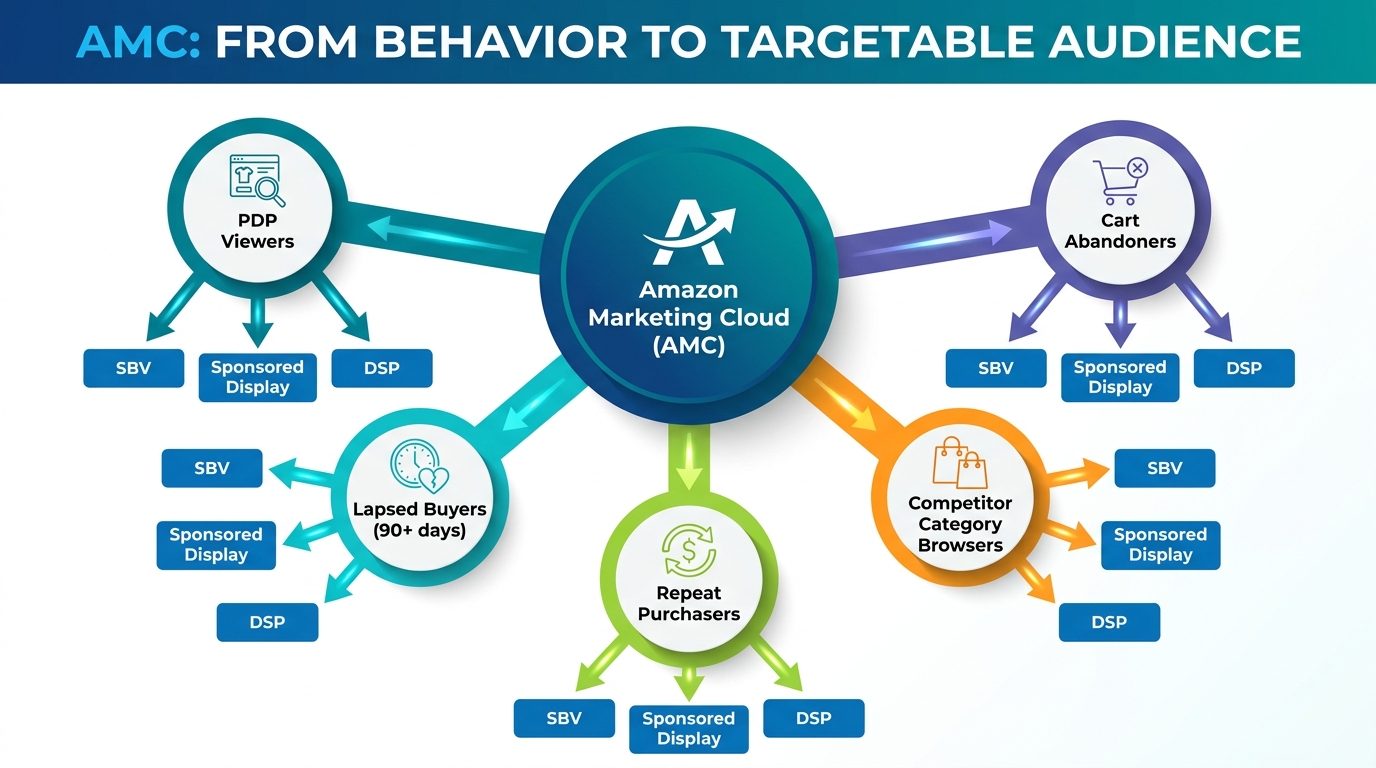
    Amazon Marketing Cloud hub diagram showing behavioral audience segments — PDP Viewers, Cart Abandoners, Lapsed Buyers, Competitor Browsers, Repeat Purchasers — connecting to SBV, Sponsored Display, and DSP campaign types

    Amazon Marketing Cloud was, for most of its early life, a reporting and attribution tool. Advertisers used it to answer questions like “how many touchpoints preceded a conversion?” and “what is the true ACoS when I account for multi-campaign paths?” These are useful questions. But the more significant evolution in 2026 is AMC’s role as an audience activation layer, not just an analytics layer.

    AMC now lets advertisers build custom audiences from behavioral signals — product detail page views, cart adds, repeat purchases, lapsed buyers who haven’t converted in 90+ days, shoppers who browsed a specific category but didn’t purchase — and push those audiences directly into Sponsored Products, Sponsored Brands, SBV, Sponsored Display, and DSP campaigns.

    This closes the loop between insight and action in a way that wasn’t previously possible. You’re no longer using AMC to understand what happened and then making educated guesses about what to do next. You’re using AMC to identify a specific behavioral cohort, build a campaign audience from it, and deploy that audience in an SBV campaign that speaks directly to where those shoppers are in their journey.

    The No-Code Audience Builder: Lower Barrier, Higher Stakes

    Amazon’s introduction of a no-code audience builder within AMC has materially lowered the technical barrier to doing this kind of segmentation. You no longer need SQL query skills to build custom audiences. The practical implication is that more advertisers now have access to AMC audience activation — which means the competitive advantage goes to those who are more thoughtful about what audiences they build and how they deploy them, not just to those with the technical resources to access the tool at all.

    The segments most consistently cited as high-value by practitioners: shoppers who viewed your product detail page in the last 30 days but did not purchase (warm retargeting), shoppers who purchased once in the last 90-180 days (loyalty development), shoppers who viewed competitor ASINs in your category (competitive conquest), and first-party customer lists re-engaged via Sponsored Display.

    Connecting AMC Audiences to SBV Creative Strategy

    Here is where most advertisers leave significant value on the table. They build AMC audiences, they layer them into campaigns, they apply bid modifiers — but they run the same creative to every audience. That eliminates most of the strategic benefit of persona segmentation in the first place.

    If you have separate audiences for first-time category explorers and for competitive switchers, those two audiences have different objections, different levels of brand awareness, and different reasons to choose your product over the alternatives. The video that works for a cold discovery audience — focused on introducing what the product is, establishing the category problem it solves — is a different video than the one that works for a shopper who just viewed a competitor’s detail page and is now comparison shopping.

    Persona-first SBV means aligning the creative brief to the audience brief. When those two are matched, the format performs dramatically better than when they’re misaligned.

    Building Your Three Core Persona Buckets

    Not every brand needs a dozen persona segments. The complexity ceiling in campaign management is real, and over-segmentation creates as many problems as under-segmentation. For most brands, three core persona buckets provide enough granularity to make meaningful strategic distinctions without making campaign management unmanageable.

    Bucket One: Discovery Personas

    These are shoppers who are entering the category for the first time, or who are broadly aware of the category but haven’t yet formed strong brand preferences. They’re using generic, high-volume search terms. They’re browsing category pages. They’re on informational product pages doing preliminary research. AMC signals that identify discovery personas include first-time category keyword searches (no prior category purchase history in the lookback window), broad category PDP views without cart actions, and shoppers who’ve been exposed to upper-funnel streaming TV or Prime Video ads without subsequent product engagement.

    The right campaign mechanics for discovery personas: broad-to-phrase keyword targeting, category targeting, theme targeting with careful placement monitoring, and creative that leads with the category problem and introduces your product as a solution. Bids should be conservative — this audience is the top of the funnel, and efficiency expectations should reflect that. NTB rate is the primary KPI; ACoS is largely irrelevant here.

    Bucket Two: Comparison Personas

    Comparison personas have already done initial research and are now evaluating specific options. They’re searching for product-specific terms — often including competitor brand names or specific features (ASIN-level or attribute-level searches). They’ve viewed multiple PDPs in the category. AMC can identify these shoppers via multi-product-view sequences, cart-add-without-purchase signals, and repeat category searches within a tight timeframe.

    Campaign mechanics: product targeting against competitor ASINs (PDP placement SBV is particularly powerful here), keyword targeting on competitor brand terms and feature-specific queries, and creative that speaks to differentiation — why your product specifically vs. the alternatives. This is also the segment where audience bid modifiers on “new-to-brand shoppers” are most impactful: you’re willing to bid more to win a comparison shopper who has never bought your brand before, because converting them is worth more than converting someone who was already heading to your listing.

    Bucket Three: Intent and Loyalty Personas

    Intent personas are close to purchase: they’ve viewed your PDP recently, added to cart, or are prior purchasers showing replenishment signals. These are the highest-commercial-value shoppers in the SBV ecosystem. The bid modifiers that can go up to +900% are most justifiably applied here — you are paying a premium for shoppers who have already demonstrated high purchase intent or loyalty, and the conversion economics support it.

    Creative for intent and loyalty personas can be more direct: product reminders, social proof, limited-time offers, or replenishment nudges. The campaign structure here often overlaps with Sponsored Display retargeting, which creates a sequencing opportunity — SBV for the video touchpoint, Sponsored Display for the persistent reminder, with AMC tracking the path from impression to conversion across both.

    Campaign Architecture: Separating NTB From Retargeting

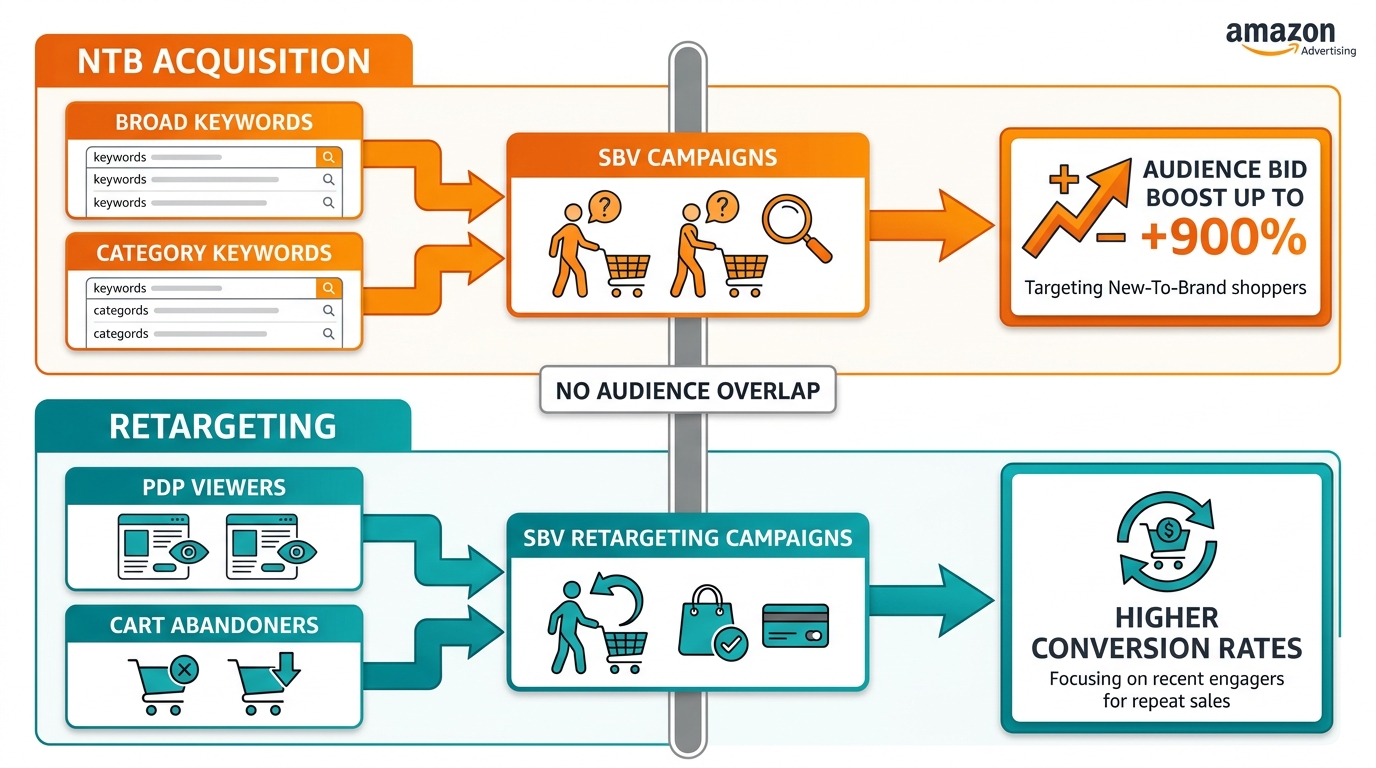
    Amazon SBV campaign architecture split into two parallel tracks: NTB Acquisition track in orange with broad keywords and new shopper targeting, and Retargeting track in teal with PDP viewers and cart abandoners, with NO AUDIENCE OVERLAP divider between them

    The most structurally important decision in persona-first SBV is the one that often gets skipped: keeping new-to-brand acquisition and retargeting in separate campaigns, with separate budgets, separate bids, and separate creative.

    Why does this matter? Because when NTB and retargeting exist in the same campaign, the budget optimizes toward whichever audience is cheaper to reach and convert in the short term — which is almost always retargeting. Warm audiences convert faster and at higher rates. If they share a budget pool with cold prospecting, retargeting will consume the majority of the spend, and you’ll effectively stop running a discovery program while still believing you have one.

    The Structural Rules

    Keep NTB campaigns free of audience bid modifiers set to favor returning purchasers. Use negative audience exclusions to remove your existing customer base from NTB SBV campaigns where possible — you don’t want to spend top-of-funnel budget reaching shoppers you’ve already converted. Use AMC audiences to identify and exclude recent purchasers and PDP viewers from discovery campaigns, and instead channel them into the retargeting track.

    The retargeting track should carry tighter creative aligned to purchase signals: more product-specific messaging, stronger call-to-action, shorter video that assumes category awareness and gets straight to the value proposition.

    Budget allocation guidance that appears consistently in practitioner frameworks: roughly 60–70% of SBV budget on acquisition (discovery + comparison personas) and 30–40% on retargeting and loyalty. This reflects SBV’s core value as a new-audience acquisition format while still capturing the efficiency of warm retargeting. The exact split should be calibrated to your brand’s actual NTB rate — if your AMC data shows your current SBV is already predominantly reaching existing customers, that’s a signal your acquisition allocation needs to increase.

    Placement Allocation Within Each Track

    For acquisition campaigns, top-of-search placement deserves a higher share of bids — this is where discovery shoppers are. For retargeting campaigns, PDP placement is often more efficient, since retargeting audiences are more likely to be in the product research phase and actively viewing detail pages.

    Amazon allows bid adjustments by placement type within Sponsored Brands campaigns. Use placement-level bid adjustments to reinforce this logic: boost top-of-search bids in acquisition campaigns, boost PDP bids in retargeting campaigns. Stack this with audience bid modifiers and you have a two-axis bid strategy that is much more precise than adjusting a single headline bid.

    Theme Targeting and AI Matching: Reading the Algorithm

    Theme targeting deserves its own treatment because it operates differently from every other SBV targeting type. While keyword and product targeting are advertiser-directed — you specify what you want to target — theme targeting is system-directed. You define a theme (essentially a cluster of related search and browse intent) and Amazon’s algorithm decides where to show the ad based on its interpretation of that theme in real-time auction contexts.

    The advantage is reach expansion without the overhead of manually building keyword lists that cover every relevant query variation. The risk is reaching irrelevant contexts if the AI’s interpretation of your theme doesn’t match your actual target customer.

    How to Use Theme Targeting Without Losing Control

    The safest operational model for theme targeting in a persona-first campaign is to treat it as a prospecting layer within the discovery persona bucket, running in its own campaign with a strictly defined budget cap. This keeps theme targeting from cannibalizing spend from manually controlled campaigns.

    Review the placement and search term reports for theme-targeted campaigns weekly in the first month. Identify placements and search terms that are driving meaningful click and view behavior versus those generating impressions without engagement. Add irrelevant terms as negatives at the campaign level. Use high-performing terms from theme targeting to inform and expand the keyword lists in your manually controlled discovery campaigns.

    Over time, theme targeting can function as a continuously self-updating discovery layer — surfacing relevant intent signals that manual keyword research would have missed. But it requires active management to stay relevant, especially in categories where product taxonomy and shopper language evolve quickly.

    What AI Matching Is Actually Optimizing For

    Amazon’s AI-assisted matching in SBV is becoming more product-detail-aware and less purely keyword-triggered. The algorithm increasingly factors in the quality and relevance of the landing page — your product detail page — as part of the ad relevance score. Brands with strong PDPs (rich images, complete bullets, A+ content, high review velocity) get access to better AI-matched placements because the system has higher confidence that the landing experience will satisfy the shopper intent it matched.

    This creates a direct link between your PDP quality and your SBV targeting efficiency that most advertisers haven’t fully internalized. Investment in listing quality isn’t just a conversion rate optimization — it affects the reach and efficiency of AI-matched SBV placements. A weak PDP limits where the algorithm is willing to show your ad, regardless of how strong your keyword or theme targeting setup is.

    Creative That Works for Personas: Sound-Off, Mobile-First, Message-Matched

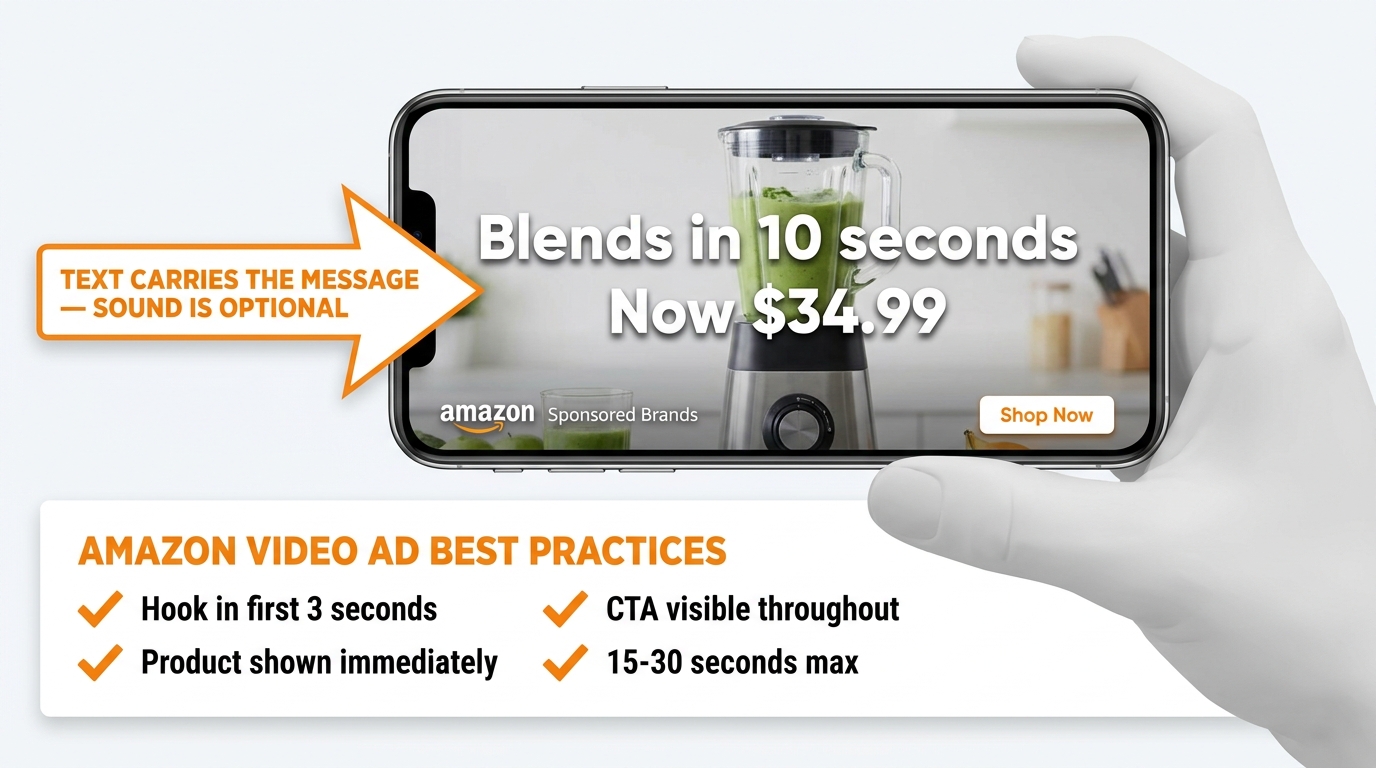
    Mobile phone mockup showing an Amazon Sponsored Brands Video ad for a kitchen blender playing silently with bold text overlays, with a checklist of SBV creative best practices including hook in first 3 seconds, product shown immediately, CTA visible throughout, and 15-30 seconds max

    If persona-first SBV targeting is the strategic layer, persona-matched creative is where that strategy either lands or falls apart. The creative brief has to be derived from the persona brief, not developed independently of it.

    Amazon’s SBV format has some hard constraints that shape all creative decisions before persona-specific choices come into play. Videos auto-play muted — either on scroll (mobile) or when at least 50% in view. The vast majority of impressions are delivered without audio. This means the video must communicate its core message through visuals and text overlays alone, without relying on voiceover or music.

    The Sound-Off Imperative

    Designing for silent viewing is not optional — it’s the baseline. Every critical message element (what the product is, the key benefit, the call to action) must be communicated visually. Text overlays carry messages that voiceover would handle in a traditional video format. Captions should be large, legible at mobile screen sizes, and timed to the visual pacing of the product demonstration.

    The practical discipline this requires: watch your SBV creative with the sound completely off and ask whether someone who has never heard of your product could understand what it is and why they should click within the first three seconds. If the answer is no, the creative needs revision regardless of how good it sounds with audio.

    First-Three-Second Architecture

    Amazon and most experienced practitioners cite the first two to three seconds as the decisive creative window for SBV. The product should appear on screen by second two at the latest. The category problem or key benefit should be communicated within three seconds via either visual demonstration or on-screen text. Anything that delays the product reveal — brand logo intros, abstract lifestyle scenes, slow fades — costs attention that most shoppers won’t give back.

    The structure that consistently performs well: product in frame immediately, key benefit stated via on-screen text within three seconds, demonstration or proof point in the middle section, clear call-to-action and product/brand close in the final two to four seconds. Total length: 15 to 30 seconds for most categories. Longer formats work for high-consideration purchases where shoppers are willing to invest more attention, but 15 seconds is the safe default.

    Matching Creative to Persona Stage

    Discovery persona creative should introduce the category problem first, then position the product as the solution. These shoppers may not know your brand at all — the creative needs to earn attention from zero rather than assuming any prior brand awareness. Hook lines like “The problem with [category]” or “Why [common frustration] keeps happening” can work well because they validate the discovery shopper’s unmet need before presenting the product.

    Comparison persona creative should lead with differentiation. This audience already knows they want a product in this category — what they’re trying to figure out is why your specific product over the alternatives. Feature comparisons, social proof indicators (review counts, bestseller badges, awards), and direct attribute callouts (“the only [product] with [specific feature]”) all address the comparison stage question of “why this one?”

    Intent and loyalty persona creative can afford to be more direct and conversion-focused. A product reminder with a strong CTA (“Back in stock” / “Free shipping today” / “Subscribe and save 15%”) works well for this audience because you’re not doing brand-building work — you’re providing a timely nudge to an already-warm decision.

    Measurement Frameworks: What to Track Beyond ACoS

    Dashboard showing three primary SBV measurement metrics: New-to-Brand Rate with 60%+ target, Branded Search Lift with upward trend, and Detail Page View Rate, plus a warning that ACoS alone misses the majority of SBV's true value

    Measuring SBV with the same framework used for Sponsored Products is one of the most durable mistakes in Amazon advertising. The format is different, the funnel position is different, the buyer journey impact is different. The measurement framework needs to reflect all three.

    Primary Metrics by Persona Bucket

    For discovery campaigns, the primary metrics are new-to-brand order rate and new-to-brand revenue percentage. Secondary metrics include detail page view rate (DPVR) — the percentage of ad impressions that result in a product detail page view — and branded search volume trend (tracked via AMC or Brand Analytics, looking for organic branded search lift correlated with SBV impression volume). ACoS is a tertiary metric at most; NTB ACoS (which divides ad spend by new-to-brand revenue specifically) is more meaningful than blended ACoS for this bucket.

    For comparison campaigns, ACoS becomes more relevant but should still be viewed alongside conversion rate from PDP visits (are comparison shoppers who arrived from SBV converting at the rate you’d expect for high-intent traffic?) and competitive conquest rate (what share of PDP-targeted traffic is coming from competitor ASINs vs. your own?). A healthy comparison campaign is driving substantial traffic from competitor product pages and converting it at meaningful rates.

    For intent and loyalty campaigns, traditional direct-response metrics apply more directly. ACoS, ROAS, and conversion rate are all meaningful here because the audience is purchase-stage. But even for this bucket, supplement with AMC data on purchase frequency and average order value — loyalty SBV should be improving both, not just capturing clicks that would have converted anyway.

    The AMC Attribution Window Adjustment

    One of the most useful measurement techniques available through AMC for SBV is adjusting the attribution window beyond Amazon’s default 14-day click window. SBV’s role as a mid-funnel awareness format means many of its conversions happen on timelines longer than two weeks — particularly for high-consideration categories where the research-to-purchase cycle spans 30, 60, or even 90 days.

    AMC allows custom attribution window analysis. Running an AMC query that looks at 30-day and 60-day conversion paths for SBV-exposed shoppers will typically show materially higher attributed conversion than the default 14-day window. This doesn’t mean you over-claim SBV credit — it means you’re measuring it on a timeline that actually reflects how shoppers interact with the format.

    Halo Effect Measurement

    SBV’s most undervalued contribution is brand search lift — the increase in organic search volume for your brand name that follows SBV impression campaigns. This effect is real and has been documented in case studies across multiple categories, but it’s invisible in campaign-level reporting because it shows up in organic results rather than as directly attributed ad revenue.

    Measuring it requires comparing branded organic search volume (available in Brand Analytics) before and after significant SBV campaigns, ideally in AMC where you can segment by geographic market or product category to build a more rigorous comparison. Brands that have done this analysis consistently find that SBV’s total revenue influence — including organic halo — is significantly larger than what campaign-attributed revenue alone suggests.

    The Bid Modifier Stack: Layering Without Cannibalization

    Audience bid modifiers in SBV are powerful enough to be dangerous if applied without a coherent architecture. The +900% ceiling means a single misconfigured modifier could drive your effective CPC to levels that make no economic sense. The goal of bid modifier strategy is precision — applying the right premium to the right audience in the right campaign, without creating overlap that causes your different campaigns to bid against each other.

    The Audience Exclusion Principle

    Before applying any bid modifiers, establish your audience exclusion logic. If your NTB acquisition campaign has no audience exclusions, it will reach existing customers — and if you have a +500% bid modifier on “previously purchased” audiences in that campaign, you’ll be paying a massive premium for a customer interaction that belongs in your loyalty campaign instead.

    The cleanest architecture: NTB campaigns exclude any audience that has purchased or viewed your brand in the last 365 days. Retargeting and loyalty campaigns are built specifically around those excluded audiences. This creates mutually exclusive lanes where each campaign is reaching the audience it was designed for, and bid modifiers within each campaign are applied to sub-segments of that audience rather than creating cross-campaign competition.

    The Two-Axis Bid Stack

    For each campaign in your SBV portfolio, you have two independent bid adjustment levers: placement-level adjustments (top-of-search vs. PDP) and audience-level adjustments (within the campaign’s primary audience, boosting specific sub-segments). Applying both creates a compound effect.

    Example: in a discovery campaign, you might set a top-of-search placement boost of +30% to prioritize that placement for first-time search impressions. Within that campaign, you might apply a +200% bid modifier on the “new-to-brand shoppers” audience segment. The result is that when a new-to-brand shopper is in a top-of-search context, your effective bid is substantially higher than for any other combination — you are paying the most to win the impression most likely to result in a high-value new customer acquisition.

    This kind of bid logic can’t be set and forgotten. It requires regular review of impression share, conversion rates, and CPCs at the placement and audience level to ensure the modifiers are working as intended and the economics remain defensible.

    Common Mistakes Brands Make When Shifting to Persona-First SBV

    The appeal of persona-first SBV is that it offers a more sophisticated, more accountable approach to video advertising. The execution risk is that sophistication brings complexity, and complexity creates new failure modes. These are the ones that show up most consistently when brands make this transition.

    Building Personas From Demographics Rather Than Behavior

    Demographic personas — “our customer is a 35–45 year old woman interested in wellness” — are useful for brand strategy but nearly useless for Amazon PPC architecture. Amazon doesn’t offer demographic targeting in Sponsored Ads. Your personas need to be built from behavioral signals: what did this person search for, view, add to cart, purchase? Only behavior-derived personas can be operationalized into actual campaign structures via AMC audiences and bid modifiers.

    Over-Segmenting Too Early

    Starting with eight persona buckets when you have modest monthly SBV spend will spread budget too thin across too many campaigns. Each campaign needs sufficient impression and click volume to generate statistically meaningful performance data — if campaigns are getting 50–100 clicks per month, you can’t make reliable optimization decisions. Start with three buckets (discovery, comparison, intent/loyalty), establish budget minimums that give each meaningful data volume, and expand segmentation only as overall spend scales.

    Running the Same Creative Across All Personas

    Covered in the creative section, but worth restating as a mistake category: if you build the targeting infrastructure for persona-first SBV but run identical video creative across all three buckets, you’re capturing only about half the strategic benefit. The targeting half is in place; the message-matching half isn’t. Creative production investment is the bottleneck that often prevents advertisers from fully executing persona-first strategy — the solution is to prioritize creative versioning even if it means starting with stripped-down video formats (slideshow-style video, product demo clips) that can be produced faster than full brand video productions.

    Not Setting Exclusions Before Launching

    Launching NTB and retargeting campaigns simultaneously, in the same account, without audience exclusions between them is the fastest way to create budget overlap and muddy your attribution data. Set up exclusion audiences in AMC before you launch separate campaign tracks, verify that the exclusion audiences are populating correctly, and do a test week at modest spend before committing full budget to the new structure.

    Using ACoS to Optimize Discovery Campaigns

    If you or your agency is pausing or reducing bids on discovery SBV campaigns because the ACoS looks high relative to Sponsored Products benchmarks, you are optimizing out the format’s primary value. Discovery campaigns are supposed to have higher ACoS by direct-response metrics — that’s not a bug, it’s an accurate reflection of what they’re doing in the funnel. The discipline required here is organizational as much as technical: stakeholders who approve ad budgets need to understand why discovery SBV is measured differently and what metrics actually indicate it’s working.

    Putting It Together: A Phased Implementation Roadmap

    The full persona-first SBV architecture described in this article is not something most brands can implement in a single sprint. The realistic path is a phased rollout that prioritizes the highest-impact changes first and builds complexity incrementally as data accumulates and the team becomes comfortable with the new structure.

    Phase One: Separate NTB and Retargeting (Weeks 1–4)

    The single highest-impact structural change is separating new-to-brand acquisition from retargeting into distinct campaigns with distinct budgets. Even without AMC audience activation or sophisticated bid modifier stacks, this alone changes how you measure SBV and prevents retargeting from consuming discovery budget. Start here. Establish audience exclusions, set NTB rate as the primary KPI for acquisition campaigns, and begin baseline measurement before making further changes.

    Phase Two: Activate AMC Audiences (Weeks 5–8)

    Once the NTB/retargeting separation is in place and you have four weeks of baseline data, begin building AMC custom audiences. Start with the highest-value segments: PDP viewers (last 30 days), cart abandoners (last 14 days), and recent single purchasers (last 90 days). Activate these audiences in your retargeting campaigns. Set bid modifiers conservatively at first — +50% to +100% — and increase based on conversion rate data over the following weeks.

    Phase Three: Persona Bucket Expansion and Creative Matching (Weeks 9–16)

    With the foundational structure in place, introduce the comparison persona bucket as a distinct campaign — typically built around product targeting on competitor ASINs and feature-specific keyword targeting. Develop creative versions matched to each active persona bucket. Introduce theme targeting as a prospecting layer within the discovery campaign, with its own sub-budget and weekly placement review discipline.

    Phase Four: Measurement Refinement and Optimization (Ongoing)

    At this point the structure is in place and optimization becomes the ongoing work: refining bid modifiers based on audience-level conversion data, expanding or contracting each persona bucket’s budget allocation based on AMC attribution analysis, updating creative based on DPVR and engagement data, and using branded search lift analysis to quantify the organic halo effect of discovery campaigns. This phase doesn’t end — it’s the continuous improvement loop that separates SBV programs that compound in value over time from those that plateau.

    Conclusion: The Compounding Advantage of Persona Intelligence

    The shift from keyword-first to persona-first SBV is not a one-time campaign restructuring exercise. It’s a different theory of what Amazon video advertising is for and how it creates value. Keywords tell you what a shopper typed. Personas tell you who the shopper is, where they are in their journey, and what they actually need to hear to take the next step.

    When you build campaigns around that level of understanding — when the targeting, the creative, the bidding logic, and the measurement framework are all aligned to buyer type rather than to match type — SBV stops being a format you run because it’s available and starts being a format that does specific, measurable work in your funnel.

    The new targeting infrastructure Amazon has built — AMC audience activation, audience bid modifiers, PDP placement targeting, AI-assisted theme matching — is not a set of independent features. It’s a coherent system designed to reward advertisers who bring a persona-level understanding of their buyer to the campaign build. The brands seeing the strongest NTB rates, the best branded search lift, and the most defensible long-term customer acquisition economics from SBV are the ones who recognized this shift early and restructured accordingly.

    The question is not whether persona-first SBV is worth doing. The data on NTB contribution, branded search halo, and full-funnel attribution makes a strong case that it is. The question is how quickly your organization can shift from running video ads to running video strategy — and how much of the competitive window remains available while that shift is happening.

    Key Takeaways: Separate NTB and retargeting campaigns before any other change. Build personas from behavioral signals in AMC, not demographics. Match creative to persona stage, not to campaign structure. Measure discovery campaigns on NTB rate and branded search lift, not ACoS. Use the two-axis bid stack (placement + audience modifiers) to create compound precision in your bidding. Start with three persona buckets and scale complexity only as budget and data volume support it.

  • The SBV Placement Shift: How to Rebuild Your Amazon Search Funnel From the Ground Up

    The SBV Placement Shift: How to Rebuild Your Amazon Search Funnel From the Ground Up

    Amazon SBV placement shift infographic showing the move to full-funnel intent-tiered campaign architecture

    For years, Sponsored Brands Video lived on the margins of most Amazon advertisers’ campaign hierarchies. It was the format you tacked onto a mature account once everything else was humming — a creative flex, a brand-awareness experiment, or a way to use up a budget surplus before quarter-end. Sophisticated? Sure. Essential? Most teams quietly said no.

    That calculation is now wrong. And the brands that haven’t updated it are bleeding impression share, paying inflated CPCs on their own branded terms, and watching competitors leapfrog them at the top of search using exactly the format they deprioritized.

    Amazon’s Sponsored Brands Video has undergone a structural placement shift that fundamentally changes how the search results page (SERP) is organized, how shoppers encounter brands at the moment of intent, and what a healthy Amazon search funnel actually looks like in 2026. This isn’t an incremental update to SBV’s auction mechanics. It’s a wholesale change in how Amazon weights video in its ad stack — and by extension, how every other ad type on your roster performs.

    By Q1 2026, SBV represented approximately 58% of Sponsored Brands spend in large agency portfolios. That number tells you something important: the market has already voted. The question is whether your account structure has caught up with what the market already knows.

    This article breaks down exactly what changed with SBV placements, why the old search funnel architecture no longer works, and how to rebuild your campaigns from the ground up using an intent-tiered structure built for the way Amazon’s SERP actually looks today.

    What Actually Changed — The SBV Placement Shift Explained

    Before and after comparison of Amazon SERP layout showing SBV shift from optional mid-funnel unit to dominant top-of-search placement in 2026

    Before you can rebuild your search funnel, you need an accurate picture of the shift itself. It’s tempting to characterize this as a gradual, incremental evolution — but the data points suggest something more abrupt happened between late 2024 and early 2026 that has materially changed SERP architecture.

    From Inline Unit to SERP Anchor

    Historically, Sponsored Brands Video functioned as an inline search result unit. It appeared mid-page, typically below the first row of organic results and a couple of Sponsored Products. It was attention-catching when it played, but it wasn’t positioned as a primary discovery vehicle. Its reach was real but its strategic weight in most campaign structures was treated as secondary.

    What changed is placement priority. Amazon has progressively moved SBV into the top-of-search position — the most valuable real estate on the SERP — in many categories. The video unit now frequently appears above the organic results grid, above static Sponsored Brands headline ads, and above the fold on mobile. This isn’t consistent across every category or query type, but it’s now the dominant pattern in high-competition verticals.

    The practical consequence: if a competitor is running a well-structured SBV campaign targeting your category keywords and you aren’t, they’re occupying the space that shapes shopper perception before any other result is visible. The ad that plays first doesn’t just win the click — it anchors what the shopper’s baseline comparison looks like for everything they see next.

    The CPM and CPC Ripple Effect

    Placement elevation has a direct effect on auction economics. As SBV competes more aggressively for top-of-search slots, CPCs and CPMs across the Sponsored Brands format have risen in high-volume categories. Advertisers who had calibrated their SB bidding strategy based on historical benchmark data are finding their models no longer predict actual spend or impression share accurately.

    More importantly, static Sponsored Brands headline ads — the format most teams built their brand-awareness layer around — are getting displaced. When a video unit occupies the top slot, the static headline format either gets pushed down or doesn’t show at all. If your branded defense strategy relies primarily on static SB, you may not be showing up at all on branded searches that your competitors are actively targeting with SBV.

    Mobile as the Core Context

    The placement shift matters disproportionately on mobile. The majority of Amazon shopping now happens on mobile devices, and on smaller screens the top-of-search SBV placement dominates the visible viewport before any scroll. A 15-second autoplay video at the top of a mobile search result is not competing with other ads — it’s the entire screen.

    This mobile-first reality changes how SBV should be briefed, produced, and optimized. But it also changes how much creative lift the format can deliver when it’s well-executed versus how much damage a poor creative execution can do to perception at the top of your category search.

    Amazon’s Algorithmic Weighting

    The placement shift isn’t just a layout decision. It reflects how Amazon’s A10 algorithm is incorporating engagement signals from video. Click-through rates on SBV units that auto-play with product-in-action hooks tend to run higher than the platform-wide average CTR of approximately 0.59%. SBV benchmarks from agency data suggest CTRs in the 0.7–1.2% range, with well-optimized creatives hitting closer to 0.89%. That engagement differential feeds relevancy signals that affect how Amazon scores and ranks your campaigns overall — not just your SBV line items.

    Why Your Old Search Funnel Is Broken — and How to Diagnose It

    Most Amazon advertisers built their original search funnel structure around Sponsored Products as the conversion engine, with Sponsored Brands as a brand-halo layer sitting loosely on top. SBV, if it existed at all in the account, was typically a single campaign running a mix of branded and category terms without clear segmentation. Budgets were set relatively flat across all three ad types, and optimization happened primarily within Sponsored Products where return on ad spend (ROAS) attribution was clearest.

    That architecture was functional in a world where SBV was peripheral. It breaks down the moment SBV becomes the dominant SB format and the primary shaper of top-of-search real estate.

    The Five Symptoms of a Broken Search Funnel

    Rising branded CPCs with no corresponding impression share gains. If your brand-term CPCs have climbed 20–40% over the past year while your branded impression share has stayed flat or declined, competitors are likely running SBV campaigns against your brand terms and outbidding your static SB in the auction for top-of-search placement.

    Declining organic rank on core category terms despite stable sales velocity. SBV plays a documented role in driving click-velocity signals that can influence organic rank. If your organic positions are eroding on category terms while your Sponsored Products campaigns are stable, check whether your SBV presence on those terms is weaker than competitors’.

    Branded and non-branded terms mixed into the same SBV campaign. This is the most common structural mistake. When you mix branded, category, and competitor terms into one SBV campaign, Amazon’s bidding algorithm optimizes toward aggregate performance — which typically means over-investing in whatever term type drives the easiest conversions (usually branded) and under-investing in the terms that actually grow market share.

    Single SBV creative running across all keyword clusters. A brand logo video optimized for mid-funnel brand awareness performs differently against a high-intent buyer searching an exact category keyword versus a discovery searcher entering a broad category phrase. One creative cannot serve both contexts well. Running it undifferentiated across them means poor performance everywhere.

    No baseline for measuring SBV’s contribution beyond last-click attribution. Standard Amazon campaign reports show last-click attribution for SBV, which systematically undercounts the format’s role in assisted conversions. If you have no Amazon Marketing Cloud (AMC) queries running to capture multi-touch paths, you almost certainly have an inaccurate picture of what SBV is actually generating — and you’re making budget decisions based on flawed data.

    Running a Quick Structural Audit

    Before rebuilding, pull the last 90 days of data across your Sponsored Brands campaigns and answer these four questions: What percentage of your SB spend is in video format versus static? Are branded, category, and competitor terms separated across different campaigns or mixed together? Do you have distinct creative assets mapped to different intent levels? And are you running any AMC queries to capture SBV-assisted conversion paths? If the answers are “less than 40%,” “mixed,” “no,” and “no,” your funnel needs a full rebuild, not a tweak.

    Intent-Tiered Campaign Architecture — The New Structural Foundation

    Three-tier SBV campaign architecture funnel showing branded defense, category exploration, and competitor conquest tiers with KPIs

    The core structural change in a rebuilt SBV-led search funnel is the separation of campaigns by shopper intent rather than by keyword volume or ad format. The principle is straightforward: a shopper searching your brand name has a fundamentally different intent, conversion probability, and response to creative than a shopper searching a category phrase. Running the same SBV campaign against both obscures performance, degrades optimization, and burns budget on the wrong objectives.

    Intent-tiered architecture separates campaigns into three distinct groups, each with its own keyword set, creative asset, success metric, and bidding logic.

    Tier 1: Branded Defense

    Branded defense campaigns target your own brand name and close brand variants in exact match. The objective is owning top-of-search on your own terms — preventing competitor SBV units from occupying the slot a potential buyer sees when they search your name. The success metric here is not ROAS. It’s branded impression share and click-through rate on branded queries. A high ROAS branded campaign that’s showing up 40% of the time is failing at its job, even if the returns look clean.

    The creative brief for branded defense campaigns is different from other tiers. The shopper already knows your brand. They’re searching to find your product, compare your SKU range, or confirm a purchase decision. The video hook should reinforce why they made the right call — product quality, key differentiator, social proof, value proposition — rather than introducing the brand as a discovery moment.

    Tier 2: Category Exploration

    Category exploration campaigns target non-branded category terms — the broad and phrase-match keywords a shopper enters when they’re in the market but haven’t committed to a brand. These searches represent the most valuable new-to-brand opportunity in the funnel. They’re also the highest-volume, most competitive keyword tier, which means CPC efficiency matters more here than in the branded tier.

    The success metric for category exploration shifts to new-to-brand (NTB) percentage, not pure ROAS. SBV typically drives a high NTB rate — agency data suggests NTB rates of around 65–70% on well-structured category SBV campaigns, compared to lower rates on Sponsored Products for the same terms. That NTB premium justifies a higher CPC ceiling than last-click ROAS alone would support.

    Creative for this tier should open with a problem or use-case that maps to the category search intent. If someone searched “best running shoes for plantar fasciitis,” your SBV shouldn’t open with your logo — it should open with a person running comfortably, foot visible, with benefit text on screen: “Engineered for plantar fasciitis relief.” The hook earns the next five seconds of attention by directly answering the search query.

    Tier 3: Competitor Conquest

    Competitor conquest campaigns are the most aggressive tier and require the most surgical execution. These campaigns target competitor brand names, competitor product terms, or competitor ASIN-targeted placements. The objective is intercepting shoppers who’ve already shown intent toward a competitor and presenting a compelling reason to switch consideration.

    The success metric here is NTB rate and click-through rate — not conversion rate. Competitor conquest shoppers have a lower baseline conversion probability than branded or category searchers, because they started with different intent. Expecting ROAS parity with branded campaigns from a conquest SBV is a mistake that leads brands to cut budget from campaigns that are actually working at their proper objective.

    Creative execution for conquest campaigns is the most different of the three tiers. The video must create a credible comparison advantage — not by naming the competitor (Amazon’s advertising policies restrict comparative claims in most formats), but by visually demonstrating the differentiating features that matter to the category’s shoppers. If your main competitor’s key weakness is battery life and yours is genuinely superior, the conquest creative should feature battery performance in the first three seconds.

    The Separation Principle in Practice

    Each of these three tiers should be separate campaigns — not ad groups within one campaign. The reason is bidding control. Amazon’s campaign-level bidding rules and placement multipliers apply at the campaign level. If you mix branded and competitor terms in the same campaign, you cannot set different bidding strategies for each. When you separate them, you can optimize branded campaigns for impression share with more aggressive CPCs, set category campaigns with dynamic bidding targeting new-to-brand conversion, and manage conquest campaigns at controlled CPC floors without those decisions contaminating each other.

    Branded Defense: Reserve Share of Voice and the New Protection Layer

    The most significant structural tool Amazon has introduced for branded SBV strategy in 2026 is Reserve Share of Voice (Reserve SOV). For brand-registered advertisers, this feature allows you to pre-purchase a guaranteed allocation of top-of-search Sponsored Brands placement for specific branded keywords at a fixed price — bypassing the standard auction entirely for those placements.

    What Reserve SOV Actually Delivers

    The beta results Amazon shared when rolling out Reserve SOV are striking. Advertisers using the feature on branded keywords saw top-of-search impression share rise from 62.7% to 99.3%. That’s not an incremental gain — it’s the difference between showing up most of the time and showing up essentially all of the time.

    For branded SBV specifically, this matters because the top-of-search slot on a brand query is where competitor SBV campaigns are trying to intercept your shoppers. Without Reserve SOV, you’re competing in an auction against competitors who may be bidding aggressively on your brand name. With Reserve SOV, that auction is effectively taken off the table for the reserved placement.

    The Fixed Pricing Trade-Off

    Reserve SOV uses fixed upfront pricing rather than auction-based CPCs. This has a real trade-off: in periods where your competitor interest in your branded terms is low, you may pay more than you would in an open auction. The value of Reserve SOV is certainty and protection, not necessarily cost efficiency in every scenario.

    The right framing for Reserve SOV is insurance. You’re paying for the guarantee that your brand controls its own top-of-search appearance, regardless of what competitors are willing to bid at any given moment. For brands in highly competitive categories or categories with heavy competitor conquesting activity, the certainty premium is almost always worth paying. For brands in lightly contested niches where branded CPCs are already stable, the calculus is less clear-cut.

    Layering Reserve SOV with Auction-Based SBV

    Reserve SOV doesn’t replace auction-based SBV on branded terms — it supplements it. Reserve SOV typically covers the top-of-search SB placement. Auction-based SBV campaigns can still capture additional branded placements across the rest of the SERP, including product detail page (PDP) video placements and lower SERP positions. A complete branded defense layer uses both tools in tandem: Reserve SOV locks the top-of-search branded slot, while auction-based SBV campaigns provide additional branded coverage and help maintain bid competitiveness in the auction signals that influence organic relevancy.

    Category Exploration: SBV as Your Mid-Funnel Engine

    The category exploration tier is where most of SBV’s new-to-brand and market share growth potential lives — and it’s also the tier that requires the most creative and strategic investment to execute well. The reason category SBV is harder is that you’re competing for attention among shoppers who haven’t already self-selected toward your brand. You have to earn consideration from scratch in 15–20 seconds.

    Keyword Cluster Architecture for Category SBV

    Category exploration campaigns should be structured around tight keyword clusters, not broad swaths of category terms. A tight cluster means a small group of related keywords with similar search intent and similar conversion profiles. “Best protein powder for women” and “women’s protein powder unflavored” are related but they’re not the same intent. A shopper searching the first phrase is in early consideration; the second suggests they’ve already narrowed their requirements and may be closer to purchase.

    Separate clusters allow you to match creative more precisely to search intent. The broad consideration searcher needs an awareness-building hook that establishes category leadership. The specificity searcher needs a hook that confirms your product meets their specific requirement. Running one generic creative against both clusters wastes the specificity searcher’s attention and fails to capitalize on the purchase intent signal their query carries.

    Practical cluster sizes of three to seven closely related keywords tend to perform better than either single-keyword campaigns (which often lack enough auction volume to gather meaningful data) or large mixed clusters (which create the same intent-blur problem as mixing branded and category terms).

    Targeting the Discovery Moment

    Category SBV works best when it targets shoppers in the decision window — not too early (when they’re just browsing and have no purchase intent) and not so late in the funnel that they’re already deep in product comparison mode. The discovery window is typically captured by category-level search terms that include a use case or benefit qualifier (“joint support supplement for seniors,” “waterproof hiking boot for wide feet”) rather than purely generic category terms (“supplement,” “boot”) or highly specific product-feature terms (“supplement with 1500mg glucosamine”).

    Category terms with use-case qualifiers also tend to have better CPC efficiency than pure generic terms, because they attract less competition from brands that only target highest-volume head terms. This is one of the counterintuitive aspects of SBV category strategy: being slightly more specific in your keyword targeting often delivers better scale at better cost than going after the broadest terms in your category.

    Driving New-to-Brand Efficiently

    The NTB rate for category SBV is meaningfully higher than for Sponsored Products on the same terms, because SBV intercepts the shopper earlier in the visual decision process. When Amazon’s own data shows a shopper is new to a brand across the full attribution window (which AMC captures more accurately than the standard 14-day last-click window), category SBV consistently shows up as a touchpoint in the path to first purchase.

    To measure this accurately, the minimum AMC query you should be running is a path-to-conversion report that captures SBV impressions in the days before a Sponsored Products click and purchase. Even without a complex multi-touch model, seeing how often SBV appears in the lookback window before a conversion event gives you a meaningful view of the format’s assisted contribution that standard reporting completely misses.

    Competitor Conquest Campaigns — Offensive SBV Tactics That Don’t Waste Spend

    Competitor conquest SBV is the highest-risk, highest-potential tier in the funnel. When it works, it introduces your brand to shoppers who have demonstrated purchase intent in your category but arrived at a competitor first. When it doesn’t work, it burns budget on low-conversion traffic against a buyer who’s already committed elsewhere. The difference between the two outcomes is almost entirely in the specificity of execution.

    Targeting Strategy for Conquest

    There are two main targeting approaches for competitor SBV: keyword targeting on competitor brand names and product targeting on competitor ASINs. Each has different characteristics in the current SERP environment.

    Keyword targeting on competitor brand names (exact match to “CompetitorBrandName” or phrase match to “CompetitorBrandName [category term]”) places your SBV in the search results for shoppers who typed the competitor’s name. These shoppers know what they’re looking for, which means your creative needs to make the switching consideration very clear and very fast. A generic brand video won’t cut it here. You need to present a direct, relevant advantage in the first three seconds.

    Product targeting on competitor ASINs places your SBV on the product detail pages of specific competitor products. This is a longer-funnel placement — the shopper is deep in product evaluation on a competitor’s listing — and it tends to work better for higher-consideration purchases where shoppers compare multiple options before deciding. The creative brief for PDP conquest is different from search-results conquest: here, you have a shopper who just read your competitor’s listing, so your video should emphasize the specific dimension where you win the comparison.

    Budget Ceilings and Performance Expectations

    Conquest campaigns require a fundamentally different performance benchmark than branded or category campaigns. Expecting similar ROAS from conquest traffic as from branded traffic is a guaranteed path to cutting the wrong campaigns. A realistic conquest benchmark is a conversion rate 30–50% lower than your branded conversion rate and a ROAS that may be 40–60% lower than branded ROAS — but against a new-to-brand rate that approaches 90–100% (since by definition, competitor shoppers have never purchased your brand).

    Set a separate budget ceiling for conquest that’s justified by the lifetime value of a new-to-brand customer, not by the immediate ROAS of the conquest click. If your average customer lifetime value is three purchases at your product’s average order value, then paying a higher CPA to acquire a first purchase is rational as long as the math closes over the full customer cycle, not just the first 14 days.

    Creative Considerations for Conquest

    Amazon’s advertising policies restrict explicit comparative advertising in most formats, but this doesn’t prevent effective conquest creative. The key is demonstrating superiority through product action rather than stated comparison. Show your product doing what competitors’ products do poorly. Lead with the specific feature, use-case, or outcome that shoppers in your category most frequently cite as their unmet need — the one your competitor consistently fails to address. You don’t need to say “better than Brand X.” The shopper searching Brand X will recognize what you’re showing them.

    The Creative Layer — Rebuilding SBV Assets for the New Placement Reality

    Amazon SBV video creative anatomy showing the optimal 15-second structure with silent hook, benefit text, and CTA timeline breakdown

    Creative is where the placement shift creates the most immediate operational pressure for brands. It’s not enough to restructure campaign architecture around intent tiers if the creative assets feeding those campaigns were built for a world where SBV was a supplementary mid-page format. The top-of-search placement demands a completely different type of video.

    The Silent-First Imperative

    Agency data from 2026 consistently shows that approximately 71% of Sponsored Brands Video views are muted — up from around 64% in 2024. This trend continues to accelerate as mobile shopping grows and as more shopping happens in contexts where audio is off by default (commutes, office browsing, shared spaces). Any SBV creative that depends on audio to deliver its core message is losing its message with nearly three-quarters of viewers.

    Silent-first design is not just a best practice at this point — it’s a survival requirement. Every element of your SBV’s message that matters must be deliverable through visual elements alone: product visible in action, benefit text on screen, outcome demonstrated visually. Sound should enhance and reinforce rather than carry the communication load.

    The First Three Seconds — Where the Campaign Wins or Loses

    The hook window for SBV is approximately three seconds. This is not a creative guideline — it’s a behavioral data point. Shoppers who don’t have a reason to keep watching within the first three seconds scroll past, and the impression registers as a low-engagement signal. Over time, high skip rates at the three-second mark tell Amazon’s algorithm that this creative unit is not generating meaningful attention, which can affect placement priority in the auction.

    What works in the first three seconds: the product in active use (not a static product shot), a motion element that creates visual curiosity (opening a package, a before/after transition, a product in an aspirational setting), or a benefit text overlay that directly addresses the search query. What doesn’t work: brand logo animation, generic lifestyle footage that doesn’t show the product, or slow-burn scene-setting that asks the viewer to wait for the point.

    Optimal Runtime — The Case for 15–20 Seconds

    Amazon’s own guidelines allow SBV runtimes up to 45 seconds. Performance data suggests that 15–20 seconds is the sweet spot. Videos in this range consistently outperform both shorter (under 10 seconds) and longer (over 30 seconds) runtimes on key engagement metrics. The exception is high-consideration, high-price categories (professional equipment, furniture, complex technology products) where shoppers show more tolerance for longer runtimes if the content is genuinely demonstrative.

    A 15–20 second SBV structure that performs well typically follows this framework: seconds 0–3 for the hook (product in action, visual curiosity or benefit hook), seconds 3–8 for the core value proposition (one clear benefit claim, on-screen text, product demonstration), seconds 8–15 for supporting evidence (second feature, use-case demonstration, social proof signal), and a closing CTA frame (brand name + product name + simple call to action) in the final two to three seconds. This framework is deliberately simple — complexity in a 15-second video almost always loses to clarity.

    One Campaign, One Creative, One Query Cluster

    The most effective SBV creative strategy pairs one creative asset with one tight keyword cluster, not a broad library of generic videos pushed across all campaigns. This sounds more labor-intensive than it is in practice. You don’t need a different production shoot for each creative — you need different edits. A single product shoot day can generate raw material for three or four different 15-second cuts with different hooks, different benefit focuses, and different opening frames, each mapped to a different tier of your intent architecture.

    A branded defense creative cut leads with brand familiarity and quality signals. A category exploration creative cut leads with the use-case problem your product solves. A conquest creative cut leads with the specific differentiator that matters most to shoppers in that competitive context. Same product footage, same production quality, entirely different communication architecture — and each creative performs in its specific context in a way a generic video cannot.

    Bidding Strategy for the New SBV Landscape

    Bid strategy for SBV has grown meaningfully more sophisticated in the current placement environment. The old approach — set a manual CPC, adjust periodically based on ACoS — doesn’t capture the bidding nuance that the new intent-tiered structure requires.

    Branded Tier: Prioritize Impression Share Over Efficiency

    On branded campaigns, the optimization objective is impression share, not ROAS. Branded searches are high-intent, high-conversion moments with low incremental cost to win when you’re the brand being searched. Being aggressive in the branded auction is almost always the right call, because the counterfactual is a competitor’s SBV showing up in your slot. Set branded SBV campaigns to dynamic bids (up and down), with an aggressive top-of-search placement multiplier to ensure your branded SBV wins the top slot as often as possible.

    If your branded CPCs feel high, the answer is rarely to reduce bids on branded terms — it’s usually to add Reserve SOV to guarantee the placement independent of the auction, and to ensure your Quality Score signals (video completion rate, CTR, landing page relevance) are strong enough that Amazon’s algorithm prices you favorably within the branded auction.

    Category Tier: Balance Discovery Scale with CPA Discipline

    Category exploration campaigns require more nuanced bidding. These terms often have higher CPCs than branded terms but lower conversion rates, because the shopper isn’t committed to your brand yet. The right bidding framework here is dynamic bids (down only) with a CPC floor calibrated to your acceptable new-to-brand CPA — not your blended ROAS target, but the specific economics of acquiring a new customer through this channel.

    Segment your category campaigns further by match type to capture different price levels: exact match for the highest-intent, highest-converting category terms (where more aggressive bidding is justified) and broad/phrase match for discovery and scale (where lower CPCs are acceptable because the intent signal is weaker). Running these as separate campaigns rather than ad groups within one campaign gives you cleaner bidding control per segment.

    Conquest Tier: Set Floors and Protect Efficiency

    Conquest campaigns should run with fixed CPCs or dynamic bids (down only) with a conservative ceiling. These campaigns are not the place for aggressive up-bidding — the lower conversion probability of conquest traffic means you can lose a lot of money fast by letting Amazon’s dynamic bidding system push CPCs up on competitor brand terms. Set a CPC ceiling based on what a new-to-brand customer is worth to you, model the expected conversion rate on conquest traffic, and stick to those guardrails.

    Review conquest campaign performance monthly rather than weekly. Conquest results are noisier than branded or category results because the audience is less pre-qualified, which means week-over-week fluctuations will be larger. Optimizing too frequently in response to short-term noise leads to premature cuts of campaigns that are actually working their way through the longer conversion window typical of conquest traffic.

    Measuring What Matters — Attribution, AMC, and the Halo You’re Missing

    Amazon Marketing Cloud attribution dashboard showing SBV multi-touch funnel paths with halo lift and new-to-brand rate data

    Attribution is where most SBV strategies fail silently. The standard Amazon campaign reporting dashboard measures last-click attribution within a 14-day window. For Sponsored Products, which typically captures conversion-intent clicks, that model is adequate. For SBV — which operates earlier in the decision journey, often driving awareness and consideration that converts through a different path later — last-click systematically undercounts the format’s contribution.

    The Last-Click Problem

    Consider a realistic shopper journey: a shopper searches a category term, sees your SBV, watches four seconds, and scrolls on. Three days later, they search your brand name, click a Sponsored Products ad, and purchase. In standard campaign reporting, the Sponsored Products campaign gets 100% credit for the conversion. The SBV campaign shows an impression but no attributed sale.

    Under last-click accounting, the rational conclusion is that the SBV campaign is generating spend with no return. The decision to cut or reduce SBV budget follows logically — and is completely wrong. The SBV impression created the brand awareness that made the branded search happen three days later. Cutting it removes the awareness engine that powers the branded conversion, but standard reporting makes that invisible.

    Agency data suggests that last-click attribution can miss 35–40% of conversions that have an SBV touchpoint in the pre-conversion window. That’s not a rounding error — it’s a material misallocation signal that consistently directs budget away from the format that’s driving upper-funnel activity toward the format that captures the final click.

    Amazon Marketing Cloud as the Measurement Fix

    Amazon Marketing Cloud (AMC) provides the multi-touch view that standard reporting lacks. AMC is a clean-room analytics environment that lets you run SQL queries across your full advertising data set, including impression data across formats, paths-to-conversion with all touchpoints, time-lag analysis between ad exposures and purchases, and new-to-brand customer identification across the full attribution window.

    The minimum AMC setup for SBV measurement should include three query types. First, a path-to-conversion report showing the frequency with which SBV impressions appear in the 7–30 day window before a Sponsored Products click and purchase. Second, a new-to-brand analysis showing what percentage of SBV-exposed purchasers are first-time brand buyers. Third, a time-lag analysis showing the average number of days between first SBV impression and eventual purchase — which helps you set appropriate attribution windows and conversion rate expectations per tier.

    Organic Rank Halo Effects

    The most discussed and least measured SBV impact is the halo effect on organic search ranking. Amazon’s organic ranking algorithm incorporates click-velocity and purchase-velocity signals from paid campaigns, though Amazon doesn’t publicly document the mechanics. The practitioner consensus, backed by AMC-based pre/post analyses, is that sustained SBV presence on category terms generates measurable organic rank improvement over 30–60 day windows.

    The mechanism is straightforward in principle: SBV drives incremental page visits and product detail page views. Those page views feed the click-velocity signals Amazon’s algorithm uses to determine organic relevance. More relevant organic positions drive more organic traffic, creating a compounding return from SBV investment that standard paid-only attribution never captures.

    Measuring organic halo requires pre/post design: establish organic rank baselines for target keywords before launching or expanding SBV on those terms, then track rank changes at 30-day intervals against a control group of keywords where SBV presence wasn’t changed. The comparison gives you a directional view of SBV’s organic contribution — and, more practically, a way to justify SBV budget increases to stakeholders who only see last-click ROAS in their dashboards.

    Rebuilding Your Search Funnel in 90 Days — A Phased Action Plan

    90-day phased action plan roadmap for rebuilding Amazon SBV search funnel with three phases: audit, launch, and optimize

    The full rebuild of an SBV-led search funnel doesn’t need to happen overnight, and attempting to do it all at once typically leads to messy data and uncontrolled spend. A 90-day phased approach lets you build the structure correctly, gather clean data at each stage, and make budget decisions based on actual performance rather than projections.

    Phase 1 — Days 1–30: Audit, Restructure, and Baseline

    Week 1–2: Pull your current state data. Export the last 90 days of Sponsored Brands performance, broken down by campaign and ad group. Identify all current SBV campaigns and map which keyword types they’re targeting (branded, category, competitor). Calculate SBV as a percentage of total SB spend. Pull your branded impression share data and note any gaps. This is your baseline — the “before” that will make the rebuild’s results legible.

    Week 3–4: Build the new campaign architecture. Create separate campaigns for each intent tier (branded defense, category exploration, competitor conquest). Migrate keywords from your old campaigns into the correct new campaign homes. Do not launch these campaigns yet — set them to paused status and complete the creative audit first. Also, begin the AMC access setup if you don’t already have it, because you’ll need data flowing from launch day forward.

    During this phase, also identify whether Reserve SOV is available and appropriate for your branded keywords. If your branded CPCs have been elevated and you’re in a category with active competitor conquesting, this is the window to evaluate whether the fixed-cost Reserve SOV makes economic sense compared to the auction-based branded bidding you’re currently running.

    Phase 2 — Days 31–60: Launch, Test, and Calibrate

    Week 5–6: Launch the intent-tiered campaigns. Activate branded defense, category exploration, and competitor conquest campaigns in sequence rather than simultaneously. Start with branded defense (lowest risk, most straightforward to measure), then category exploration, then conquest. Launching in sequence gives you cleaner early data per tier and lets you course-correct on creative or bidding before adding more complexity.

    Creative A/B testing. For each tier, run two creative variants with different hooks in the first three seconds. The goal is not polished production — it’s rapid learning about which opening frame drives higher completion rates and CTR within each keyword cluster. Keep everything else constant (length, structure, CTA) and vary only the first-three-second hook. This tells you what the audience in each intent tier actually responds to, which is often different from what brand teams expect.

    Week 7–8: Bidding calibration. After two weeks of live data, review impression share, CTR, and conversion data by tier. On branded defense, check whether impression share is hitting target levels — if not, bid up. On category exploration, review CPA against your NTB benchmark and adjust bids if CPA is significantly above or below target. On conquest, check that CPCs are staying within your ceiling and that CTR is generating qualified traffic rather than just impressions.

    Phase 3 — Days 61–90: Optimize, Scale, and Measure Full-Funnel Impact

    AMC attribution pull. By day 60, you have enough data to run meaningful AMC path-to-conversion queries. Pull the multi-touch report for SBV-assisted conversions and compare the total attributed sales figure to your last-click campaign report. The delta is the “invisible” SBV contribution that your current reporting is missing — and it’s often large enough to justify a significant budget shift toward SBV.

    Creative winner rollout. Identify the winning hook variant from your Phase 2 A/B test and apply it across all campaigns in that tier. Begin shooting or editing any new creative variations needed to improve performance in underperforming tiers. The iteration cycle on SBV creative should run every 60–90 days, not every six months — video creative fatigue is real, and fresh hooks sustain completion rates that start to decline as audiences accumulate impressions on the same video.

    Organic rank tracking review. Compare organic rank positions for your SBV-targeted category keywords at day 90 against your pre-launch baselines. Look for rank improvements on terms where SBV was newly launched or significantly scaled. Document the correlation between SBV investment and organic rank movement — this is the evidence base you need to make the internal case for continued or expanded SBV investment to stakeholders who are primarily focused on last-click paid metrics.

    Budget reallocation based on full-funnel data. Use the combined picture — last-click campaign ROAS, AMC-attributed assists, NTB acquisition rates, and organic rank halo — to make a defensible reallocation of your total sponsored ads budget toward or away from each tier. Brands that complete this 90-day process typically find they’ve been underinvesting in category exploration SBV and overinvesting in static SB headline formats that are now getting displaced from top-of-search anyway.

    The Competitive Risk of Waiting

    The SBV placement shift is not a coming disruption — it’s already structurally in place. The brands that restructured their search funnels around SBV twelve to eighteen months ago already hold the advantage: they’ve established quality score signals from sustained video engagement, trained Amazon’s algorithm on their brand relevancy in the video format, and accumulated the historical performance data that gives them preferential positioning in the SBV auction.

    The cost of delay is not just higher CPCs. It’s the compounding disadvantage of entering the SBV auction later, when CPCs have already risen in response to growing advertiser competition, when the creative quality bar for the format has risen to meet higher advertiser investment, and when competitors have already captured the organic rank halo benefits that early SBV investment generates.

    There is still time to rebuild. The brands that complete the intent-tiered rebuild in the next 60–90 days will find the category exploration tier is not yet fully saturated in most niches, and the branded defense tier can be shored up quickly with the right combination of SBV and Reserve SOV. But the window where this rebuild is straightforward and relatively inexpensive is narrowing as more accounts complete their own transitions.

    Key Takeaways

    • SBV is now the dominant SB format, representing approximately 58% of Sponsored Brands spend in leading agency portfolios in Q1 2026. Accounts that treat it as supplementary are already behind.
    • Intent-tiered campaign architecture — separating branded defense, category exploration, and competitor conquest into distinct campaigns — is the structural foundation of a modern SBV search funnel.
    • Reserve Share of Voice raised branded impression share from 62.7% to 99.3% in Amazon’s beta. It’s the most effective branded defense tool available for protecting top-of-search on your own brand terms.
    • 71% of SBV views are muted. Silent-first creative design — with product in action and benefit text on screen in the first three seconds — is no longer optional.
    • 15–20 seconds is the optimal SBV runtime. Structure: hook (0–3s), core benefit (3–8s), supporting proof (8–15s), CTA (final 2–3s).
    • Last-click attribution misses 35–40% of SBV-assisted conversions. Amazon Marketing Cloud path-to-conversion queries are the minimum measurement standard for understanding what SBV is actually delivering.
    • The 90-day rebuild phasing — audit and restructure, launch and test, optimize and scale — gives you clean data at each stage and prevents the messy overlap that comes from trying to change everything at once.
    • The cost of waiting is compounding. Early movers in SBV already hold quality score advantages, organic rank halo benefits, and auction positioning that will be progressively more expensive to close.