Category: Uncategorized

  • Unlocking Sales with Amazon Product Optimization

    Unlocking Sales with Amazon Product Optimization

    If you're still treating your Amazon listings like a one-and-done task, you're already falling behind. The old playbook of setting up a product page and hoping for the best simply doesn't work anymore. Amazon product optimization is an ongoing, active process. You have to treat your product page like a living asset, constantly fine-tuning it to win over both shoppers and Amazon's A10 algorithm.

    The New Rules of Amazon Product Optimization

    Forget everything you thought you knew about simply stuffing keywords into your listing. Success on Amazon in 2026 is a whole new ballgame, and the A10 algorithm has rewritten the rules. The focus has shifted dramatically toward customer experience and genuine organic performance. Your job is no longer just to be found—it’s to convert, satisfy, and earn trust.

    This modern approach to Amazon product optimization rests on a few core pillars that successful sellers have mastered. It's about thinking holistically about the entire customer journey on your page.

    Key Pillars of Modern Amazon Optimization

    To really grasp this shift, it helps to break down the essential components. These are the areas where you need to be focusing your energy right now to stay competitive and get the algorithm on your side.

    Optimization Pillar Primary Goal Key Action
    Deep Keyword Mastery Attract highly qualified, ready-to-buy traffic. Dig for long-tail phrases and customer questions, not just broad, generic terms.
    Compelling Visuals Answer questions and build desire before they read. Create a full suite of images, infographics, and videos that show, not just tell.
    Strategic A+ Content Tell a brand story and stand out from competitors. Use rich media to build trust, explain benefits, and justify your price point.
    Reputation Management Build social proof and customer confidence. Proactively manage reviews and answer Q&A to show you're an engaged, reliable brand.

    Ultimately, these pillars all support one core principle that I've seen play out time and time again.

    The core principle is simple: a listing that excels at converting visitors into happy customers will be rewarded with higher rankings. The A10 algorithm prioritizes listings that demonstrate authority and generate consistent sales velocity.

    This is a huge evolution. Back in the day, the A9 algorithm was all about PPC and basic keyword relevance. Now, in 2026, the A10 algorithm cares far more about customer authority, organic sales, and even external traffic from sources like social media and blogs. It rewards brands that build a real audience.

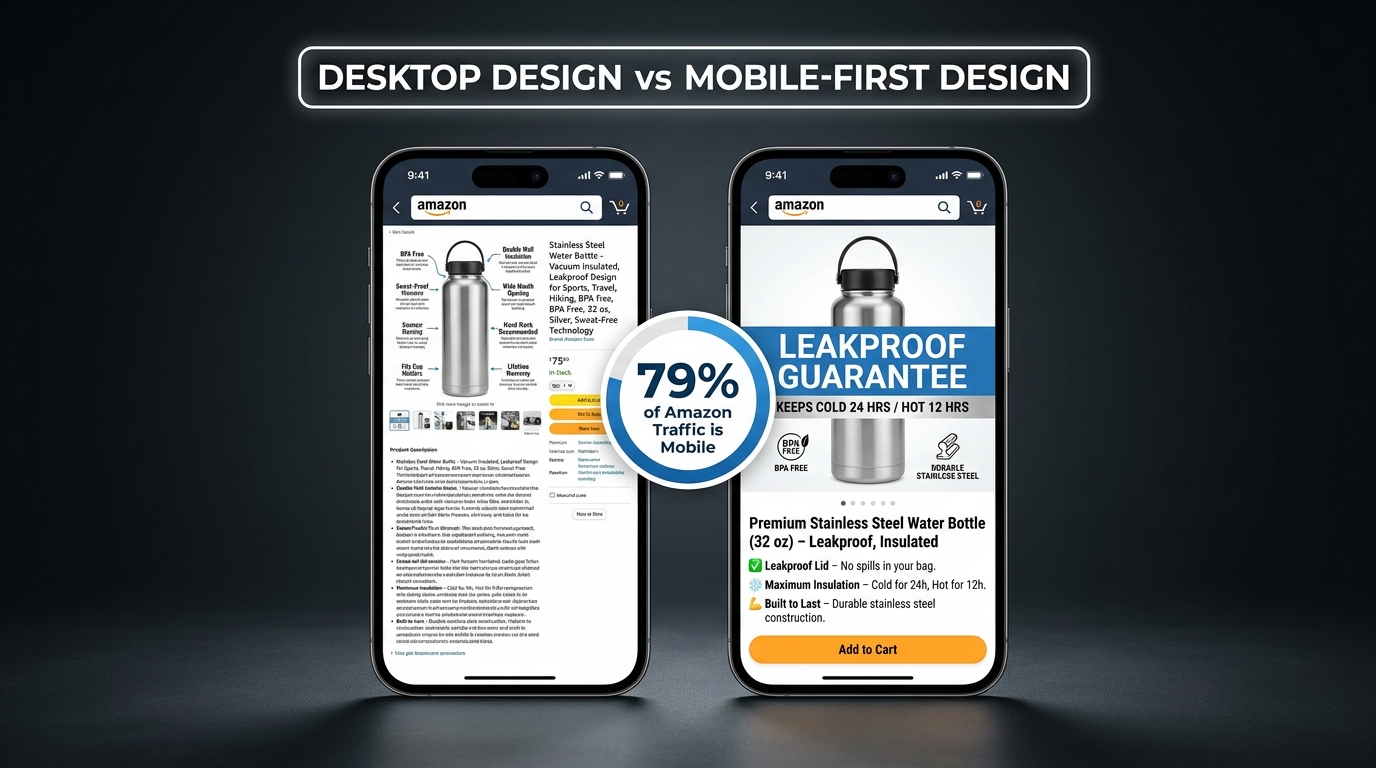
    The payoff for getting this right is massive. For example, well-executed A+ Content is shown to deliver up to a +20% conversion boost, which is absolutely critical when over 50% of purchases happen on mobile. Brands that dominate the Buy Box consistently capture up to 70-80% of all sales in their categories. Top agency reports on Amazon marketing for 2026 show just how brands are adapting to this new reality.

    This guide will walk you through the actionable checklist you need to compete. We'll cover everything from deep keyword research and backend settings to creating stunning AI-powered visuals. To get a head start, see how AI can transform your product photography in our guide on creating high-converting Amazon listing images.

    Building Your Foundation with Keywords and Backend Fields

    Laptop displaying 'Keyword Foundation' software on screen, with a plant and notebook on a wooden desk.

    Before you even think about writing a catchy title or compelling bullet points, the real work of Amazon product optimization has to happen behind the scenes. This is all about building a solid keyword foundation and properly setting up your backend fields. Get this right, and you’re essentially giving Amazon's A10 algorithm a crystal-clear roadmap to who your product is for, making sure you show up in front of the right shoppers.

    I see so many sellers focus only on the big, obvious keywords—the "short-tail" terms like "yoga mat." And sure, they have a place. But the money is in the "long-tail" keywords. These are the super-specific, multi-word phrases like "extra thick non slip yoga mat for hot yoga." A shopper searching for that knows exactly what they want, and that intent translates directly to higher click-through rates and a much better return on your ad spend.

    Uncovering High-Intent Keywords

    The first step is a mental shift. You have to stop thinking about what you call your product and start thinking about the problems your customers are trying to solve. Modern keyword research is really part detective work, part data crunching.

    A great place to start is the Amazon search bar itself. Just begin typing your main product term and watch what Amazon's auto-suggest pops up. These are real searches from real customers, and they're often a goldmine of long-tail keyword ideas.

    From there, it's time to dig deeper.

    • Spy on Your Competitors: Pull up the top 10 listings for your primary keyword. Don't just skim them—analyze their titles, bullets, and especially their customer Q&A sections. What words do they use over and over? What questions do shoppers keep asking? These reveal pain points you can target.
    • Run Reverse ASIN Lookups: Grab the ASINs of your top three competitors and plug them into a dedicated SEO tool. A reverse ASIN search will spit out a list of the exact keywords they're ranking for, both organically and with ads. It's like getting a copy of their playbook.
    • Mine for Gold in Reviews: Go read the 3-star reviews on competing products. Why 3-star? Because they are often the most balanced, highlighting what's good but also what's missing. These "I wish it had…" comments are pure keyword gold.

    This whole process will give you a powerful list of keywords that goes way beyond the basics. You'll find phrases that tap into specific needs and help you connect with shoppers your competition is completely ignoring.

    Optimizing Your Backend Search Term Fields

    With your master keyword list in hand, you can start putting it to work. Your most valuable keywords will go in your title and bullets, but the backend fields are your secret weapon. This is where you can tell Amazon about all the other relevant terms without making your public-facing copy sound like a robot wrote it.

    The backend search term field is one of the most powerful—and most overlooked—tools you have. It's your private line to the A10 algorithm, letting you index for synonyms, common misspellings, and related concepts that just don't fit naturally into your main listing.

    Think of it as your strategic keyword overflow. You have a strict character limit, so you need a plan. Here's a quick checklist to do it right:

    • Search Terms (Generic Keywords): This is the main event. Fill this field with your secondary and long-tail keywords. Use all lowercase, separate words with a single space, and don't repeat anything that's already in your title, bullets, or other backend attributes. No commas, no semicolons—just a space-separated string of words.
    • Subject Matter: This helps Amazon's algorithm categorize your product more precisely. Add 3-5 relevant phrases that describe the product's use case or topic. For example, "outdoor patio furniture" or "mindfulness meditation guide."
    • Other Attributes: Don't skip these! Fields like "Target Audience" (e.g., "professional chefs," "beginner gardeners") and "Intended Use" are becoming more important for filtered search and voice search through Amazon's AI, Rufus. The more specific you are, the better.

    When you fill out these backend fields correctly, you’re giving Amazon a ton of valuable data. This helps you show up in more filtered searches and for a much wider range of customer queries, setting the stage for a truly optimized and profitable product.

    Crafting High-Conversion Titles, Bullets, and Descriptions

    A professional flat lay of a modern workspace with a tablet, pen, document, and 'High-Conversion COPY' text.

    Alright, you’ve done the crucial behind-the-scenes work. Your backend keywords are dialed in, building a solid SEO foundation for your product. Now comes the part where we turn that technical groundwork into persuasive copy that connects with real shoppers. This is where Amazon product optimization gets its personality.

    Your title, bullet points, and description are your front-line sales team. They have to grab a customer's attention in a sea of search results and guide them from a casual glance to a confident purchase. Think of it as a mini sales funnel on a single page: the title hooks them, the bullets answer their immediate questions, and the description seals the deal. If one part is weak, the whole system falters, and you leave sales on the table.

    Your Title: The Ultimate Click Magnet

    I tell every seller I work with: your product title is the single most valuable piece of real estate you have on Amazon. It’s the first thing anyone sees in the search results, and it has to do two jobs at once—satisfy the A10 algorithm and entice a human to click. A title overstuffed with keywords might get you seen, but a readable, benefit-rich title is what actually earns the click.

    The trick is finding that sweet spot. You want to front-load your most important keyword phrase and the product's core identity while ensuring it all makes sense. A formula I've seen work time and time again is:

    [Brand Name] [Primary Keyword Phrase] – [Key Feature or Benefit], [Size/Color/Quantity]

    For instance, a title like "EcoPure Water Filter Pitcher – Removes Lead and Chlorine for Better Tasting Water, 10 Cup Capacity, White" is worlds better than "Water Filter Pitcher Filter Water." It immediately tells the shopper the brand, what it does, why that matters, its size, and color. It answers five questions before they've even clicked.

    Amazon gives you a technical limit of around 200 characters, but don't feel you need to use all of it. In my experience, the first 60-80 characters are what count, especially on mobile. That's your prime real estate.

    Turning Features into Benefit-Driven Bullets

    This is where I see so many listings fall flat. Sellers just list out dry, technical specs in their five bullet points. Here's the thing: customers don't buy features; they buy the solutions and outcomes those features provide. Your job is to be a translator.

    So instead of just stating a feature like "Made with 304 Stainless Steel," you reframe it as a direct benefit: "BUILT TO LAST A LIFETIME: Crafted from rust-proof 304 stainless steel, so you never have to worry about replacing a flimsy or broken part again." See the difference? You’ve just sold them durability and peace of mind, not just a grade of metal.

    I like to structure bullets to tell a story and preemptively tackle customer concerns:

    • Bullet 1: Start with the main problem your product solves. Hook them immediately.
    • Bullet 2: Show off your unique solution or what makes your product different.
    • Bullet 3: Paint a picture of a specific use case or a positive experience.
    • Bullet 4: Build trust by talking about quality, materials, a warranty, or your brand's commitment.
    • Bullet 5: End on a strong note, maybe with a call-to-action or by reinforcing the core value.

    This approach walks a customer through their own decision-making process, building their confidence with every point.

    Remember, your bullet points aren't just a list; they are a conversation with your customer. Each one should anticipate and answer a question, moving them closer to clicking "Add to Cart."

    The Product Description: Your Final Pitch

    Even if you have access to A+ Content, your standard text description still gets indexed by Amazon and matters for SEO. And for sellers who aren't brand registered, this space is your last, best chance to make your case. Too often, it’s just a dreaded wall of text.

    The fix is surprisingly simple: use a little basic HTML to make it scannable. A few simple tags can completely change the reading experience. You can use <br> for line breaks and <b> to bold key phrases, guiding the reader’s eye.

    A simple structure that consistently performs well:

    • Start with a bold headline that repeats the main benefit.
    • Follow with a short, engaging paragraph that expands on the problem you're solving.
    • Use a mix of short sentences and paragraphs to explain features and benefits.
    • Bold important callouts like "Easy to Clean" or "Perfect for Gifting" to break up the text.
    • Wrap up with a final statement about your brand and exactly what's included in the box.

    This simple formatting transforms a dense block of text into an easy-to-scan sales pitch, ensuring your final message gets heard loud and clear.

    Mastering Visuals with AI-Powered Product Imagery

    A computer displaying product images, a camera on a tripod, and a cardboard box for AI product image creation.

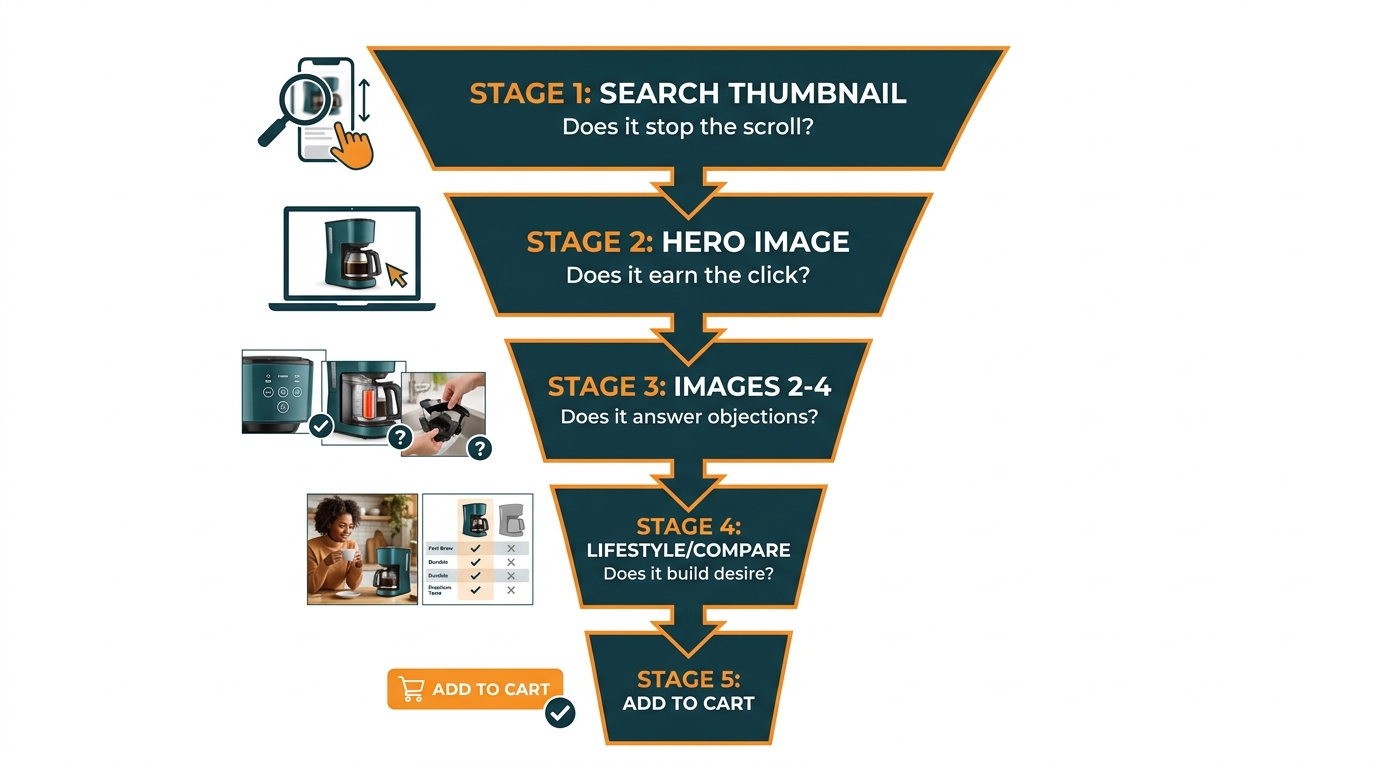
    After you've dialed in your copy, your images have to do the real work. On Amazon, your product photos aren't just there to look pretty—they're your number one sales tool. They are often the first, and most powerful, impression a shopper gets. A top-notch visual strategy is no longer optional for Amazon product optimization; it's what stops the scroll, answers questions at a glance, and builds the trust needed to make a sale.

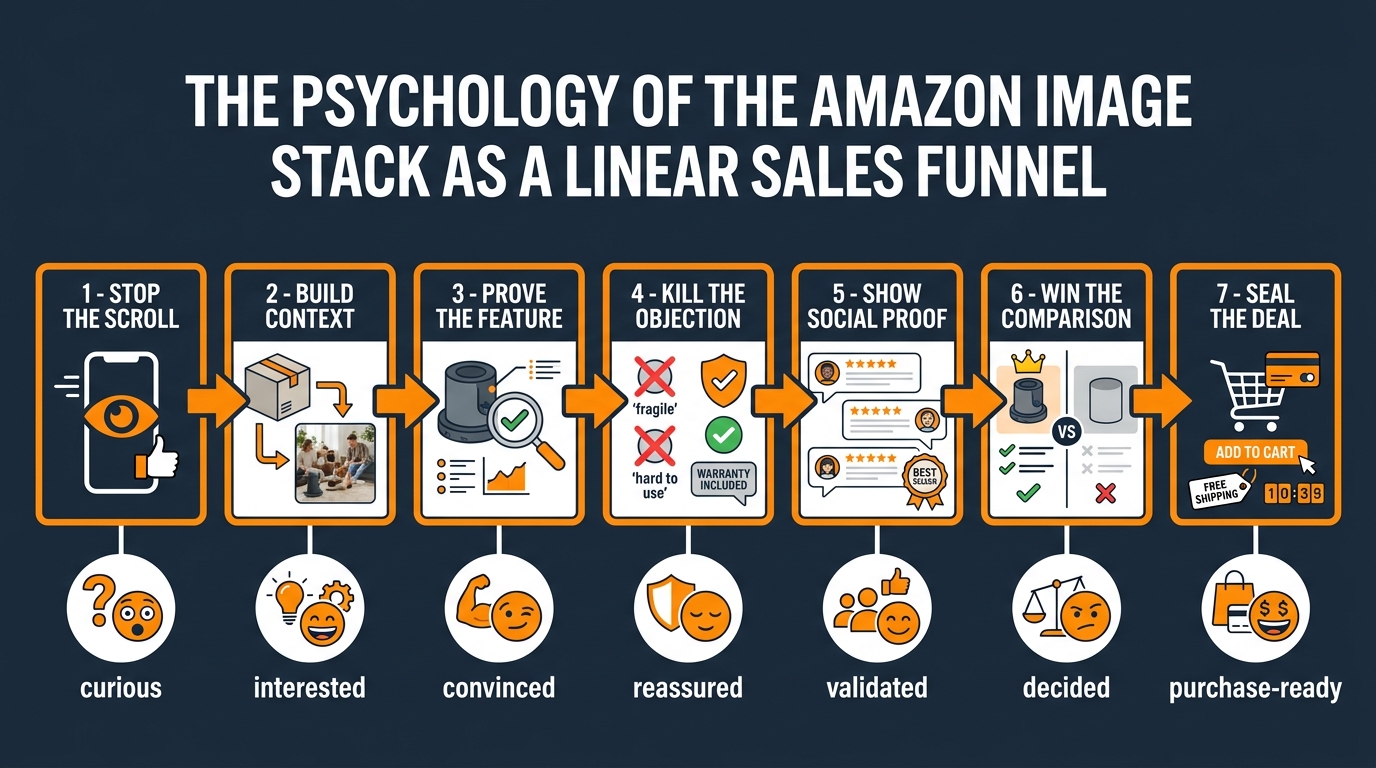
    Think of your image stack as a visual conversation with your customer. It begins with that perfect main image, your digital handshake, and then unfolds to tell a complete story through a series of carefully chosen shots.

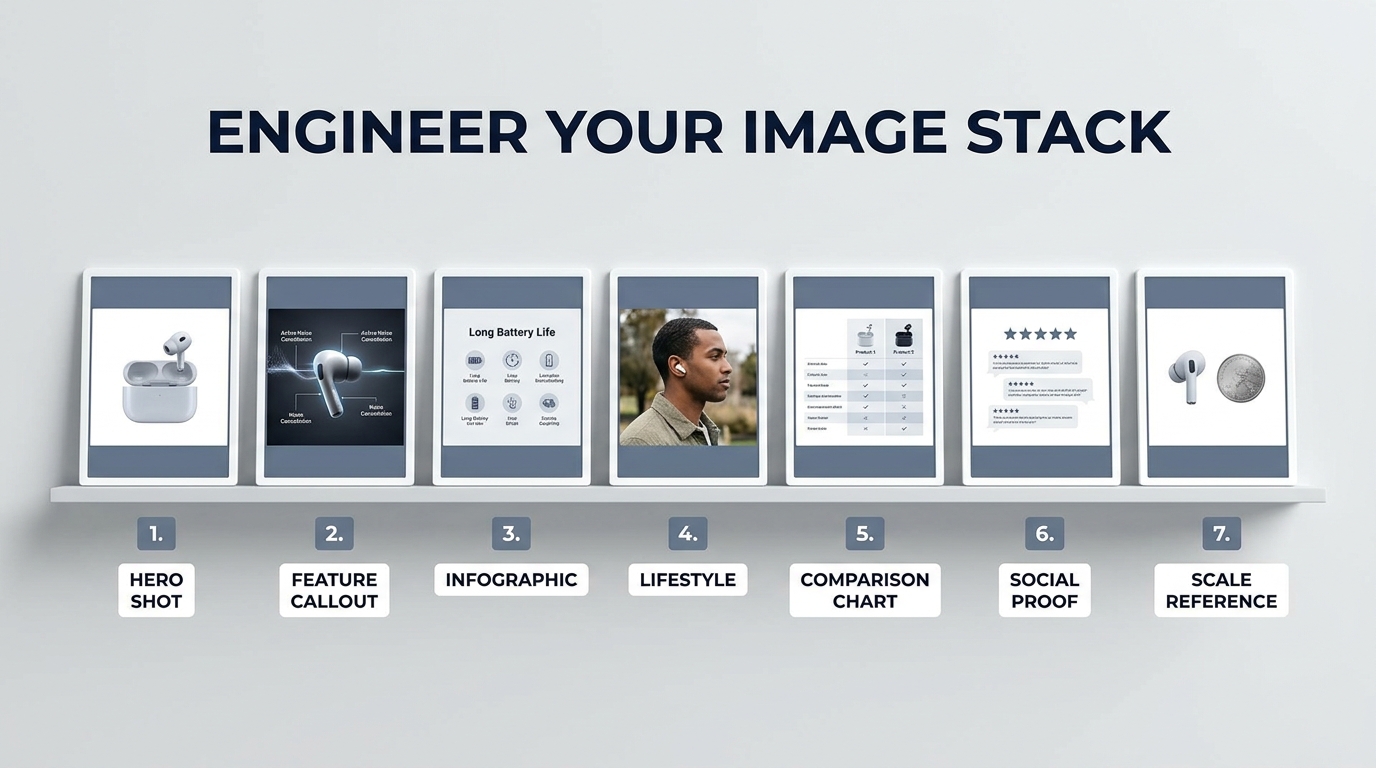
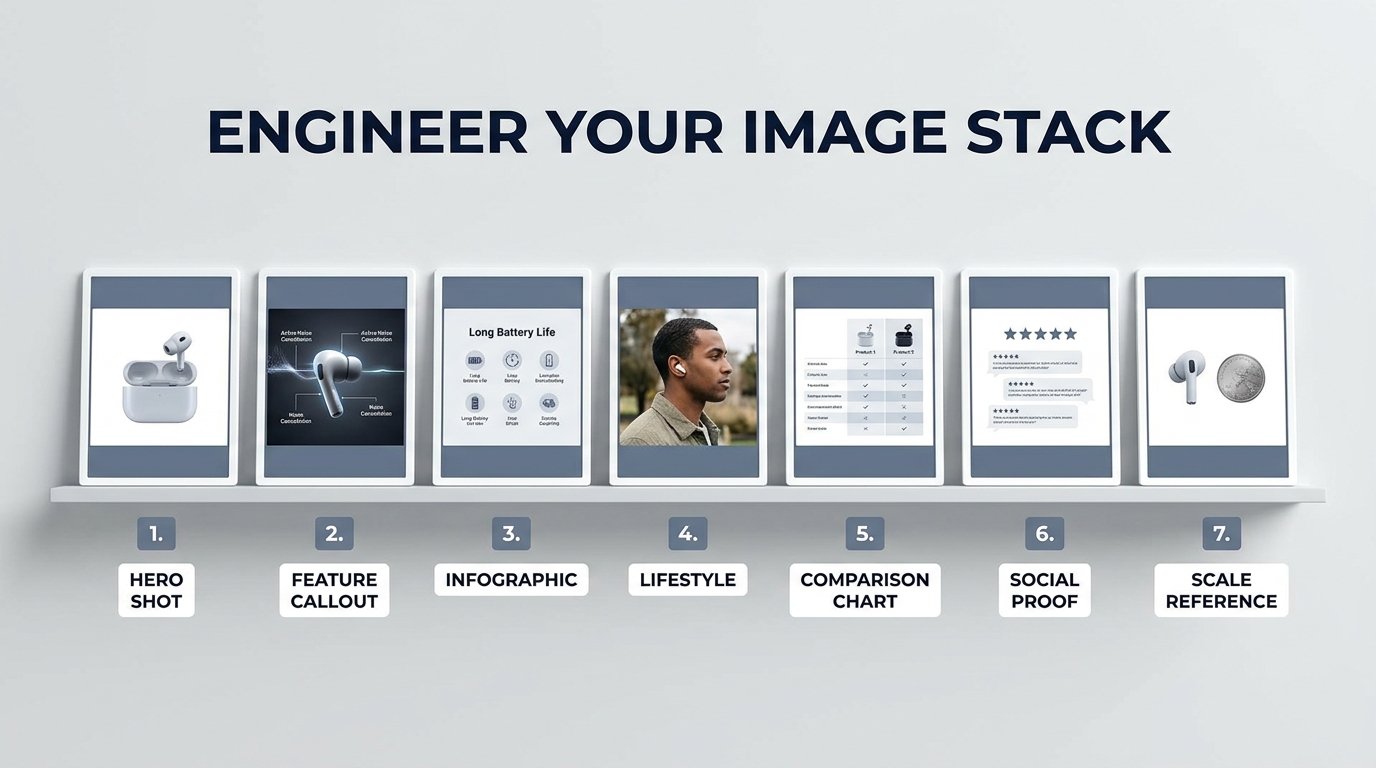
    The Anatomy of a High-Impact Image Stack

    A truly effective image set does more than just show off your product. It gets ahead of every question, doubt, or curiosity a customer might have. A winning gallery is a mix of different image types, each with a specific job to do.

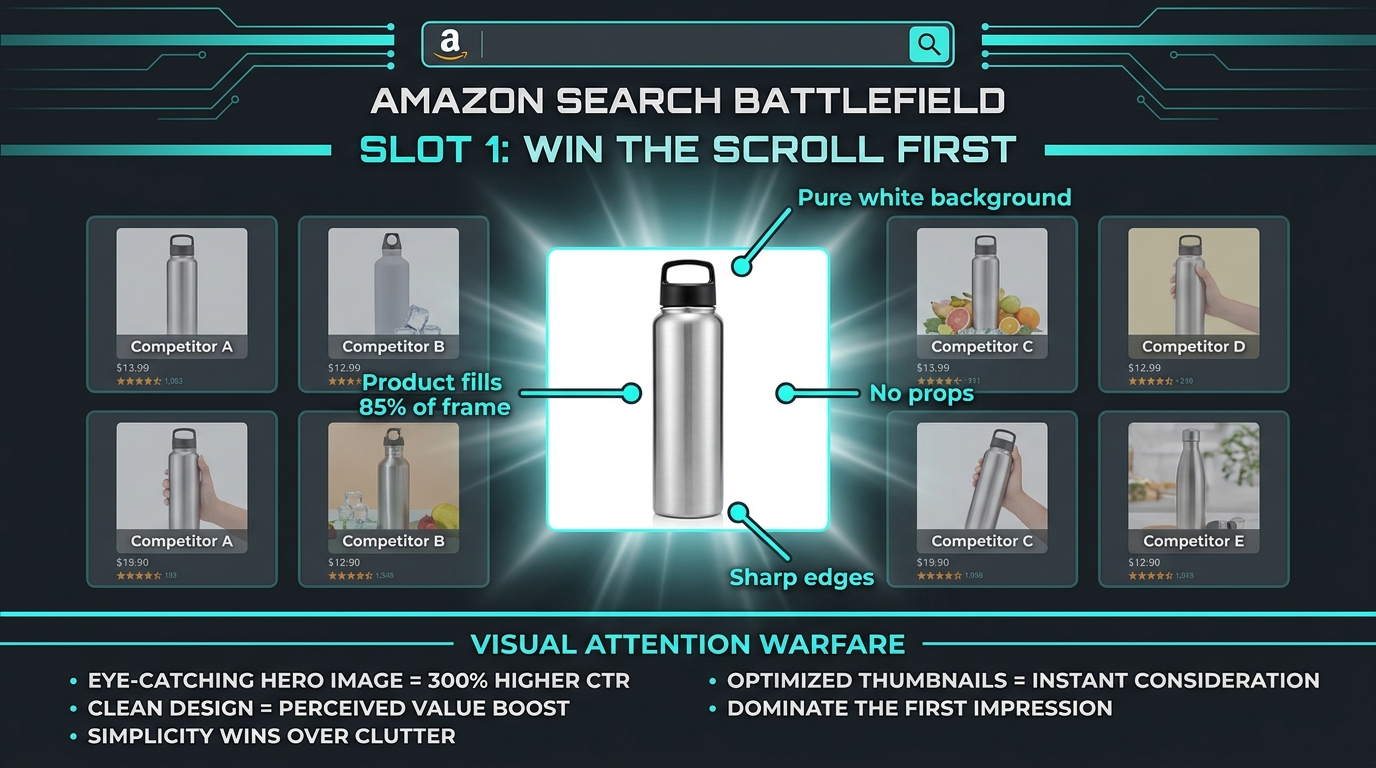
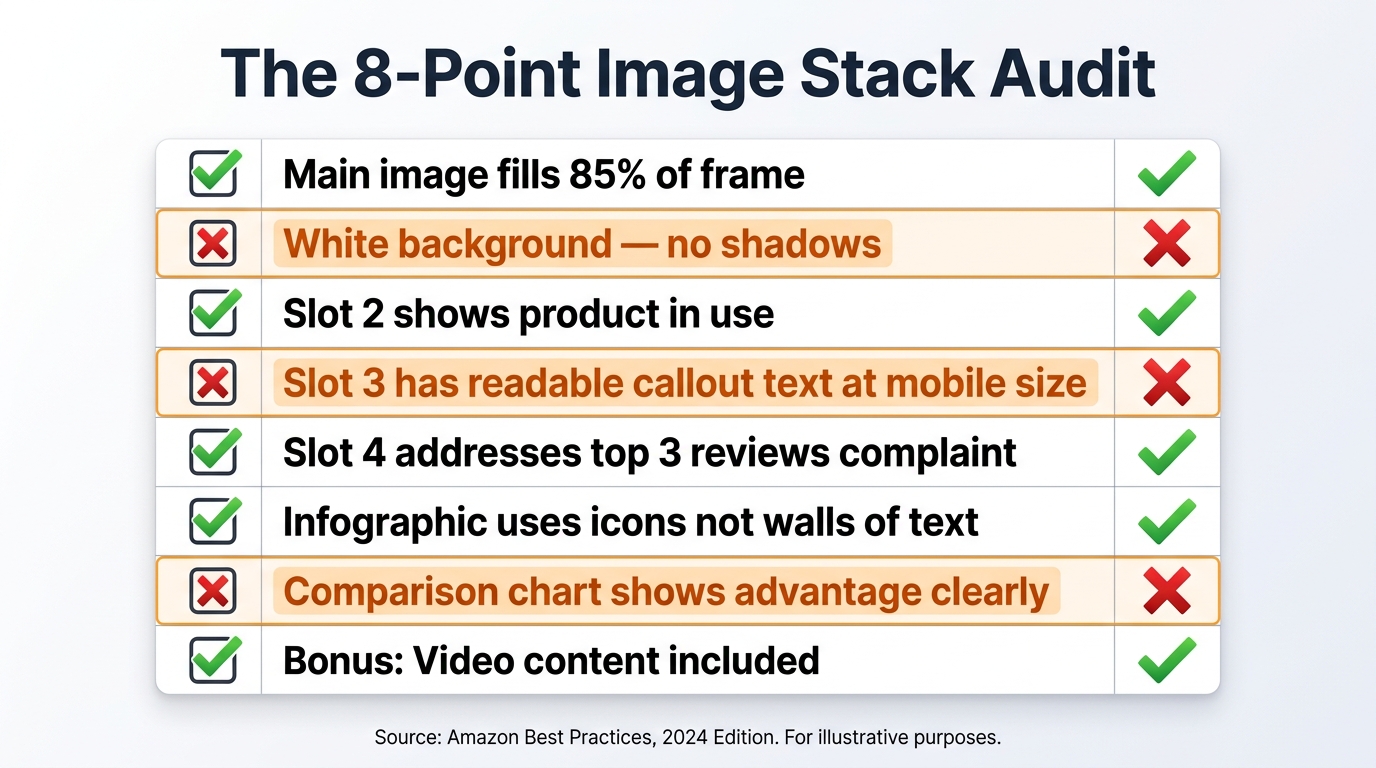
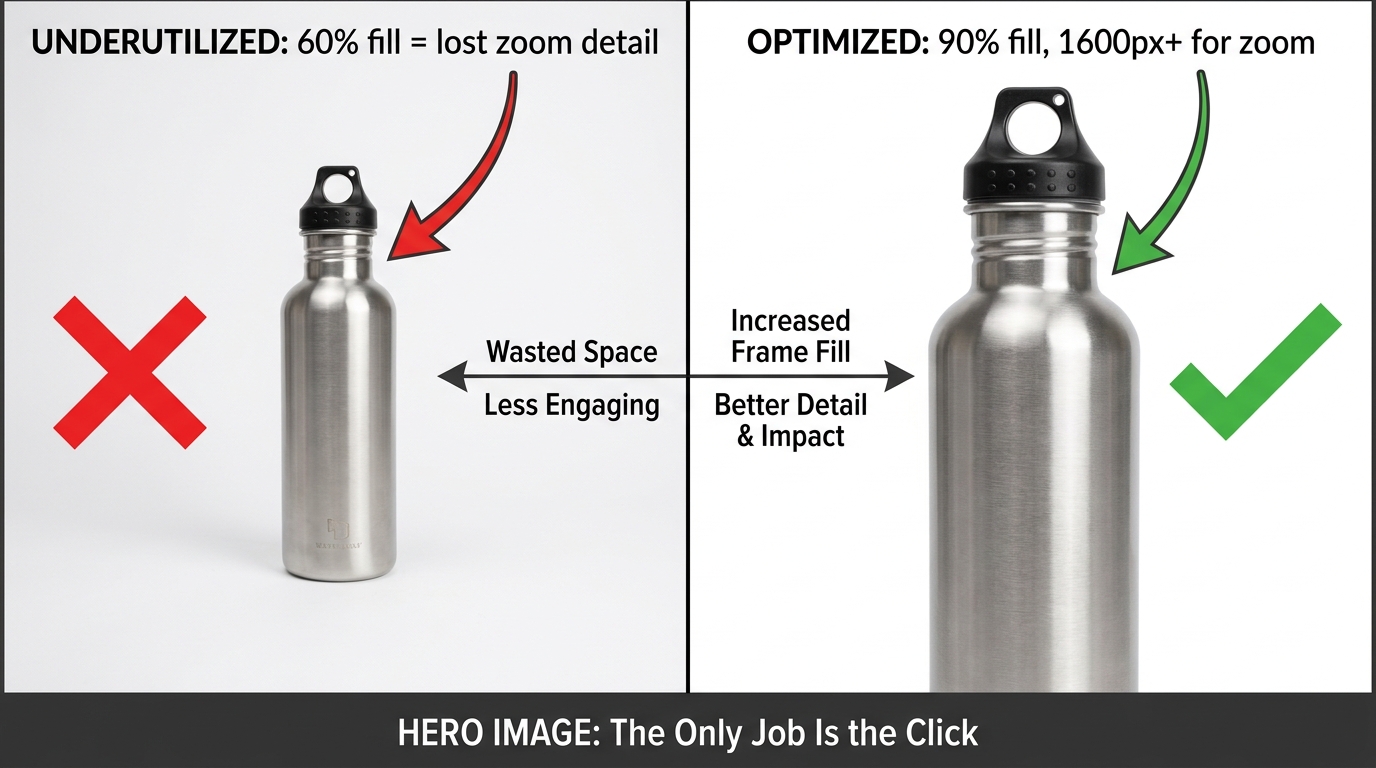
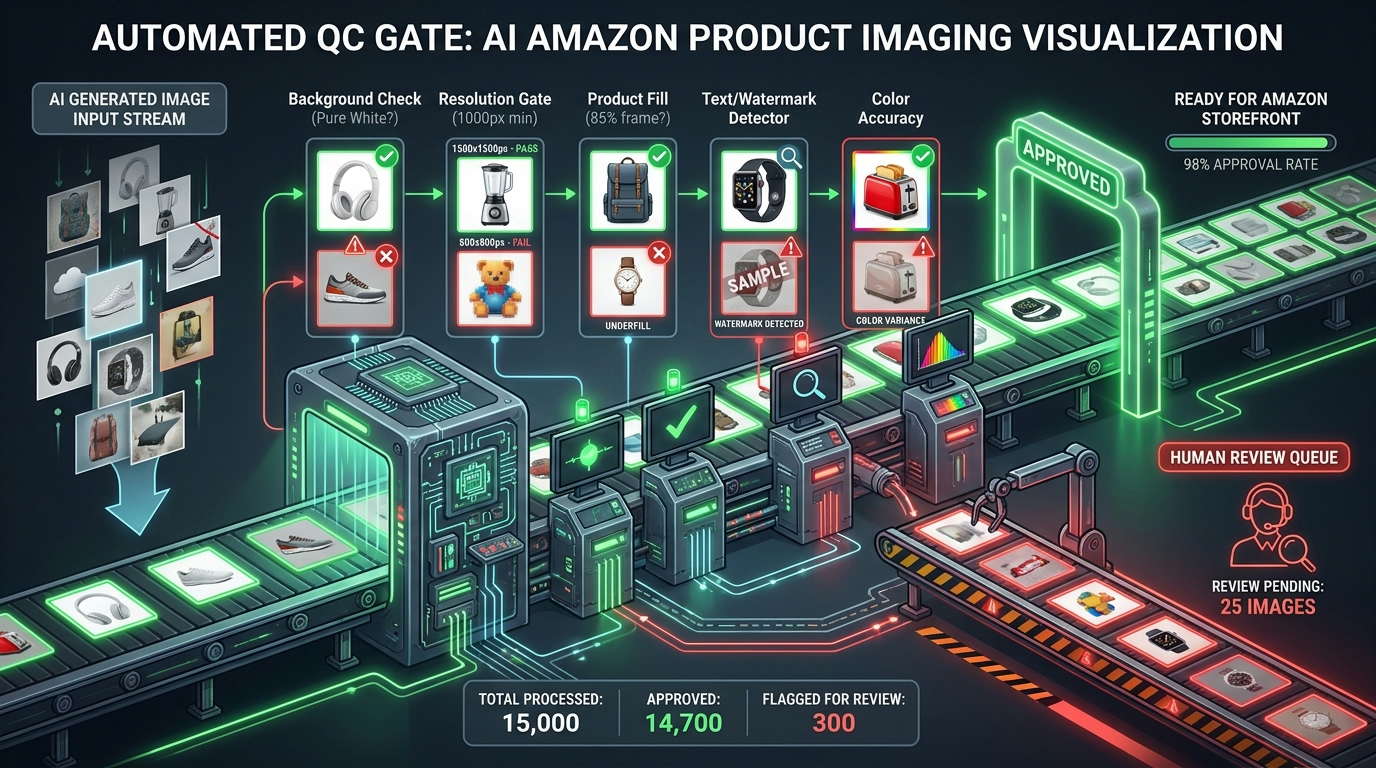
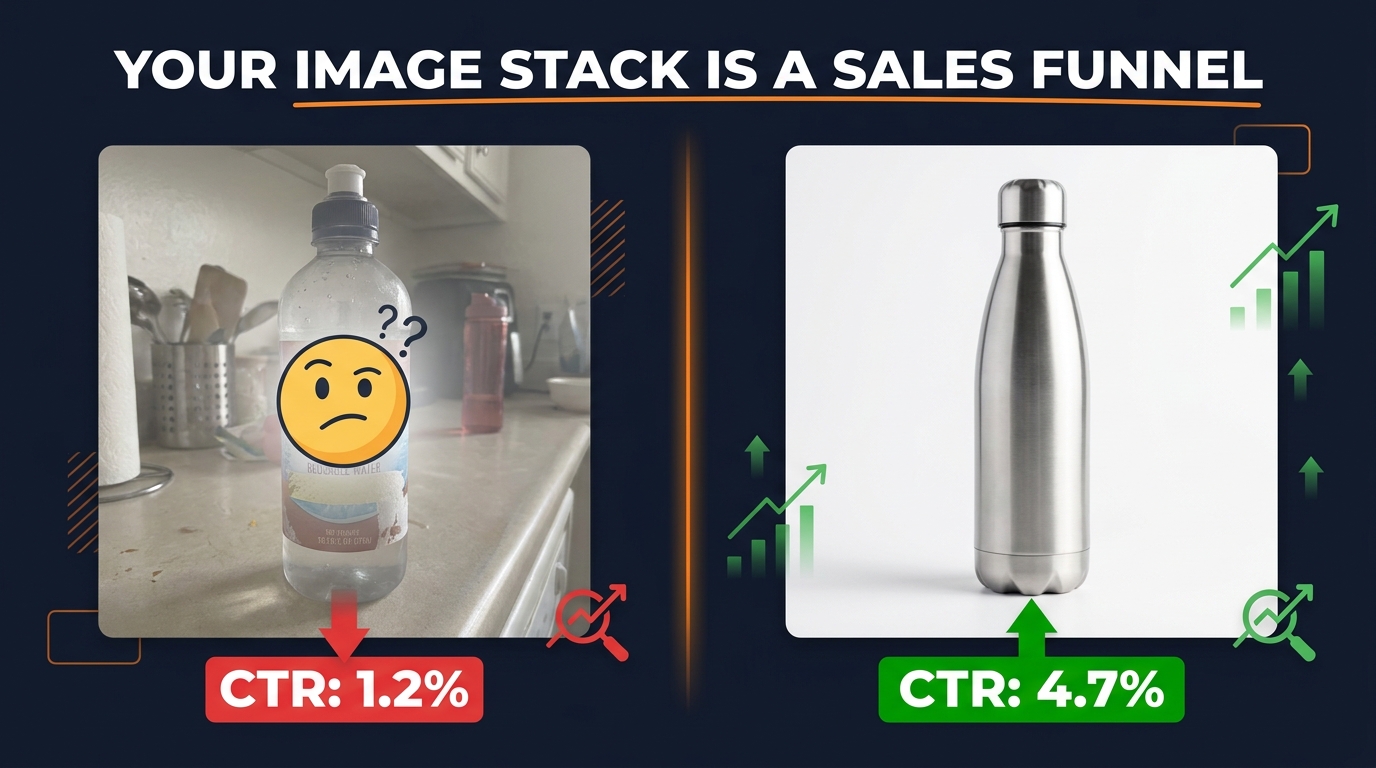
    • The Main Image: This is your hero shot, plain and simple. It needs to be on a pure white background, filling 85% of the frame, and make it instantly obvious what your product is. Its only goal is to be so clear and compelling that it earns the click from a sea of competitors on the search results page.
    • Lifestyle Photos: These shots put your product in a real-world setting, helping customers picture it in their own lives. A portable blender shown on a kitchen counter during a hectic morning routine tells a much richer story than a picture of the blender floating in a white void.
    • Infographics and Feature Callouts: Here's your chance to break down key benefits and specs into something scannable and easy to understand. Use them to highlight dimensions, materials, or unique features your copy mentions, reinforcing the product's value and justifying its price.

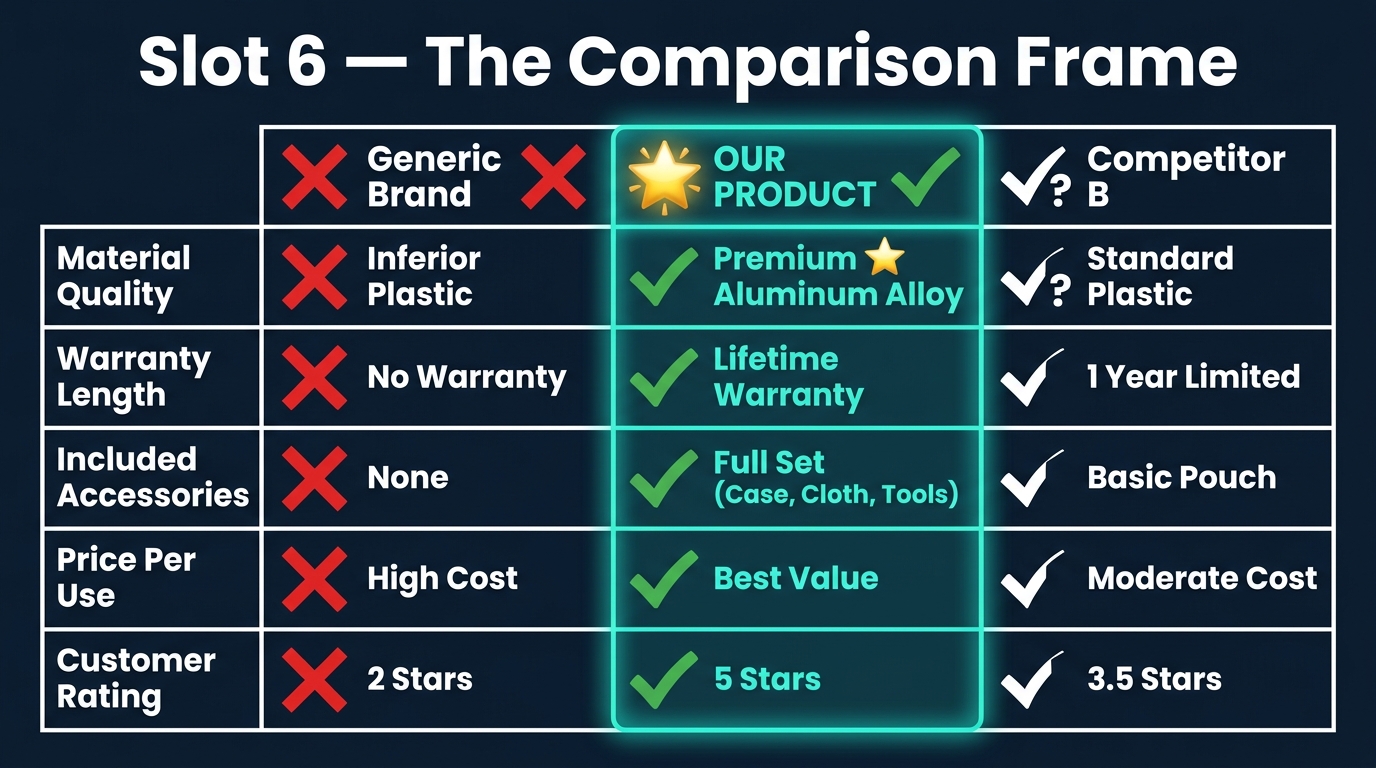
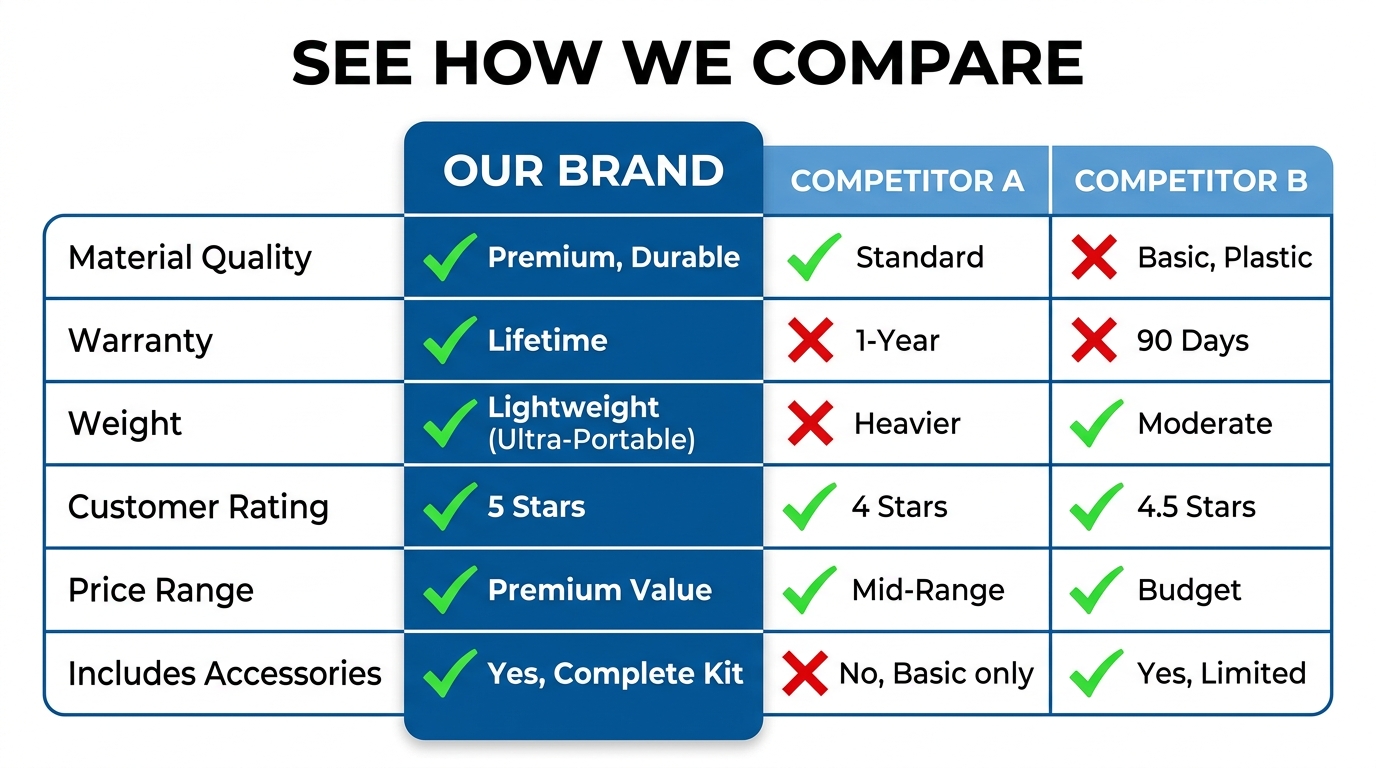
    • Comparison Charts: How does your product measure up against others? A simple chart can instantly show off your unique selling points, either against a competitor or other models in your own lineup. This helps shoppers make a quick, confident decision.

    For years, putting together this full suite of images was a major headache for sellers. It meant shelling out for expensive photoshoots, hiring graphic designers, and dealing with long turnaround times. It was a huge barrier to effective Amazon product optimization.

    High-quality product images are no longer just a "nice-to-have"—they are the core of your listing's performance. Listings featuring a full suite of 7 or more optimized images consistently see 20-40% higher engagement, directly fueling the sales velocity that the A10 algorithm rewards.

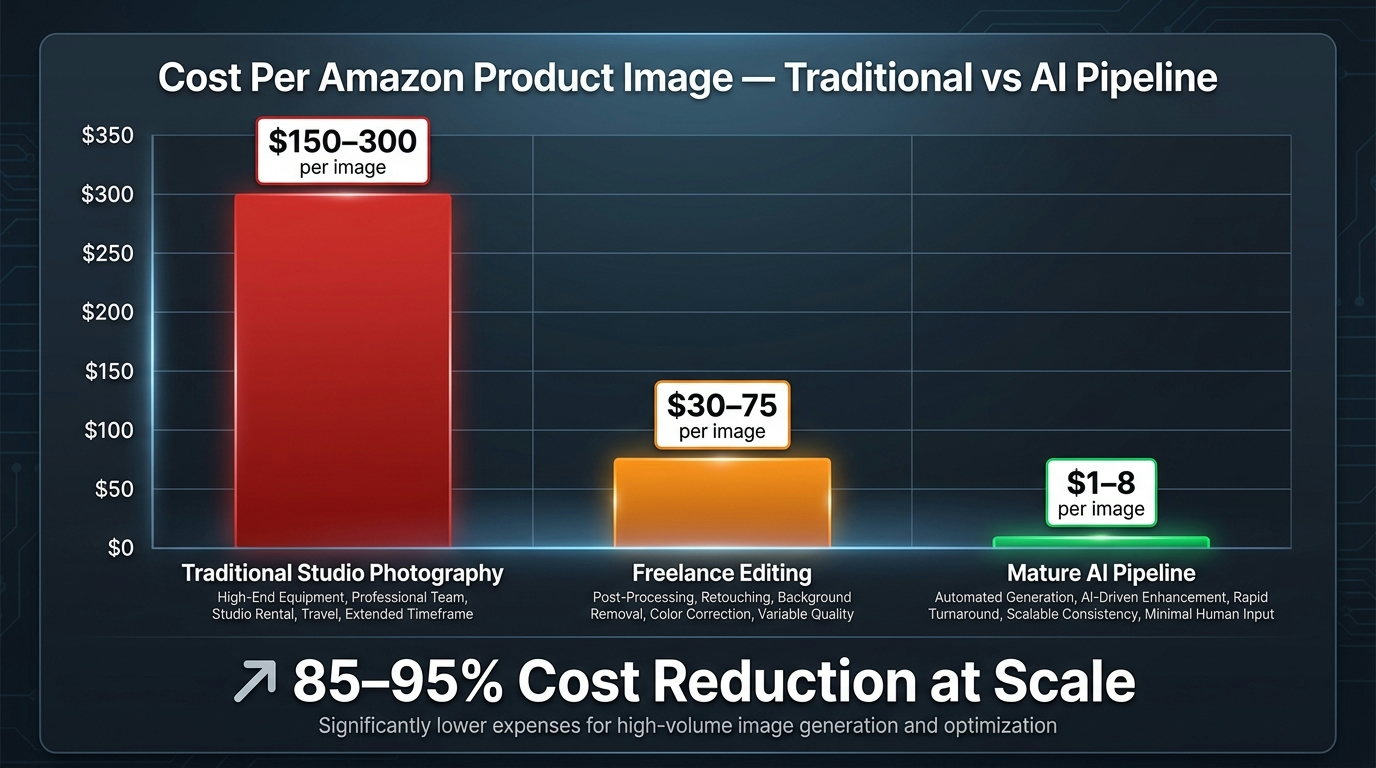
    The numbers don't lie. In-depth research on scaling an Amazon business has found that professional visuals can increase conversion rates by as much as 30% when everything else is dialed in. The problem has always been the price tag and the hassle. Freelancers can charge thousands of dollars for a single listing, an impossible expense for many sellers. Luckily, AI has completely flipped the script.

    The AI Workflow for Agency-Quality Visuals

    AI-driven platforms like AlgoFuse.ai have leveled the playing field, giving every seller the ability to generate a complete, high-converting image stack in just a few minutes. This workflow gets around the old-school bottlenecks of cost, time, and needing a designer on speed dial.

    The process itself is surprisingly simple. Instead of spending hours trying to write the perfect AI prompt or a detailed design brief, you just provide a few key inputs, like your product's ASIN or main keywords.

    The platform then does the heavy lifting, automating the entire creative process:

    1. First, it scans top-performing competitors for your keywords across all 19 Amazon marketplaces to see what visual styles are resonating with customers right now.
    2. Next, it automatically applies current best practices, making sure your main image is compliant and all your secondary images are designed for maximum impact.
    3. Finally, it generates a full suite of visuals, including lifestyle scenes, detailed infographics, and comparison charts, all based on your product’s specific features and benefits.

    This AI-powered approach delivers an entire agency-quality image package with a single click. It allows you to test, tweak, and even localize your visuals for international markets at a speed that was unimaginable just a few years ago.

    Manual Image Creation vs AI-Powered AlgoFuse.ai

    To really understand how big of a shift this is, it helps to see a direct comparison between the traditional method and the new AI-powered workflow. The table below breaks down the key differences in cost, time, and effort.

    Metric Manual Process (Freelancer/Agency) AI-Powered Process (AlgoFuse.ai)
    Cost Per Listing $500 – $3,000+ ~$15 (up to 95% less)
    Turnaround Time 1 – 4 weeks ~5 minutes
    Revisions Slow, often with additional costs Instant, with minimal token usage
    Expertise Needed Requires design briefs and direction None—fully automated best practices
    Scalability Limited by freelancer/agency capacity Unlimited—generate for entire catalog
    Localization Requires separate projects per market Built-in for global marketplaces

    As you can see, this isn't just a small step forward; it's a fundamental change in how sellers can manage their visual merchandising. Being able to create stunning, data-backed images on demand gives everyone a fighting chance—from brand-new sellers working on a tight budget to large aggregators who need to optimize hundreds of listings at once. This is the future of visual Amazon product optimization.

    Alright, you've nailed down your keywords, your copy is sharp, and your images are ready to go. Now it's time for the masterclass—the final layers that turn a good listing into one that truly dominates its category.

    This is where we move beyond the basics and get into strategic Amazon product optimization. We're talking about A+ Content, smart pricing, and building a rock-solid reputation with reviews. Think of these as the closers. Your title and images got them in the door, and the bullet points answered their first few questions. These next pieces are what will get them to confidently click "Add to Cart."

    Go Beyond Bullets with Strategic A+ Content

    A+ Content is your brand's dedicated space on the product page. It's your chance to tell a story, tackle any lingering doubts, and show off what makes your product special in a rich, visual way. When done right, it's a serious conversion driver—we've seen it boost sales by as much as 20% in some categories.

    The trick is to use the modules with purpose, not just as decoration.

    • Tell Your Brand Story First: Kick things off with a full-width banner that explains who you are. Are you a small family-run business? An innovator obsessed with sustainable materials? This is your chance to connect with the shopper on a human level.
    • Show, Don't Just Tell: Instead of more text, use comparison charts. They're fantastic for showing how your product stacks up against an older version or even the competition. You can also use a series of lifestyle images with text overlays to walk customers through the key benefits, making it much more digestible than a block of text.
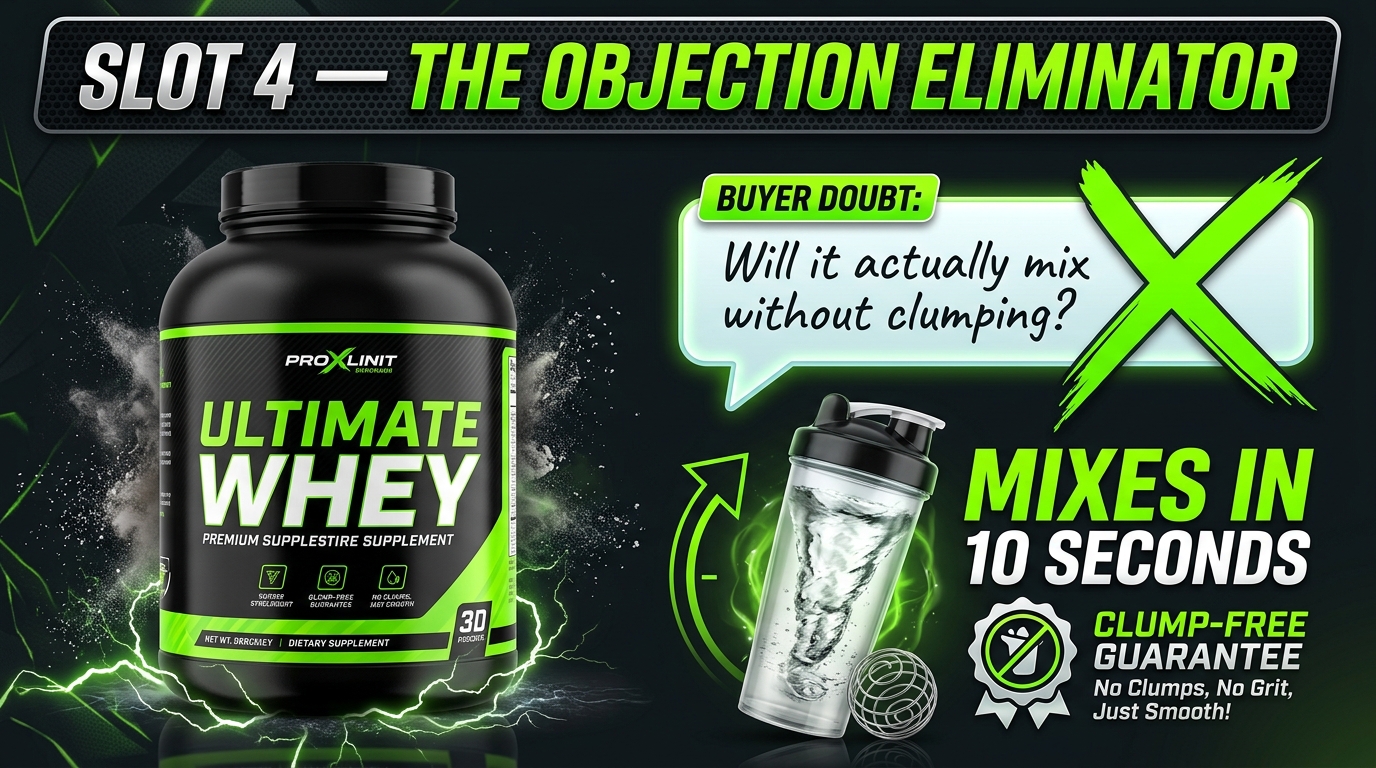
    • Handle Objections Before They Happen: Is your product priced higher than others? Use a module to break down the premium materials or superior tech that justifies the cost. Worried people might think setup is complicated? Create a simple, step-by-step visual guide.

    I've seen so many sellers treat A+ Content like an afterthought, just throwing in a few extra images. That's a huge missed opportunity. It's your single best tool for building brand trust right on the page. Use it to answer the big question: "Why should I choose you?"

    For a long time, creating compelling A+ Content meant hiring a designer. Thankfully, that's changed. Modern tools have put professional-grade branding within reach for everyone. For instance, AI platforms like AlgoFuse.ai can generate stunning A+ modules in minutes, turning your product info into layouts that are designed to sell.

    Win the Buy Box with Smart Pricing

    Pricing on Amazon can feel like walking a tightrope. Go too high, and you'll lose the Buy Box. Go too low, and you're just giving away your profits. The real goal is finding that competitive sweet spot that drives sales and protects your margins.

    First thing's first: do your homework. Look at the top 5-10 competitors for your main keyword. Don't just glance at the price—dig deeper. How many reviews do they have? Are they FBA or FBM? Do they have great A+ Content? A well-established product with 5,000 reviews can easily command a higher price than a brand-new one.

    • Know Your Numbers: Before you set a price, you have to know your all-in costs. That means your cost of goods, inbound shipping, Amazon referral fees, FBA fees, and your ad spend.
    • Use a Repricer: Manually trying to keep up with competitor prices is a recipe for disaster. You can use Amazon's built-in Automate Pricing tool or a third-party repricer to set rules. This keeps you competitive without getting dragged into a race to the bottom.

    Build Unshakable Trust with Reviews and Q&A

    On Amazon, social proof isn't just important—it's everything. A listing with hundreds of positive reviews will almost always beat one with just a handful, even if the products are identical. This is why having a proactive strategy for getting reviews is a non-negotiable part of Amazon product optimization.

    The easiest and safest way to do this is by using the "Request a Review" button in Seller Central after a sale. Amazon sends a standardized, fully compliant email asking the customer for both a product review and seller feedback. It's simple, but it works.

    Don't sleep on your Q&A section, either. It’s a goldmine. Check it daily. When a potential customer asks a question, be the first to jump in with a clear, helpful answer. Not only does this help that one person, but it also signals to every future visitor that you're an active, responsive brand they can trust.

    Getting your listing live isn't the end of the job—it's just the beginning. The real work, the kind that builds a sustainable brand on Amazon, is in the constant tweaking and testing that comes next. A listing that just sits there is a listing that's slowly getting buried. This commitment to continuous Amazon product optimization is what I’ve seen separate the seven-figure sellers from those who just tread water.

    Think of it as a monthly rhythm. You have to regularly get your hands dirty in the data to see what’s actually happening on the ground. The idea is to find those small, smart changes that add up to major gains over time.

    Your Monthly Optimization Checklist

    First, pull up your Amazon Search Term reports. Are shoppers finding you with the keywords you thought they would? More often than not, you'll uncover some surprising new phrases that are driving real traffic. This report is a goldmine because it’s not theory; it’s the exact language your customers are using.

    Next, look at your unit session percentage rate—your conversion rate, plain and simple. If you’re pulling in tons of clicks but not enough sales, that’s a red flag. Something on your page is stopping people from clicking "Add to Cart." Maybe your price is off, your images aren’t compelling, or a new competitor just launched with a killer offer. A sudden dip in conversions is your cue to investigate.

    And speaking of competitors, you need to be watching them. What did they just change? Did they roll out new A+ Content? Tweak their main image? Drop their price by a dollar? These aren't just random changes; they're clues you can use to sharpen your own strategy.

    I tell my clients to treat this monthly review like a pilot’s pre-flight check. You wouldn't take off without making sure every instrument is working perfectly. Your Amazon listing is your business's engine—it needs the same level of attention.

    This routine is what lets you stop guessing and start making informed moves. You’ll know when it's time to test a new main image, rewrite a bullet point to address a common question, or shift your ad budget to a keyword that’s suddenly converting like crazy. If you need to whip up some new images for testing, you can generate a few options in minutes with a trial of AlgoFuse.ai.

    Taking Your Brand Global: Expansion and Localization

    Once you have a solid optimization process humming along in your primary market, it’s tempting to look at international expansion. But I’ve seen too many brands fail by simply copy-pasting their US listing into the UK or German marketplace. That approach just doesn't work.

    Going global means you have to go local. And that's about so much more than just a direct translation.

    • Localize Your Keywords: Don't just translate your best keywords. You have to do the research to find out what customers in Germany, Japan, or the UK are actually searching for. The language and slang are always different.
    • Adapt Your Imagery: That sunny California lifestyle photo might fall flat in a European market. Show local models and use backdrops that feel familiar and relevant to that specific audience.
    • Adjust Your Copy: Your clever American idioms won't make sense overseas. Rewrite your copy to connect with the unique culture and buying habits of each new market.

    This is a non-negotiable step for a successful international launch. The data shows that brands who commit to this level of localization see huge performance boosts. Using Premium A+ modules, for instance, can increase conversions by up to 20%. That's a massive advantage, especially as Amazon's search AI increasingly prioritizes listings with rich, detailed content.

    This diagram really breaks down the core pieces of your listing that you need to be constantly monitoring and refining.

    Diagram showing the Listing Dominance Process Flow, highlighting Brand Story, Price, and Reviews.

    From your Brand Story to your Pricing and Reviews, each part works together. Keeping them all in sync and constantly improving them is the key to dominating your category.

    Frequently Asked Questions About Amazon Optimization

    Even the most thorough checklist can leave you with a few lingering questions when you get into the nitty-gritty of Amazon product optimization. I've seen these same questions pop up time and again, so let's clear them up based on real-world experience.

    How Often Should I Update My Listing?

    This is a question I get all the time, and the honest answer is: it depends. But one thing is for sure—a "set it and forget it" mindset is a surefire way to get left behind.

    As a baseline, plan to do a deep dive into your listing and your top competitors at least once a month. This means you're actively looking at your keyword performance, conversion rates, and what changes your rivals are making to their images, copy, and pricing.

    That said, don't wait a month if you see a problem. If sales suddenly tank or a new competitor starts stealing your thunder, you need to react immediately. True optimization isn't just a scheduled check-in; it's a constant process of reacting to the market.

    What Is the Most Important Thing to Optimize for a New Product?

    When you're launching a new product, it's all about one thing: getting found. You can have the best product in the world, but if shoppers can't find it, you have zero chance of making a sale.

    From day one, your entire focus should be on discoverability. For me, that boils down to three non-negotiables:

    • A Killer Main Image: This is your billboard in a crowded search results page. It has to be sharp, clear, and compelling enough to stop a scrolling thumb and earn that click.
    • A Keyword-Rich Title: Your title is your most powerful SEO weapon. Front-load your most critical keyword phrase so both Amazon's A9 algorithm and shoppers know exactly what your product is at a glance.
    • Comprehensive Backend Keywords: This is your secret advantage. Fill out every character of your backend search terms with all the relevant synonyms, use cases, and long-tail keywords you've researched.

    Reviews are absolutely essential for long-term success, but you can't get reviews without getting seen first. The launch phase is a sprint to master search visibility and get that initial traffic flowing.

    How Do I Measure the Impact of My Optimization Changes?

    If you don't track your changes, you're just guessing. The biggest mistake I see sellers make is changing everything at once—new title, new bullets, new images—and then having no idea what actually worked (or didn't).

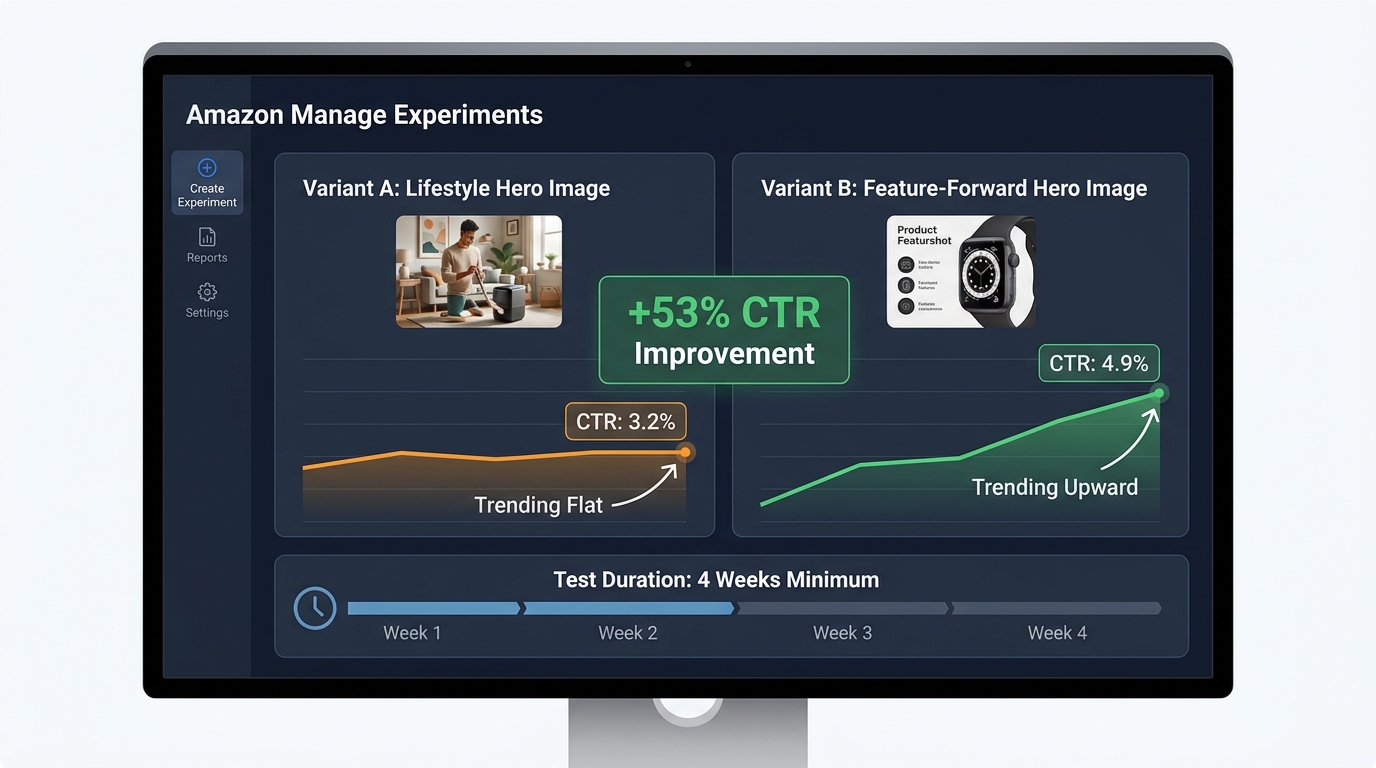
    Instead, test one element at a time. For instance, roll out a new title and let it run for two weeks. Keep a close eye on your click-through rate (CTR) and session count in your business reports. Did they go up?

    Once that test is done, update your bullet points and then monitor your unit session percentage (your conversion rate) for the next two weeks. The key metrics to live by are:

    • Sessions: Are more eyeballs landing on your page?
    • Click-Through Rate (CTR): Is your main image and title doing its job in search?
    • Unit Session Percentage: Are your images and copy convincing shoppers to click "Add to Cart"?

    This deliberate, one-change-at-a-time approach lets you pinpoint exactly what moves the needle. As you get comfortable tracking this, you can learn more about advanced keyword strategies in our in-depth guide to Amazon SEO.


    Ready to create stunning visuals that convert browsers into buyers? With AlgoFuse.ai, you can generate an entire agency-quality image stack—from infographics to A+ Content—in just five minutes. Get started for free and create your first listing today.

  • The Ultimate Amazon Listing Optimization Tool Guide for 2026

    The Ultimate Amazon Listing Optimization Tool Guide for 2026

    At its core, an Amazon listing optimization tool is a piece of software designed to help you perfect your product pages. It's about getting more eyes on your products, convincing more shoppers to click, and ultimately, driving more sales. Think of it as a central hub for everything from keyword research and content writing to generating images and tracking your performance, all based on hard data instead of guesswork.

    Why Listing Optimization Tools Are Essential in 2026

    Two engineers optimize a formula race car on a track, with a laptop displaying performance data.

    On Amazon's battlefield in 2026, just having a fantastic product won't cut it. Your listing is your digital storefront, your best salesperson, and the main engine for your growth. Trying to optimize it manually—piecing together keywords from one source and hiring a freelance designer for images—is like showing up to a Formula 1 race with a bicycle. You just can't compete.

    A modern listing optimization tool is your professional pit crew. While you're focused on the big picture of running the business, the tool is on the track, making constant, data-backed adjustments to keep you in the lead. It's analyzing your rivals, fine-tuning your strategy, and making sure your listing is always running at peak performance.

    The Shift from Guesswork to Data-Driven Automation

    The old days of "keyword stuffing" a title and just hoping for the best are long gone. Today’s marketplace rewards listings that are scientifically engineered to convert, and this is where data and automation become your secret weapons. These tools don't just find random keywords; they pinpoint the exact phrases and even the visual styles that are winning sales for your top competitors right now.

    This move toward data-driven optimization is no longer optional. When you’re up against millions of other products, an automated tool can process thousands of data points in seconds—something that would take a human seller weeks to accomplish. It’s the difference between navigating with a crumpled paper map and using a live GPS that automatically finds the fastest route around traffic jams.

    The real advantage is simple: an Amazon listing optimization tool helps you make smarter decisions, faster. It completely levels the playing field, giving sellers of any size the power to compete by using the same data-driven strategies that huge brands rely on to own their categories.

    The Tangible Impact on Your Bottom Line

    Bringing a powerful tool into your workflow isn’t just about saving a few hours. It’s about generating a serious return on your investment. We’re seeing that strategically optimized listings, especially those packed with high-quality images and video, can see a conversion rate increase of up to 30%. On top of that, sellers who tune their content for natural language queries—targeting Amazon's AI assistant, Rufus—are reporting sales boosts of 20-25%. You can dive deeper into these 2026 sales strategies and their impact on digitalhill.com.

    When you use an Amazon listing optimization tool to dial in your images, titles, and bullet points, you create a clear path to real growth:

    • Improved Organic Rankings: When your listing converts better, Amazon's algorithm notices. It sees your product as relevant and starts showing it to more people, organically.
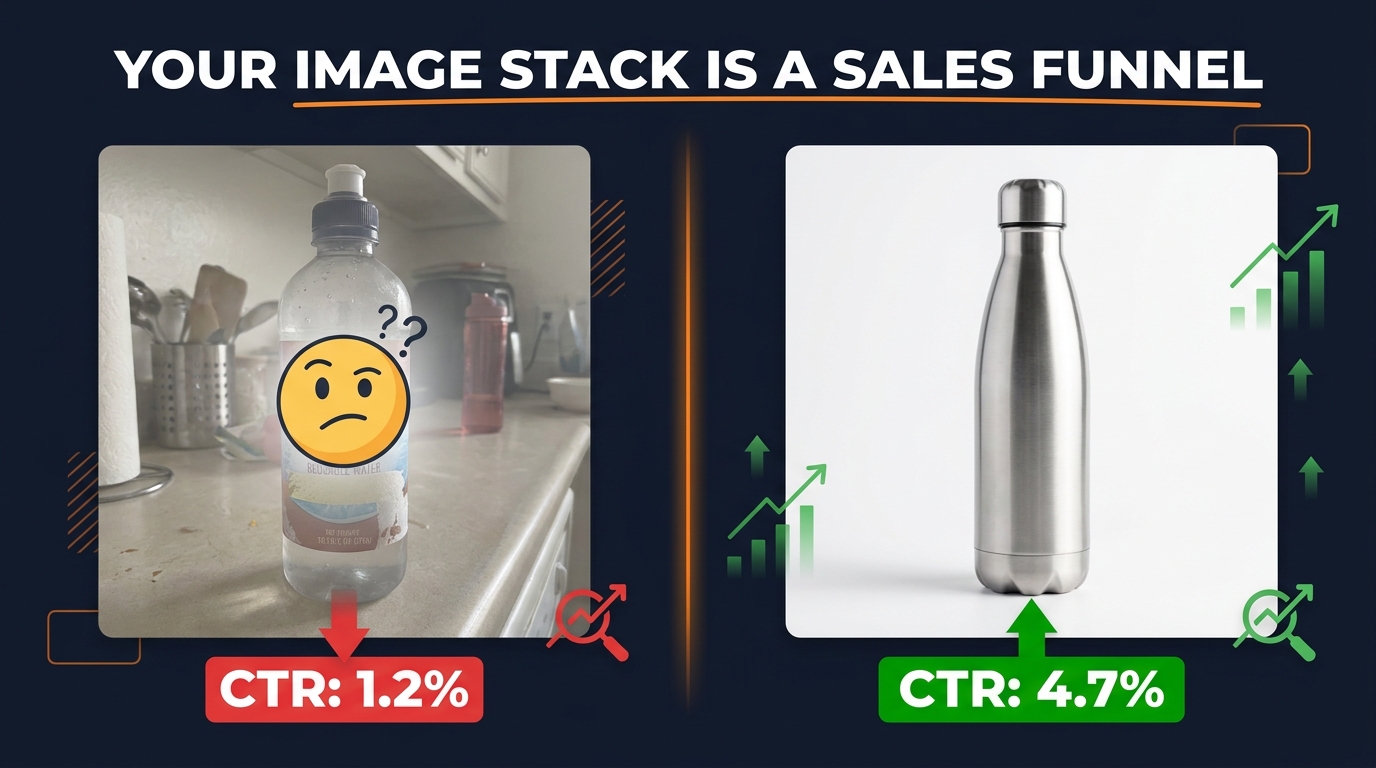
    • Higher Click-Through Rates: A data-informed main image and a killer title will grab a shopper's attention, convincing them to click on your product instead of the one next to it.
    • Increased Revenue: It’s a simple formula. More traffic plus a higher conversion rate equals more sales and a healthier business.

    For any seller who is serious about succeeding on Amazon, these tools are no longer a luxury—they are a fundamental part of the toolkit.

    How Modern Optimization Tools Actually Work

    So, what do these optimization tools really do under the hood? Forget the marketing jargon for a second. Let's talk about what actually happens when you fire up a modern Amazon listing optimization tool.

    Think of it less like a simple piece of software and more like having a whole team of specialists on call. It's your market researcher, data analyst, copywriter, and graphic designer, all rolled into one powerful platform. Its main job is to take a standard, maybe even underperforming, product page and turn it into a genuine sales machine. It does this by swapping guesswork for hard data at every single step.

    The Brains Behind the Operation

    It all starts with reconnaissance. The first thing a good tool does is become an expert on your specific corner of Amazon. Instead of you spending hours manually clicking through dozens of competitor pages, the tool does it all in seconds, pulling out the crucial details on what's already winning over customers.

    This isn't just a quick glance at the best-sellers, either. The software systematically deconstructs their entire strategy, examining the key ingredients that make them successful:

    • Keyword Strategy: It pinpoints the exact high-traffic keywords your competitors are ranking for and, just as importantly, how they're weaving them into their titles, bullet points, and descriptions.
    • Visual Approach: It analyzes the types of images they’re using. What makes their main image pop in search results? Are they using infographics to explain complex features or lifestyle shots to sell an experience?
    • Pricing and Reviews: It can track competitor pricing strategies and even dig through customer reviews to find recurring complaints or highly-requested features you can capitalize on.

    This process gives you a clear, data-backed blueprint for what it takes to compete. The tool then uses this intel to guide the creation of your own listing, element by element.

    From Data to Done-For-You Content

    Gathering all that competitive data is just the first half of the job. The real power comes from turning that intelligence into a listing that actually sells. This is where modern AI-powered platforms have completely changed the game.

    Instead of just handing you a list of keywords and wishing you luck, these tools actively help build the content for you. For example, after identifying the most valuable keywords, an AI can draft optimized titles and compelling bullet points that speak to both Amazon's A9 algorithm and real, live shoppers.

    The biggest leap forward, though, has been in creating visual content. Your product’s images are often the single most important factor in convincing a customer to buy, and this is where modern tools are now focusing their power.

    Platforms like AlgoFuse.ai are a perfect example of this shift. They don’t just give you ideas for what kind of images to create; they actually create them for you. By analyzing the "visual DNA" of the top-performing listings in your niche, the AI in AlgoFuse.ai can generate a full set of data-driven, marketplace-compliant images in minutes. We're talking everything from the all-important main image to rich infographics and lifestyle photos. This removes the need for expensive photoshoots or designers, saving sellers enormous amounts of time and money. It's a data-first approach that ensures every part of your listing—especially its most critical visual assets—is built to perform from the second you hit "publish."

    Unpacking the Core Features That Drive Conversions

    So, what do these Amazon listing optimization tools actually do? Think of them less as a simple gadget and more like a complete command center for your product page. The best tools have a few core features that work together to get you more sales and a better rank.

    It’s a powerful feedback loop. Great images get you more clicks, the right keywords get you found in search, and solid analytics show you what to improve next. It all starts with the very first thing a shopper lays eyes on.

    AI-Powered Image Generation

    Imagine having a professional creative team on call, 24/7, that already knows exactly what visuals sell on Amazon. That’s pretty much what you get with modern AI image generation. This isn't just about slapping your product on a white background.

    A good tool digs into what the top-selling products in your niche are doing visually and then builds you a full set of high-converting images from scratch.

    This means it can generate:

    • Compliant Main Images: Crystal-clear hero shots that meet Amazon's rules and stand out in a sea of search results.
    • Engaging Lifestyle Scenes: Your product shown in a real-world setting, helping shoppers picture it in their own homes or lives.
    • Informative Infographics: Forget boring bullet points. This turns your product’s best features into graphics that are easy to understand at a glance.

    For many sellers, this one feature alone can replace the need for pricey photoshoots and graphic designers, saving you thousands of dollars and weeks of work on a single listing.

    Advanced Keyword and Competitor Analysis

    Next up is getting inside your customer's head. This is where the tool gives you x-ray vision into what shoppers are typing into the search bar and what your competitors are doing to win their clicks. It’s so much more than a basic keyword finder.

    By pulling apart the titles, bullets, and even the hidden backend search terms from the top-selling ASINs, the tool creates a detailed map of what’s working. You’ll uncover not just the obvious high-volume keywords, but also the lucrative long-tail keywords that people use when they’re ready to buy.

    This lets you stop guessing and start using the exact phrases your target audience uses. Your listing will finally speak the language of both the Amazon algorithm and your customers, pulling in more of the right kind of traffic.

    A/B Testing and Performance Analytics

    Your new and improved listing is live—now what? How do you know if your changes are actually making a difference? This is where you get to play scientist. A/B testing and analytics features let you test different parts of your listing to see what really moves the needle.

    You can finally get concrete answers to questions you've probably been asking for years:

    • Does my lifestyle image get more clicks than the plain white background one?
    • Which title converts better: the one highlighting "durability" or the one focused on "style"?
    • Do these new bullet points actually lead to more people adding my product to their cart?

    This process turns optimization from a guessing game into a data-driven strategy. By tracking metrics like click-through rates, sessions, and conversion rates, you get hard proof of what’s making you money. It’s this constant feedback loop that helps you stay ahead of everyone else.

    These features are powerful on their own, but they're critical when used together. As shopper behavior changes, the data changes with it. We’re already seeing predictions that by 2026, listings with strong multimedia could see 30% conversion uplifts. Plus, AI-generated A+ content can help deliver the visuals needed for 20%+ rate increases. Top agencies and brands are already using these tools to find weak spots in their catalogs and see what customers are saying in competitor reviews, all to build a smarter content strategy. You can learn more by checking out the top Amazon seller strategies for 2026 on sellerlabs.com.

    A Step-by-Step Guide to Image-First Optimization

    For years, the standard advice for selling on Amazon was always the same: start with keywords, write your title and bullets, and then, almost as an afterthought, upload your images. In a marketplace where shoppers scroll endlessly, that process is completely backward. Your images are your storefront, your salesperson, and your one shot to stop a customer mid-scroll.

    That's why savvy sellers are flipping the old model on its head. Using an amazon listing optimization tool like AlgoFuse.ai lets you build your listing around its most important asset: the visuals. This image-first workflow is more intuitive and, frankly, far more effective at building listings that actually convert.

    Step 1: Analyze What the Top Sellers Are Showing

    Before you even think about your own product, you have to understand what your customers are already responding to. The first move is to use your tool to pull up the listings for the top 5-10 sellers for your main keyword and study their images. This isn't about subjective taste; it's about reverse-engineering their visual strategy.

    Pay close attention to a few key things:

    • The Main Image: Is it a clean, studio-style shot on a white background, or does it incorporate packaging or a small graphic element to stand out?
    • The Infographics: What specific features or benefits are they calling out with text and icons? Are they using comparison charts to put down competitors?
    • The Lifestyle Photos: What kind of person or setting are they using? Does it help the shopper imagine the product in their own life?

    This detective work gives you a clear picture of the visual language that’s already winning in your niche.

    Step 2: Generate Your Data-Driven Image Set

    Now that you have your competitive intel, it's time to create your own image gallery. This is where a dedicated tool really shines. You feed your product information into a platform like AlgoFuse.ai, and its AI gets to work. It combines the patterns from your top competitors with proven design principles to generate a full set of high-converting images in just a few minutes.

    This new workflow is all about building a visual foundation first, then layering in the keywords and copy, and finally, analyzing the results to keep improving.

    Diagram showing the Amazon listing optimization cycle with steps for images, keywords, and analytics.

    The result is a set of images that aren’t just beautiful—they’re strategically built from the ground up to speak directly to what your target customers want to see.

    Step 3: Refine and Perfect Your Visual Story

    The first draft from the AI is usually a fantastic starting point, but the real power comes from your own expertise. Using the platform’s editor, you can easily make small but impactful adjustments. Maybe you want to rephrase the text on an infographic, swap the background on a lifestyle photo, or generate a few extra main image options to A/B test later.

    Your goal is to build a complete visual story. Each image should answer a question, overcome an objection, or build the trust a customer needs to click "Add to Cart."

    Step 4: Write Copy That Supports the Visuals

    Once your image set is finalized, writing the rest of the listing becomes shockingly easy. You're no longer staring at a blank page trying to invent compelling copy. Instead, your job is simply to write text that reinforces what the images are already communicating.

    It’s a simple "show, then tell" approach:

    • Does your infographic highlight "Durable Stitching"? Your bullet point can elaborate with, "Features reinforced double-stitching to ensure it holds up to daily wear and tear."
    • Does your lifestyle image show the product on a rainy hike? Now you can confidently write a title that includes "Fully Waterproof for Any Adventure."

    The copy practically writes itself because you've already established the core story with your visuals.

    Step 5: Publish, Monitor, and Improve

    With your new, image-first listing complete, it’s time to push it live and see how it performs. A good amazon listing optimization tool will include a performance dashboard where you can track crucial metrics like sessions, click-through rate, and most importantly, your conversion rate.

    This data is your feedback loop. It tells you what's working and what isn't, allowing you to continually test, tweak, and iterate on your listing to stay ahead of the competition.

    Choosing the Right Tool for Your Business

    A person interacting with a tablet showing a digital checklist for making decisions wisely.

    Picking the right Amazon listing optimization tool can feel like a major commitment, but it doesn't need to be so complicated. The secret isn't finding the tool with the most bells and whistles; it's about matching its strengths to your specific business needs.

    After all, a solo entrepreneur launching their first private label product is playing a completely different game than an agency juggling fifty client accounts. Let's walk through what different sellers should be looking for to get the best fit for their goals and budget.

    For New and Budget-Conscious Sellers

    When you're just starting out, every dollar and every minute counts. Your focus should be on getting the fastest possible return without a steep learning curve or a hefty price tag.

    You'll want a platform that offers:

    • An Intuitive Interface: You shouldn't need a user manual the size of a phone book just to create a listing. The process should feel straightforward and guided.
    • Scalable Pricing: A pay-as-you-go or token-based model is a game-changer here. It lets you optimize one or two listings without getting stuck in a monthly subscription you’re not fully using.
    • A Free Trial or Credits: Being able to test the tool on a real listing is the ultimate proof of concept. You get to see the results before you spend a single cent.

    The goal for a new seller is simple: maximum impact, minimal waste. A tool that quickly gives you a professional-grade listing for a single product is infinitely more valuable than a complex platform with dozens of features you won't touch for months.

    For Agencies and High-Volume Sellers

    Once you're managing a portfolio of ASINs—whether for your own brands or for clients—your priorities shift dramatically. It's no longer just about one perfect listing; it's about efficiency, scale, and collaboration.

    Look for these critical features:

    • Multi-ASIN Management: A centralized dashboard is a must. You need a single place to organize projects by client or brand without losing your mind.
    • Team Collaboration: The ability for multiple team members to access and work on listings is essential for smooth handoffs and quality control.
    • Bulk Processing: Creating or updating content for several products at once isn't a luxury; it's a massive time-saver that directly impacts your bottom line.
    • Localization Capabilities: If you serve international brands, the tool must be able to analyze competitors and generate content for different marketplaces, like Amazon.de or Amazon.co.jp.

    For Established Brands

    If you're an established brand, your reputation is everything. You have a distinct voice, a specific look, and your main goal is to maintain that hard-won brand consistency across your entire catalog.

    Your checklist should prioritize:

    • Brand Consistency Features: The best tools let you upload brand assets—logos, fonts, color palettes—that the AI can then weave directly into generated images.
    • Advanced Editing and Customization: You need granular control to tweak every infographic and lifestyle shot until it perfectly aligns with your brand’s aesthetic.
    • A+ Content Generation: A huge bonus is a tool that also helps create visually rich A+ Content. This is where you get to tell a deeper brand story and really connect with customers.

    Feature Checklist for Selecting an Optimization Tool

    To make your decision easier, use this checklist to compare different Amazon listing optimization tools based on the features that matter most to your business.

    Feature AlgoFuse.ai Generic Tool A Manual Process (Freelancer)
    Image Generation Yes, AI-powered infographics & lifestyle images Basic templates or none Yes, but at high cost and long turnaround times
    Keyword Research Yes, integrated with listing copy generation Often a separate, disjointed feature Manual research required; quality varies
    A/B Testing Support Yes, generates variations for "Manage Your Experiments" Limited or non-existent Extremely costly and slow to implement
    Analytics & Scoring Yes, provides listing quality score and recommendations Basic analysis, often lacks actionable insights No integrated analytics; requires separate tools
    Team Collaboration Yes, designed for agencies and brand teams Usually limited to single-user accounts Requires manual file sharing and version control
    Localization Yes, supports multiple Amazon marketplaces Often limited to one primary marketplace Requires hiring separate freelancers for each region
    Pricing Model Flexible, pay-as-you-go tokens Fixed monthly/annual subscription Per-project or hourly rates, often with hidden costs
    A+ Content Generation Yes, integrated workflow Typically not included or is a basic add-on A separate, expensive project requiring a designer

    This table highlights how an all-in-one solution like AlgoFuse.ai can consolidate your workflow, providing features that are either missing or inefficient in other tools and manual processes.

    Pricing Models Explained

    Understanding how you'll be charged is just as important as the features themselves. The two most common models are monthly subscriptions and pay-as-you-go tokens. A fixed subscription offers predictability, but you often pay for capacity you don't use.

    In contrast, a flexible token-based model, like the one offered by AlgoFuse.ai, gives you a much clearer ROI because you only pay for exactly what you generate.

    With Amazon's A10 algorithm laser-focused on conversion rates, professionally optimized images and A+ content can drive sales well beyond the 20% mark. For any seller, using an AI tool to create a full seven-image set with infographics for just a few tokens is a massive cost advantage. This strategy allows for constant, affordable testing and can lead to savings of up to 95% compared to hiring freelancers for the same work. You can find out more about how new AI tools are helping sellers optimize listings at novadata.io.

    Your Action Plan for Higher Conversions

    We’ve walked through everything from the fundamentals of a modern amazon listing optimization tool to building a powerful, image-first workflow. If there's one thing to take away, it's this: winning on Amazon isn't about outworking everyone; it's about outsmarting them. An AI-driven platform is what makes that possible.

    You've seen how these tools act like an in-house expert—part data analyst, part creative director. They dig through the competition, pinpoint the exact keywords shoppers are using, and help you create visuals that actually sell. The best part? You don't need a degree in design or data science to build a listing that can go head-to-head with the top sellers.

    Moving from Theory to Action

    Let's be honest, the old methods of guessing which keywords might work and spending a fortune on freelance designers are broken. The sellers who are pulling ahead are the ones who have embraced data-driven automation. When you adopt an AI-powered tool, you're not just getting a piece of software; you're getting an immediate competitive advantage. You can finally create listings that aren't just attractive, but are scientifically built to convert.

    This shift lets you get back to what you do best—sourcing great products and growing your business—while the tool handles the heavy lifting of optimization. It's about reclaiming your time and your budget.

    The real game-changer here is empowerment. With the right platform, it doesn't matter if you're a one-person shop or a growing brand. You can compete with established giants, save thousands on creative work, and start making decisions based on solid data, not just a gut feeling.

    Your Next Step to Growth

    This guide has laid out the roadmap. You now know how to spot a good tool, what core features to look for, and how to put an image-first strategy into practice that focuses on what truly moves the needle.

    The final step is to see it for yourself. Reading about the benefits is one thing, but experiencing the technology firsthand is what makes it all click. That "aha!" moment when you watch an AI generate a full set of data-backed images for your product in just a few minutes is something every seller should experience.

    This is your chance to stop playing catch-up and start setting the pace. To see how an amazon listing optimization tool can genuinely change your workflow and lift your conversion rates, the best way is to simply give it a try.

    Get started with a tool like AlgoFuse.ai for free and see the difference it makes on your own product.

    Frequently Asked Questions

    If you’re exploring how to get more out of your Amazon listings, you probably have a few questions. We get it. Here are the straight-up answers to the things sellers ask us most.

    How Quickly Can I See Results After Optimizing?

    That's the big question, isn't it? The honest answer is, it depends on what you’re measuring. You can often see an immediate bump in metrics like click-through rates (CTR) and conversions just days after launching new AI-generated images. Great visuals grab a shopper's attention right away.

    The bigger prize, a higher organic keyword ranking, takes a bit more patience. You should start seeing a real difference in 2 to 6 weeks. That’s the typical timeframe for Amazon’s A10 algorithm to collect enough performance data, see that your listing is converting better, and reward you for it.

    Does an AI Image Tool Replace My Keyword Tools?

    Not at all. Think of it this way: they’re two different experts working together on your project. An AI image generator like AlgoFuse.ai is your visual strategist, using keywords and competitor insights to create images that are wired to sell. But you still need your dedicated keyword research tools to build that foundational list of search terms.

    The winning strategy is a one-two punch:

    1. First, use a research tool to pinpoint your most valuable keywords.
    2. Then, feed that data into an amazon listing optimization tool to produce visuals that convert the exact traffic those keywords bring in.

    Can I Use These Tools for International Marketplaces?

    Absolutely, and this is where things get really powerful. Modern platforms are designed for global sellers. They can analyze the best-selling products in specific markets—like Amazon.de in Germany or Amazon.co.uk in the UK—and then generate localized lifestyle photos and infographics that connect with the local culture and buying habits.

    This saves a massive amount of time and money. You no longer have to hunt down and manage local designers for every single country you want to sell in.

    Is a Token-Based Tool More Expensive Than a Subscription?

    It's actually much more cost-effective for most sellers, especially since optimization needs can come in waves. Instead of being locked into a flat monthly fee for features you might not touch, you just pay for what you create. For example, you could generate a full 7-image set for a product listing for as little as 90 tokens. You can get all the details on our flexible payment options and see how our refund policy work here.

    When you stack that against the $500-$2,000 it costs to hire a freelancer for a single listing, the savings can climb as high as 95%. This makes it a smart, scalable solution whether you're a new seller launching your first product or a big agency juggling hundreds of ASINs.


    Ready to stop guessing and start creating listings scientifically built to convert? AlgoFuse.ai puts a creative agency and a data analyst into one simple platform. Generate a complete, high-converting image set for your product in minutes.

    Try AlgoFuse.ai for free and optimize your first listing today.

  • AI Product Image Generator A Guide for Amazon Sellers

    AI Product Image Generator A Guide for Amazon Sellers

    Think of an AI product image generator as a specialized tool that takes a single, clean photo of your product and instantly creates a full suite of professional listing images. It can generate everything from lifestyle shots and infographics to your all-important main image, effectively replacing the need for expensive photoshoots with a smarter, faster process. For anyone selling on Amazon, this means getting top-tier visuals in minutes, not weeks.

    Your New Advantage in Ecommerce Imagery

    In the fiercely competitive world of Amazon, your product images do all the heavy lifting. They're your digital storefront, your silent salesperson, and often the one thing that convinces a shopper to click "Add to Cart." For years, creating a complete set of high-converting images was a frustrating cycle of hiring photographers, finding graphic designers, and going through endless rounds of revisions.

    That old, expensive model is no longer the only option. The arrival of a dedicated AI product image generator puts the creative power right back where it belongs: in your hands. This isn't just about saving a bit of cash; it’s about gaining a critical advantage in speed and strategy that used to be impossible for most sellers.

    Before we dive into the workflow, let's look at how this new approach stacks up against the old way of doing things.

    Traditional vs AI-Powered Image Generation

    Metric Traditional Freelancer/Agency AI Product Image Generator (AlgoFuse.ai)
    Turnaround Time 2-4 weeks ~5 minutes
    Cost Per Listing $500 – $3,000+ $15 – $30
    Revision Process Slow; multiple day turnarounds Instant; generate new options in seconds
    Scalability Cost & time increase with each product Consistent cost & time, easy to scale
    Creative Basis Designer's intuition, subjective feedback Data-driven from top competitor listings

    The table makes it clear: the shift to an AI-powered workflow isn't just an incremental improvement. It represents a fundamental change in how you can approach your visual merchandising on Amazon.

    Speed Reimagined from Weeks to Minutes

    The most obvious benefit is the massive time savings. A traditional photoshoot, from finding the right person to getting your final edited images, can easily eat up two to four weeks. An AI product image generator can deliver a complete set of seven marketplace-ready images in about five minutes.

    Think about what that speed does for your business. You can:

    • Launch new products the moment they land, catching trends while they're hot.
    • Instantly refresh aging listings for a holiday promotion or to fight back against a new competitor.
    • A/B test entirely different visual angles without committing weeks and thousands of dollars to new creative.

    Shifting from Guesswork to Data-Driven Visuals

    But here's the real game-changer: modern AI tools are built on a foundation of data. Instead of just relying on a photographer's creative eye or your own best guess, a platform like AlgoFuse.ai actually analyzes what's already winning on Amazon. It scans thousands of top-performing listings for your main keyword, identifying the exact visual elements and styles that are proven to drive clicks and sales.

    Key Takeaway: The AI doesn't just create a pretty picture; it engineers an image designed to perform based on real-time market data. This data-first approach transforms your visual strategy from an art project into a measurable science.

    This process ensures your new images—from the hero shot's composition to the layout of an infographic—are already optimized to match what customers are looking for and what Amazon's algorithm favors.

    Unlocking Brand Consistency and Scalability

    As your brand expands, keeping a consistent visual identity across tens or hundreds of SKUs becomes a huge operational headache. An AI product image generator completely solves this. You can define a core visual style and apply it across your entire catalog, ensuring every single listing looks professional and feels like it belongs to your brand.

    This creates a repeatable, scalable system for your visuals. Whether you're launching your second product or your two-hundredth, you can produce high-quality, on-brand imagery without your costs or timelines spiraling out of control. It's a complete workflow shift, moving from one-off creative projects to a reliable engine for growth.

    Creating Your First Data-Driven Image Set

    Getting started with an AI product image generator is surprisingly simple, and it all boils down to one thing you already have: a decent photo of your product. This is your starting block, and the quality of everything that comes after hinges on this single image.

    Don't worry, you don't need a fancy studio setup. Just find a neutral background, like a plain white wall or even a sheet of poster board. Good, even lighting is key—try to avoid harsh shadows. Honestly, the camera on a modern smartphone is more than enough to get a sharp, clear shot.

    The whole point is to give the AI an unobstructed look at your product. From there, it can spin up a whole set of visuals designed to compete on Amazon.

    From a Single Photo to a Full Listing

    Once you've got your product photo, the real fun begins. You'll upload that image and give the AI just one more bit of information: your main Amazon keyword or the ASIN of a competitor you want to analyze. That’s it. This one action kicks off a powerful workflow that’s driven entirely by real-world market data.

    This isn't about slapping your product on a random stock background. The moment you provide that keyword, the AI dives into Amazon and analyzes what the top-selling products are doing. It's looking for patterns in:

    • Main Image Styles: What angles, lighting, and compositions are the big players using?
    • Infographic Layouts: How are competitors using text and icons to show off their product's best features?
    • Lifestyle Themes: What kind of scenes and environments are helping shoppers connect with the product and imagine it in their own lives?

    This is what makes a purpose-built e-commerce tool so different from a generic AI art generator. The images it creates aren't just a creative guess; they're based on what's already proven to work and make sales in your exact niche.

    Think of the AI as your own personal market researcher, creative director, and graphic designer all working together. It crunches data from thousands of successful listings to build a visual strategy for your product in minutes.

    In about five minutes, the entire process is done. You get a complete set of seven marketplace-ready images—a compliant main image, detailed infographics, and compelling lifestyle shots—all from that one photo and keyword.

    The difference between this and the old way of doing things is pretty stark.

    Diagram comparing traditional imagery creation (photoshoot, weeks, expensive) to AI imagery generation (minutes, affordable).

    As you can see, we're talking about a massive reduction in time and cost. What used to take weeks and cost thousands of dollars now takes minutes and costs next to nothing.

    The Science Behind the Scenes

    So what’s actually happening under the hood? It’s a clever mix of computer vision and market analysis. When you upload your photo, the AI first cleanly cuts your product out from its original background. This creates a perfect digital asset—the "actor" it can now place on any "stage."

    At the same time, the keyword analysis is building that stage. If your keyword is "coffee grinder," the AI doesn't just find a generic kitchen picture. It generates a kitchen scene with the specific type of lighting, countertop materials, and background props that are common among the top-selling coffee grinders. It learns that for a yoga mat, a calm, minimalist indoor space converts better than a busy park scene.

    This data-first approach is applied to every single image. For infographics, the AI might see that top competitors are all using a three-icon layout to call out their main benefits. For lifestyle shots, it might notice that showing the product being used by a certain demographic is a winning formula.

    The result is a strategically built image set designed from the ground up with one goal in mind: to rank higher and convert more shoppers. You can see this workflow in action yourself when you sign up and try it for free.

    Refining AI-Generated Images to Perfection

    A person types on a wireless keyboard while working on photo editing software on a dual monitor setup.

    Getting that first set of images from an AI product image generator feels like magic. In minutes, you have a nearly complete listing. But here’s something I’ve learned from experience: that first draft is your starting block, not the finish line. The real art is in the edits that follow—tweaking, regenerating, and guiding the AI until the images don’t just look good, they look perfectly on-brand.

    Think of the AI’s initial output as a fantastic, educated guess. It knows what generally works on Amazon. Your job is to inject your specific brand DNA and creative direction. The good news is, you don't need to be a Photoshop wizard. Modern tools are designed for exactly this kind of back-and-forth.

    The Iteration Loop: Your Key to Greatness

    So, let's say the AI creates a gorgeous lifestyle shot of your new kitchen gadget. It's set in a sleek, minimalist kitchen, but your brand is all about that rustic, farmhouse charm. Do you start over? Absolutely not.

    This is where the real power lies. You just select that image and tell the AI to regenerate it, maybe adding a simple prompt like "in a rustic farmhouse kitchen." A single click can give you several new options, one of which will likely nail the cozy vibe you had in your head.

    It's the same for infographics. If the text on a feature callout feels a little off from your brand’s voice, you don’t have to fire off an email to a designer and wait. You just edit the text directly inside the tool, and the image updates right there.

    Pro Tip: Don’t hesitate to hit "regenerate" a few times. I've found that each new version teaches the AI more about what you're looking for. This rapid trial-and-error is what makes this process so much faster and more affordable than the old way of doing things.

    This isn't just a niche trick; it's rapidly becoming the industry standard. AI image editing was the fastest-growing software category of 2024, exploding with a 441% year-over-year traffic increase. With nearly 20% of Americans already using AI to create images, your customers are seeing more polished visuals than ever. Keeping up isn't optional anymore. You can dive deeper into these trends by checking out the latest AI image statistics.

    Smart Edits Don’t Have to Be Expensive

    This whole process of fine-tuning works so well because of how token-based pricing is structured. In the past, every round of revisions with a photographer or graphic designer meant more hours and more money. The economics of AI are completely different.

    Generating an entire seven-image listing from scratch might cost you 90 tokens. But making a small, critical change—like swapping a background or updating the text on one image—could cost as little as 5 tokens. This model encourages you to get everything just right.

    • Swap Backgrounds: That beach scene isn’t working? Try a mountain view for just a few tokens.
    • Adjust Demographics: Need your lifestyle shot to resonate with a different audience? Regenerate it with models that better reflect your target customer.
    • A/B Test Main Images: Create a few variations of your hero image with different angles or props. The cost is so low, it’s a no-brainer.

    This approach gives you the freedom to experiment in ways that were once far too costly or time-consuming. You can test visual hypotheses and optimize every single image without ever worrying about blowing your budget.

    Taking Full Control of Your Visual Story

    At the end of the day, the editing dashboard is your creative command center. It puts you in the director's chair, giving you final say over every visual element that represents your product. This is how you ensure every image is not just a pretty picture, but a strategic asset designed to convert.

    This level of hands-on control is what separates a good listing from a great one. Whether you’re dialing in the perfect aesthetic or localizing images for an international marketplace, these refinement tools are what let you build a powerful, cohesive brand story. Once you’ve perfected your visuals, you can keep all your projects organized and accessible in your dedicated AlgoFuse.ai dashboard.

    Advanced Strategies to Turn Your Images Into Conversion Engines

    A good set of images gets you in the game. But a great set? That's what wins the sale. The difference is moving beyond just showing what your product is and instead showing what it does for the customer. This is where we shift from description to persuasion, using our images to answer questions, overcome objections, and guide a shopper straight to the "Add to Cart" button.

    This is where an ai product image generator becomes a secret weapon. Forget just making pretty lifestyle shots. You can now instantly create powerful selling tools—think comparison charts, feature callouts, and visual how-tos—that directly tackle a shopper's biggest hesitations. Your images stop being passive decoration and start actively selling.

    Telling a Visual Story That Sells

    Think of your image stack on Amazon as a silent salesperson telling a story. Each image has a specific job, and when they work together, they build a compelling case for why your product is the only one they need. If you lose their attention, you've lost the sale.

    Here’s how I think about the flow of images on a listing that consistently converts:

    • The Scroll-Stopper: This is your main image. Its only goal is to pop on a crowded search results page. It has to be clean, clear, and compelling enough to earn that first click. No distractions.
    • The "Aha!" Moment: Your second image should immediately show the product solving a real-world problem. A lifestyle shot or a simple infographic here helps the customer instantly visualize the benefit in their own life.
    • The Differentiator: Now it's time to show why you're better. Use infographics and callouts to highlight the 2-3 key features that set you apart from the competition. Is it stronger? Easier to use? More durable? Show, don't just tell.
    • The Quality Proof: Get up close. Use stylized close-ups to show off premium materials, intricate craftsmanship, or a unique design detail. This builds perceived value and justifies your price.

    • The Final Handshake: Seal the deal and remove any last-minute doubts. This is the perfect spot for a comparison chart against competitors, a "what's in the box" graphic, or an image that tells your brand story and builds trust.

    When you structure your images this way, the purchase feels like the obvious and logical next step for the shopper.

    Building High-Impact A+ Content Modules

    Premium A+ Content is where you can truly let your brand shine, and frankly, it's one of the best conversion boosters Amazon gives us. We all know that listings with A+ Content just convert better—it's not even a debate anymore. An AI image generator makes creating this rich, immersive content almost trivially easy.

    Instead of paying a designer for every single module, you can prompt the AI to create assets tailored specifically for A+ layouts.

    • Full-Width Banners: Prompt something like, "wide, cinematic lifestyle photo of [my product] on a marble kitchen island, with soft morning light from a window." This creates an aspirational feel that screams "premium brand."
    • Comparison Charts: You don't need the AI to generate the final chart with text. Instead, have it create a branded, professional-looking table template. Then, you can easily drop in your text comparing your product's features against key competitors.
    • Feature Stacks: To break up text-heavy sections, generate a series of smaller, cohesive images. Each one can illustrate a single benefit you're discussing, making the entire section more scannable and impactful.

    The explosive growth in AI image generation is a clear signal of where e-commerce is headed. The market is expected to surge from $9.10 billion in 2024 to an incredible $63.29 billion by 2030, all driven by the demand for richer visual content. This is exactly what A+ Content is built for. You can dig into the data behind these AI image generator market trends to see just how big this shift is.

    By using an AI tool for these assets, you can create a complete, top-tier brand experience in hours, not weeks. This allows you to roll out conversion-lifting A+ Content across your entire catalog, giving you a massive advantage over slower-moving competitors.

    Go Global by Looking Local: Scaling Your Brand with Image Localization

    Split image: urban street with person, outdoor cafe with coffee and cake, text 'LOCALIZE GLOBALLY'.

    Expanding your brand into new countries is one of the biggest growth opportunities for any seller. But it's also where many stumble. An image that sells like crazy in the United States could be a total dud in Germany or Japan. Success isn't just about translating your bullet points; it's about making your entire listing feel like it was made for that specific culture.

    This is exactly where an AI product image generator can become your secret weapon for global expansion.

    Not long ago, this kind of visual localization was a logistical nightmare. You'd have to fly to different countries for photoshoots, hiring local models, photographers, and stylists to get the right look. The costs were astronomical, putting true global branding out of reach for all but the largest corporations. AI completely changes the game.

    From a Single Product to a Worldwide Presence

    Let’s say you sell premium coffee beans. For your U.S. listing, you might have a lifestyle image of someone holding a big travel mug in a bustling, modern kitchen. It works perfectly. But that same image in Japan? It might not connect. A better approach could be a shot featuring a smaller, more elegant ceramic cup in a quiet, minimalist space. With an AI image generator, you can create both of those scenes in minutes, all from a single photo of your product.

    This is possible because a smart tool like AlgoFuse.ai is built to understand the subtle differences between Amazon marketplaces. It knows the visual styles, the types of environments, and even the model demographics that resonate best with shoppers in each country. You just tell the AI you’re targeting Amazon.de or Amazon.co.jp, and it gets to work creating scenes that feel genuinely local.

    How AI Nails the Cultural Details

    This goes way beyond just changing the background. A good AI tool handles the small, critical details that build trust and make a shopper feel understood.

    • Environments: The AI can place your skincare product in a bathroom that looks like it belongs in a Berlin apartment, not a sprawling Los Angeles home.
    • Props: It can surround your kitchen gadget with food and utensils that are common in that specific culture, making the scene feel instantly familiar.
    • Models: You can generate lifestyle shots with models who actually look like the local population, making your product feel more relatable and trustworthy.

    By getting these details right, your listings don't just feel translated—they feel native. This is how you meet regional marketplace standards and, more importantly, connect with customers on a deeper, emotional level.

    You're not just making a few new pictures. You're building a scalable visual strategy for every market you enter. An AI product image generator cuts the cost and complexity of global expansion by an order of magnitude, turning what used to be a months-long project into a single afternoon of work.

    The Business Case for AI-Powered Localization

    It's hard to overstate just how significant this shift is. The market for AI image generators is expected to skyrocket from roughly USD 3.16 billion in 2025 to over USD 30 billion by 2033. This explosive growth is happening because businesses have realized AI can slash image production costs by up to 95% compared to traditional photoshoots, all while delivering top-tier quality.

    With North America already making up over 41% of the market, the pressure to adopt these tools is only going to grow. You can dive deeper by reading the full report on the AI image generator market.

    For an Amazon seller, this is huge. Expanding into a new country is no longer a high-stakes bet. You can now test your product's appeal in a new market with a fully localized listing for a tiny fraction of the old cost. If it works, you've unlocked a new revenue stream. If it doesn't, you've learned a valuable lesson without a massive financial loss. This makes your global strategy faster, smarter, and far more profitable.

    Jumping into any new tool, especially one that handles your Amazon images, is bound to bring up some questions. It’s smart to be skeptical—these images are your most critical sales assets. Let's walk through some of the most common concerns I hear from sellers about using an AI product image generator.

    Can AI Images Really Compete with Professional Photography?

    Not only can they compete, but in many strategic ways, they often pull ahead. Modern tools, particularly an ai product image generator built with e-commerce in mind, create visuals that are virtually indistinguishable from high-end studio shots.

    But the real edge isn't just about quality; it's about strategy.

    Instead of just aiming for a "nice-looking" photo, these AI systems are trained on what’s actually working on Amazon. They analyze the lighting, shadows, and layouts of top-performing listings in your category. This means your images are designed for conversion right from the start.

    Plus, you get a level of speed and flexibility that a traditional photoshoot just can't offer. You can generate a dozen variations to find the perfect angle or background, something that would cost a fortune with a human photographer. The technology is surprisingly good at creating the whole package:

    • Clean, compliant main images that stand out in crowded search results.
    • Sharp infographics that clearly communicate your product’s value.
    • Believable lifestyle scenes that help shoppers imagine the product in their day-to-day life.

    Ultimately, the final images aren't just professional; they're data-driven and built specifically to perform on the Amazon marketplace.

    Do I Need Design Skills to Use This Type of Tool?

    Absolutely not. That’s one of the biggest reliefs for most sellers. Platforms like AlgoFuse.ai were built for entrepreneurs and brand managers, not for graphic designers. The entire workflow is meant to feel intuitive.

    You start with a simple, clean photo of your product. Then, you tell the AI your main keyword or give it a competitor's ASIN to analyze. That’s really it. The AI does all the heavy lifting.

    It studies the market, pinpoints the visual cues that work in your niche, and then generates a complete set of images. You don't need to mess with layers in Photoshop or write a complex brief. You just review the images in a simple dashboard and make changes with a few clicks.

    The whole point is to give you the power to create agency-quality visuals on your own terms. You're the creative director, without needing any of the technical design skills.

    How Does the Pricing Work and Is It Cost-Effective?

    Most of these advanced AI platforms run on a token-based system, which is where the savings really start to make sense. You move away from big, upfront project fees and into a much more flexible, on-demand model.

    For example, with a platform like AlgoFuse.ai, generating a full set of seven Amazon listing images might only cost you around 90 tokens. Most starter plans give you hundreds of tokens, and new users often get enough free tokens to produce their entire first listing without spending a dime.

    Now, compare that to the old way of doing things. A freelance photographer and graphic designer can easily run you $500 to over $2,000 for just one product.

    The cost-effectiveness really shines during the revision process. Need to tweak the text on an infographic or try a different lifestyle scene? That might only be 5 tokens. With a designer, that's another round of feedback and another line item on your invoice. For sellers launching multiple products, the savings can climb upwards of 95%, not to mention the turnaround time shrinking from weeks to mere minutes.

    Can the AI Create Images That Match My Brand Identity?

    Yes, and you can get surprisingly specific. This is all handled through a simple process of refining and iterating on what the AI gives you.

    The AI’s first attempt is based on what’s broadly successful for your keyword, but the editing features are where you dial in your specific brand look.

    Let's say the initial lifestyle photos look a bit too sleek and modern, but your brand has more of a warm, rustic vibe. You can just hit "regenerate" and guide the AI toward different environments, color schemes, or moods. For infographics, you can edit the text directly to make sure it matches your brand's voice.
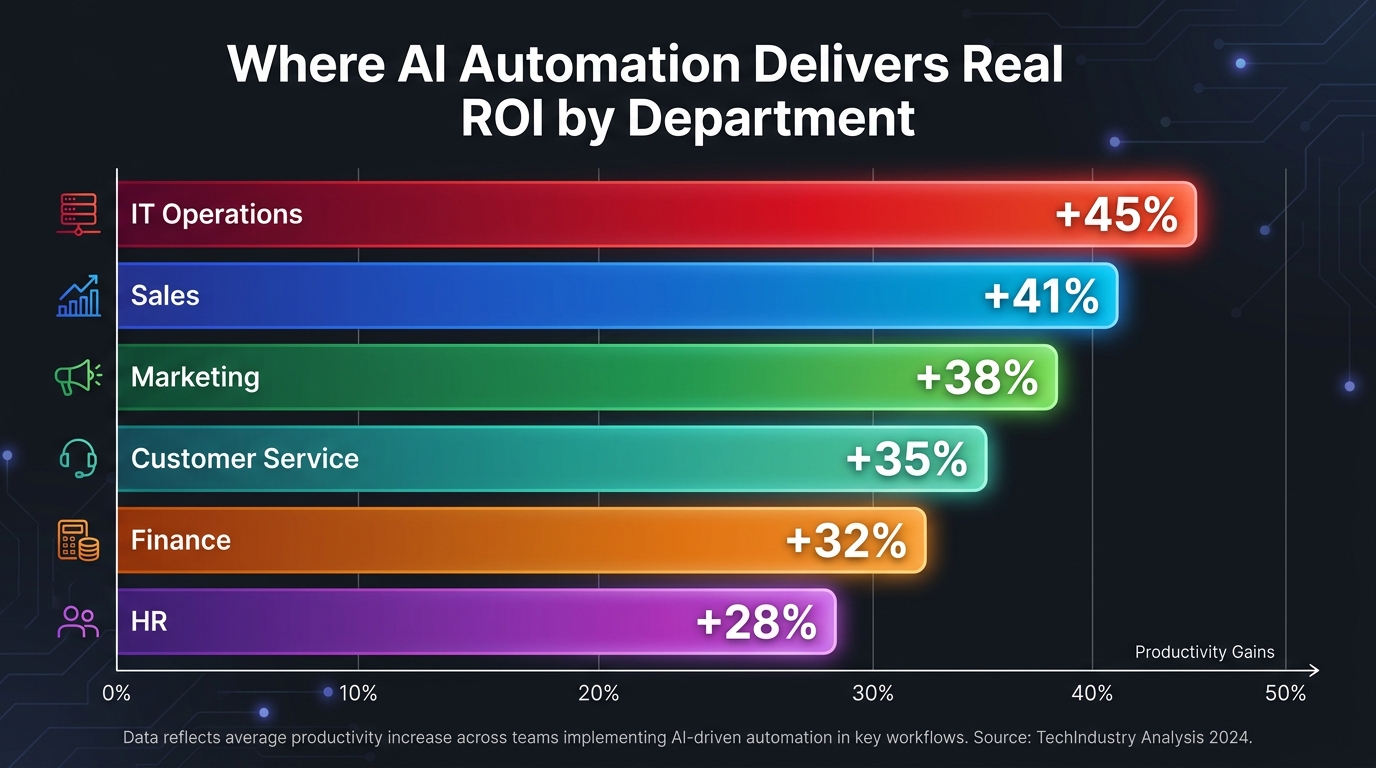
    It becomes a quick feedback loop where you steer the AI's powerful engine until the output is not only optimized for Amazon but also a perfect reflection of your brand.


    Ready to see just how quickly you can get this done? AlgoFuse.ai gives you all the tools you need to generate a full set of high-converting, data-driven images in about five minutes. Get started for free today and create your first listing on us.

  • Your Guide to an AI Product Image Generator for Amazon Listings

    Your Guide to an AI Product Image Generator for Amazon Listings

    At its core, an AI product image generator is your on-demand creative studio. It’s a specialized tool that uses artificial intelligence to spin up a full suite of professional, high-converting product photos from just one or two simple pictures of your item. For anyone selling on Amazon, this means you can get all your lifestyle shots, infographics, and main images done in minutes, without ever hiring a photographer or graphic designer.

    Why Visuals Are Your Most Powerful Sales Tool on Amazon

    On Amazon, your product images do the heavy lifting. They’re your silent salesperson. When a shopper lands on your page, they can’t hold your product or see it in action. All they have are your pictures. This is where so many sellers stumble—they treat their images like a chore to be checked off, not as the single most important factor driving their sales.

    Let’s be blunt: generic, uninspired images don't just blend in; they actively repel customers. They scream "amateur," raise doubts about your product's quality, and send shoppers straight to your competitor’s more polished listing. This directly tanks your click-through rate, your session time, and, ultimately, your sales velocity and BSR.

    The Staggering Cost of Traditional Photography

    Think about the old way of getting this done. A traditional product photoshoot is a long, expensive headache. It usually looks something like this:

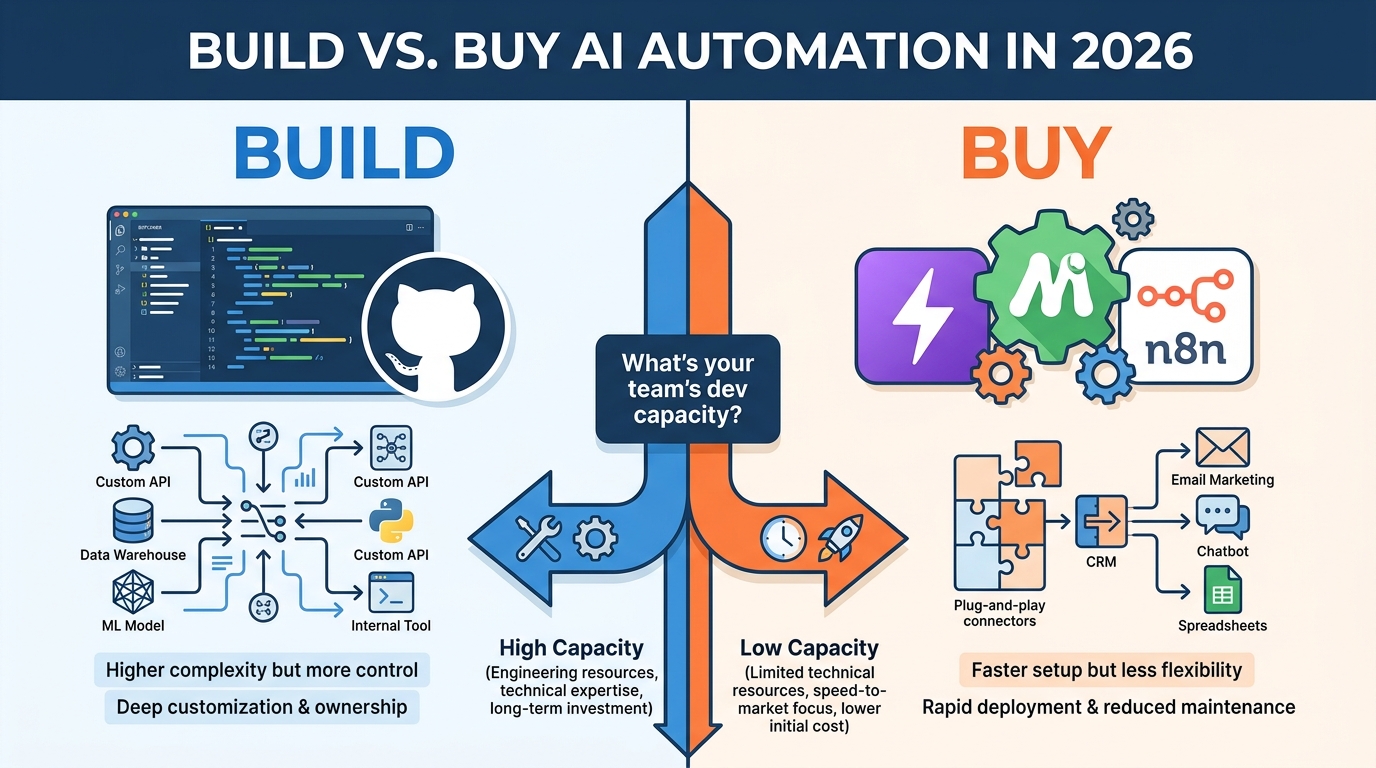
    • First, you have to find and hire a freelance photographer or an agency.
    • Then, you’re shipping your valuable inventory out for the shoot.
    • Next comes all the back-and-forth to coordinate models, props, and locations.
    • You wait days, sometimes weeks, to get the final edited photos back.
    • Finally, the invoice arrives, often for thousands of dollars for just a handful of images.

    The whole process is slow, rigid, and incredibly expensive. Want to create a few images for a Christmas promotion or test a different lifestyle angle? You have to fire up that entire costly cycle all over again. For sellers with more than a few SKUs or those looking to expand internationally, this model just doesn't scale.

    To put it in perspective, let's compare the two approaches side-by-side.

    Traditional vs AI-Powered Image Generation: A Quick Comparison

    The table below breaks down the core differences in cost, time, and output quality between the old-school route and using an AI platform for your Amazon listing images.

    Metric Traditional Method (Freelancer/Agency) AI Product Image Generator (e.g., AlgoFuse.ai)
    Cost $1,000 – $5,000+ per photoshoot $29 – $99 per month for unlimited generations
    Turnaround Time 1-4 weeks 2-5 minutes
    Image Variety Limited to the original shoot concepts Infinite variations and concepts on demand
    Scalability Low; each new product requires a new shoot High; easily generate images for entire catalogs
    Flexibility Low; revisions are costly and time-consuming High; instantly test new scenes, models, and styles

    As you can see, the shift isn't just about incremental improvement; it's a fundamental change in how you can approach your visual marketing.

    The Rise of AI in Ecommerce Visuals

    This is exactly why the AI image generator market is booming. The industry is projected to jump from USD 412.51 million in 2025 to an incredible USD 1,747.63 million by 2034. That explosive growth is driven by the non-stop demand for better visuals in ecommerce, particularly on a competitive battlefield like Amazon. With a dominant 40.34% market share, North America is leading this charge. You can dig into the full report on this market's rapid expansion for more details.

    An AI product image generator completely upends the traditional model. Instead of dropping thousands on a single shoot, you get the power to create infinite visual concepts whenever you want, for a tiny fraction of the cost.

    This isn't just about saving a buck, though. Modern tools like AlgoFuse.ai give you a serious strategic edge because they're built with market intelligence at their core. By analyzing what's working for top-selling products across 19 different Amazon marketplaces, these platforms can generate visuals that are already dialed in for conversion. The AI knows what kinds of infographics, lifestyle scenes, and feature callouts are grabbing customers' attention in your niche right now.

    This data-first approach takes all the guesswork out of the equation. You get agency-quality visuals that are engineered to sell from the get-go. You’re no longer just making pretty pictures; you’re deploying a targeted visual strategy designed to capture attention and build trust instantly.

    Creating High-Converting Amazon Images From a Single Photo

    This is where the real magic happens. Forget the weeks of back-and-forth with photographers and the thousands of dollars spent on photoshoots. You can take one simple, clean product photo and turn it into a complete set of seven conversion-ready Amazon images.

    The whole approach is built for speed and, more importantly, for what actually works on Amazon right now. You don't need to be a prompt engineer or a graphic designer. The AI handles the creative work by first analyzing what’s already winning in your market.

    It All Starts With One Good Photo

    Everything hinges on your source image, but getting it right is surprisingly straightforward. You don't need a professional studio shot; a high-resolution photo from a modern smartphone will do the job perfectly.

    The goal is just to give the AI a clean, unobstructed view of your product. For the best results, keep these tips in mind:

    • Stick to a plain, neutral background. A simple white or light gray backdrop makes it easy for the AI to isolate your product perfectly.
    • Get the lighting right. You want even, consistent light. Try to avoid harsh shadows or bright glares that might hide product details. Natural light from a nearby window is usually your best bet.
    • Capture a clear, head-on angle. Think of this as your main "hero" shot. It should show the product clearly and accurately.

    This single image is the only raw material you need. It becomes a "digital twin" that the AI will place into dozens of different scenes, infographics, and lifestyle shots. A solid input photo is the foundation for sharp, professional, and convincing final images.

    Let Market Intelligence Guide the Way

    Once your photo is ready, this is where a platform like AlgoFuse.ai really changes the game. Instead of asking you to dream up creative prompts from scratch, it starts with hard data. All you do is enter your main target keyword or the ASIN of a top competitor.

    This simple action kicks off a real-time analysis of the top-performing listings for that exact keyword on Amazon. The AI immediately gets to work identifying which types of images are currently driving the most clicks and sales.

    This is the core advantage, and it can't be overstated. The AI isn't just generating pretty pictures at random. It’s reverse-engineering the visual strategies of the most successful sellers in your niche, giving you a proven blueprint to follow.

    The system studies everything—the camera angles, the benefits highlighted in infographics, the demographics of models in lifestyle photos, and even how comparison charts are structured. It then synthesizes all these best practices to build a custom image strategy just for your product.

    Generating Your Full 7-Image Stack in Minutes

    After the market analysis is done, the AI generates a complete set of seven essential Amazon images all at once. The whole process usually takes about five minutes.

    Here’s a look at the kind of image set you can expect and why each one is so critical for driving sales:

    • The Main Image: A perfect hero shot on a pure white background, ready to go and fully compliant with Amazon's rules.
    • Two Lifestyle Images: These place your product in realistic, aspirational settings that help your target customer imagine it in their own life. You get a couple of different contexts to show off its versatility.
    • A Benefit-Focused Infographic: This one gets straight to the point, calling out 3-5 key benefits with clean icons and short text. It instantly answers the customer’s biggest question: "What's in it for me?"
    • A Feature Callout Image: This image zooms in on specific technical features, materials, or dimensions. It’s all about building trust and showcasing quality.
    • A Comparison Chart: A powerful tool that positions your product against a generic competitor, making it obvious why yours is the better choice.
    • A Final "In-Use" or Brand Shot: This last image often reinforces the brand story or shows the positive outcome of using your product, leaving a lasting impression.

    This visual shows just how much this modern AI workflow simplifies the journey from a single photo to a full-fledged Amazon listing.

    Flowchart comparing traditional image generation process with AI image generation workflow, from capture to usage.

    The takeaway here is the incredible compression of time and resources. What once took weeks of coordination and a whole creative team is now an automated task that’s over in minutes. You get a complete, market-tested set of visuals without writing a single prompt or hiring outside help. This one-click generation is the new playbook for launching and optimizing products at a speed that was impossible just a few years ago.

    Refining Your AI-Generated Images for Maximum Impact

    Getting your first set of AI images is a great start, but the real magic happens next. Don't think of those initial outputs as the finished product. Instead, see them as a solid foundation you can build on. The best part is that you can refine, tweak, and perfect these visuals without ever leaving the platform.

    This is where an ai product image generator evolves from a simple generator into an interactive creative suite. The top-tier tools come with built-in AI editing features, letting you make surprisingly specific changes with just a few words.

    A person uses a stylus on a tablet displaying a photo gallery of various landscape images, on a wooden desk.

    Fine-Tuning Images with AI Editing

    Let's say one of your new lifestyle shots is almost perfect, but the background feels a little flat. Instead of regenerating a whole new batch, you can just edit what you have.

    For example, imagine your product is a portable blender, and the AI placed it on a generic kitchen counter. That's fine, but it doesn't scream "on-the-go." You can simply command the AI to "change the background to a hiking trail at sunrise." In moments, the tool swaps out the entire scene, intelligently keeping your product as the perfectly lit hero.

    This kind of prompt-based editing is a massive time-saver. You can use it for all sorts of things:

    • Change the setting: Swap a plain living room for a high-end modern office or a relaxing beach scene.
    • Add or alter props: Place a steaming mug next to your coffee maker or add a smartphone beside your new tech gadget to show scale.
    • Update infographic text: Quickly change "Durable Design" to a more compelling "Built to Last a Lifetime."

    It’s these quick, targeted adjustments that turn a good image into a great one that nails your specific marketing angle.

    Generating Variations for A/B Testing

    Here’s where things get really interesting. Because creating a completely new image concept is so fast and affordable, you can finally stop guessing and start A/B testing your visual strategy.

    The ability to instantly create and test different visual hypotheses is a huge advantage. You're no longer debating what your audience might want to see; you're using real data to optimize for conversions.

    Let's say you're selling a premium desk chair. You could generate two completely different lifestyle images to see which performs better:

    1. The "Professional" Angle: An image of the chair in a sleek, minimalist home office to attract remote workers and executives.
    2. The "Gamer" Angle: The same chair but in a high-tech gaming rig with RGB lighting, targeting the massive gaming community.

    By running both images in your listing (or in your ad campaigns), you’ll get clear data on which one drives more clicks and sales. This iterative process takes the expensive guesswork out of building your brand's visual identity. Platforms like AlgoFuse.ai make it easy to start creating and testing your own image variations.

    This rapid evolution is part of a huge shift in e-commerce. The AI image generator market, valued at USD 3.16 billion in 2025, is on track to hit a staggering USD 30.02 billion by 2033. This incredible growth is fueled by sellers who now have 24/7 access to agency-quality visuals, helping them slash costs and boost conversions. To see how this boom is impacting sellers worldwide, you can explore more insights on the AI image market's growth.

    Localizing Your Product Images for Global Amazon Sales

    Taking your brand global on Amazon is a massive opportunity, but I’ve seen countless sellers stumble right out of the gate with a simple, yet costly, mistake. They just copy their US-based product images and paste them into their listings for Amazon.de, Amazon.co.jp, or Amazon.com.au. This is a surefire way to scream "foreign seller" to local shoppers, instantly killing trust and your conversion rate.

    What resonates with a customer in Ohio can feel completely alien to a buyer in Osaka. That classic family barbecue scene that works wonders in Australia? It might just look odd and out of place in Germany. To truly succeed worldwide, you need to go beyond just translating text—you have to localize your visuals. This is where a good ai product image generator becomes one of your most valuable assets for international growth.

    A triptych showing an outdoor restaurant, a table setting with 'LOCALIZE VISUALS' text, and a pagoda building.

    Why One-Size-Fits-All Images Don't Work

    Cultural context is everything. A generic lifestyle photo with North American models in a sprawling suburban home just won't connect with a shopper in Tokyo who lives in a smaller, more modern apartment. It creates a subtle but powerful disconnect, making your product feel like it wasn't made for them.

    This is a huge blind spot I see all the time. Sellers pour money into logistics and professional translations but then treat their most powerful sales tool—their images—as an afterthought. The result is predictable: lower conversion rates, fewer clicks, and a painfully slow start in a promising new market.

    Don’t let your visuals betray your global ambitions. A localized image tells a shopper, "We made this for you and your lifestyle," which is one of the most powerful messages you can send in e-commerce.

    Crafting Culturally Authentic Scenes with AI

    Instead of dealing with the logistical nightmare and high cost of photoshoots in every single country, you can use a quality ai product image generator to spin up authentic, localized scenes in just a few minutes. The trick is using a platform that’s actually built for this kind of detailed, specific generation.

    Let's say you're selling a premium coffee grinder. Here’s how you could adapt your imagery for three totally different markets:

    • For Amazon.com (USA): You might generate a shot of the grinder on a big granite countertop in a spacious, open-concept kitchen, maybe with a family milling about in the background.
    • For Amazon.it (Italy): The scene could shift to a cozy, sun-drenched kitchen, with the grinder sitting next to a classic stovetop Moka pot on a rustic wooden table.
    • For Amazon.co.jp (Japan): Here, you'd want to place the grinder in a compact, minimalist kitchen, focusing on clean lines, organization, and a feeling of calm efficiency.

    Each image is selling the exact same product, but they’re speaking a completely different visual language—one that feels familiar, authentic, and aspirational to the local shopper. That's how you build an instant connection and show you've done your homework.

    Tapping into Marketplace Data for Smarter Localization

    The really powerful AI platforms, like AlgoFuse.ai, take this a step further by basically doing the cultural research for you. Instead of guessing what a typical German kitchen looks like, the AI can analyze the top-performing competitor listings directly on Amazon.de.

    This completely changes the game for sellers. The workflow is incredibly straightforward:

    • You pick the marketplace you're targeting, like Amazon UK.
    • You enter your main product keyword.
    • The AI scans the current best-sellers in that country for that keyword.
    • It then generates a complete set of listing images, including lifestyle shots, that mirror the models, environments, and overall aesthetic that is already proven to convert with British shoppers.

    This process removes all the cultural guesswork. Your visual strategy is now grounded in real-time market data, not stereotypes. You're not just making a "British-looking" scene; you're creating a scene that aligns with the visual trends dominating your niche on that exact Amazon storefront. This is how you build trust and drive sales from day one, no matter where in the world you decide to sell.

    Understanding Pricing and Calculating Your Return on Investment

    Whenever you consider a new tool, the first question is always, "What's this going to cost me?" With an AI product image generator, the pricing can feel a bit different. Most platforms, AlgoFuse.ai included, run on a token or credit system instead of a simple per-image fee.

    At first, that might seem abstract, but it’s actually built to give you more control over your budget. You’re not paying a flat rate for every single image. Instead, you use a certain number of tokens for specific tasks. This means you can match your spending directly to your needs, whether you're creating an entire image stack from scratch or just making a few minor edits. It’s a far cry from the rigid, all-or-nothing project fees you get from a photography studio.

    Breaking Down the Token Costs

    So, what does this look like in the real world? Let’s use AlgoFuse.ai as an example. The token cost is tied directly to how much work the AI has to do. A simple task uses fewer tokens, while a more complex one will use more. It’s that straightforward.

    Here's a quick look at the costs you can expect:

    • Full 7-Image Listing: Generating a complete set of seven images—your main shot, lifestyle photos, infographics, and even a comparison chart—all from just one photo costs 90 tokens.
    • Premium A+ Content Module: Need a beautiful banner or a custom module for your A+ Content? That’ll run you 60 tokens.
    • Simple Image Edit: Just want to swap out a background or change some text? That’s a quick fix and only costs 5 tokens.

    This structure ensures you’re only paying for what you actually use. A full visual overhaul for a new product has a predictable, manageable cost, while tweaking a listing for a holiday promotion becomes almost trivially inexpensive.

    Calculating Your Immediate ROI

    This is where the numbers really start to make sense. A traditional product photoshoot can easily set you back $2,000 to $5,000 and take weeks of planning and execution. With an AI platform, you can get a more comprehensive and market-tested set of visuals in minutes, often for less than the cost of a dinner out. The savings are immediate, often cutting your creative costs by up to 95%.

    By moving from expensive, one-off photoshoots to a low-cost subscription, you’re turning a major capital expense into a small, predictable operational cost. This frees you up to test, iterate, and refresh your listings whenever you want, not just when the budget allows.

    This isn't a niche trend; it's a massive market shift. Analysts are painting a very aggressive picture of where this technology is headed. For instance, MarkNtel Advisors projects the AI image generator market will skyrocket from USD 9.10 billion in 2024 to USD 63.29 billion by 2030. That’s a compound annual growth rate of 38.16%. This explosion is being driven by the relentless growth of e-commerce and the need for high-volume sellers to work more efficiently.

    Strategies for Maximizing Your Token Value

    You can stretch your investment even further if you're smart about it. When you’re evaluating plans, look for features designed to give you maximum value over time.

    For example, some higher-tier plans offer token rollover, which lets your unused tokens from one month carry over to the next. This is a fantastic feature for sellers whose creative needs come in waves. You won't have to worry about losing the value you've already paid for during a slow month.

    Most importantly, you should never have to buy a tool blind. A good platform will let you test it out first. We give new users free starter credits on AlgoFuse.ai—enough to generate a complete 7-image listing for a product. This gives you a chance to see the quality for yourself and get a feel for the workflow before you ever pull out your credit card.

    If you have questions about how plans or billing works, it's always smart to have a look at the fine print. You can check out the company's refund and subscription terms right on their site. That kind of transparency is exactly what you should look for when making an investment in your brand’s future.

    Common Questions About AI Product Image Generators

    Whenever I talk to sellers about using AI for their product photos, the same few questions always pop up. It’s new territory, so a healthy dose of skepticism is natural. Let’s get straight to it and address the most common concerns I hear from Amazon sellers diving into these tools.

    Can AI Really Replace a Professional Product Photographer?

    For the bread-and-butter images you need on an Amazon listing, the answer is yes, it absolutely can. While you might still hire a photographer for a huge, artistic brand campaign, an ai product image generator is built for the specific, conversion-focused images that actually drive sales on the marketplace.

    Think about the standard image stack for a successful listing. An AI can knock these out in minutes, not weeks:

    • Lifestyle shots that show your product in a real-world setting.
    • Infographics that clearly highlight key benefits with clean text and icons.
    • Comparison charts that stack your product up against the competition.

    These are the workhorse images that do the heavy lifting for your conversion rate. Getting them done with a traditional photographer is often slow and costly. The AI automates this, giving you a full set of assets that are perfectly tailored for the Amazon environment with incredible speed.

    Do I Need Design Skills to Use These Tools?

    Not at all. This is probably the biggest misconception holding sellers back. The best platforms are built for entrepreneurs and marketers, not professional graphic designers. The entire process is designed to be intuitive from the get-go.

    You won’t be wrestling with complex software or trying to become an expert prompt engineer. The most effective systems are guided by real market data. You just give it a single photo of your product, and the AI handles the composition, lighting, and graphic design elements based on what’s already proven to sell in your niche.

    The whole point of these tools is to eliminate the technical headaches of great design. If you can upload a photo and type a simple phrase, you have everything it takes to create a complete, high-converting image set.

    What Kind of Photo Do I Need to Start With?

    Simple is best. You don’t need a fancy, professionally lit studio shot. In fact, a single, clean photo of your product against a plain white or neutral background works perfectly. This gives the AI a clear, unobstructed "map" of your product's shape, texture, and details.

    Honestly, a high-resolution photo from a modern smartphone is usually more than enough. When you provide a clean "digital twin" of your product, you give the AI the best possible foundation to work from. It can then accurately place that item into countless different scenes and graphics. Don't overthink it—a clear shot is all you need to get started.

    How Does the AI Know What Images Convert Well on Amazon?

    This is the real magic that separates a generic image tool from one built specifically for e-commerce. Advanced platforms like AlgoFuse.ai aren't just creating pretty pictures; they're performing real-time market analysis to inform every image they generate.

    Here's a look under the hood:

    1. You start by giving it your main keyword or the ASIN of a direct competitor.
    2. The AI instantly goes to work, scanning the top-performing listings for that exact keyword in your marketplace.
    3. It then identifies the visual patterns, layouts, and benefit callouts that are winning clicks and sales right now.

    This data-first approach is what makes the results so effective. The AI isn't just guessing what might look good. It's applying the proven visual strategies of your most successful competitors directly to your own product, giving you a massive shortcut to a listing that converts.


    Ready to stop guessing and start generating visuals that are engineered to sell? Try AlgoFuse.ai today and create your first complete, data-driven Amazon image set for free. https://www.algofuse.ai